Quick answer: which visa do I need for a yoga course in India?
Most yoga students need three things, all online and all on official .gov.in websites:
- The 1-year e-Tourist Visa. When the form asks why you are visiting, choose "Short Term Yoga Programme". It costs US$40 for most countries. Apply 3–4 weeks before you fly.
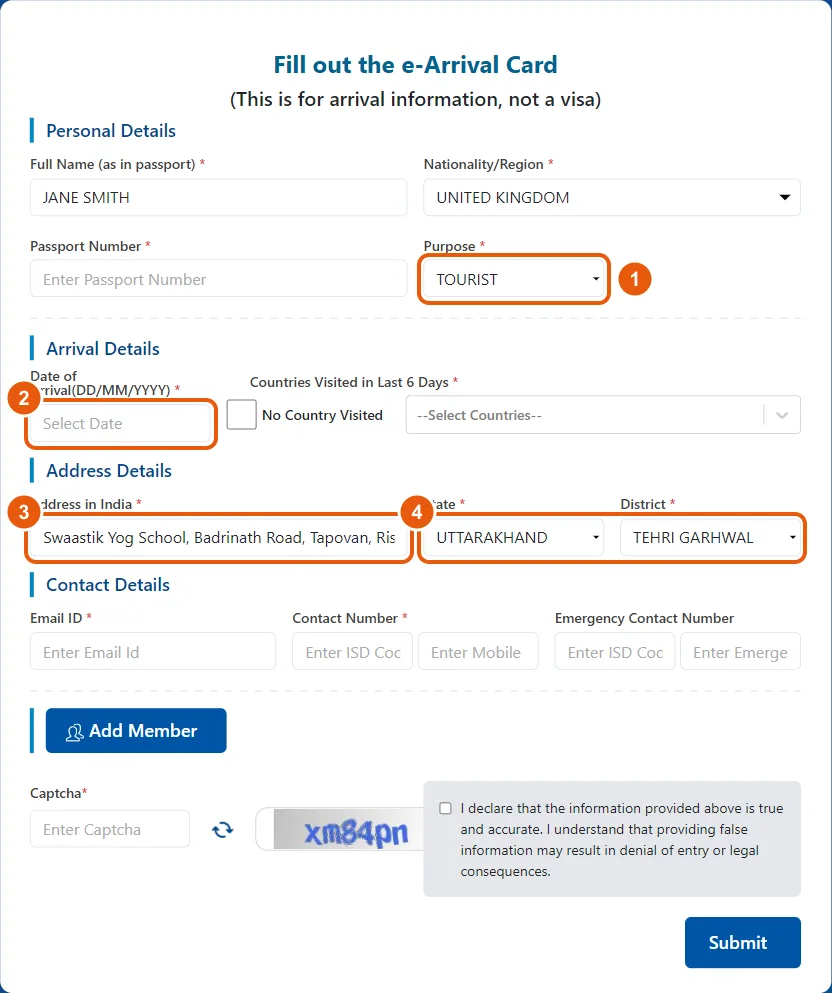
- The India e-Arrival Card. This is free. Fill it in within 72 hours before you land.
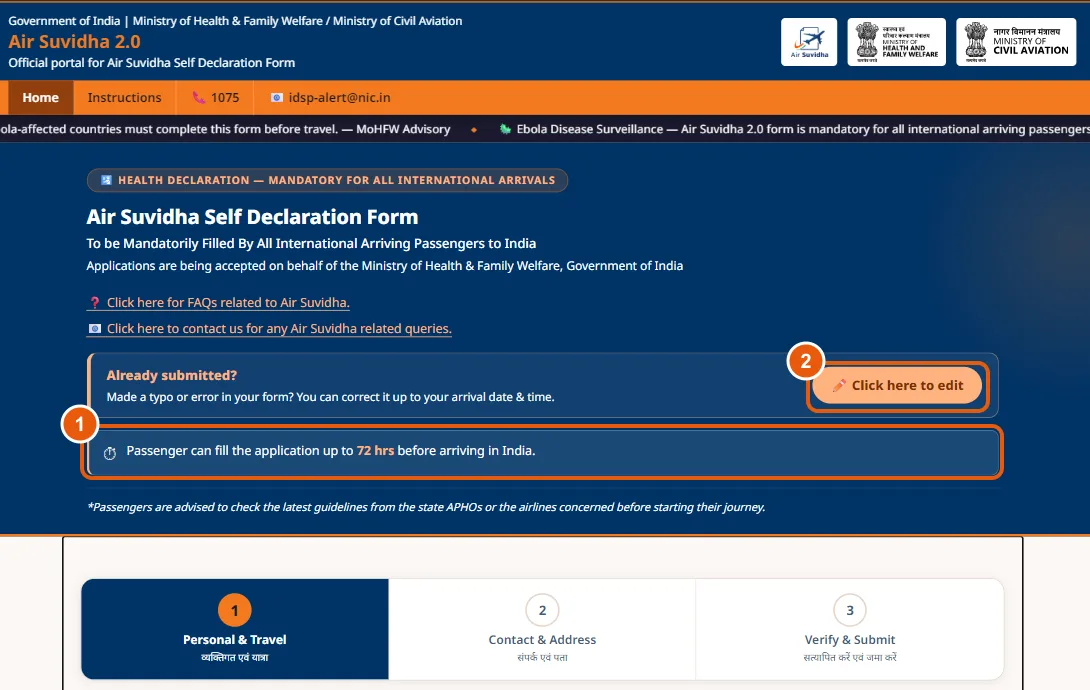
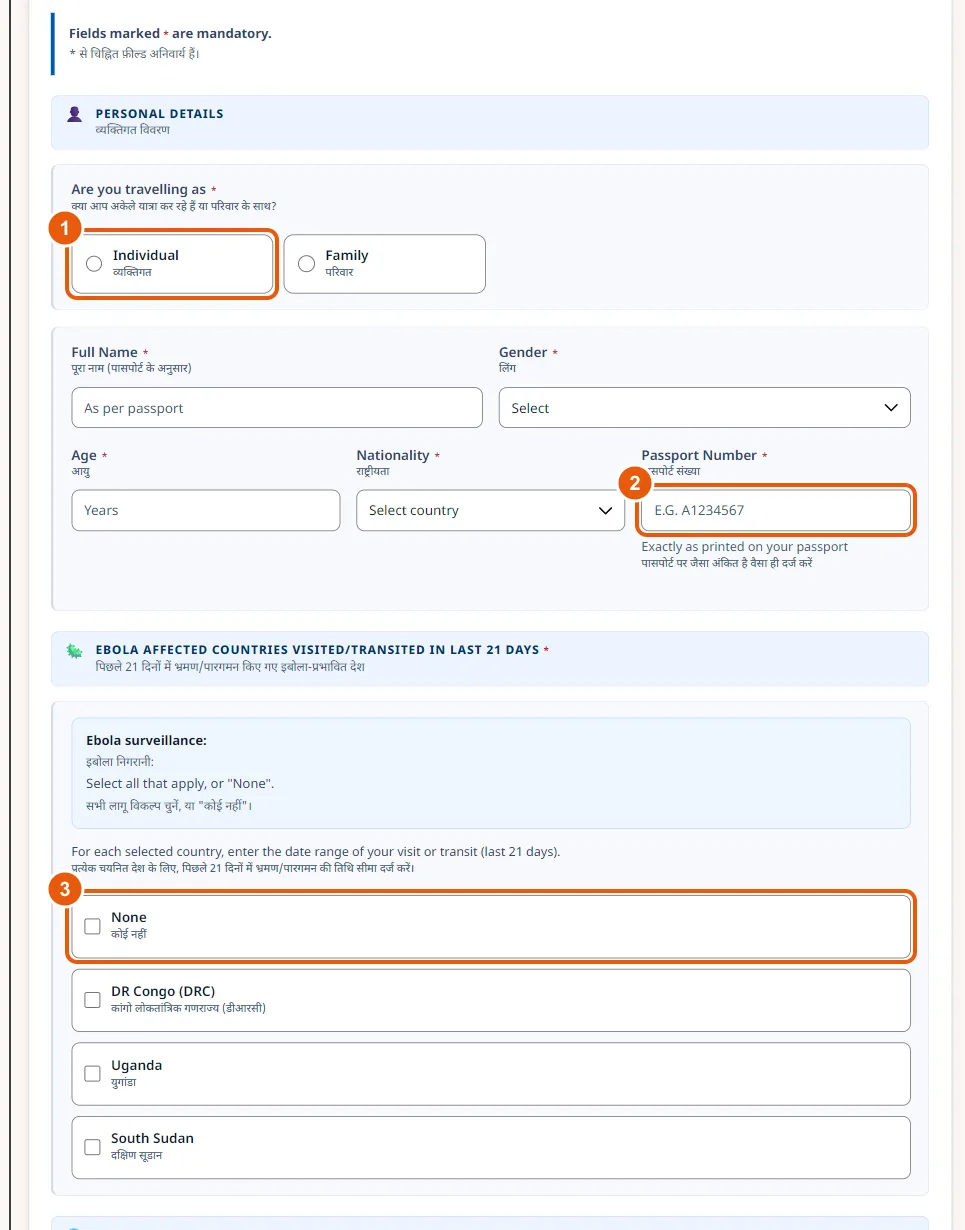
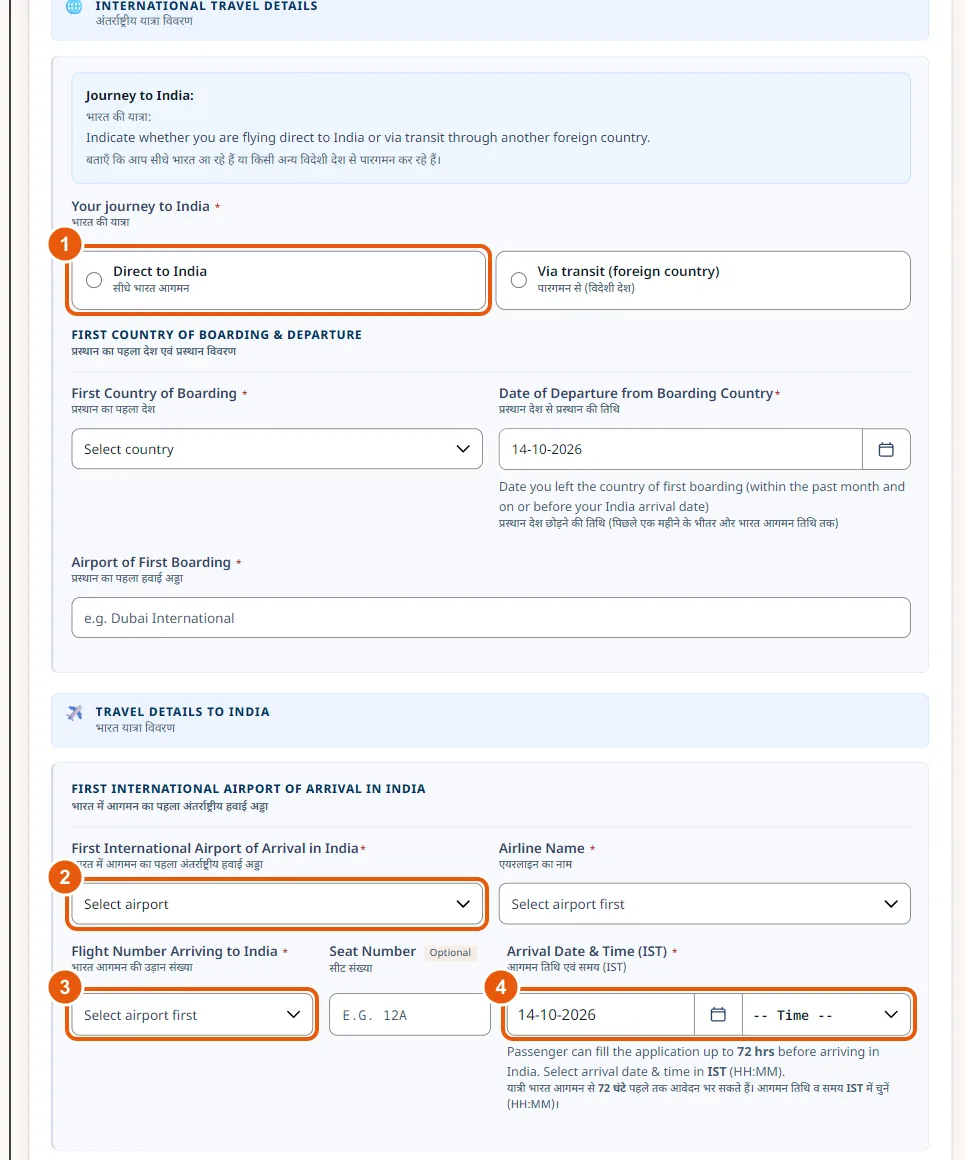
- The Air Suvidha 2.0 health form. This is free and mandatory for every international arrival since June 2026. Fill it in within 72 hours before you land; doing it at web check-in is easiest.
Fly into Delhi (DEL), not Dehradun. Dehradun is not an e-Visa entry airport.
Last checked against the official portals: 14 October 2026.
Getting your visa sorted is the least fun part of planning a yoga teacher training in Rishikesh. It does not have to be stressful. Every year, students from more than 60 countries arrive at our school in Tapovan, and almost all of them use the same simple route. This guide shows you exactly what to fill in, step by step, with screenshots of the real government forms.
Your 3-step checklist (at a glance)
| Step | What it is | Official website | When to do it | Cost |
|---|---|---|---|---|
| 1 | e-Tourist Visa (1 year): your permission to enter India | indianvisaonline.gov.in/evisa | At least 4 days before arrival (we suggest 3–4 weeks) | US$40 for most countries + 3% bank charge |
| 2 | e-Arrival Card: tells immigration who you are and where you will stay | indianvisaonline.gov.in/earrival | Within 72 hours before you land | Free |
| 3 | Air Suvidha 2.0: a short health self-declaration | airsuvidha.civilaviation.gov.in | Within 72 hours before you land (easiest at web check-in) | Free |
Important: the e-Arrival Card and Air Suvidha are not visas. They do not replace the e-Visa. You need all three.
Which visa should I choose? (comparison)
India's e-Tourist Visa comes in three lengths. All of them list "attending a short term yoga programme" as an allowed purpose. Here is how they compare:
| Visa | Valid for | Entries | Stay limit | Fee (most countries) | Good for |
|---|---|---|---|---|---|
| e-Tourist, 30 days | 30 days from arrival | Multiple | 30 days total (cannot be extended) | US$25 (Jul–Mar), US$10 (Apr–Jun) | A short retreat only. Too tight for a 4-week course. |
| ⭐ e-Tourist, 1 year (recommended) | 365 days from the day it is granted | Multiple | Up to 180 days in a calendar year | US$40 | 200hr, 300hr, 100hr, aerial and sound-healing courses, plus travel |
| e-Tourist, 5 years | 5 years from the day it is granted | Multiple | Up to 180 days in a calendar year | Varies a lot (e.g. US$160 USA, US$484 UK, US$200 most of Europe) | People who come back to India often |
| e-Student Visa (yoga) | 1 year | Multiple | Course length | Varies | Long, formal academic programmes at institutes registered on India's "Study in India" portal. Not needed for our courses. |
Fees are from the official e-Tourist Visa fee table (dated 8 September 2026). A 3% bank charge is added. Fees are non-refundable, even if the visa is refused. Check your country's exact fee on the official fee table (PDF).
Why we recommend the 1-year e-Tourist Visa
- No stress if your dates move. Our 200-hour course runs about 28 days. Arrive two days early to beat jet lag and a 30-day visa is already almost used up. The 1-year visa gives you breathing room.
- Multiple entries. You can pop over to Nepal or Sri Lanka after your course and come back in.
- Time to travel. Many students stay on to explore the Himalayas, Varanasi or Goa after graduating.
- Come back for your next level. If you return within the year for a 300-hour course, the same visa still works.
- The price difference is small. For most countries it costs only US$15 more than the 30-day visa.
Good to know: the official e-Tourist rules allow short-term yoga programmes. Formal, structured courses longer than 6 months fall under the Student visa route instead. All our teacher trainings and retreats are short-term programmes of under two months. If you plan to stay in India for a long, formal academic course, check the Student visa rules with your Indian embassy.
Step 1: How to apply for the 1-year e-Tourist Visa
Before you start, have these ready:
- Passport valid for at least 6 months from the date you apply, with at least 2 blank pages.
- A photo: JPEG, 10 KB–1 MB, square (height = width), plain white or light background, full face, eyes open, no glasses, no shadows, no border.
- A scan of your passport photo page: PDF, 10–300 KB.
- Our admission letter. The form asks for a letter from the institute for short-term courses. We email it to you after you pay your deposit.
- A credit/debit card and an email address you check often.
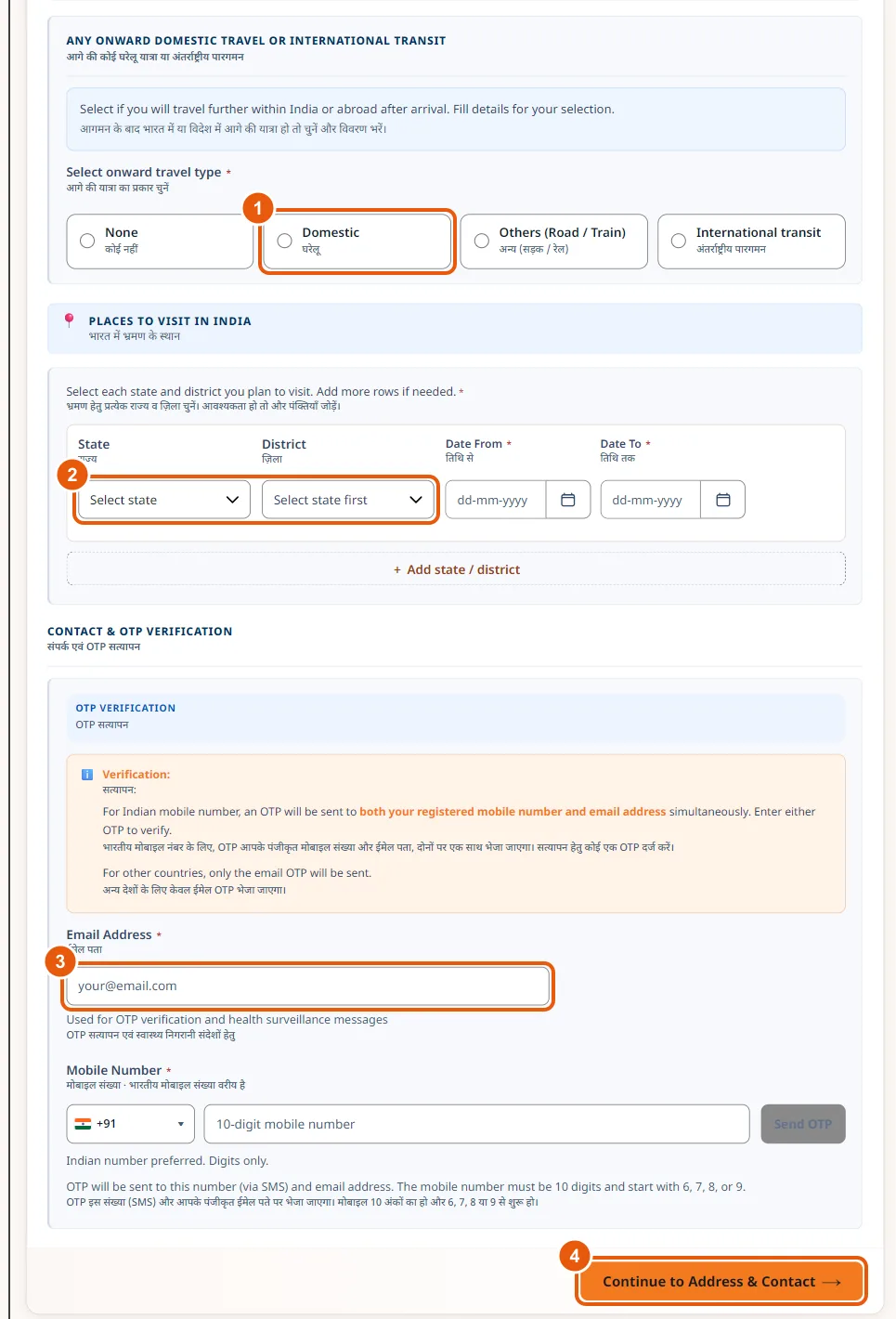
1. Open the official site and click "Apply here for e-visa"
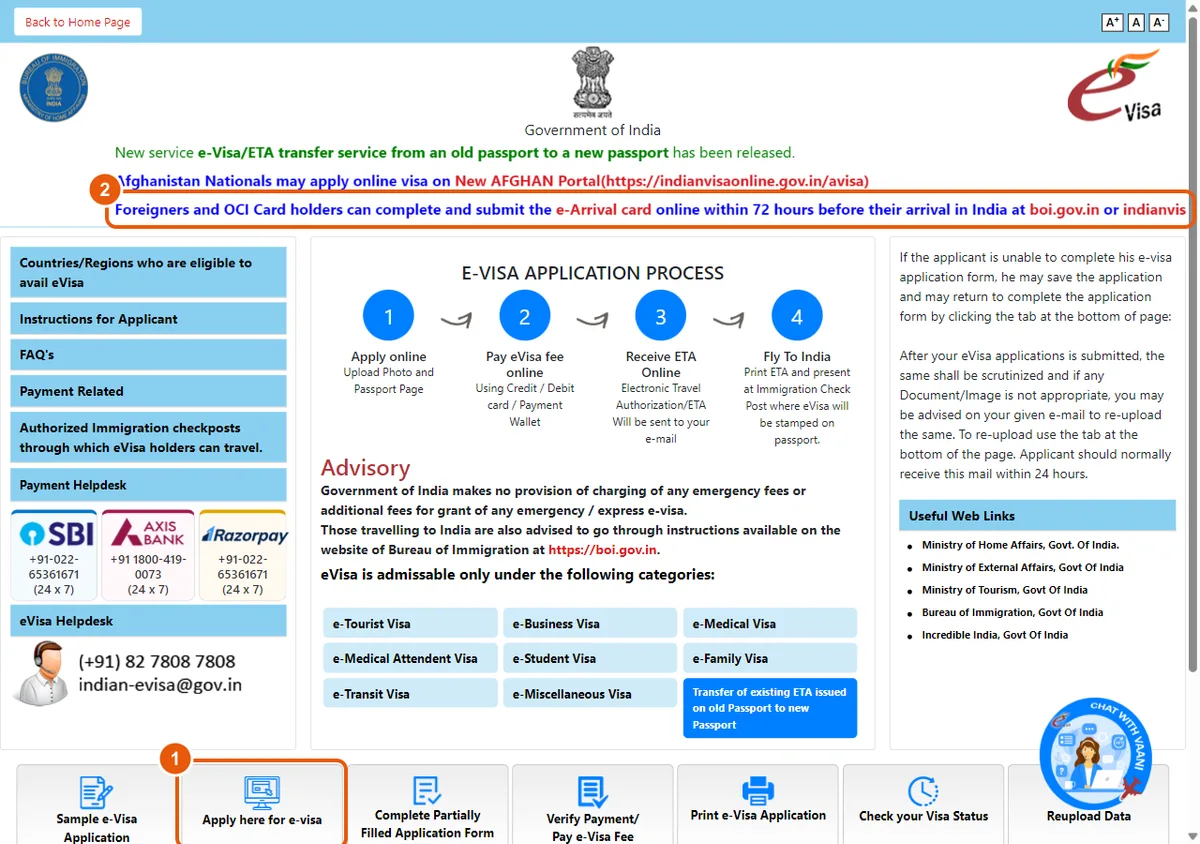
Go to indianvisaonline.gov.in/evisa. Type it yourself; do not click ads. A small box first asks for your passport number, country and name. Fill these in and click Continue.
2. Fill in the first page and pick the yoga option
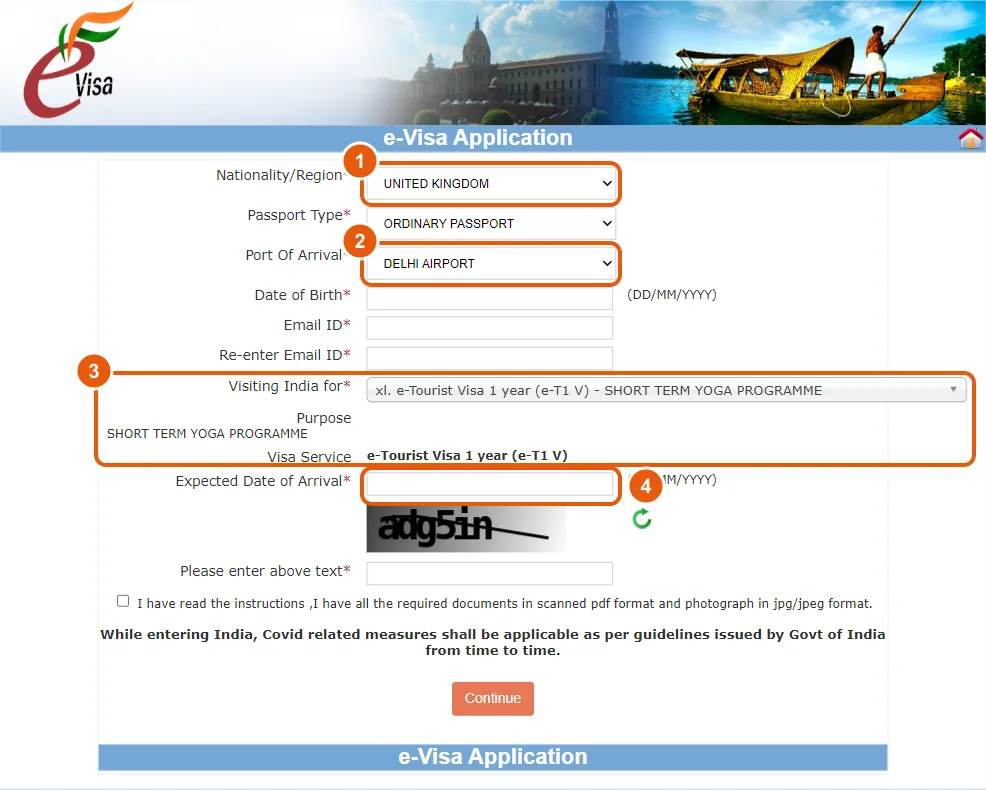
- Nationality/Region: the country on your passport. Passport type: Ordinary Passport.
- Port of Arrival: choose DELHI AIRPORT, or the airport where you first land in India. Dehradun is not on the e-Visa list.
- Visiting India for: choose "e-Tourist Visa 1 year (e-T1 V) – SHORT TERM YOGA PROGRAMME". The page then shows "Purpose: Short Term Yoga Programme" and "Visa Service: e-Tourist Visa 1 year".
- Expected Date of Arrival: the day your flight lands in India. It must be at least 4 days away.
Enter your date of birth and email, type the captcha, tick the box and click Continue. Write down the Temporary Application ID it gives you. You need it to come back later.
3. Complete the rest of the form
The next pages ask about you, your passport, your family, your job and your trip. A few tips that save time:
- Spell your name exactly as it is on your passport, including middle names.
- Address in India / reference in India: use Swaastik Yog School, Badrinath Road, Tapovan, Rishikesh, Uttarakhand 249192, phone +91 70454 64750.
- Places to visit: Rishikesh, plus anywhere else you plan to go.
- Previous visa details: this field is mandatory. If you have never been to India, the official FAQ says you can write "NA".
- Click Save often. The site can time out.
4. Upload your photo, passport and admission letter
Upload your square photo, your passport photo-page PDF and our admission letter as the supporting document. Blurry or wrong-sized uploads are the number one reason applications are sent back. If something is not right, they email you within about 24 hours asking you to re-upload. Use the "Reupload Data" button on the homepage.
5. Pay the fee
Pay by card or wallet: US$40 for most nationalities, plus a 3% bank charge. Payment must be made at least 4 days before you travel. The government does not charge any "express" or "emergency" fee. If a website offers one, it is not the official site. If your card is charged but the status does not update, wait 2 hours, then use "Verify Payment" before paying again.
6. Get your ETA, check it and print it
Your Electronic Travel Authorisation (ETA) arrives by email. Check the status with Check your Visa Status. It must say GRANTED before you fly. Check every detail: name, passport number, date of birth. Print a copy and carry it with your passport. At Delhi immigration, the officer stamps the visa into your passport and takes your fingerprints and photo.
.jpg&w=1920&q=75)