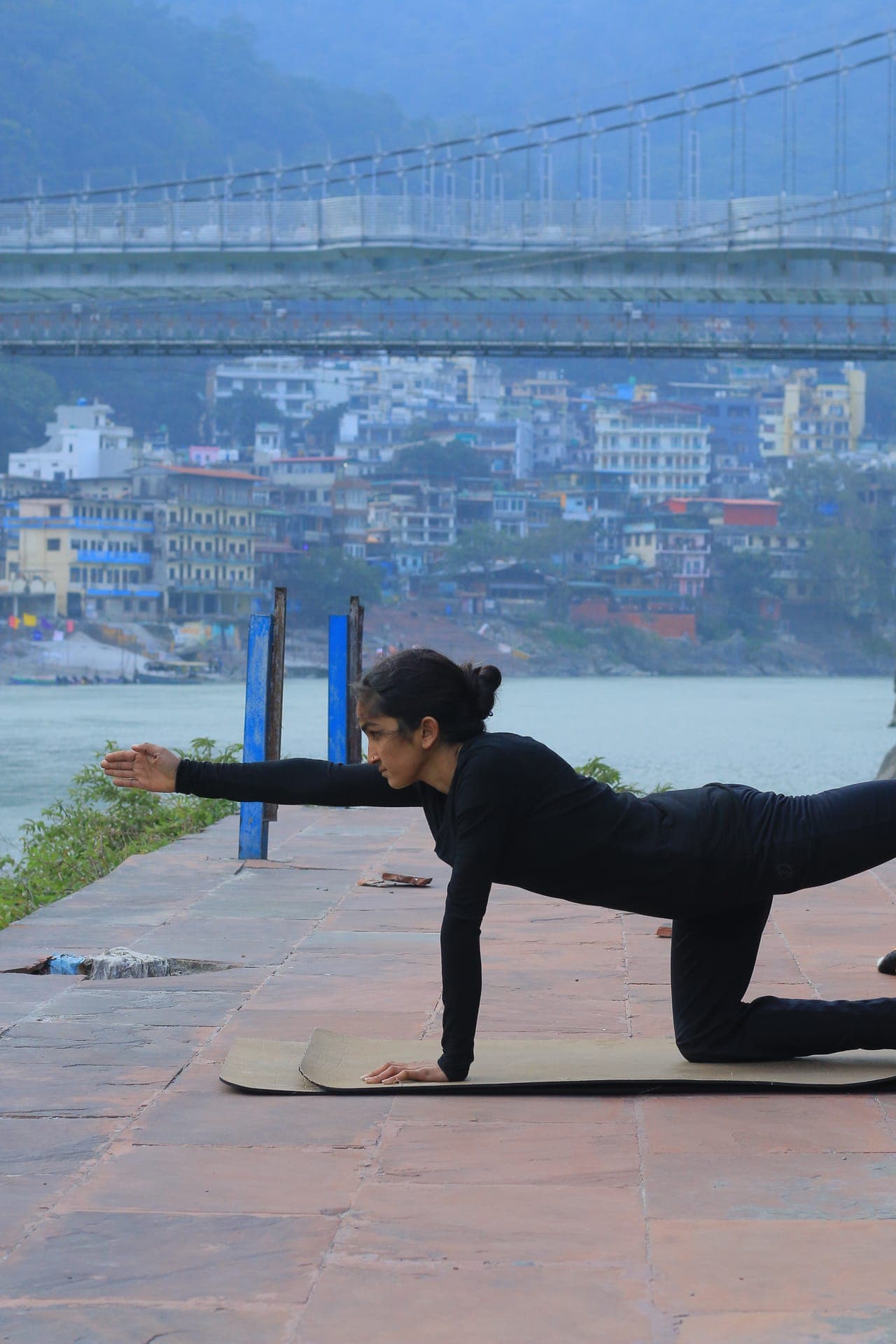
If you have ever lain awake at three in the morning, mind racing, body tense, and sleep feeling impossibly distant, you are not alone. Sleep disorders affect an estimated 30 to 35 percent of the global adult population, and the consequences ripple through every aspect of health and daily functioning. The good news is that yoga for sleep is one of the most effective, drug-free approaches to improving both the quality and duration of your rest. At Swaastik Yog School in Rishikesh, we teach evening practices specifically designed to guide the nervous system from a state of agitation into deep, restorative calm, and our students consistently report dramatic improvements in their sleep patterns.
This guide provides a complete yoga for sleep bedtime routine, including the best poses, breathing techniques, and relaxation practices that you can begin tonight. No experience required.
Why Yoga for Sleep Works: The Science
To understand why yoga for sleep is so effective, you need to understand the autonomic nervous system. This system has two branches: the sympathetic nervous system (your fight-or-flight response) and the parasympathetic nervous system (your rest-and-digest response). Insomnia and poor sleep are almost always linked to an overactive sympathetic nervous system. Your body is stuck in a low-grade state of alert, producing cortisol and adrenaline when it should be winding down.
Gentle yoga poses, slow breathing, and guided relaxation directly activate the parasympathetic nervous system through the vagus nerve, the longest cranial nerve in the body, which runs from the brainstem to the abdomen. When stimulated through specific breathing patterns and physical postures, the vagus nerve triggers a cascade of relaxation responses: heart rate decreases, blood pressure drops, digestion improves, and cortisol levels fall. This is the physiological state required for deep, restorative sleep.
A 2020 meta-analysis published in the journal BMC Psychiatry reviewed 19 randomized controlled trials and concluded that yoga interventions significantly improved sleep quality in adults with sleep disturbances, with effects comparable to or exceeding those of pharmaceutical sleep aids, without the side effects or dependency risks.
Best Yoga Poses for Sleep
These poses are specifically selected for their calming effect on the nervous system. Perform them on your bed or on a mat beside your bed, in dim lighting, 20 to 30 minutes before you want to fall asleep. Hold each pose for one to three minutes unless otherwise indicated.
Legs Up the Wall (Viparita Karani)
This is perhaps the single most effective yoga pose for sleep. Sit sideways against a wall, then swing your legs up so your heels rest against the wall and your back is flat on the floor. Let your arms rest at your sides with palms facing up. Close your eyes and breathe slowly.
This gentle inversion reverses blood flow from the lower body, reduces swelling in the legs and feet, and powerfully activates the parasympathetic nervous system. Many practitioners report feeling a wave of relaxation within the first minute. Stay here for three to five minutes if possible.
Supine Spinal Twist (Supta Matsyendrasana)
Lying on your back, draw your right knee toward your chest and guide it across your body to the left side. Extend your right arm out to the side and turn your gaze to the right. Allow gravity to do the work; do not force the knee down. Hold for one to two minutes, then switch sides.
Spinal twists release tension stored in the muscles along the spine and stimulate the digestive organs, which often hold stress-related tension. The gentle rotational stretch also helps decompress the spine after a long day of sitting or standing.
Child's Pose (Balasana)
Kneel on the floor, bring your big toes together, separate your knees wide, and fold forward, extending your arms in front of you. Rest your forehead on the mat, a pillow, or a bolster. Breathe deeply into the back of your rib cage.
Child's Pose creates a sense of safety and enclosure that triggers the relaxation response. The gentle compression of the abdomen against the thighs massages the internal organs, and the forehead-to-floor contact stimulates the vagus nerve through a light pressure point between the eyebrows known in yoga as the Ajna chakra.
Standing Forward Fold (Uttanasana)
Stand with feet hip-width apart, bend your knees generously, and fold forward from the hips. Let your head hang heavy, grab opposite elbows, and sway gently side to side. Hold for one to two minutes.
This pose uses gravity to release tension in the neck, shoulders, and lower back while the gentle inversion calms the mind. The act of letting the head drop below the heart has an immediately soothing effect on the nervous system.
Reclining Bound Angle Pose (Supta Baddha Konasana)
Lie on your back, bring the soles of your feet together, and let your knees fall open to the sides. Support each knee with a pillow or bolster if the stretch feels too intense. Place one hand on your heart and one on your belly.
This deeply restorative pose opens the hips and groin, where we store enormous amounts of emotional and physical tension. The supported variation, with bolsters under the knees, can be held for five minutes or more with profound calming effects.
Happy Baby (Ananda Balasana)
Lying on your back, draw both knees toward your armpits and grab the outer edges of your feet. Gently rock side to side. This pose releases the lower back and inner groin while the rocking motion is inherently soothing.
Corpse Pose (Savasana)
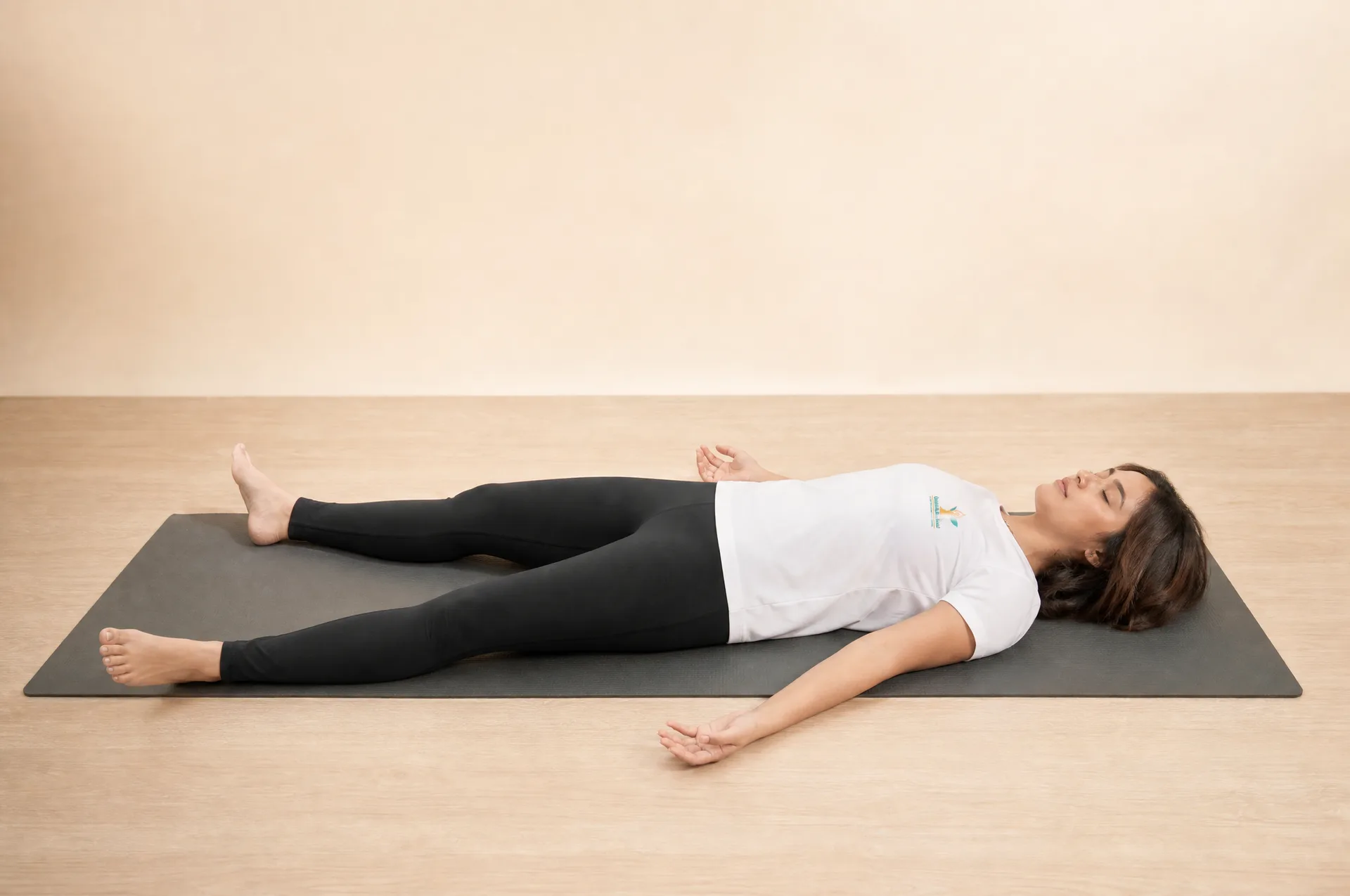
Lie flat on your back with legs extended, arms by your sides with palms up, and a pillow under your knees if your lower back is sensitive. This is the final pose and the bridge between your practice and sleep. In Savasana, systematically relax every part of your body from your toes to the crown of your head. Many people fall asleep during this pose when done in bed, and that is perfectly fine.