Back to Blog
Practice

Yin Yoga Benefits: Complete Guide to Deep Stretching

Rahul Badoni
Share this post:
Yin Yoga Benefits: Complete Guide to Deep Stretching

What is Yin Yoga? Benefits for flexibility, fascia health, and mental calm. Sample poses held 3-5 minutes and who Yin yoga suits best.

If you have ever felt that your yoga practice is all about movement, heat, and effort, yin yoga benefits might be exactly the missing piece you need. Yin yoga is a slow, meditative style of practice where poses are held for three to five minutes or longer, targeting the deep connective tissues, fascia, and joints rather than the muscles. At Swaastik Yog School in Rishikesh, we integrate yin yoga into our training programs because we believe a complete practitioner understands both the active and the still, the yang and the yin.

In this complete guide, we explore what yin yoga is, how it differs from other yoga styles, its wide-ranging physical and mental benefits, who it is best suited for, sample poses you can begin practicing today, and important contraindications to be aware of.

What Is Yin Yoga and Why Does It Matter?

Yin yoga was popularized in the West by Paul Grilley and Sarah Powers in the late 1990s, though its roots draw from Taoist philosophy and traditional Chinese medicine. Unlike vinyasa, ashtanga, or power yoga, which engage the muscles through dynamic movement and repetition, yin yoga asks you to relax the muscles completely and allow gravity to do the work. The focus shifts from muscular effort to passive stretching of the deeper layers of the body.
In the Taoist framework, yin represents the still, cool, receptive, and internal qualities of nature, while yang represents the active, warm, dynamic, and external. Most modern yoga classes are yang in nature. They build heat, challenge the muscles, and move quickly. Yin yoga provides the necessary counterbalance. It is cool, slow, introspective, and deeply nourishing.

This distinction matters because our connective tissues, which include ligaments, tendons, fascia, and joint capsules, do not respond well to rhythmic, muscular loading. They need sustained, moderate stress over time to become healthier, more hydrated, and more resilient. That is precisely what yin yoga provides.

How Yin Yoga Differs from Yang Styles

Understanding how yin yoga differs from yang-oriented practices helps you appreciate why both belong in a balanced yoga lifestyle.

Hold Duration

In a vinyasa or ashtanga class, poses are typically held for five breaths or less. In yin yoga, each pose is held for a minimum of three minutes, often extending to five, seven, or even ten minutes. This extended duration allows the stress to bypass the muscles, which relax after about ninety seconds, and reach the deeper connective tissues.

Muscular Engagement

Yang styles deliberately engage muscles for strength and stability. Yin yoga deliberately releases muscular engagement. You are encouraged to find your appropriate edge, the point where you feel a moderate stretch without sharp pain, and then soften everything. No gripping, no effort, just surrender.

Pace and Temperature

Yang practices generate internal heat through movement. Yin yoga is practiced at room temperature or even slightly cool environments. The pace is extremely slow. A full ninety-minute yin class might include only eight to twelve poses.

Target Tissues

While yang yoga primarily targets muscles, yin yoga targets fascia, ligaments, tendons, and the joint capsules. These tissues are dense and avascular, meaning they have limited blood supply and require sustained pressure to change and adapt.

Mental Quality

Yang practices often cultivate focus, determination, and physical discipline. Yin yoga cultivates patience, acceptance, surrender, and the ability to sit with discomfort without reacting. Many practitioners find yin yoga far more mentally challenging than any vigorous flow class because there is nowhere to hide from your thoughts.

The Complete Yin Yoga Benefits for Body and Mind

The yin yoga benefits extend far beyond simple flexibility. Research and clinical experience point to a wide range of physical, mental, and emotional advantages.

Deep Flexibility and Range of Motion

Yin yoga is one of the most effective practices for improving flexibility, particularly in areas that resist change in dynamic practices, such as the hips, pelvis, and lower spine. The sustained holds gradually lengthen the fascia and connective tissue, creating lasting changes in range of motion that short-duration stretches cannot achieve.

Studies have shown that fascial tissue requires at least 90 to 120 seconds of sustained load before it begins to undergo plastic deformation, the type of change that results in lasting length. Yin holds of three to five minutes ensure this threshold is consistently met.

Fascia Health and Hydration

Fascia is the web of connective tissue that surrounds every muscle, organ, bone, and nerve in your body. When fascia becomes dehydrated or adhered, it restricts movement, causes pain, and creates compensatory patterns throughout the body. Yin yoga compresses and then releases fascial tissue, creating a sponge-like effect that draws fresh fluid, nutrients, and oxygen into these tissues.

Joint Maintenance and Injury Prevention

Joints that are not regularly moved through their full range of motion gradually lose mobility. Yin yoga gently stresses the joint capsules, maintaining their health and preventing the stiffness that comes with age and sedentary lifestyles. For athletes and physically active individuals, yin yoga serves as essential joint maintenance that complements their high-impact training.

Nervous System Regulation

The slow pace and long holds of yin yoga activate the parasympathetic nervous system, the body's rest-and-digest mode. Regular yin practice has been shown to reduce cortisol levels, lower heart rate, and decrease blood pressure. For people living with chronic stress, anxiety, or sympathetic nervous system dominance, the calming effects of yin yoga can be profound.

Mental Calm and Emotional Processing

Sitting still in a pose for several minutes with nothing to do but breathe creates a container for emotional processing. Practitioners frequently report that yin yoga brings up stored emotions, memories, and sensations, particularly in deep hip openers. This is consistent with the somatic therapy understanding that the body stores unresolved experiences in its tissues. Yin yoga creates a safe space for these to surface and release.

Improved Sleep Quality

Because yin yoga powerfully downregulates the nervous system, practicing in the evening can significantly improve sleep onset and sleep quality. A study published in the Journal of Alternative and Complementary Medicine found that participants who practiced yin-style yoga before bed reported a 34% improvement in sleep quality scores over eight weeks.

Enhanced Meditation Preparation

If sitting still for meditation feels impossible, yin yoga can serve as a bridge. The practice trains the mind to observe sensations without reacting, to tolerate discomfort, and to maintain present-moment awareness. These are exactly the skills needed for seated meditation. Many meditation traditions in Rishikesh, including those taught at our school, use yin-style postures as preparation for extended meditation sessions.
Who Is Yin Yoga Best Suited For?

The beauty of yin yoga is that it serves a remarkably wide range of practitioners.

  • Athletes and fitness enthusiasts who need to balance intense training with recovery and flexibility work
  • Desk workers suffering from tight hips, stiff lower backs, and rounded shoulders from prolonged sitting
  • Stressed or anxious individuals who need nervous system regulation and mental calm
  • Older adults who want to maintain joint mobility and prevent stiffness
  • Yoga teachers who want to diversify their teaching repertoire and offer restorative options to students
  • Beginners who find fast-paced yoga intimidating and want a gentler entry point
  • Advanced practitioners who have plateaued in flexibility and want to address fascial restrictions

If you are visiting Rishikesh and want to experience yin yoga in an authentic setting, our drop-in classes include yin sessions overlooking the Ganges, where the sound of the river and the stillness of the Himalayan foothills create the perfect environment for deep practice.

Sample Yin Yoga Poses to Practice Today

Here are five foundational yin poses. For each, find your appropriate edge, set a timer for three to five minutes, and focus on breathing slowly and deeply. Use props like bolsters, blankets, and blocks as needed for comfort.

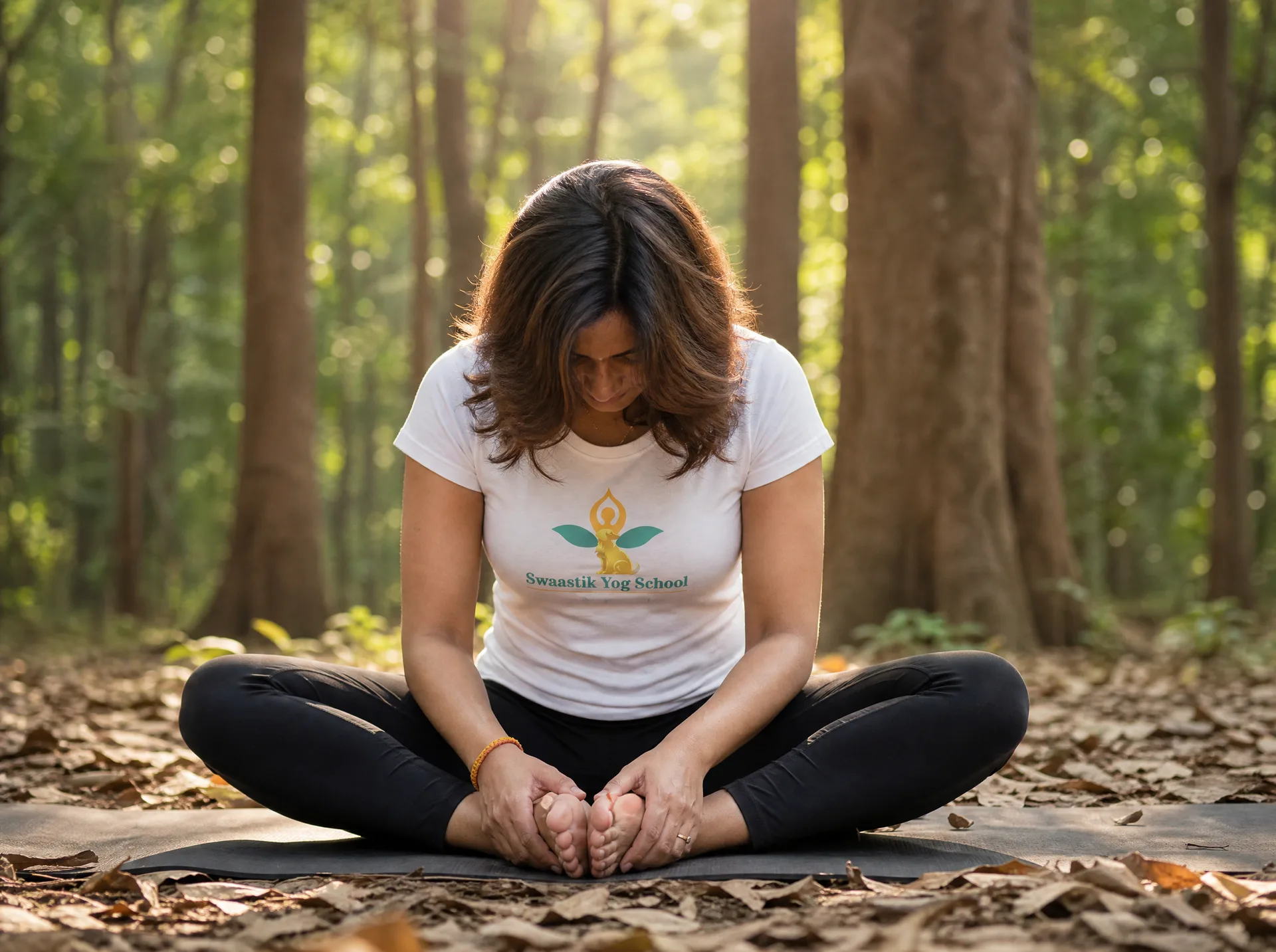
1. Butterfly Pose (Baddha Konasana Variation)

Sit with the soles of your feet together and let your knees fall open. Slide your feet forward so your legs form a diamond shape. Fold forward gently, rounding your spine and letting your head hang heavy. You should feel a stretch through the inner thighs, groin, and along the spine. Place a bolster or pillow on your feet and rest your forehead on it for support.

Targets: Inner thighs, groin, spine, hip adductors

2. Dragon Pose (Low Lunge Variation)

From a tabletop position, step your right foot forward between your hands. Slide your left knee back until you feel a deep stretch in the left hip flexor and front of the left thigh. Keep your hands on blocks on either side of the front foot, or lower to your forearms for a deeper sensation. Hold for three to five minutes, then switch sides.

Targets: Hip flexors, quadriceps, groin, hip joint capsule

3. Sphinx Pose

Lie on your belly and prop yourself up on your forearms, elbows directly under your shoulders. Let your belly relax completely onto the floor. You should feel a gentle compression in the lower back. This is intentional, as yin yoga embraces gentle spinal compression to nourish the lumbar discs. If the sensation is too strong, slide your elbows slightly forward.

Targets: Lumbar spine, sacral-lumbar fascia

4. Sleeping Swan (Pigeon Pose Variation)

From tabletop, slide your right knee forward toward your right wrist. Extend your left leg straight back. Square your hips as best you can and slowly fold forward, resting your forearms or forehead on the ground or a bolster. This is one of the most potent hip openers in yin yoga and often triggers emotional release.

Targets: Deep external hip rotators, piriformis, hip joint

5. Caterpillar Pose (Seated Forward Fold)

Sit with your legs extended straight ahead. Let your spine round forward naturally. Do not try to keep a straight back as you would in a yang forward fold. Let your head hang, your shoulders slump, and your entire posterior chain soften. Place a bolster across your legs and rest your torso on it for support.

Targets: Entire posterior chain, lumbar fascia, hamstring connective tissue

Contraindications and Safety Considerations

While yin yoga is gentle, it is not without risks. Be mindful of the following contraindications.

  • Hypermobility: If you are naturally very flexible or have a connective tissue disorder like Ehlers-Danlos syndrome, long-held passive stretches can overstretch already lax ligaments. Focus on moderate sensations rather than seeking maximum range
  • Acute injuries: Do not practice yin yoga on recently injured joints, torn ligaments, or inflamed areas. Wait until the acute phase has passed
  • Pregnancy: Some yin poses, particularly deep backbends and prone positions, should be modified or avoided during pregnancy. Consult a prenatal-specialized teacher
  • Osteoporosis: Spinal flexion under sustained load, as in Caterpillar pose, may need modification for those with osteoporosis or compression fracture risk
  • Numbness or tingling: If you experience numbness, tingling, or sharp pain in any pose, come out of it immediately. Moderate stretching or compression sensations are expected; nerve symptoms are not

Our 200-hour yoga teacher training covers yin yoga theory and safety in depth, ensuring that graduates can teach this powerful practice responsibly and effectively to students of all abilities.

How to Build a Yin Yoga Practice

Starting a yin yoga practice does not require special equipment or prior experience. Here are practical guidelines.

Frequency

Practice yin yoga two to three times per week for optimal benefits. It pairs exceptionally well with a yang practice. Many experienced yogis in Rishikesh follow a pattern of yang practice in the morning and yin practice in the evening.

Duration

A complete yin session can be as short as 30 minutes or as long as 90 minutes. Start with shorter sessions and gradually extend as your body and mind adapt to the stillness.

Environment

Yin yoga is best practiced in a quiet, warm space. Gather props beforehand so you do not need to interrupt your practice. Dim lighting, soft music, or nature sounds enhance the meditative quality. If you are in Rishikesh, practicing near the Ganges as the evening light fades is an unforgettable experience.

Mindset

Approach each pose with curiosity rather than ambition. The goal is not to achieve maximum depth but to find a place of moderate sensation and then remain still and observant. Let the pose work on you rather than you working on the pose.

Experience Yin Yoga Benefits in Rishikesh

Ready to discover the transformative power of yin yoga benefits for yourself? At Swaastik Yog School in Rishikesh, our experienced teachers guide you through authentic yin yoga sessions in a setting that is perfectly suited for deep practice. Whether you join us for a drop-in class or immerse yourself in our comprehensive 200-hour teacher training, you will experience the profound stillness and healing that yin yoga offers on the banks of the sacred Ganges.

Contact us today to begin your yin yoga journey in the yoga capital of the world.

Ready to Start Your Yoga Journey?

Join our Yoga Alliance certified teacher training programs in Rishikesh and learn from experienced instructors in the birthplace of yoga.

Related Articles

10 Best Yoga Asanas for Back Pain Relief

10 Best Yoga Asanas for Back Pain Relief

Discover the most effective yoga asanas and poses to alleviate back pain and improve spine health. Learn proper alignment and modifications for all levels.

Read More
Aerial Yoga in Rishikesh & Home Practice Guide

Aerial Yoga in Rishikesh & Home Practice Guide

Everything you need to know about Aerial Yoga in Rishikesh and learning at home. Includes equipment, safety tips, and online resources.

Read More
Everything About Vajrasana: Benefits, Time Limit & Information

Everything About Vajrasana: Benefits, Time Limit & Information

Complete information about Vajrasana (Thunderbolt Pose) including benefits, time limit, proper technique, and common mistakes to avoid.

Read More