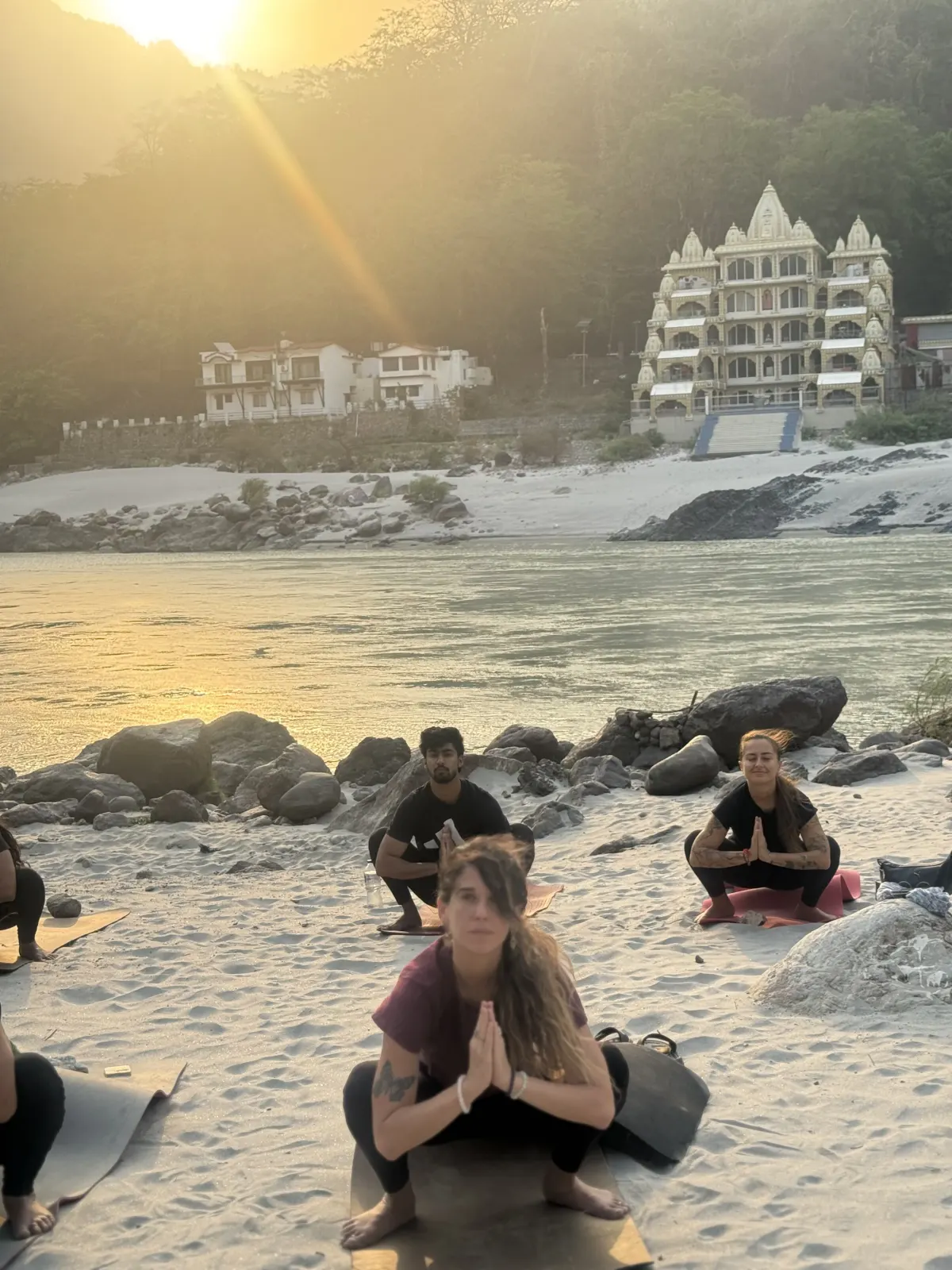
Quick answer: what does a day of yoga teacher training look like?
On our 200-hour course in Tapovan, Rishikesh, the day runs from a 6:00 AM Hatha class to dinner at 8:00 PM. You get about 8 hours of scheduled sessions: three asana classes (Hatha, Ashtanga and an advanced class), pranayama and shatkarma, anatomy, meditation and mantra chanting. You get two sattvic meals and a 3½-hour midday break. Sunday is your day off. The course lasts 22 days and ends with a practical teaching exam.
Before you book a yoga teacher training, you want to know one simple thing. What will my days actually feel like?
This post answers that with our real timetable. Not a "typical school" example. The exact hours we follow on the 200-hour yoga teacher training in Rishikesh, what happens in each block, and how hard it really is.
If you want the bigger picture first (the emotional ups and downs, the food, the first-week nerves), read our guide on what to expect at yoga teacher training in Rishikesh. This post zooms in on the clock.
The daily schedule, hour by hour
This is the timetable from our 200-hour course page. Timings can shift a little with the season, but the shape of the day stays the same.
| Time | Session | What you actually do |
|---|---|---|
| 06:00 – 07:15 AM | Hatha Yoga | Slow, held postures with careful alignment. Your body wakes up. |
| 07:15 – 09:00 AM | Pranayama / Shatkarma | Breathing techniques and yogic cleansing practices, such as neti. |
| 09:00 – 09:30 AM | Brunch | Your first meal of the day. Sattvic and vegetarian. |
| 09:45 – 10:45 AM | Alignment / Anatomy | Theory: how the body moves, and how to keep students safe. |
| 10:45 AM – 12:00 PM | Ashtanga Yoga | Dynamic practice: Sun Salutations A and B and the standing primary series. |
| 12:00 – 03:30 PM | Rest & self-study | Free time. Nap, study, practise, or walk to the river. |
| 03:30 – 04:45 PM | Advance Yoga Class | Afternoon practice, variations and deeper work on postures. |
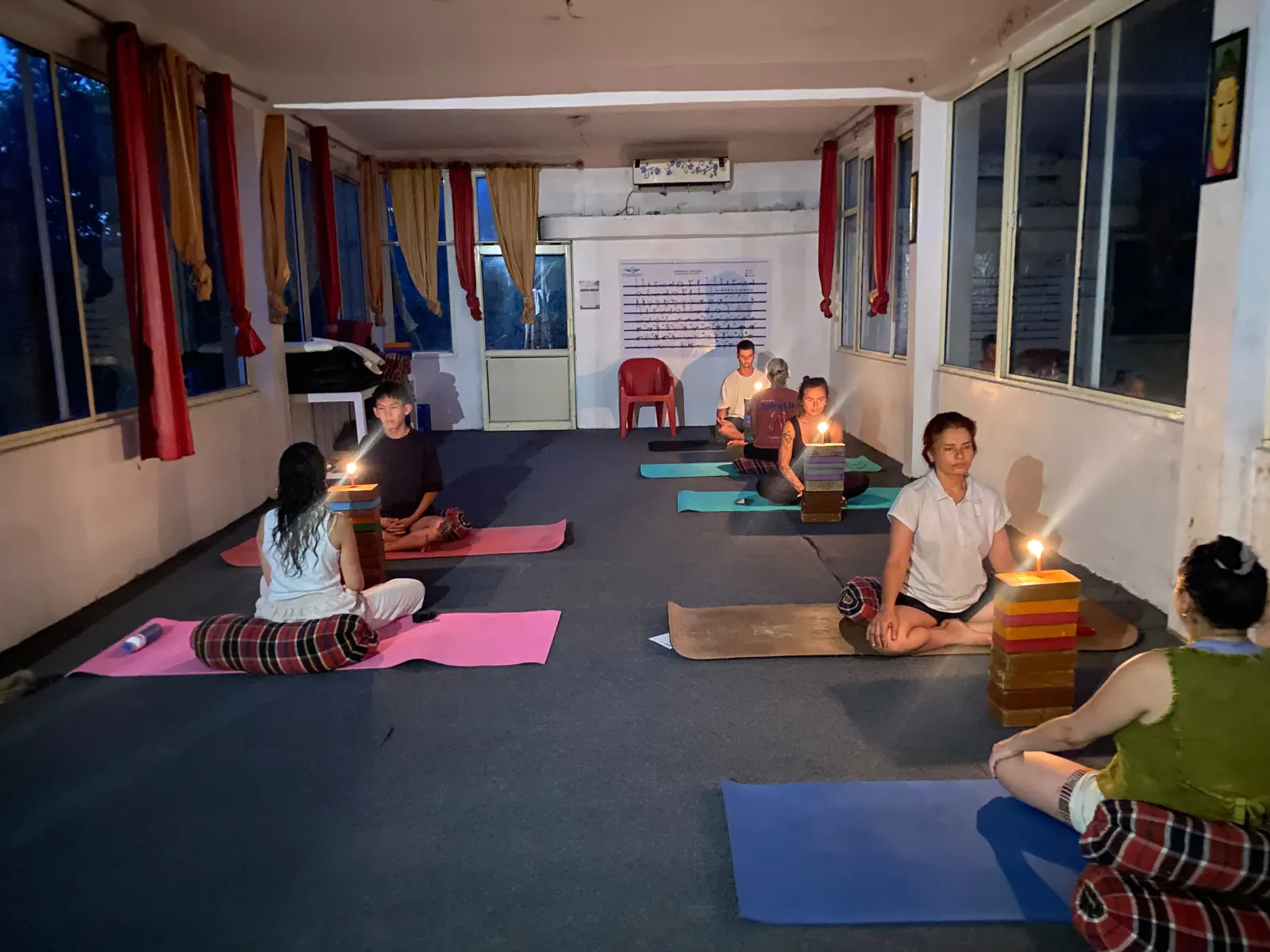
| 05:30 – 06:30 PM | Meditation | Seated meditation, including mantra and candle-gazing (trataka). |
| 06:30 – 07:30 PM | Rest | Personal time before the evening sessions. |
| 07:30 – 08:00 PM | Mantra Chanting | Om, the Gayatri mantra, the Guru mantra and others. |
| 08:00 – 09:00 PM | Dinner | Sattvic vegetarian dinner. Then sleep. |
Add it up and you get about 8 hours of sessions a day. Of those, about 3¾ hours are physical asana practice. The rest is breathwork, theory, meditation and chanting.
Morning: 6:00 AM to brunch
The first three hours are the heart of the day. You practise on an empty stomach, which is the traditional way.
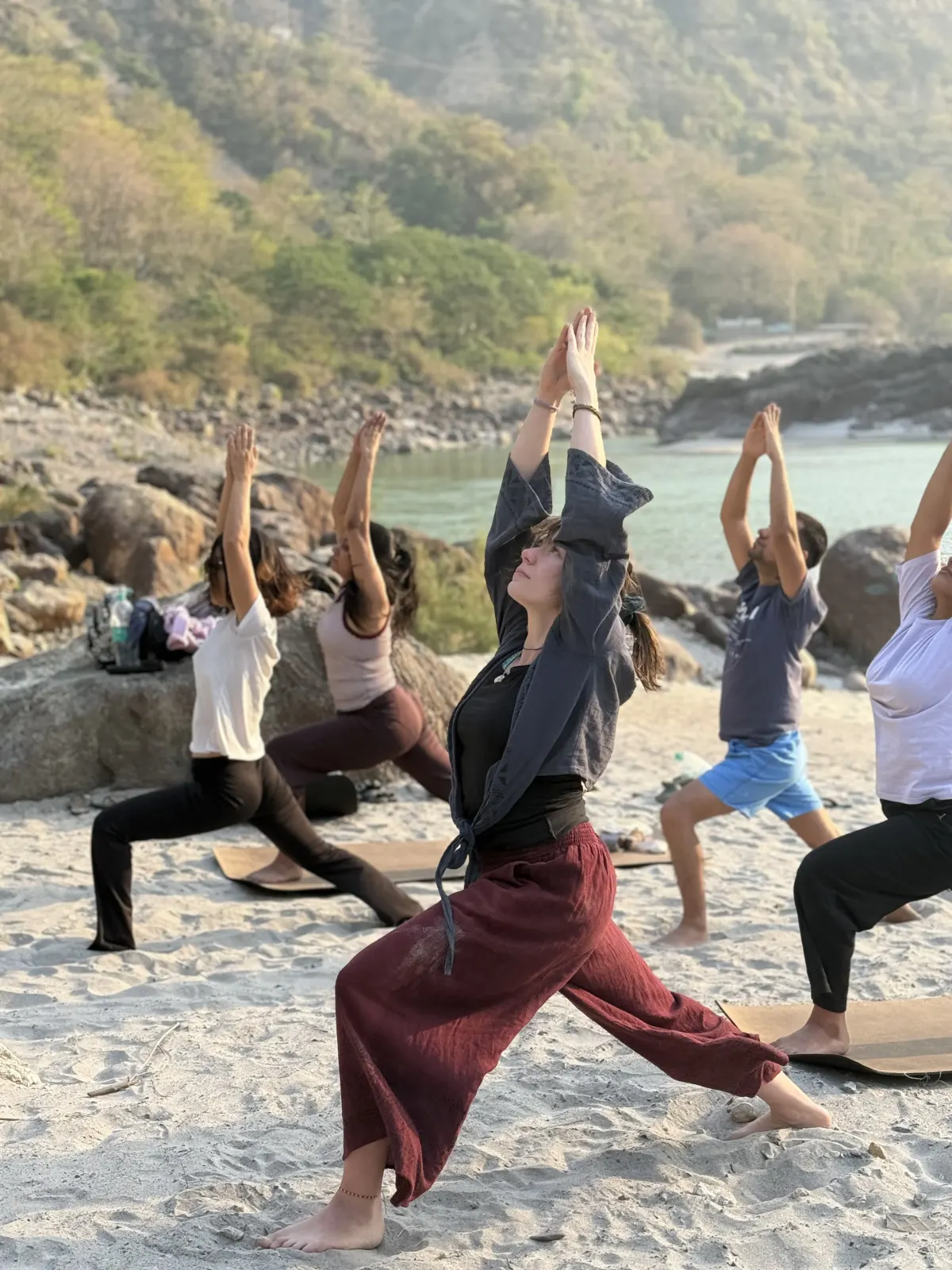
6:00 AM: Hatha yoga
Hatha comes first because it is slow. You hold each posture and learn where every part of your body should be. Over the course you learn the Hatha Sun Salutation with its breath and about 25 classical Hatha postures.
In winter, this class begins in the dark. In Rishikesh the sun rises a little after 7:00 AM in mid-December, and around 5:15 AM in mid-June. So in the cold months, you watch the sky turn light during class.
7:15 AM: Pranayama and shatkarma
This is the longest morning block. You learn to sit well, then to breathe with the belly, the chest and the full yogic breath. Later come techniques such as Nadi Shodhana, Ujjayi, Bhastrika and Bhramari.
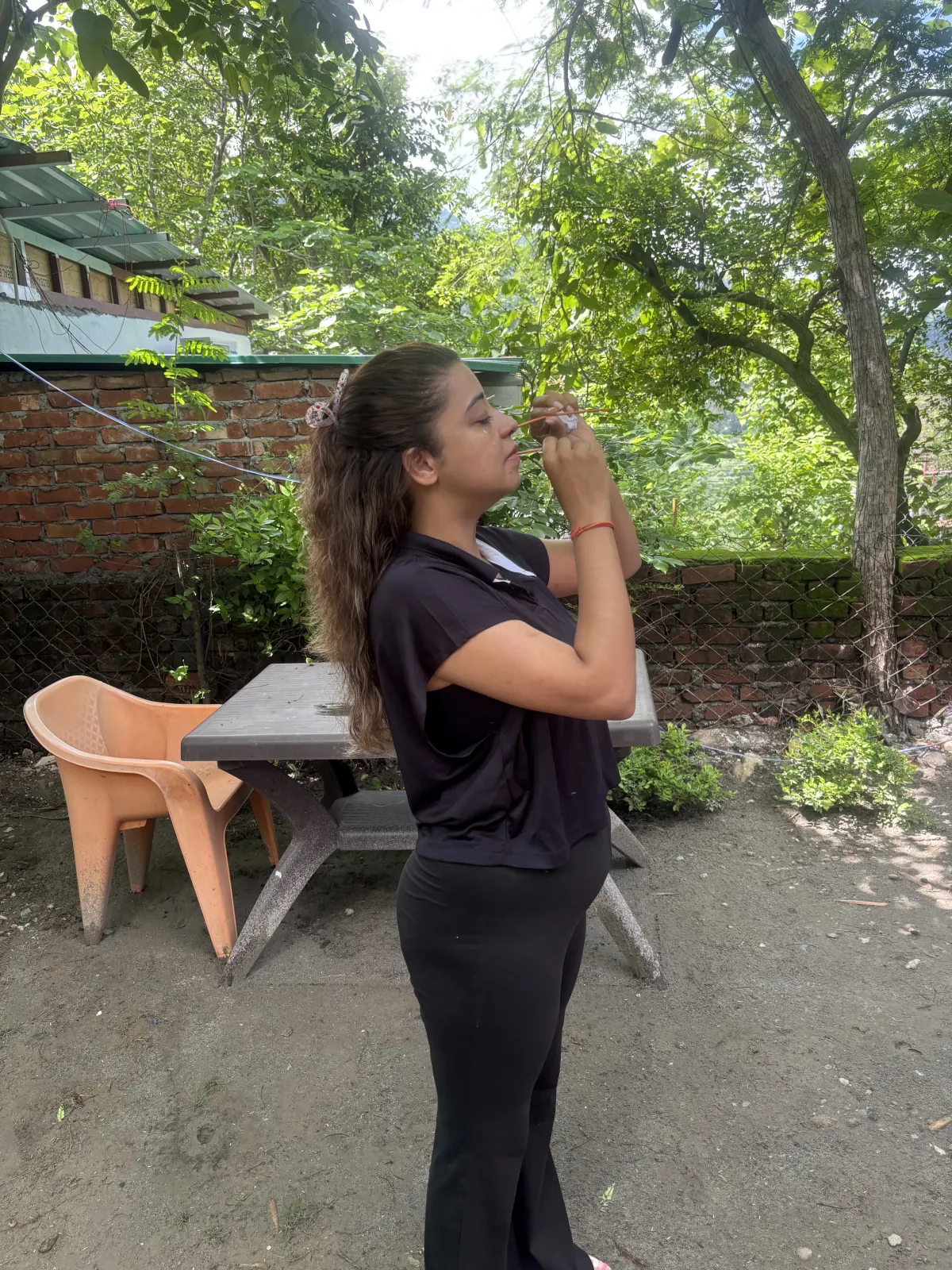
Shatkarma means yogic cleansing. You learn practices such as jala neti (rinsing the nose with salt water), kapalbhati and trataka. Many students are nervous about neti on day one. After a few tries, it usually feels normal.
9:00 AM: Brunch
We serve two meals a day: brunch and dinner. Both are sattvic vegetarian food. Herbal tea and RO-filtered water are there all day, and evening chai is included. We can make your meals dairy-free if you ask.
Two meals is a real change for many people. We will talk about how to handle it in the tips section below.
Late morning: theory, then Ashtanga
9:45 AM: Alignment and anatomy
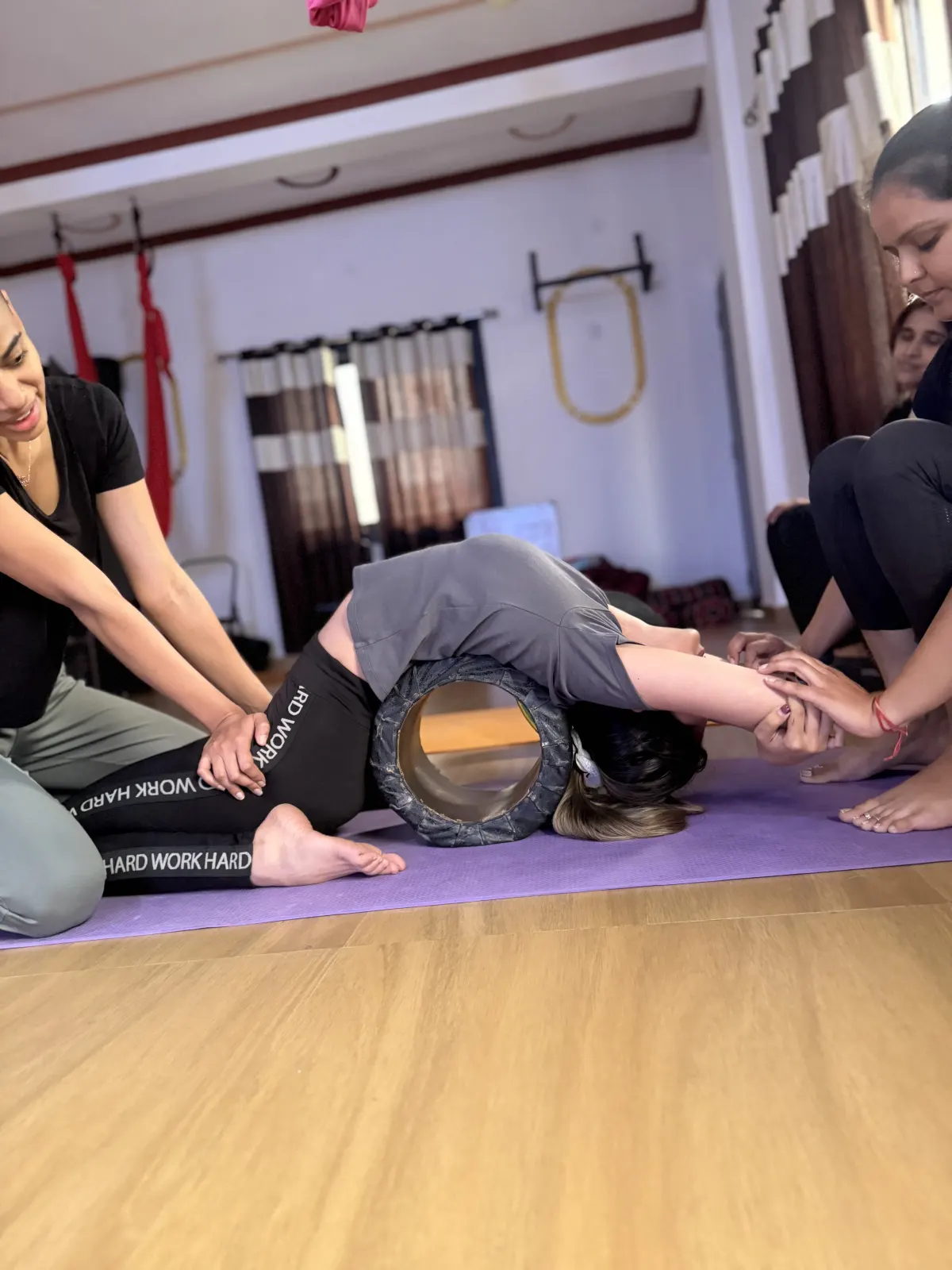
After brunch you sit down to learn. This is where you study how the body works: the main body systems, how yoga affects breathing and digestion, and how to align and adjust each posture safely.
This is also where you learn to teach. Sequencing, cueing, using props, and adapting poses for injuries all grow out of this session.
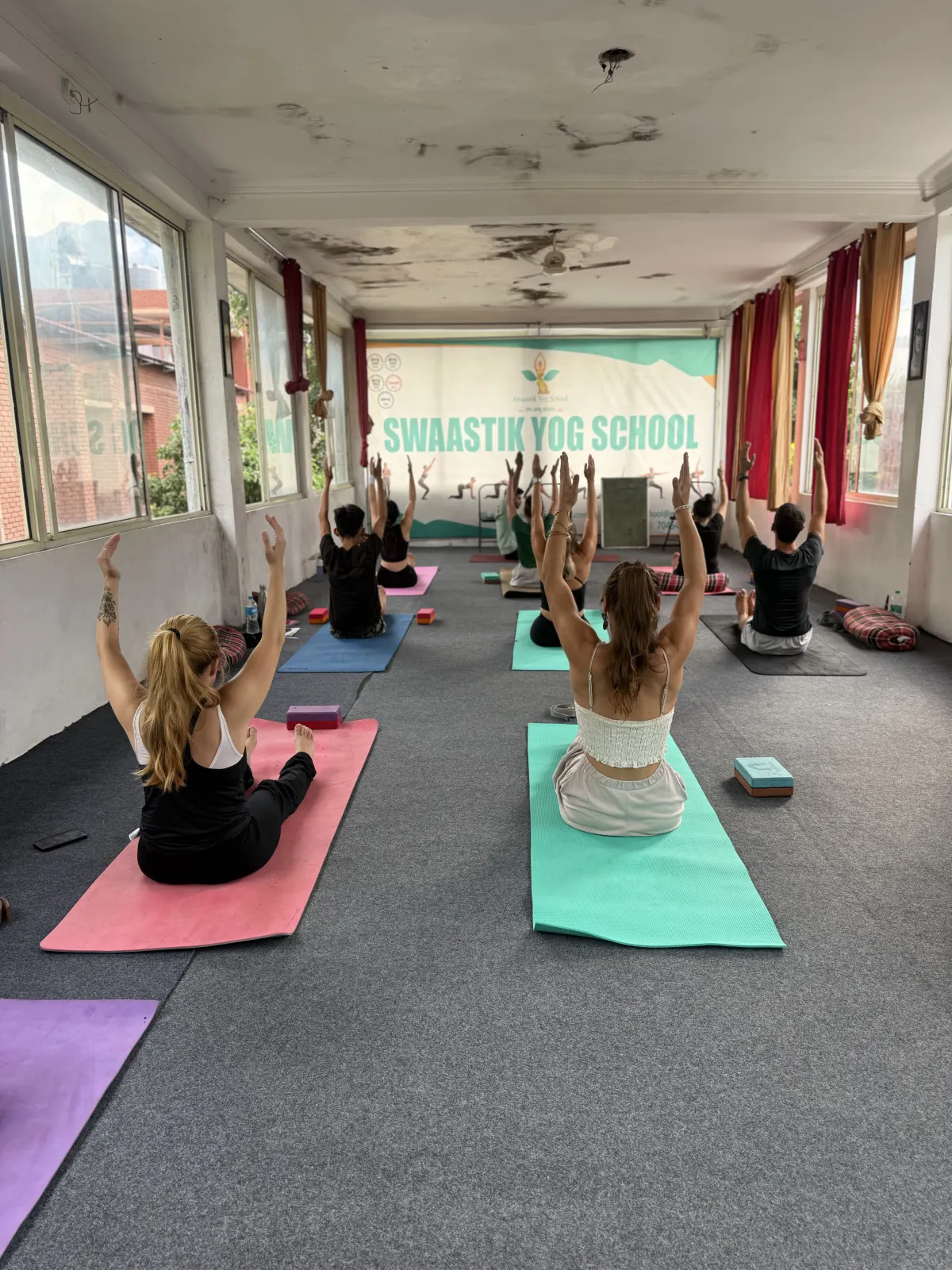
10:45 AM: Ashtanga yoga
Ashtanga is the most physical class of the day. You learn Sun Salutation A and B and the Ashtanga standing primary series, linked with the breath.
By now you have eaten and you are warm, so this is the right moment for the hardest physical work of the day.
Midday: the 3½-hour break
From 12:00 to 3:30 PM, nothing is scheduled. This surprises people. It is there for a reason.
Your body needs it. You are practising asana three times a day. The break is when you recover, digest, and let the morning's learning settle.
Here is how our students usually spend it:
- Sleep. A short nap is a popular choice, especially in week one.
- Study. Read the course manual, learn Sanskrit pose names, or plan a practice class.
- Practise teaching. Pair up with a classmate and teach each other a short sequence.
- Walk. Tapovan's cafés and the Ganga are a short walk from the school.
- Admin. Laundry, calls home, a trip to the market.