Back to Blog
Travel

Things to Do in Rishikesh: A Local Yoga School's Guide (2026)

· Updated
Share this post:
Things to Do in Rishikesh: A Local Yoga School's Guide (2026)

Ten things to do in Rishikesh, written from our yoga campus in Tapovan. Covers the Ganga aarti, the Beatles Ashram, waterfalls, rafting and a Kunjapuri sunrise, with distances, costs and the 2026 bridge closures.

Quick answer: what are the best things to do in Rishikesh?

Start with yoga by the Ganga. End at the evening Ganga aarti at Parmarth Niketan or Triveni Ghat (free, at sunset, roughly 5:30–7:30 PM by season). In between, see the Beatles Ashram (paid entry; foreigners pay more), walk to Neer Garh waterfall (about 5 km from Tapovan plus a short trail), go rafting (about ₹600–₹3,000, roughly late September to June) and catch a Kunjapuri sunrise (about 25 km, leave 1.5 hours before sunrise). Two or three days covers the highlights.

We run a yoga school on Badrinath Road in Tapovan. We take our students to the river, the ghats, the temples and the waterfalls. This guide shares what we know: what is worth the early alarm, which bridges are closed, and where people get into trouble.

Written by Mayuri Shewale, E-RYT 500 (Yoga Alliance) and founder of Swaastik Yog School in Rishikesh. Our team takes students on weekend outings to the ghats, waterfalls and temples, and the photos in this guide are our own. Entry fees and timings come from official sources where they exist; where they do not, I give a range and say so. Last checked: 14 October 2026.

Rishikesh at a glance: what to do, how far, how much

This table starts from Tapovan, where most yoga schools (including ours) are. Distances and times are approximate. Traffic, festivals and bridge closures change them.

Place or activityFrom TapovanTime neededCost (approx.)Best time of day
Laxman Jhula area (temples, cafes, river views)15–20 min walk1–2 hoursFreeMorning or late afternoon
Ganga aarti, Parmarth NiketanTaxi or e-rickshaw to Janki Setu, then walk across the river2–3 hours incl. travelFreeSunset
Ganga aarti, Triveni GhatIn the main town; 20–30 min by taxi2–3 hours incl. travelFreeSunset
Beatles Ashram (Chaurasi Kutia)Across the river; cross at Janki Setu1.5–2 hoursPaid entry; foreigners pay more (see below)Morning
Neer Garh waterfallAbout 5 km up Badrinath Road, then a 1–1.5 km trailHalf a daySmall forest fee (reported ₹30–₹50)Morning
White-water raftingOperators usually pick up in Tapovan2 hours to a full day, by stretch₹600–₹3,000 per personMorning
Kunjapuri Devi temple sunriseAbout 25 km; around 1 hour by taxiHalf a dayFree entry; you pay the taxiSunrise
Vashishta Gufa (meditation cave)About 20–25 km up Badrinath RoadHalf a dayFree entry; you pay the taxiMorning (some guides list a midday break)
A yoga classOn your doorstep60–90 min₹500 at our school (first class ₹250)Early morning

1. Practise yoga where it is actually lived

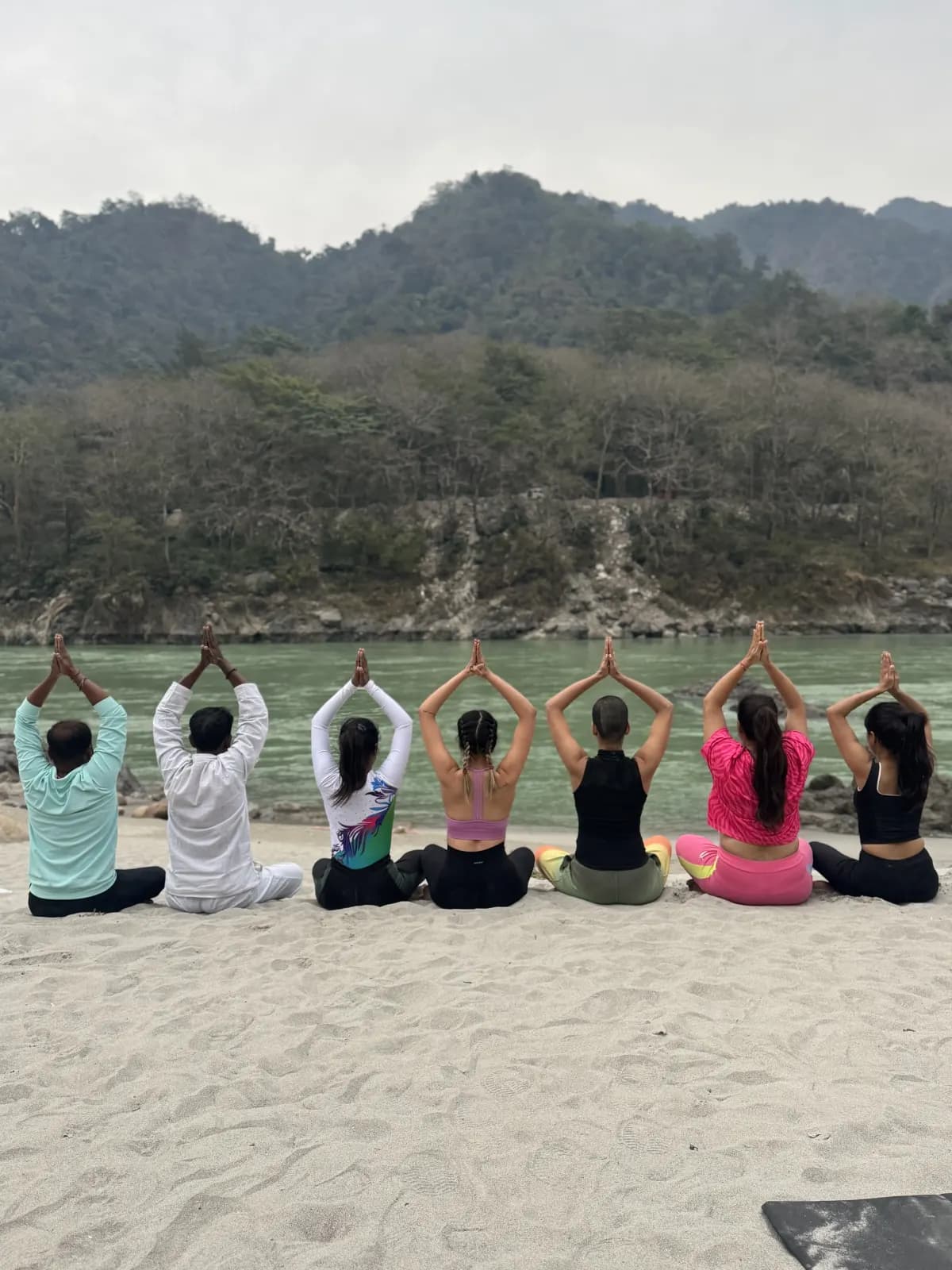
Rishikesh is known as the yoga capital of the world. So do not just watch yoga here. Join a class.

At our school you can simply walk in, Monday to Saturday. A drop-in class is ₹500, and your first class is half price at ₹250. If you are staying a while, a weekly pass is ₹2,500 and a monthly pass is ₹7,000. Mats are provided. See the current timetable on our drop-in yoga classes page, and arrive 10–15 minutes early.

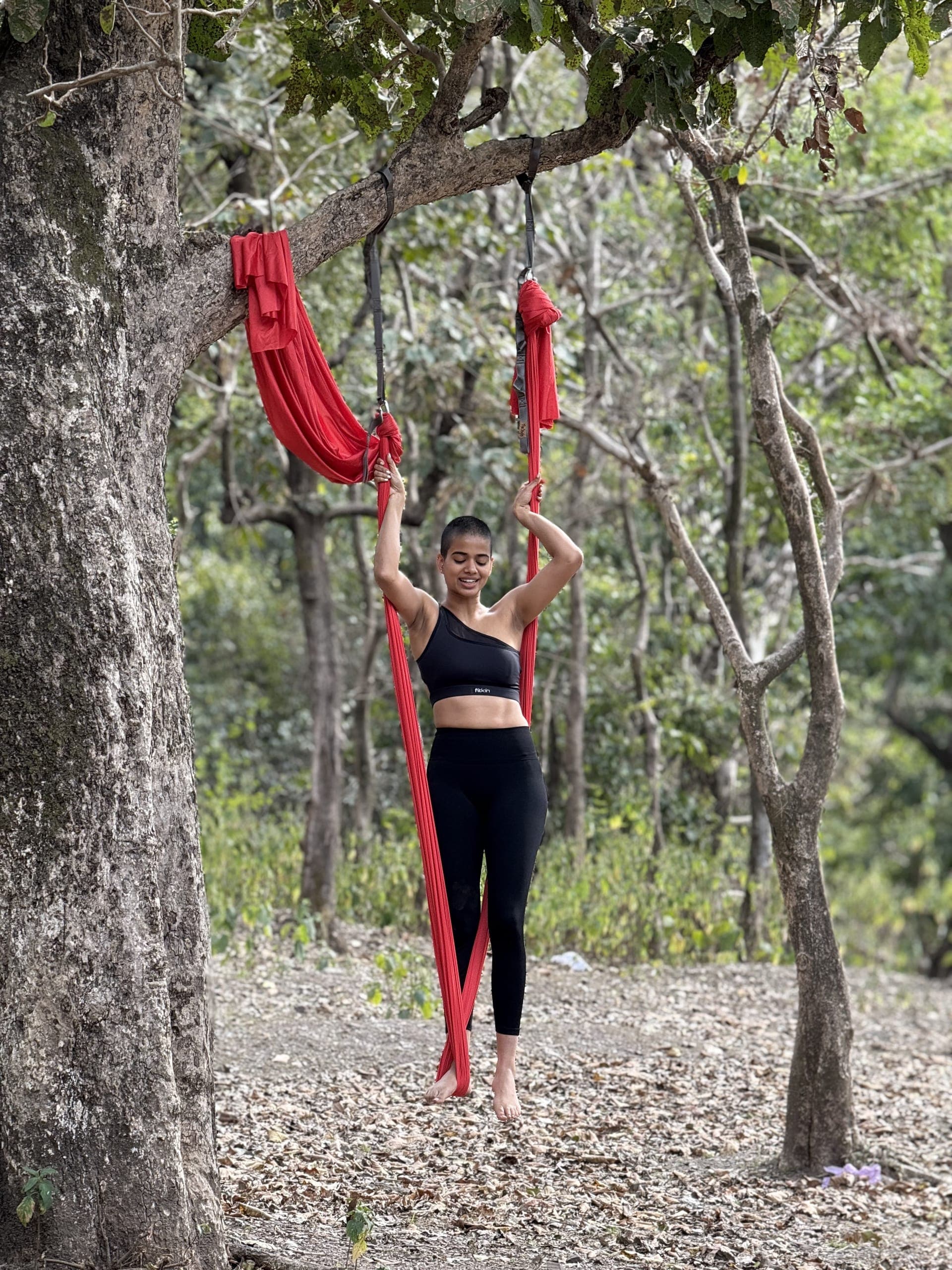
We also run aerial yoga classes in silk hammocks. Some students who try it go on to our aerial yoga teacher training.
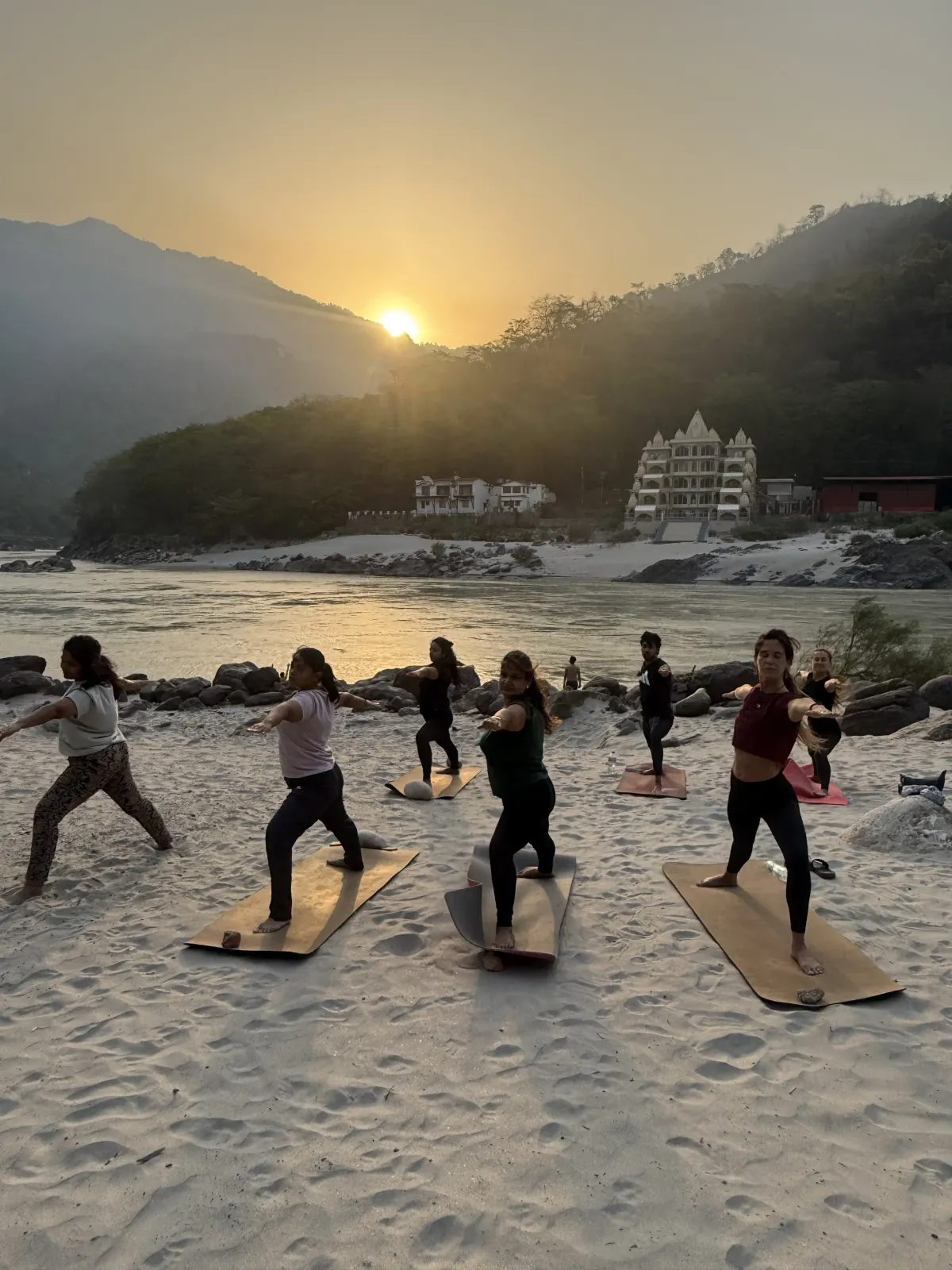
Students in warrior pose on a white-sand Ganga beach near Tapovan at sunset, with a temple and forested hills across the river
A sunset class on a sandy Ganga beach near our Tapovan campus.

2. Watch the evening Ganga aarti

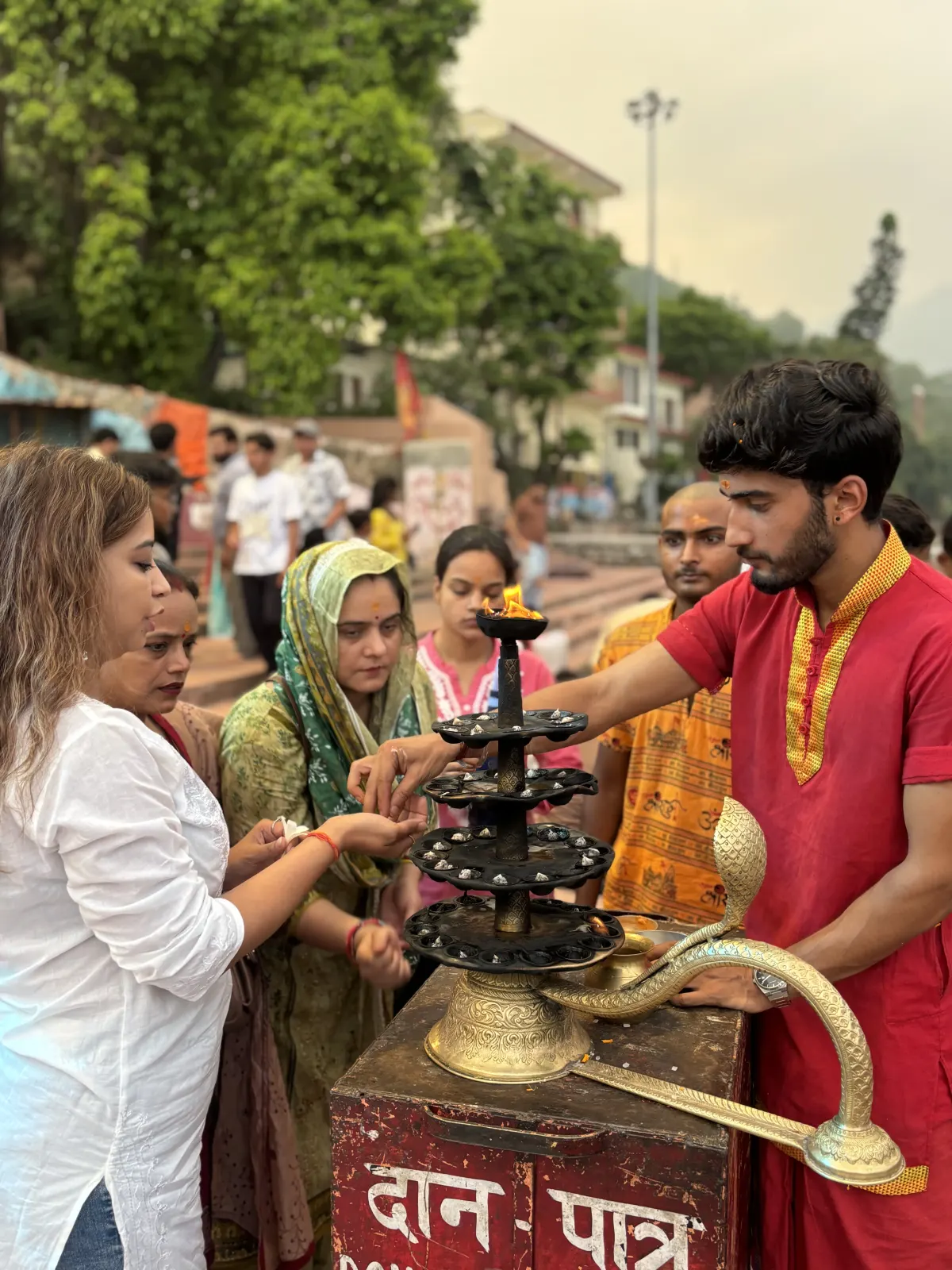
The Ganga aarti is a prayer to the river. Priests wave large brass lamps with fire, people sing, and small leaf boats with flowers and a candle float away on the water. It happens every evening at sunset. It is free.

There are two main aartis in Rishikesh. They feel quite different.

Parmarth NiketanTriveni Ghat
WhereSwarg Ashram side of the river, at the Parmarth Niketan ashram's ghatMain Rishikesh town, at the best-known bathing ghat
FeelOrganised, with group singing (bhajans) led by the ashramMore local and traditional, with lots of Indian pilgrims
Rough start timeAt sunset: around 5:30–6:00 PM in winter, 7:00–7:30 PM in summerAt sunset, so a similar seasonal range
CrowdsBusy; seats fill earlyBusy, especially on weekends and festivals
CostFree (donations optional)Free (donations optional)

The aarti follows sunset, so the clock time moves through the year. Arrive 30–45 minutes early to get a good spot, and check the time locally that day.
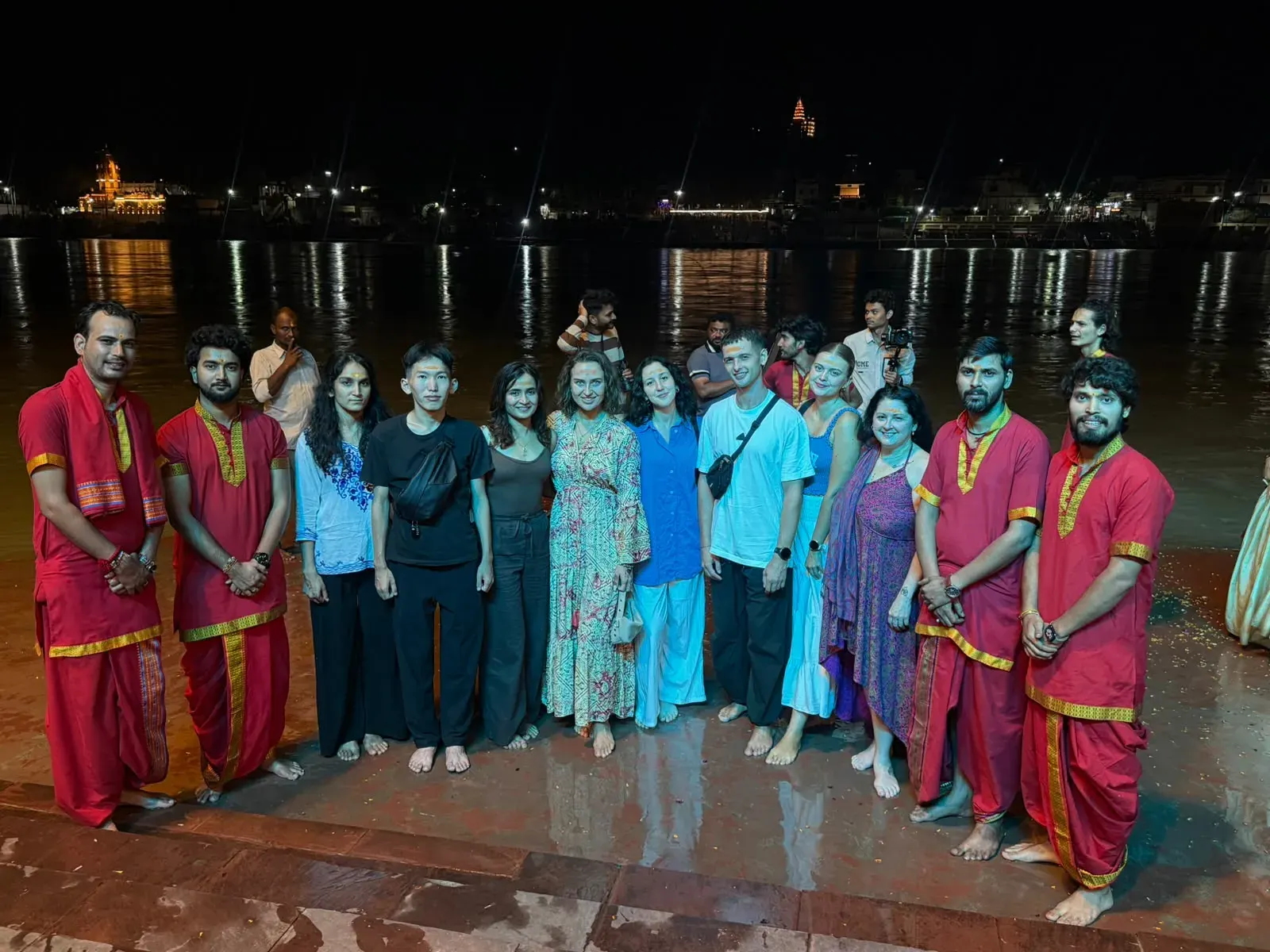
Swaastik Yog School students standing barefoot on a Ganga ghat at night with the priests in red who led the evening aarti, lights reflecting on the river
Our students on the ghat after an evening aarti, with the priests who led it. Shoes come off before you step onto the ghat.

A tip from us: sit, put the phone away for the main prayer, and just listen.

3. Visit the Beatles Ashram

In 1968 the Beatles came to Rishikesh to study meditation at the ashram of Maharishi Mahesh Yogi. Today the ashram is a quiet ruin in the forest, also called Chaurasi Kutia. It sits inside the Rajaji Tiger Reserve and is run by the forest department.

You will see old dome-shaped meditation huts, a big hall covered in murals and graffiti, and a lot of trees and silence.

  • Entry: there is a ticket, and foreigners pay more than Indians. The reserve's website lists a general entry fee of ₹150 for Indians and ₹600 for foreigners. Recent visitors report paying more at this gate, up to about ₹1,200 for foreigners. Carry cash and ID, and check the price at the gate.
  • Opening: it is open year-round, during daytime hours.
  • How long: plan 1.5–2 hours. Go in the morning when it is cooler and quieter.

4. Walk around Laxman Jhula and cross the river

The Laxman Jhula area is a 15–20 minute walk from Tapovan. It has old temples, shops selling malas and yoga clothes, cafes with river views, and plenty of people-watching.

Important update for 2026: the river crossings have changed, and many older guides are out of date.

  • Laxman Jhula, the old iron suspension bridge, has been closed since 2019 for safety. A new glass-floored bridge, Bajrang Setu, has been built beside it. Ask locally whether it is open on the day you visit.
  • Ram Jhula, the other famous suspension bridge, was fully closed for major repairs in late July 2026. News reports said it would stay shut until about December 2026.
  • Janki Setu, a newer bridge opened in late 2020, connects the Muni ki Reti side to the Parmarth Niketan area. It has a lane for people walking and a lane for two-wheelers.

So if you want to reach Parmarth Niketan or the Beatles Ashram from Tapovan, a taxi or e-rickshaw to Janki Setu is the simplest way right now. Our office team can tell you what is open that week.

For a full picture of our own neighbourhood, read our Tapovan neighbourhood guide.
Course Finder

Not sure which course is right for you?

We’ve made comparing easy. See every teacher training, retreat and class side by side — with live start dates, prices and room options — all on one page.

  • Filter by month
  • Filter by budget
  • Filter by room type
Compare All CoursesTakes 30 seconds · No sign-up needed

5. Spend time by the Ganga itself

You do not need a plan to enjoy the river. Sit on a warm rock and watch the water. The Ganga here is clear and green for much of the year, and cold all year.

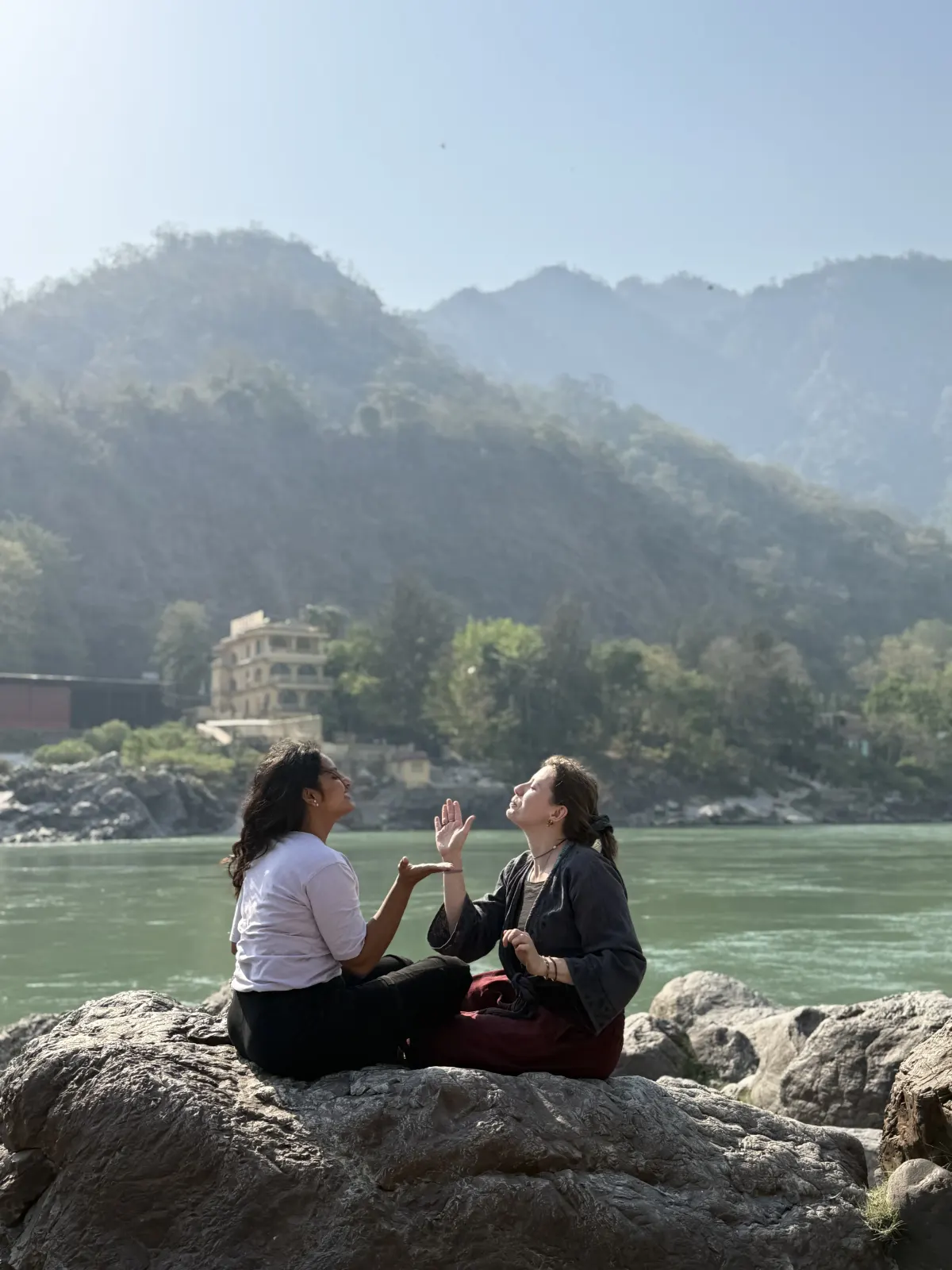
Two yoga students sitting on a large rock beside the green Ganga in Rishikesh, practising a breathing exercise with hills behind
Two of our students practising breathwork on the riverside rocks.

Please be careful in the water. The Ganga looks calm but the current is strong and the water is very cold. People drown here every year. Only paddle at the edge in shallow, slow water. Never swim alone, after dark, or after rain when the river rises.

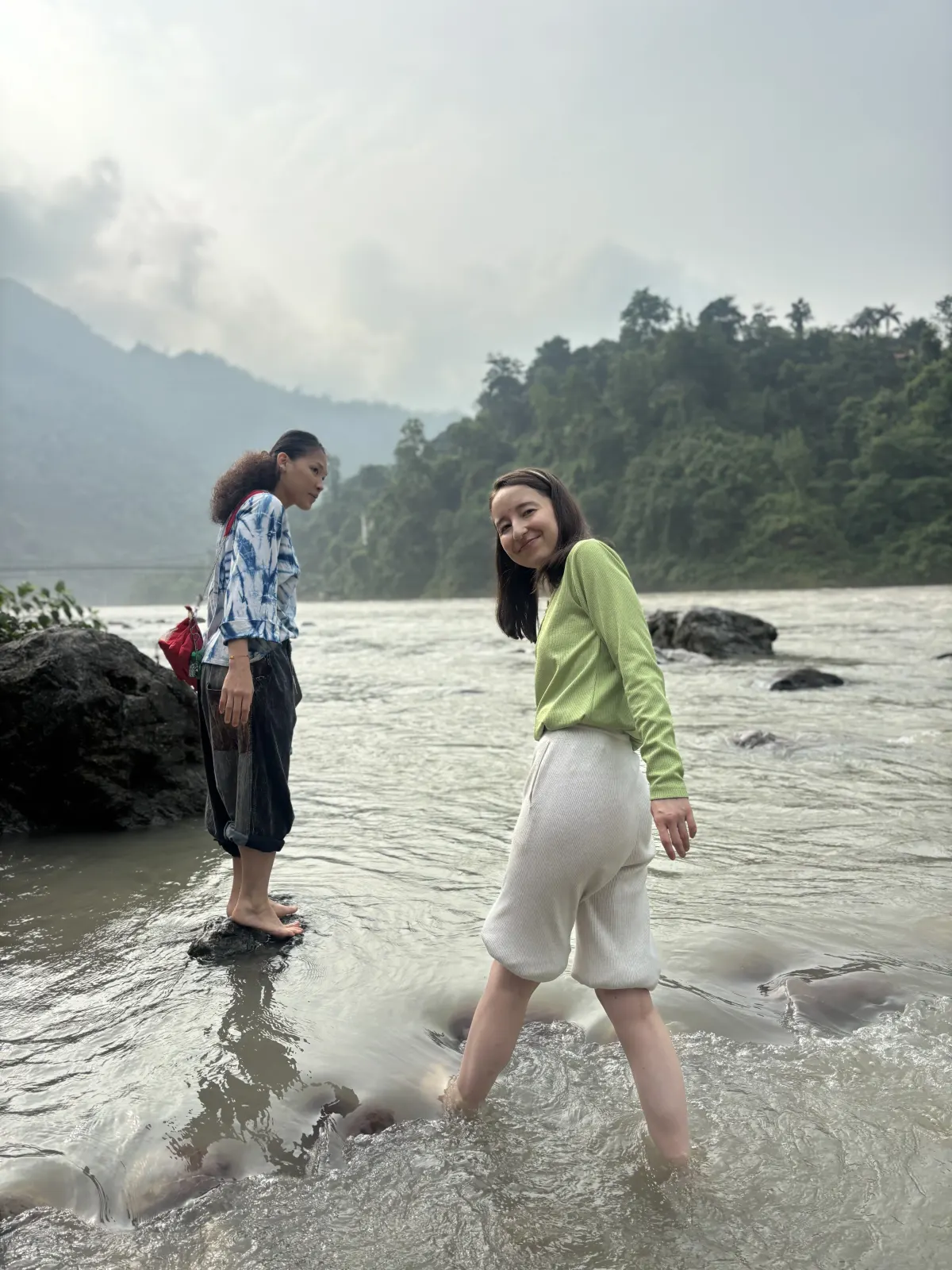
Two women wading at the edge of the Ganga on a cloudy day, with forested Himalayan foothills behind
Paddling at the edge on a weekend outing. This is as deep as we let students go.

6. Go white-water rafting (in season)

Rafting is the most popular adventure in Rishikesh. Rafts start upstream and float back down towards town through a series of rapids. The longer the stretch, the bigger the rapids.

StretchLengthGood forPrice per person (approx.)
BrahmpuriAbout 9 kmFirst-timers, families₹600–₹800
ShivpuriAbout 16 kmMost visitors; a good mix₹1,000–₹1,500
Marine DriveAbout 24–26 kmPeople who want more rapids₹1,500–₹2,000
KaudiyalaAbout 34–36 kmConfident, fit rafters₹2,500–₹3,000
  • Season: rafting stops for the monsoon at the end of June. It restarts in the second half of September, once officials say the river is safe. They can also stop it any time the water rises too high. Check before you book.
  • Age: operators set a minimum age, and the longer stretches need fitter, more confident rafters. Ask before you book.
  • Safety: wear the life jacket and helmet the whole time, and choose an operator who gives a proper safety briefing.

Tapovan is on Badrinath Road, the same road the rafts start from, so pick-up from our area is easy.

7. See the Himalayan sunrise at Kunjapuri

Kunjapuri Devi is a hilltop temple about 25 km from Tapovan, at about 1,676 metres (5,500 ft). On a clear morning you see the sun come up over layers of hills, and sometimes snow peaks to the north.

  • When to leave: about 1.5 hours before sunrise. Sunrise is around 5:15 AM in June and a little after 7:00 AM in December and January. So that means about 4:00 AM in summer and 5:30 AM in winter.
  • Getting there: about an hour by taxi. Share one with friends. Agree the fare before you get in.
  • At the top: a short climb of steps from the parking area to the temple.
  • Bring: a warm jacket. It is much colder up there than in town, even in spring.
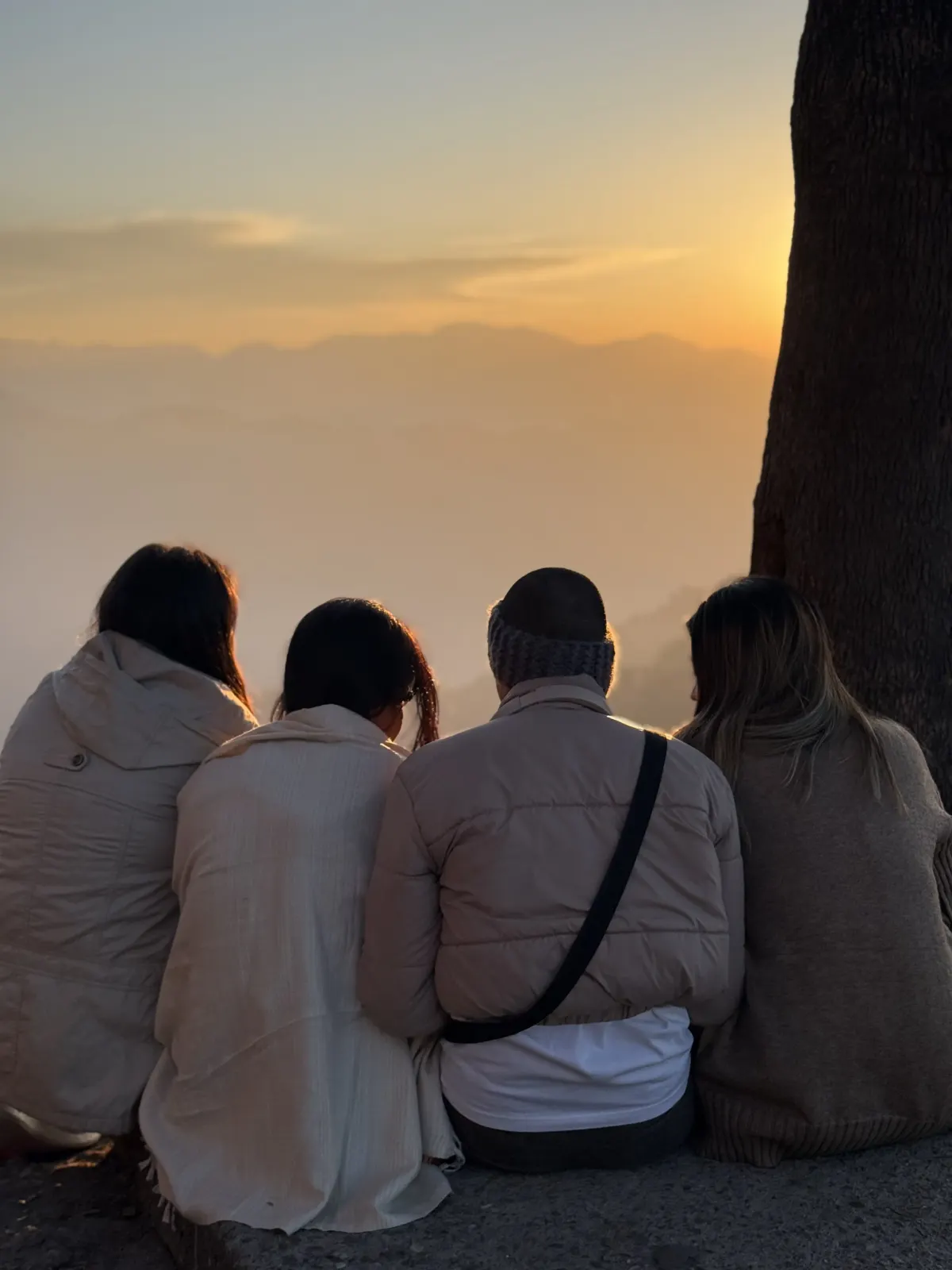
Four students in warm jackets sitting together on a hilltop wall above Rishikesh, watching an orange sunrise over misty hills
An early start pays off. Our students wrapped up for a hilltop sunrise above Rishikesh.

8. Walk to Neer Garh waterfall

Neer Garh is the easiest waterfall trip from Tapovan. You drive about 5 km up Badrinath Road to the Neer village turn-off. Then a marked trail climbs through the forest past several pools and falls. The first falls are close to the road. The upper ones take a 1–1.5 km walk.

  • Entry: a small forest-department fee, reported at ₹30–₹50.
  • Wear: shoes with good grip. The rocks are slippery, especially after rain.
  • Best season: just after the monsoon (September–October) when the water is strong, but take extra care on wet paths.

9. Sit in a meditation cave

Vashishta Gufa is a small cave by the Ganga, about 20–25 km up Badrinath Road from Tapovan. It is linked to the sage Vashishta and is still used for silent meditation. You sit in the dark, cool cave for a few minutes, then walk down to the river beach below.

Keep your voice low inside. Some guides say the cave closes for a few hours around midday, so a morning visit is the safest plan.

10. Eat well in Tapovan's cafe streets

Tapovan's main road and the lanes down to the river are full of small cafes. Expect thalis, South Indian breakfasts, fresh juice and chai.

Two things to know. First, the pilgrim areas of Rishikesh are vegetarian, and you will not find meat or alcohol on sale there. Second, drink only filtered or bottled water. (Our campus has RO-filtered drinking water for students.)

How should I behave at temples, ghats and ashrams?

Rishikesh is a holy town first and a tourist town second. A little respect goes a long way.

DoAvoid
Cover shoulders and knees at temples, ghats and ashramsShort shorts, crop tops or swimwear away from the river edge
Take your shoes off where others doWalking onto the ghat steps or into temples in shoes
Ask before photographing people, especially sadhusFlash photos or selfies during the aarti prayer
Use the dustbins and carry a reusable bottleSoap, shampoo or rubbish in the Ganga
Keep food in a closed bag near the bridgesFeeding or teasing the monkeys
Keep public affection low-keyLoud music on the ghats

Travelling on your own? Our guide to whether Rishikesh is safe for solo female travellers covers night-time, transport and where to stay.

When is the best time to visit Rishikesh?

October to March is the most comfortable time for sightseeing. Days are pleasant and skies are often clear. Mornings and nights in December and January are cold, so pack layers.

MonthsWhat it is likeGood for
October–NovemberFresh, green, clear after the rainsEverything: rafting, waterfalls, sunrise trips
December–FebruaryCold mornings and nights, sunny daysAarti, temples, yoga, quieter streets
March–AprilWarm and bright; busy around festivalsRafting, river beaches, day trips
May–JuneHot in the middle of the dayEarly-morning plans and the river
July–SeptemberMonsoon rain, landslide risk on hill roadsLush views; rafting paused until the second half of September

For a month-by-month breakdown, see our best time to visit Rishikesh guide. Coming from Delhi? Here is how to get to Rishikesh from Delhi.

How many days do I need in Rishikesh?

Two to three days covers the main sights at a calm pace. A week adds daily yoga and a couple of day trips without rushing.

If you have 1 day

Morning yoga in Tapovan, breakfast near Laxman Jhula, the Beatles Ashram after lunch, then the Parmarth aarti.

If you have 3 days

  • Day 1: yoga, Laxman Jhula area, Parmarth aarti
  • Day 2: Kunjapuri sunrise, nap, afternoon by the river
  • Day 3: rafting or Neer Garh in the morning, Beatles Ashram, Triveni Ghat aarti

If you want someone else to plan it

Our yoga retreats start every Monday and include your room, three sattvic meals a day, daily yoga and meditation, and guided outings. The 3-day retreat ($100) includes one half-day excursion. The 5-day retreat ($200) includes two. The 7-day retreat ($250) includes three, one of them the evening Ganga aarti. Prices are for a shared room.

Can I see Rishikesh while doing a yoga teacher training?

Yes. Weekend excursions are included in our residential teacher trainings in Rishikesh. We take students to waterfalls, caves, temples and the Ganga aarti, and students also explore on their own in free time.

A teacher training day is full, though. Classes start early and the evenings are for rest and study. If sightseeing is a big part of your trip, add a few days before or after the course. Our day in the life of a 200-hour training shows exactly how the hours are spent.

If you are thinking about training here, the 200-hour yoga teacher training in Rishikesh is where most people begin. It runs from Tapovan, a short walk from the river, and includes your stay, meals and those weekend outings. You can compare every course on our courses page, and international students should read our India visa guide for yoga students before booking flights.

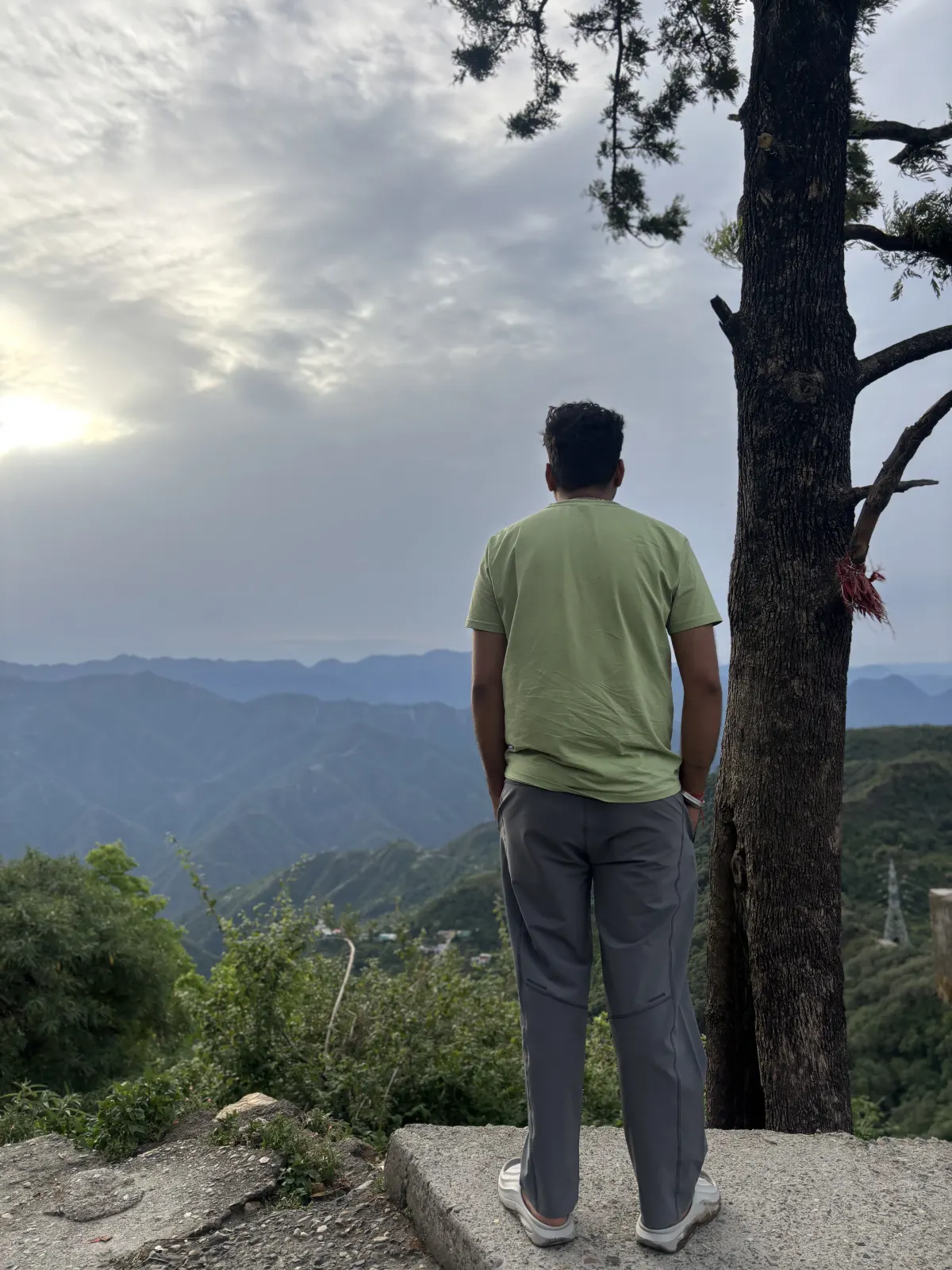
A yoga student standing at a hill viewpoint near Rishikesh, looking out over layers of green Himalayan foothills under a cloudy sky
A quiet moment at a hill viewpoint on one of our weekend outings.

Frequently asked questions

What is Rishikesh most famous for?

Rishikesh is famous for yoga, the holy Ganga river and its ashrams. It is also known for the evening Ganga aarti, the Beatles Ashram, its suspension bridges and white-water rafting. Thousands of people come each year to study yoga and meditation here.

Is the Ganga aarti in Rishikesh free?

Yes. Both the Parmarth Niketan and Triveni Ghat aartis are free to watch. You may be offered a small leaf boat with flowers and a candle to float on the river, which you pay for, and donations are optional.

What time is the Ganga aarti in Rishikesh?

It starts around sunset, so the time changes through the year. As a rough guide, expect about 5:30–6:00 PM in winter and 7:00–7:30 PM in summer. Arrive 30–45 minutes early for a good place to sit, and confirm the time locally on the day.

Is Laxman Jhula open in 2026?

No. The old Laxman Jhula suspension bridge has been closed since 2019 for safety reasons. A new glass-floored bridge, Bajrang Setu, has been built next to it; ask locally whether it is open yet. Ram Jhula was also closed for repairs in July 2026, with reports saying until about December 2026. Janki Setu is the main open crossing to the Parmarth Niketan side.

Can I do yoga in Rishikesh without signing up for a course?

Yes. Many schools in Tapovan offer drop-in classes. At Swaastik Yog School you can walk in Monday to Saturday for ₹500 a class, and your first class is ₹250. No booking is needed; just arrive 10–15 minutes early.

Is rafting open in Rishikesh right now?

Rafting runs for most of the year. It stops for the monsoon at the end of June and restarts in the second half of September, once officials say the river is safe. It can also be stopped any time the river is too high. Ask your operator or our office team the day before you plan to go.

Staying in Tapovan? Come and practise with us. Drop-in classes run Monday to Saturday, and our yoga retreats start every Monday with outings included. Ask our office team what is open on the river this week.

Ready to Start Your Yoga Journey?

Join our Yoga Alliance certified teacher training in Rishikesh — or just ask us a question. We reply to every message personally.

About the Author

Mayuri Shewale

Mayuri Shewale

Founder & Lead Yoga Teacher

E-RYT 500 · 15+ years teaching

Mayuri Shewale teaches Hatha Yoga, Aerial Yoga, Vinyasa Yoga at Swaastik Yog School in Rishikesh, sharing 15+ years of hands-on experience with students from around the world.

Related Articles

Ashram Stay in Rishikesh: Rules, Costs, Booking and Ashram vs Yoga School

Ashram Stay in Rishikesh: Rules, Costs, Booking and Ashram vs Yoga School

How an ashram stay in Rishikesh really works: the usual rules, how to book, what it costs, and when a residential yoga school in Tapovan is the better fit.

Read More
Best Yoga Retreat in Rishikesh (2026): 3, 5 or 7 Days Compared

Best Yoga Retreat in Rishikesh (2026): 3, 5 or 7 Days Compared

Our 3-, 5- and 7-day yoga retreats in Tapovan, Rishikesh, side by side: real prices ($100/$200/$250), the hour-by-hour day, what's included, and whether a retreat or a teacher training suits you better.

Read More
Affordable Yoga Retreat in India: Budget Guide 2026

Affordable Yoga Retreat in India: Budget Guide 2026

How to find an affordable yoga retreat in India. Budget breakdown, cheapest options in Rishikesh, Goa, and Kerala, plus money-saving tips.

Read More

Have Questions? Get in Touch!

Whether you're interested in our teacher training courses, retreats, or drop-in classes, we're here to help guide your yoga journey. Fill out the form or chat with us directly on WhatsApp.

We reply within 24 hours · 4.9★ from 127 students