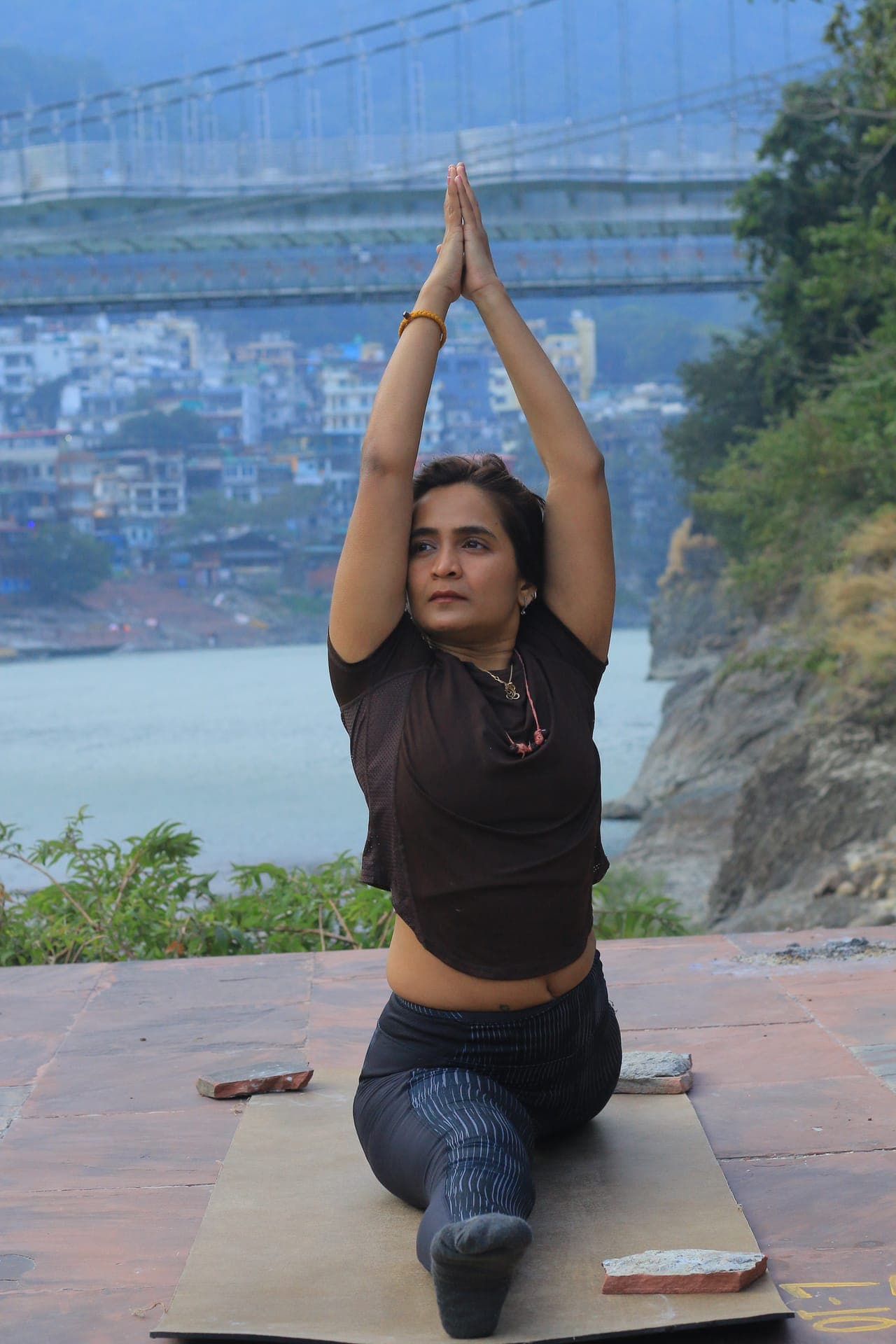
There is no better way to start your day than with a morning yoga routine. In just 30 minutes, you can wake up your body, clear your mind, calm your nervous system, and set a positive tone for everything that follows. Whether you are a beginner or an experienced practitioner, this complete 30-minute morning yoga sequence will guide you through a balanced practice that includes warm-up, sun salutations, standing poses, balance work, cool-down, and final relaxation.
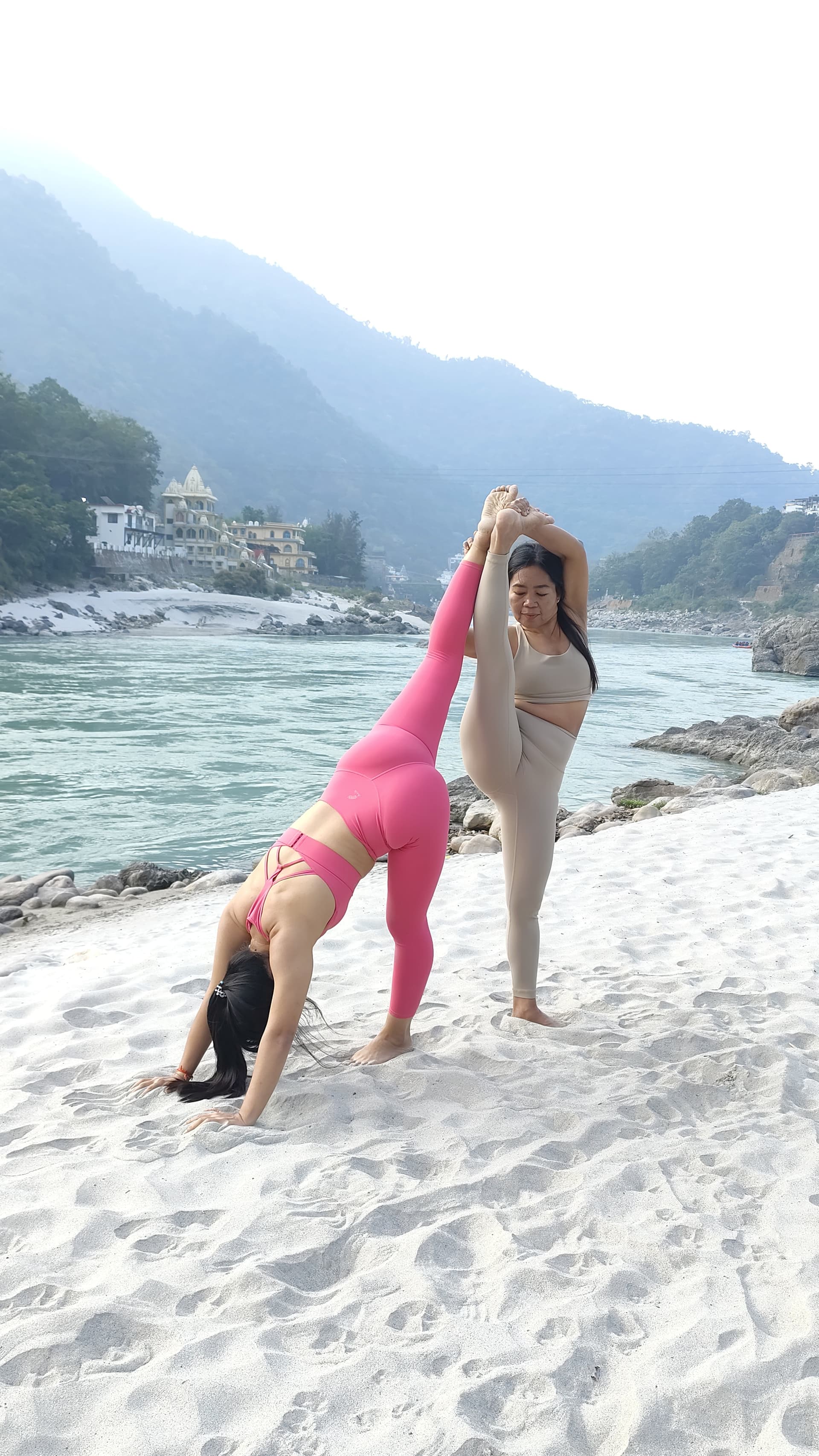
At Swaastik Yog School in Rishikesh, morning practice along the banks of the Ganges is the heart of our daily routine. Our teachers have refined this sequence over years of teaching students from all over the world. We include both the Sanskrit and English names for each pose so you can deepen your connection to the tradition.
Before You Begin Your Morning Yoga Routine
Setting Up
- Space: You need enough room to extend your arms and legs in all directions. A quiet corner of your bedroom, living room, or balcony works perfectly.
- Equipment: A yoga mat is all you need. Optional: a block and a blanket for modifications.
- Clothing: Wear comfortable, stretchy clothing that does not restrict your movement.
- Timing: Practice on an empty stomach or at least 30 minutes after a light snack. Ideally, practice right after waking.
- Hydration: Drink a small glass of warm water before you begin.
Intention
Before you move, take a moment to set an intention. This can be as simple as "I choose to be present" or "I am grateful for this new day." In the yogic tradition, this practice of Sankalpa (intention) anchors your mind and gives purpose to your physical practice.
Phase 1: Warm-Up (5 Minutes)
Your morning yoga routine should always start gently. Your body has been still for hours, and your muscles and joints need time to awaken.
Sukhasana (Easy Seated Pose) with Breath Awareness - 1 Minute
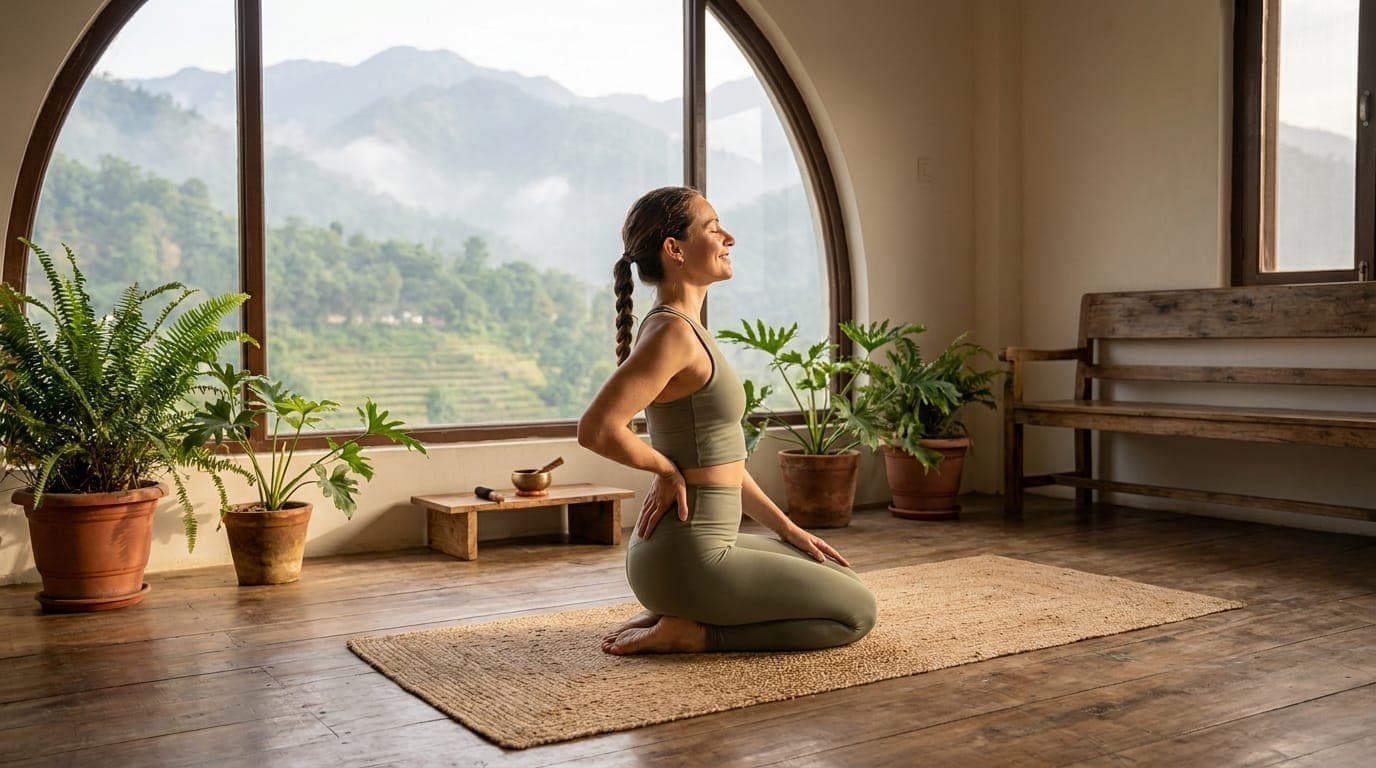
Sit cross-legged on your mat with your spine tall and your hands resting on your knees. Close your eyes. Begin to deepen your breath, inhaling slowly through the nose for a count of 4, exhaling for a count of 4. Feel your body settle. Notice any areas of stiffness or tension without trying to change them. This is your starting point.
Neck and Shoulder Rolls - 1 Minute
Staying seated, gently drop your right ear toward your right shoulder. Hold for 3 breaths, then switch to the left side. Next, make slow circles with your head, 3 times clockwise and 3 times counterclockwise. Follow with shoulder rolls: lift both shoulders to your ears on the inhale, roll them back and down on the exhale. Repeat 5 times.
Marjaryasana-Bitilasana (Cat-Cow Pose) - 1.5 Minutes
Come to all fours with your wrists under your shoulders and knees under your hips. On the inhale, drop your belly toward the floor, lift your chest and tailbone, and gaze slightly upward (Cow Pose / Bitilasana). On the exhale, round your spine toward the ceiling, tuck your chin to your chest, and draw your navel in (Cat Pose / Marjaryasana). Flow between these two positions for 8 to 10 rounds, moving with your breath. This warms up the entire spine and gently activates your core.
Balasana (Child's Pose) - 1.5 Minutes
From all fours, bring your big toes together and widen your knees to the edges of your mat. Sit your hips back toward your heels and extend your arms forward, lowering your forehead to the floor. Breathe deeply into your lower back. Hold for 6 to 8 breaths. This pose gently stretches the hips, thighs, and spine while calming the mind.
Phase 2: Sun Salutations / Surya Namaskar (8 Minutes)
Sun salutations are the engine of any morning yoga routine. They warm every major muscle group, synchronize breath with movement, and build cardiovascular energy. We will practice Surya Namaskar A, the classical version, for 4 to 5 rounds.
The Sequence (One Round)
- Tadasana (Mountain Pose): Stand at the front of your mat, feet together, arms by your sides. Ground through all four corners of your feet. Stand tall.
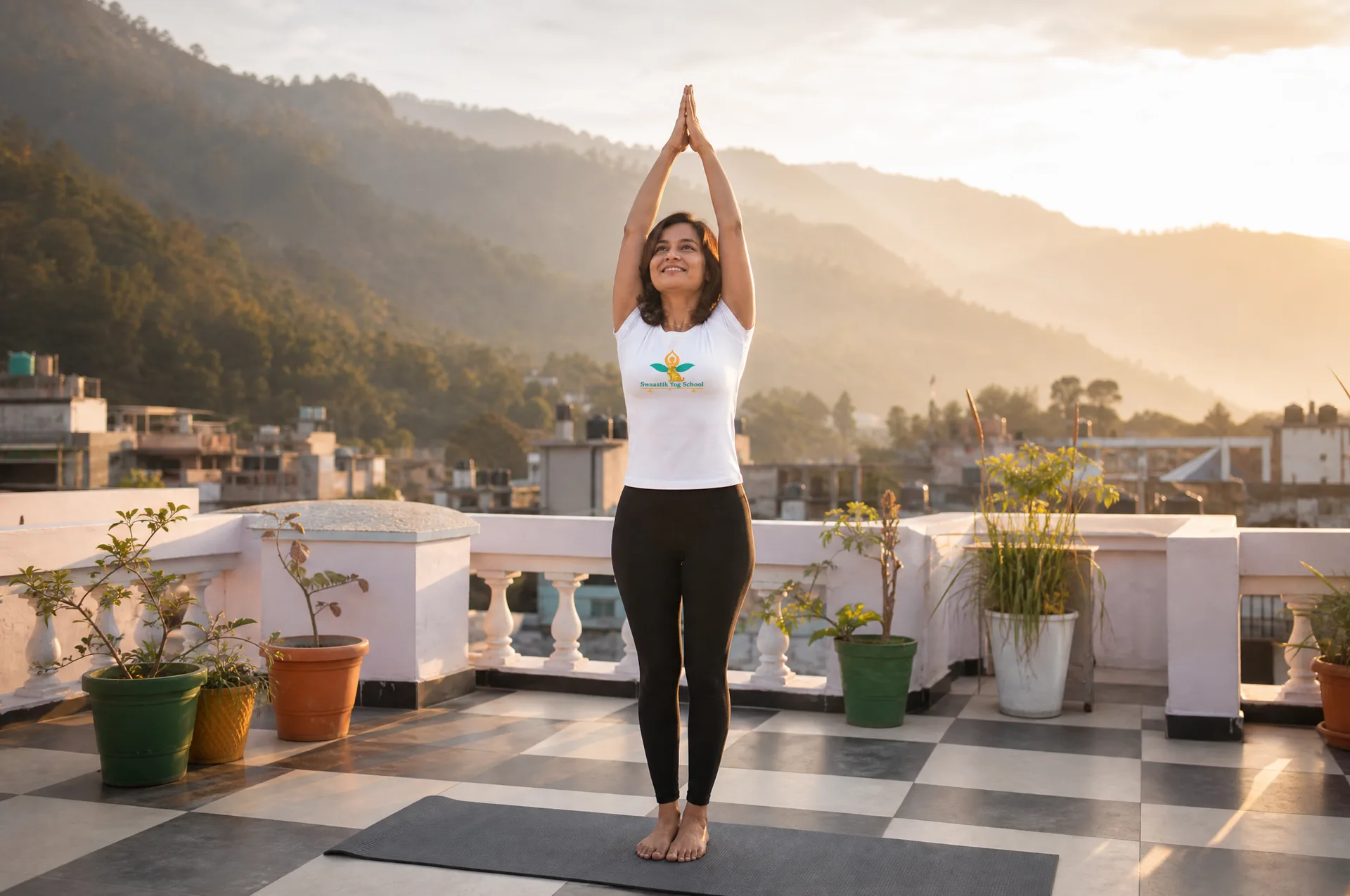
- Urdhva Hastasana (Upward Salute): Inhale, sweep your arms overhead, gaze up, and gently arch back.
- Uttanasana (Standing Forward Fold): Exhale, hinge at the hips, fold forward, bring your hands toward the floor. Bend your knees if needed.
- Ardha Uttanasana (Half Forward Fold): Inhale, lift halfway, flatten your back, fingertips on shins or floor. Gaze forward.
- Chaturanga Dandasana (Four-Limbed Staff Pose): Exhale, step or jump back, lower halfway down with elbows close to your body. Beginners can lower knees first.
- Urdhva Mukha Svanasana (Upward-Facing Dog): Inhale, press through your hands, straighten your arms, lift your chest, roll your shoulders back. Tops of feet press into the mat. Beginners can substitute Bhujangasana (Cobra Pose).
- Adho Mukha Svanasana (Downward-Facing Dog): Exhale, lift your hips up and back into an inverted V shape. Press your heels toward the floor, spread your fingers wide. Hold for 5 breaths on the first round, 3 breaths on subsequent rounds.
- Ardha Uttanasana (Half Forward Fold): Inhale, step or jump your feet to your hands, lift halfway.
- Uttanasana (Standing Forward Fold): Exhale, fold completely.
- Urdhva Hastasana (Upward Salute): Inhale, rise all the way up, arms overhead.
- Tadasana (Mountain Pose): Exhale, bring hands to your sides or heart center.
Repeat this sequence 4 to 5 times. Move slowly on the first round, allowing your body to learn the rhythm, then gradually increase your pace. By the final round, your body should feel warm, your breath should be steady, and your mind should be focused.