Back to Blog
Training

Yoga Diet: What to Eat During Teacher Training

Mayuri Shewale
Share this post:
Yoga Diet: What to Eat During Teacher Training

Sattvic diet explained, what you eat during YTT in India, Ayurvedic principles, adjusting to Indian food as an international student.

One of the most common concerns international students have before arriving for their yoga teacher training diet experience in India is food. What will I eat? Will I get enough protein? Can I handle the spice? Will my stomach survive? These are fair questions, and at Swaastik Yog School in Rishikesh, we have welcomed students from over sixty countries and understand that adjusting to Indian food is a genuine part of the training journey. The truth is that the food you eat during yoga teacher training is not just fuel for your body. In the yogic tradition, diet is a practice unto itself, one that directly affects your energy, mental clarity, emotional stability, and capacity for spiritual growth.

This guide covers everything you need to know about eating during YTT in India: the philosophy behind the yogic diet, what you will actually be served, how to handle dietary restrictions, and practical tips for international students adjusting to Indian cuisine for the first time.

The Sattvic Diet: The Foundation of the Yoga Teacher Training Diet

In Ayurveda and yogic philosophy, all food falls into three categories based on its energetic quality, or guna:

  • Sattvic (pure, harmonious): Fresh fruits, vegetables, whole grains, legumes, nuts, seeds, mild spices, ghee, honey, and herbal teas. These foods promote clarity, lightness, and calm. They are the foundation of the yoga teacher training diet
  • Rajasic (stimulating, activating): Spicy food, coffee, strong tea, onion, garlic, chocolate, and highly processed foods. These create restlessness, agitation, and an overactive mind. They are minimized during training
  • Tamasic (dulling, heavy): Meat, fish, eggs, alcohol, stale food, deep-fried food, and overly processed items. These create lethargy, heaviness, and mental fog. They are eliminated entirely during training

The reasoning is experiential rather than dogmatic. After a few days of eating a sattvic diet, most students notice a tangible difference in their energy levels, sleep quality, and ability to focus during meditation. The body feels lighter, the mind clearer, and the practice deeper. This is not placebo; it is the result of eating foods that are easy to digest, nutrient-dense, and free from the stimulants and depressants that most of us consume daily without awareness.

Why No Onion and Garlic?

One of the most surprising aspects of the sattvic diet for Western students is the exclusion of onion and garlic. In Ayurveda, these are classified as rajasic and tamasic respectively. Onion is believed to increase emotional volatility and sexual desire, while garlic generates heat and heaviness. Many students are skeptical initially, but after three to four weeks of onion and garlic-free cooking, they often remark that the food is more flavorful than expected because the kitchen relies on an extraordinary range of spices, herbs, and fresh ingredients rather than the familiar onion-garlic base that dominates most global cuisines.

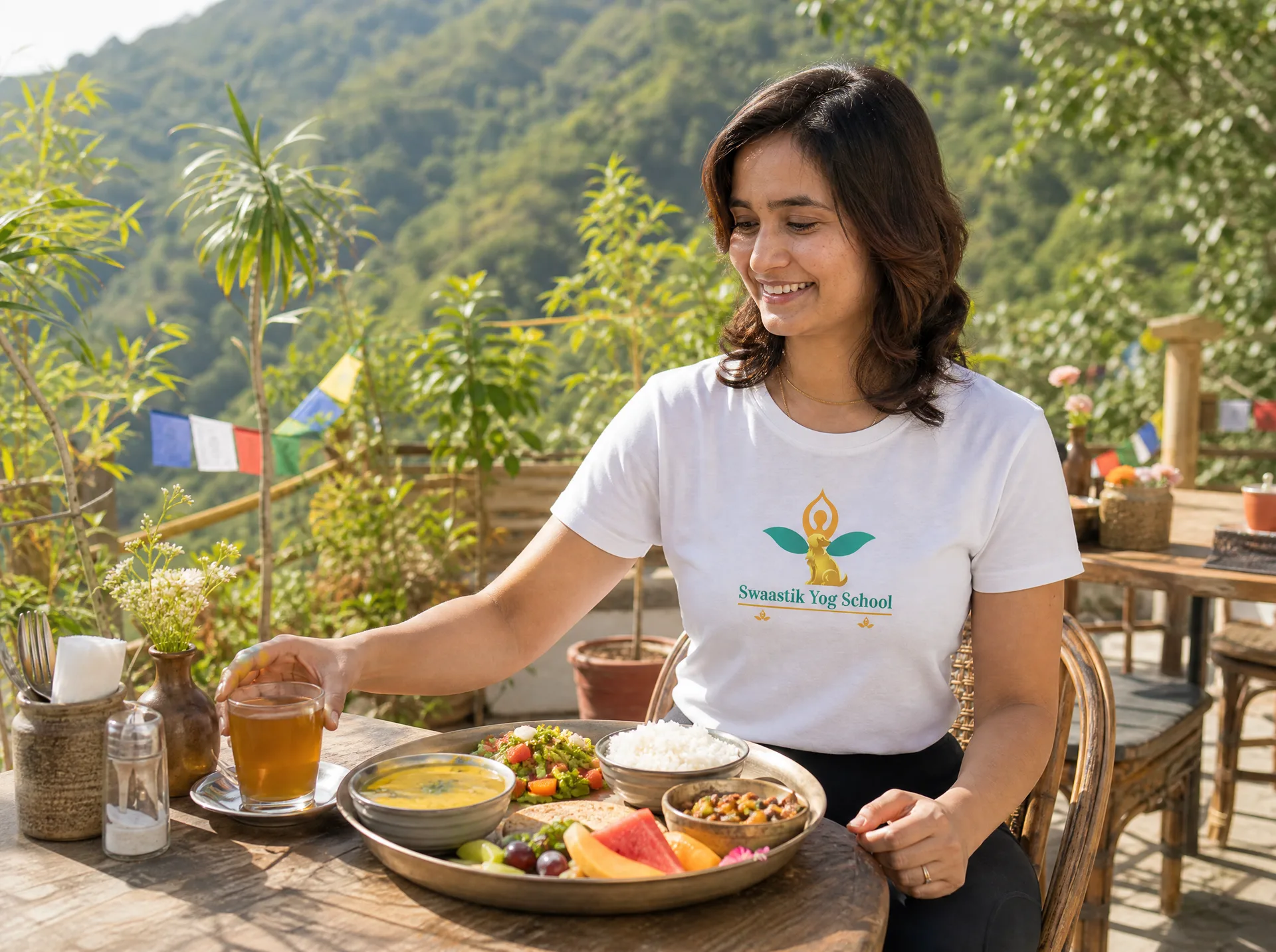
What You Will Actually Eat During YTT in India

Here is what a typical day of meals looks like at a yoga school in Rishikesh.

Morning Tea (6:00 AM)

Before the first practice session, most schools offer herbal tea or warm lemon water with honey. This gentle wake-up activates digestion without shocking the system. Common options include tulsi (holy basil) tea, ginger tea, or warm water with turmeric. Chai (Indian spiced tea with milk) is sometimes available but is considered mildly rajasic due to its caffeine content and is therefore not offered at all schools during training.

Breakfast (8:30-9:30 AM, after morning practice)

Breakfast typically includes seasonal fresh fruit, porridge (oats, daliya/broken wheat, or semolina upma), poha (flattened rice with vegetables and peanuts), idli with coconut chutney, or paratha (whole wheat flatbread) with curd. Fresh fruit juice or buttermilk is common. Portions are designed to nourish after morning practice without creating heaviness before philosophy or anatomy lectures.

Lunch (12:30-1:30 PM, the main meal)

Lunch is the largest meal of the day, aligned with the Ayurvedic principle that digestive fire (agni) peaks around noon. A typical lunch includes:

  • Dal (lentil soup) — the primary protein source, prepared in dozens of variations with different lentils and spice blends
  • Rice (usually basmati, sometimes brown)
  • Roti or chapati (whole wheat flatbread)
  • Two vegetable dishes (sabzi) — such as aloo gobi (potato and cauliflower), palak paneer (spinach with cottage cheese), bhindi (okra), lauki (bottle gourd), or mixed vegetable curry
  • Salad with cucumber, tomato, carrot, and lemon
  • Raita (yogurt with vegetables or spices)
  • Pickle or chutney in small amounts

Afternoon Snack (4:00 PM)

A light offering between afternoon practice and evening meditation: seasonal fruit, roasted chana (chickpeas), herbal tea, or occasionally a sweet like halwa or ladoo made from nuts and jaggery rather than refined sugar.

Dinner (7:00-7:30 PM)

Dinner is lighter than lunch, following the Ayurvedic principle that digestion weakens in the evening. Typical options include khichdi (a one-pot dish of rice and mung dal, considered the most sattvic meal in Ayurveda), vegetable soup, light curry with roti, or pasta on international food days. Dinner is served early to ensure digestion is well underway before bedtime, supporting both sleep quality and the next morning's practice.

Protein on a Vegetarian Yoga Teacher Training Diet

The most persistent concern from international students is protein. If you are accustomed to eating meat, fish, or eggs at every meal, the idea of a fully vegetarian diet for four weeks can feel alarming. Here is the reassurance: India has the longest tradition of vegetarianism in the world, and the cuisine has evolved over millennia to provide complete nutrition without animal products.

Key Protein Sources

  • Dal and lentils: Served at virtually every meal. Red lentils, yellow moong dal, chana dal (chickpea lentils), toor dal, and urad dal each provide 18 to 25 grams of protein per cup when cooked
  • Paneer: Indian cottage cheese, high in protein and calcium. Used in curries, grilled, or crumbled into dishes
  • Curd and buttermilk: Probiotic-rich dairy that aids digestion while providing protein
  • Chickpeas and rajma (kidney beans): Hearty legumes that feature prominently in North Indian cuisine
  • Nuts and seeds: Almonds, cashews, peanuts, sesame seeds, and pumpkin seeds appear in snacks, sweets, and main dishes
  • Soy products: Some schools include tofu or soy chunks for additional protein variety

The combination of dal with rice or roti at every meal provides all essential amino acids, forming a complete protein. This is the same principle that cultures worldwide have independently discovered: beans and grains together create nutritional completeness.

Vegan Options During Yoga Teacher Training

While the traditional Indian sattvic diet includes dairy (ghee, paneer, curd, milk), vegan students can absolutely thrive during training. Most reputable schools in Rishikesh, including ours, accommodate vegan diets with advance notice. Dal, rice, roti, vegetable dishes, fruits, nuts, and seeds form a complete vegan diet. The main adjustments involve replacing paneer with extra legumes or tofu and using plant-based alternatives to curd and ghee.

Communicate your dietary needs before arrival so the kitchen can plan accordingly. In our experience at Swaastik Yog School, approximately 15 to 20 percent of students in each cohort are vegan, and our kitchen team is experienced in serving them well.

Ayurvedic Principles Behind the Yoga Teacher Training Diet

The yoga teacher training diet is not arbitrary. It follows Ayurvedic principles that have been refined over thousands of years in the very region where you will be training.

Eat According to Your Dosha

Ayurveda recognizes three constitutional types (doshas): Vata (air/ether), Pitta (fire/water), and Kapha (earth/water). While a YTT kitchen serves a general sattvic menu, understanding your dosha helps you make choices within that menu. Vata types benefit from warm, oily, grounding foods. Pitta types do well with cooling, less spicy options. Kapha types thrive on lighter, drier, more pungent dishes. Many schools offer a basic dosha assessment during the first week of training.

Food Combining

Ayurveda teaches that certain food combinations create ama (toxins) in the body. The most relevant guidelines during YTT: avoid combining fruit with meals (eat fruit separately, thirty minutes before other food), do not mix milk with sour foods, and eat freshly prepared food rather than leftovers whenever possible.

Mindful Eating

Perhaps the most transformative aspect of the yoga teacher training diet is not what you eat but how you eat. Many schools encourage eating in silence for at least one meal per day. This practice reveals habitual patterns: how quickly you eat, whether you taste your food, how much you eat beyond fullness, and the emotional states that drive your eating. Mindful eating is meditation applied to one of our most fundamental daily activities.

Adjusting to Indian Food as an International Student

Practical advice from years of hosting students from every continent:

  • Expect a digestive adjustment period: The first three to five days may involve some stomach discomfort as your gut microbiome adapts to new spices, water, and food preparation methods. This is normal and temporary. Stay hydrated, avoid raw salads initially, and eat smaller portions until your system adjusts
  • Carry probiotics: Starting a probiotic supplement one week before arrival and continuing through training can significantly ease the transition
  • Drink only filtered or bottled water: This is non-negotiable. Avoid ice in drinks outside the school, brush your teeth with filtered water, and keep your mouth closed in the shower
  • Start mild with spice: Even dishes that are considered mild by Indian standards may be spicier than you expect. Request less spice initially and increase as your palate adjusts. Our kitchen in Rishikesh prepares food with international students in mind, using less chili than a typical Indian household
  • Pack familiar comfort foods: A small supply of protein bars, nut butter, dried fruit, or herbal tea bags from home can provide comfort during the adjustment period. No shame in this; it is practical self-care
  • Communicate allergies clearly: Write down your allergies in both English and Hindi before arrival. Common allergens like nuts, dairy, gluten, and soy are used frequently in Indian cooking, and kitchen staff need clear, written instructions

Foods to Avoid During Yoga Teacher Training

Most schools have explicit dietary guidelines. Beyond the sattvic framework, avoid:

  • Street food: Tempting as the chaat stands near Ram Jhula and Laxman Jhula are, street food hygiene standards vary enormously. Save the pani puri for after graduation when a brief stomach upset will not derail your training
  • Excessive caffeine: If you are a heavy coffee drinker, taper down before arrival rather than quitting cold turkey on day one. Withdrawal headaches during intense practice are miserable
  • Alcohol: Rishikesh is officially a dry city (alcohol sales are banned within city limits), and all yoga schools prohibit alcohol during training. Many students find that the combination of intense practice and sattvic diet naturally eliminates any desire for alcohol
  • Refined sugar: Sweets are part of Indian culture, and occasional jaggery-based or date-based treats are fine, but avoid the heavily sweetened packaged foods and sodas available in local shops

Life After Training: Taking the Yogic Diet Home

Many students worry about maintaining the dietary changes they experience during training once they return home. The good news is that you do not need to maintain a strict sattvic diet to benefit from what you have learned. The awareness itself is the lasting gift. You will notice how certain foods affect your energy, sleep, and mood in ways you never did before training. You will naturally gravitate toward lighter, more nourishing options because you have experienced how they make you feel.

Learn more about our school's philosophy and approach to holistic wellness on our about page, or explore our 200-hour teacher training program where the sattvic diet is just one element of a comprehensive, life-changing experience.

Experience the Transformative Power of Yogic Nutrition

The food at Swaastik Yog School is not just nourishment; it is an integral part of your training experience. Our kitchen in Rishikesh prepares fresh, sattvic meals three times daily, accommodating vegetarian, vegan, gluten-free, and other dietary needs. Join our 200-hour YTT and discover how the right diet transforms not just your body but your entire practice.

Contact us today to learn about our meal plans, dietary accommodations, and upcoming training dates.

Ready to Start Your Yoga Journey?

Join our Yoga Alliance certified teacher training programs in Rishikesh and learn from experienced instructors in the birthplace of yoga.

Related Articles

200-Hour Yoga Teacher Training in Goa

200-Hour Yoga Teacher Training in Goa

Everything you need to know about 200-hour yoga teacher training in Goa, including costs, best schools, and what to expect during your training.

Read More
Best 100-Hour Yoga Teacher Training in Rishikesh

Best 100-Hour Yoga Teacher Training in Rishikesh

Complete guide to choosing the best 100-hour yoga teacher training in Rishikesh. Compare schools, costs, and certification options.

Read More
Best Yoga School in Rishikesh for Authentic Training & Certification

Best Yoga School in Rishikesh for Authentic Training & Certification

How to choose the best yoga school in Rishikesh for authentic training. Key factors, certifications, and questions to ask before enrolling.

Read More