Back to Blog
Practice

Yoga for Beginners at Home: How to Start

Rahul Badoni
Share this post:
Yoga for Beginners at Home: How to Start

Start yoga at home: setting up your space, essential props, 20-minute beginner routine, common mistakes, and when to join a class.

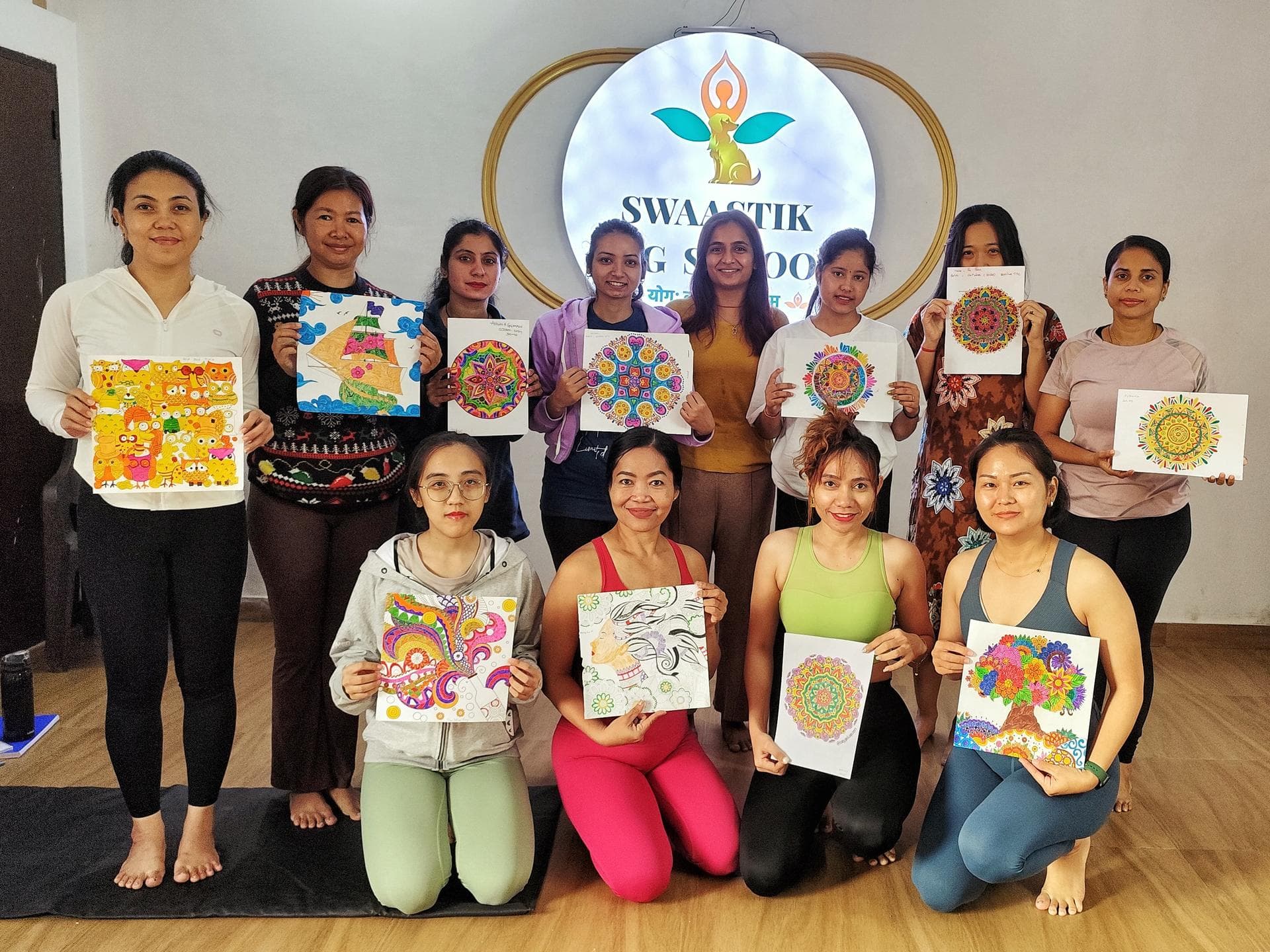
Starting a yoga for beginners at home practice is one of the most rewarding decisions you can make for your physical and mental well-being. You do not need an expensive studio membership, fancy equipment, or years of flexibility training. All you need is a small space, a willingness to learn, and the guidance to avoid common pitfalls that derail most home practitioners. At Swaastik Yog School in Rishikesh, we have introduced thousands of absolute beginners to yoga, and many of them started their journey right in their living rooms before ever stepping foot on a mat in India.

This comprehensive guide will walk you through everything you need to know about starting yoga for beginners at home: from setting up your practice space and choosing the right props, to following a complete 20-minute routine and knowing when it is time to deepen your practice with formal training.

Setting Up Your Home Yoga Space

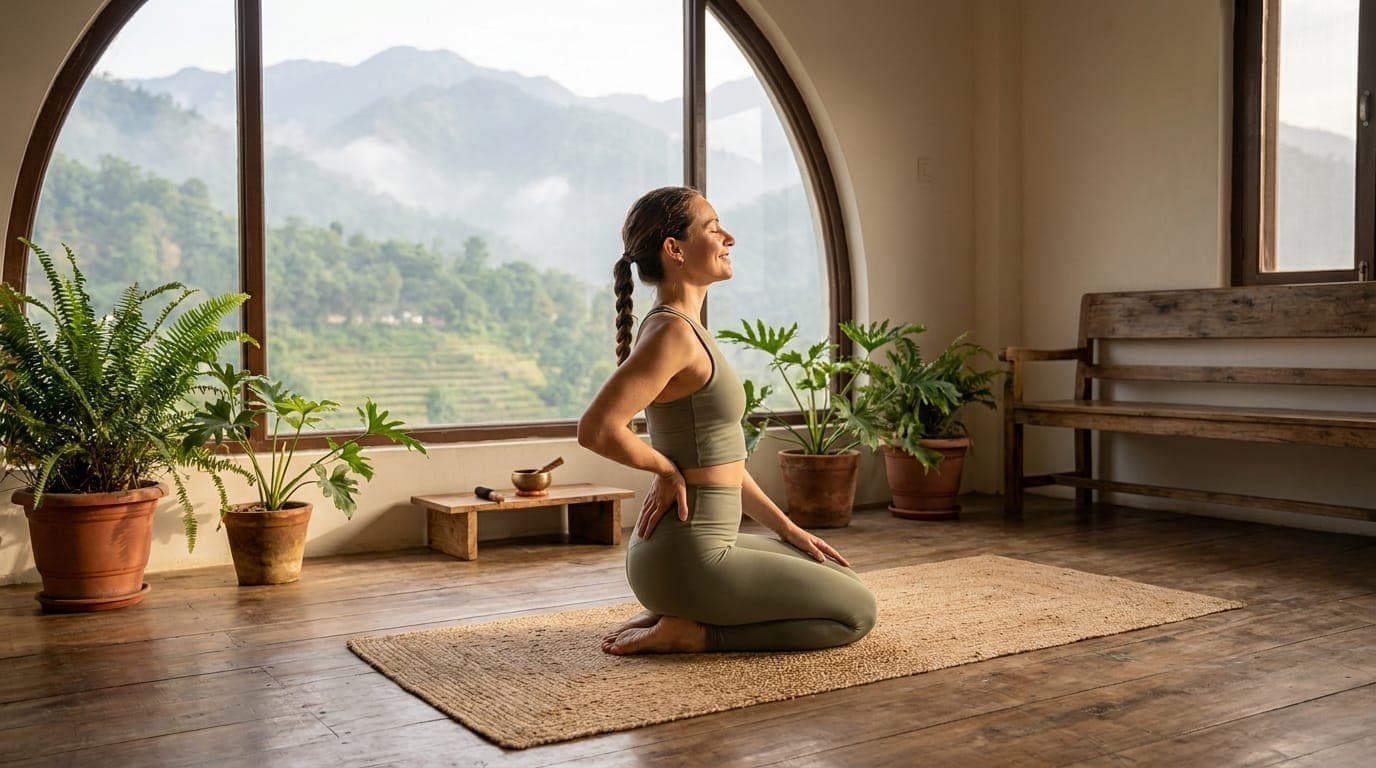
Your practice environment directly affects the quality of your yoga for beginners at home experience. You do not need a dedicated yoga room, but a few thoughtful adjustments to any space in your home can make a significant difference.
Choosing the Right Spot

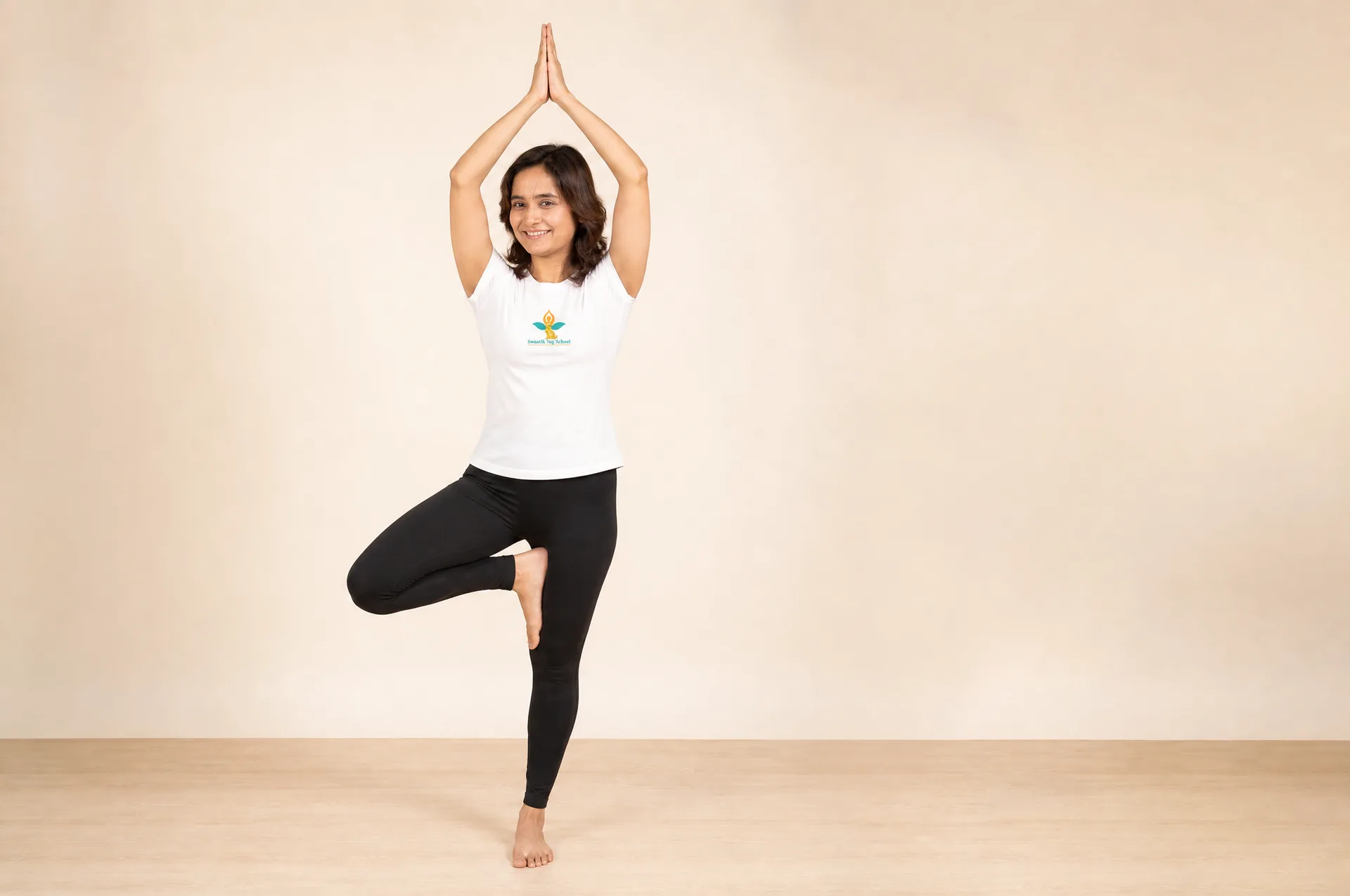
Look for a space that is at least six feet by four feet, enough room to stretch your arms wide and take a full step in any direction. A corner of your bedroom, a cleared section of the living room, or even a balcony works perfectly. Hardwood or tile flooring is ideal because it provides a stable surface beneath your mat. If you only have carpet, place your mat on it and accept that balance poses may feel slightly different.

Natural light is a wonderful bonus. If you can practice near a window, the morning sunlight will energize your sessions. Avoid spaces directly beneath ceiling fans on high speed, as the constant breeze can be distracting during breathwork and relaxation.

Reducing Distractions

Before you begin, silence your phone or place it in another room. Tell family members or roommates that you need uninterrupted time. If you have pets, they will likely want to join you, and that is fine as long as they do not trip you during standing poses. Close the door if possible. The mental shift from daily chaos to focused practice begins with creating a container of stillness around you.

Temperature and Ambiance

Keep the room comfortably warm, around 22 to 25 degrees Celsius. Cold muscles are more prone to strain, and shivering makes relaxation impossible. You do not need incense, candles, or background music, though some beginners find soft instrumental music helpful in the early weeks. As your practice matures, you will likely prefer silence so you can hear your own breath.

Essential Props for Yoga for Beginners at Home

One of the biggest myths about yoga is that you need nothing but your body. While that is technically true for advanced practitioners, beginners benefit enormously from a few basic props that make poses accessible and safe.

The Non-Negotiable: A Good Yoga Mat

Invest in a quality yoga mat with at least 4mm thickness and good grip. Cheap mats slip, bunch up, and offer no cushioning for your knees. Brands like Manduka, Liforme, or locally made Indian mats from Rishikesh markets offer excellent value. Your mat is the one prop you will use in every single session, so do not cut corners here.

Helpful Additions

  • Yoga blocks (2): These bridge the gap between your hands and the floor in poses like Triangle and Forward Fold. Cork or foam blocks work equally well.
  • Yoga strap: A simple cotton strap helps you reach your feet in seated forward bends and deepens stretches without forcing your body beyond its current range.
  • Bolster or firm pillow: Essential for restorative poses and supported backbends. A rolled-up blanket is a fine substitute.
  • Blanket: For padding under knees during kneeling poses and for warmth during final relaxation (Savasana).

You can substitute household items in the beginning: thick books for blocks, a belt or towel for a strap, and sofa cushions for bolsters. But as your practice becomes regular, dedicated props make a noticeable difference.

Best Resources for Yoga for Beginners at Home

The internet offers a wealth of free and paid resources to guide your home practice. Here are the most reliable options for beginners in 2026.

YouTube Channels

  • Yoga with Adriene: The most popular yoga channel on YouTube with over 12 million subscribers. Her 30-day challenges are perfect for building consistency.
  • Breathe and Flow: Excellent for beginners who want slightly more athletic sequences with clear alignment cues.
  • Yoga with Kassandra: Specializes in yin yoga and slower practices that are ideal for evening sessions.
  • Swaastik Yog School: Our own channel features authentic Hatha and Ashtanga sequences taught by experienced teachers from Rishikesh.

Apps

  • Down Dog: Generates unique sequences every session based on your level, preferred style, and time available. The free tier is generous.
  • Yoga Go: Designed specifically for beginners with illustrated pose guides and progressive programs.
  • Insight Timer: While primarily a meditation app, it offers thousands of free guided yoga sessions from teachers worldwide.

When Digital Is Not Enough

Apps and videos are excellent starting points, but they cannot correct your alignment in real time. A screen cannot tell you that your front knee is collapsing inward in Warrior II or that your lower back is rounding dangerously in Forward Fold. After two to three months of consistent home practice, we strongly recommend attending at least a few drop-in classes with a qualified teacher to receive personalized feedback.
A Complete 20-Minute Beginner Routine

This sequence is designed for absolute beginners and can be done first thing in the morning or in the evening. Hold each pose for five to eight breaths unless otherwise noted. Move slowly and never force your body into a shape that causes sharp pain.

Warm-Up (3 Minutes)

Begin seated cross-legged on your mat. Close your eyes and take ten deep breaths, inhaling through the nose for four counts and exhaling for six. Then perform five gentle neck rolls in each direction, followed by five seated side stretches on each side, reaching one arm overhead and leaning to the opposite side.

Standing Sequence (8 Minutes)

  • Mountain Pose (Tadasana): Stand tall with feet hip-width apart, arms by your sides, weight distributed evenly. Engage your thighs, lengthen your spine, and breathe deeply. Hold for 30 seconds.
  • Forward Fold (Uttanasana): Hinge at the hips, bend your knees as much as needed, and let your torso drape over your legs. Hold for five breaths.
  • Low Lunge (Anjaneyasana): Step your right foot back into a lunge, lower the back knee to the mat, and lift your arms overhead. Hold for five breaths, then switch sides.
  • Warrior II (Virabhadrasana II): From standing, step your feet wide apart, bend the front knee over the ankle, and extend arms parallel to the floor. Hold for five breaths per side.
  • Triangle Pose (Trikonasana): Straighten the front leg from Warrior II, reach forward and then down toward your shin or a block. Extend the top arm to the ceiling. Hold for five breaths per side.

Floor Sequence (6 Minutes)

  • Cat-Cow (Marjaryasana-Bitilasana): On hands and knees, alternate between arching and rounding your spine with each breath. Repeat ten times.
  • Downward Facing Dog (Adho Mukha Svanasana): From all fours, tuck your toes and lift your hips high, creating an inverted V shape. Bend your knees generously as a beginner. Hold for five breaths.
  • Child's Pose (Balasana): Kneel and sit back on your heels, folding forward with arms extended. Rest your forehead on the mat. Hold for eight breaths.
  • Supine Twist: Lying on your back, hug your right knee into your chest and guide it across your body to the left. Extend your right arm out to the side. Hold for five breaths, then switch.

Relaxation (3 Minutes)

Lie flat on your back in Savasana with arms at your sides, palms facing up. Close your eyes and consciously relax every part of your body from your toes to the crown of your head. Remain still for at least three minutes. This is not an optional extra; it is the most important part of your practice, the phase where your nervous system integrates the benefits of everything you just did.

Common Mistakes Beginners Make at Home

After years of teaching beginners in Rishikesh and observing the patterns of home practitioners who later come to our school, these are the most frequent errors we see.

Comparing Yourself to Instagram

Social media yoga bears almost no resemblance to a real beginner practice. The person doing a perfect split on a cliff edge in Bali has likely been practicing for a decade. Your Forward Fold with deeply bent knees is valid, honest, and exactly where you should be.

Skipping Warm-Up and Savasana

Most home practitioners jump straight into poses and skip the final relaxation because they feel unproductive. This is like cooking a meal and never eating it. The warm-up protects your body, and Savasana is where the real transformation happens at the nervous system level.

Holding Your Breath

Beginners unconsciously hold their breath during challenging poses. If you catch yourself doing this, it means you are pushing too hard. Back off until you can breathe smoothly and steadily. In yoga, the breath is more important than the shape of the pose.

Practicing Through Pain

There is a crucial difference between the gentle discomfort of stretching tight muscles and the sharp, stabbing pain of a joint or ligament being stressed beyond its capacity. The first is normal and expected. The second is a signal to stop immediately. Learning this distinction is one reason we recommend supplementing your home practice with in-person instruction.

Inconsistency Over Intensity

Practicing for 20 minutes five days a week will transform your body and mind far more effectively than a single 90-minute session on the weekend. Regularity matters more than duration, especially for beginners.

When to Move Beyond Home Practice

A home practice is a beautiful foundation, but there comes a point when most practitioners feel called to go deeper. If you notice any of the following, it may be time to seek formal instruction:

  • You have been practicing consistently for three months or more and want to learn more advanced poses safely.
  • You are unsure whether your alignment is correct and worry about injury.
  • You feel drawn to the philosophy, breathwork, or meditation aspects of yoga beyond just the physical postures.
  • You are considering becoming a yoga teacher yourself.

A structured course like our 100-Hour Yoga TTC in Rishikesh is specifically designed for dedicated practitioners who want to formalize their understanding. It bridges the gap between a personal home practice and professional-level knowledge of asana, pranayama, anatomy, and yoga philosophy. Many students tell us it is the experience that transforms yoga from something they do into something they embody.

Building Your Long-Term Home Practice

As you grow in your practice, consider gradually expanding your sessions from 20 minutes to 30, then 45, and eventually 60 minutes. Introduce pranayama (breathing exercises) before your asana practice and a short five-minute meditation after Savasana. Explore different styles: Hatha for steady, held poses; Vinyasa for flowing movement; Yin for deep, slow stretches. Over time, your body will tell you what it needs each day, and you will learn to listen.

Keep a simple journal of your practice. Note what you did, how you felt before and after, and any poses that felt particularly beneficial or challenging. Patterns will emerge over weeks and months that guide your development more accurately than any app algorithm.

Ready to Take Your Yoga Practice to the Next Level?

Whether you have been practicing yoga at home for weeks or years, there is nothing like immersing yourself in the birthplace of yoga. At Swaastik Yog School in Rishikesh, you will deepen your practice with experienced teachers on the banks of the Ganges, surrounded by the Himalayan foothills. Explore our drop-in classes for a taste, or dive into our 100-Hour Yoga TTC for a transformative foundation.

Contact us today to learn about upcoming programs, scheduling, and how to plan your journey to Rishikesh.

Ready to Start Your Yoga Journey?

Join our Yoga Alliance certified teacher training programs in Rishikesh and learn from experienced instructors in the birthplace of yoga.

Related Articles

10 Best Yoga Asanas for Back Pain Relief

10 Best Yoga Asanas for Back Pain Relief

Discover the most effective yoga asanas and poses to alleviate back pain and improve spine health. Learn proper alignment and modifications for all levels.

Read More
Aerial Yoga in Rishikesh & Home Practice Guide

Aerial Yoga in Rishikesh & Home Practice Guide

Everything you need to know about Aerial Yoga in Rishikesh and learning at home. Includes equipment, safety tips, and online resources.

Read More
Everything About Vajrasana: Benefits, Time Limit & Information

Everything About Vajrasana: Benefits, Time Limit & Information

Complete information about Vajrasana (Thunderbolt Pose) including benefits, time limit, proper technique, and common mistakes to avoid.

Read More