Back to Blog
Training

Online vs In-Person Yoga Teacher Training: Honest Guide

Mayuri Shewale
Share this post:
Online vs In-Person Yoga Teacher Training: Honest Guide

Pros and cons of online vs in-person YTT. Certification acceptance, cost, learning quality, networking, and practical skills comparison.

The question of online yoga teacher training vs in person has become one of the most debated topics in the yoga community since 2020. What began as a pandemic necessity has evolved into a permanent feature of the yoga education landscape, with hundreds of schools now offering fully virtual, fully residential, and hybrid teacher training options. But which one is actually right for you? At Swaastik Yog School, we offer both an online yoga teacher training and our flagship in-person 200-hour YTT in Rishikesh, so we have a uniquely balanced perspective on the strengths and limitations of each format.

This is not a sales pitch for either option. This is an honest, detailed comparison to help you make the best decision for your specific circumstances, goals, and learning style.

Online Yoga Teacher Training vs In Person: The Core Differences

Before we break down specific categories, it helps to understand the fundamental difference in how these two formats deliver education. In-person training is immersive: you live, breathe, eat, and sleep yoga for three to eight weeks in a dedicated environment. Online training is distributed: you integrate yoga education into your existing life over weeks or months. Neither is inherently better. They serve different needs and produce different outcomes depending on the student.

Certification and Industry Acceptance

Yoga Alliance Recognition

Yoga Alliance began accepting online training hours in 2020 and has continued to recognize virtual programs through 2026. Both online and in-person programs from Yoga Alliance Registered Schools (RYS) result in the same RYT-200 or RYT-500 credential. On paper, there is no difference in the certification you receive.

How Studios and Employers View Online Certifications

Here is where reality diverges from policy. Many studio owners and hiring managers in the yoga industry do distinguish between online and in-person graduates, fairly or not. In informal surveys of studio owners in the US, UK, and Australia, approximately 60% expressed a preference for in-person trained applicants for teaching positions. The reasoning is practical: in-person training includes hands-on adjustments, live teaching practice with real students, and the kind of spontaneous learning that happens when you share a physical space with experienced teachers for weeks on end.

However, this preference is softening year over year. The quality of online programs has improved dramatically, and many studios now evaluate candidates based on audition classes and demonstrated skill rather than how they trained. If you choose the online route, plan to compensate by accumulating significant in-person teaching hours after graduation.

Cost Comparison: Online Yoga Teacher Training vs In Person

Online Training Costs

Online 200-hour programs typically range from $500 to $3,000 USD. Budget options at the lower end often involve pre-recorded content with minimal live interaction. Higher-priced programs include live Zoom sessions, one-on-one mentoring, and more rigorous feedback on teaching practice. Our online program falls in the mid-to-upper range because it includes live sessions with our Rishikesh-based faculty, individual feedback on teaching assignments, and access to our comprehensive video library.

In-Person Training Costs

Residential programs in India (primarily Rishikesh, Goa, and Kerala) range from $1,000 to $4,000 USD, typically including accommodation, three daily meals, and all study materials. Western-based programs in the US, UK, or Europe cost $2,500 to $6,000 and usually do not include accommodation or meals.

Hidden Costs to Consider

  • Travel: International flights to India range from $500 to $1,200 depending on your origin. This is obviously zero for online training
  • Lost income: Taking three to four weeks off work for residential training can cost more than the program itself. Online training allows you to continue working
  • Visa and insurance: Budget $50 to $200 for an Indian visa and $100 to $300 for travel insurance
  • Post-training costs: Online graduates often need to invest in workshops, mentoring, or additional in-person training to build confidence. In-person graduates typically feel more teaching-ready immediately

When you factor in all costs, the total investment for an online yoga teacher training vs in person program in India is often comparable. The online option saves on travel and accommodation but may require additional investment afterward to close the practical skills gap.
Learning Quality and Depth

Where In-Person Training Excels

  • Hands-on adjustments: Learning to physically adjust and assist students is nearly impossible through a screen. This skill requires feeling the adjustment in your own body, then practicing on live students with immediate teacher feedback
  • Real-time observation: When teachers can see your alignment from multiple angles in a physical space, they catch subtle misalignments and habitual patterns that a webcam cannot capture
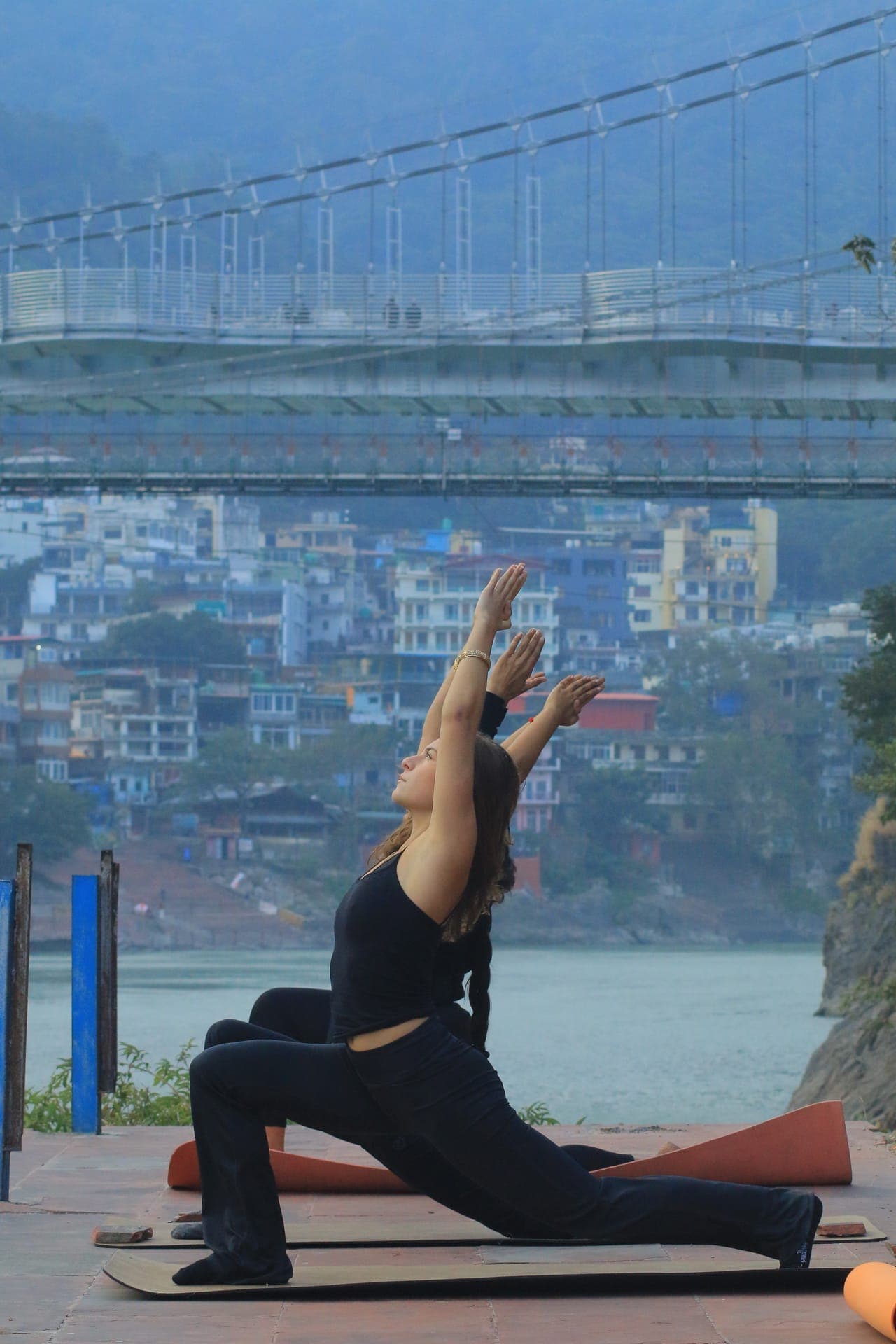
  • Immersive environment: In Rishikesh, yoga is not something you do for an hour and then return to normal life. You wake to chanting at dawn, practice asana as mist rises off the Ganges, study philosophy in the afternoon, and meditate as the sun sets over the Himalayas. This total immersion accelerates transformation in a way that no online program can replicate
  • Live teaching practice: Teaching real students who you can see, touch, and respond to in three dimensions is fundamentally different from teaching over Zoom
  • Spontaneous learning: Some of the most valuable insights during teacher training come from informal conversations over chai, questions asked during a meal, or a teacher demonstrating a point in the hallway. These moments cannot be scheduled into an online curriculum

Where Online Training Excels

  • Self-paced learning: Complex topics like anatomy and philosophy benefit from the ability to pause, rewind, and review content multiple times. In a live lecture, you get one pass
  • Extended integration: Online programs typically run over several months, giving you time to practice, teach, and integrate each module before moving to the next. Residential programs pack enormous amounts of information into a short period, which can lead to cognitive overload
  • Accessibility: For parents, caregivers, people with disabilities, or those who cannot take extended time away from work, online training makes yoga education possible when in-person would not be
  • Comfort and safety: Learning from your own space eliminates the stress of travel, unfamiliar environments, and shared accommodation
  • Recorded resources: Having permanent access to lecture recordings, demonstration videos, and teaching templates is a significant advantage for ongoing reference after graduation

Networking and Community

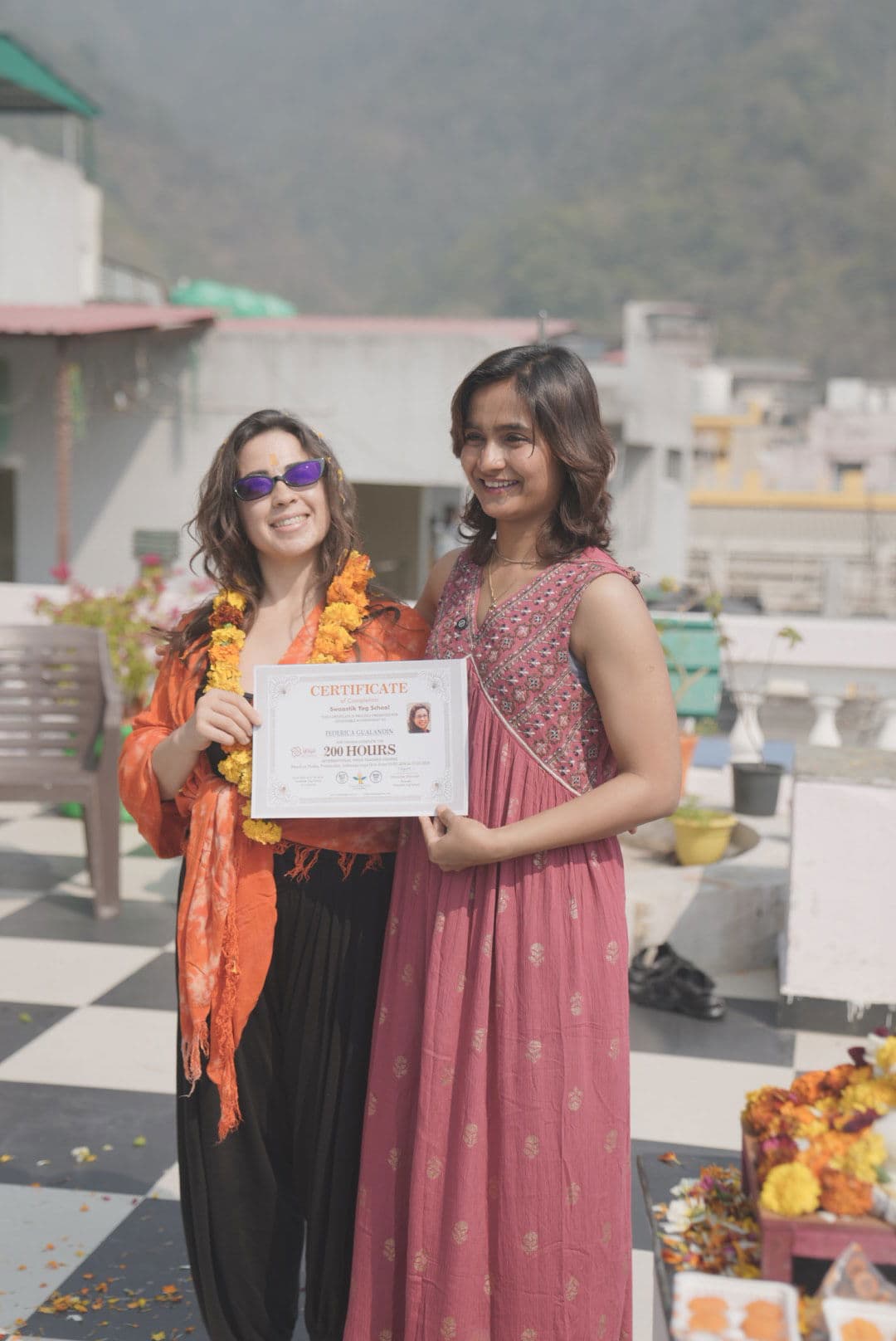
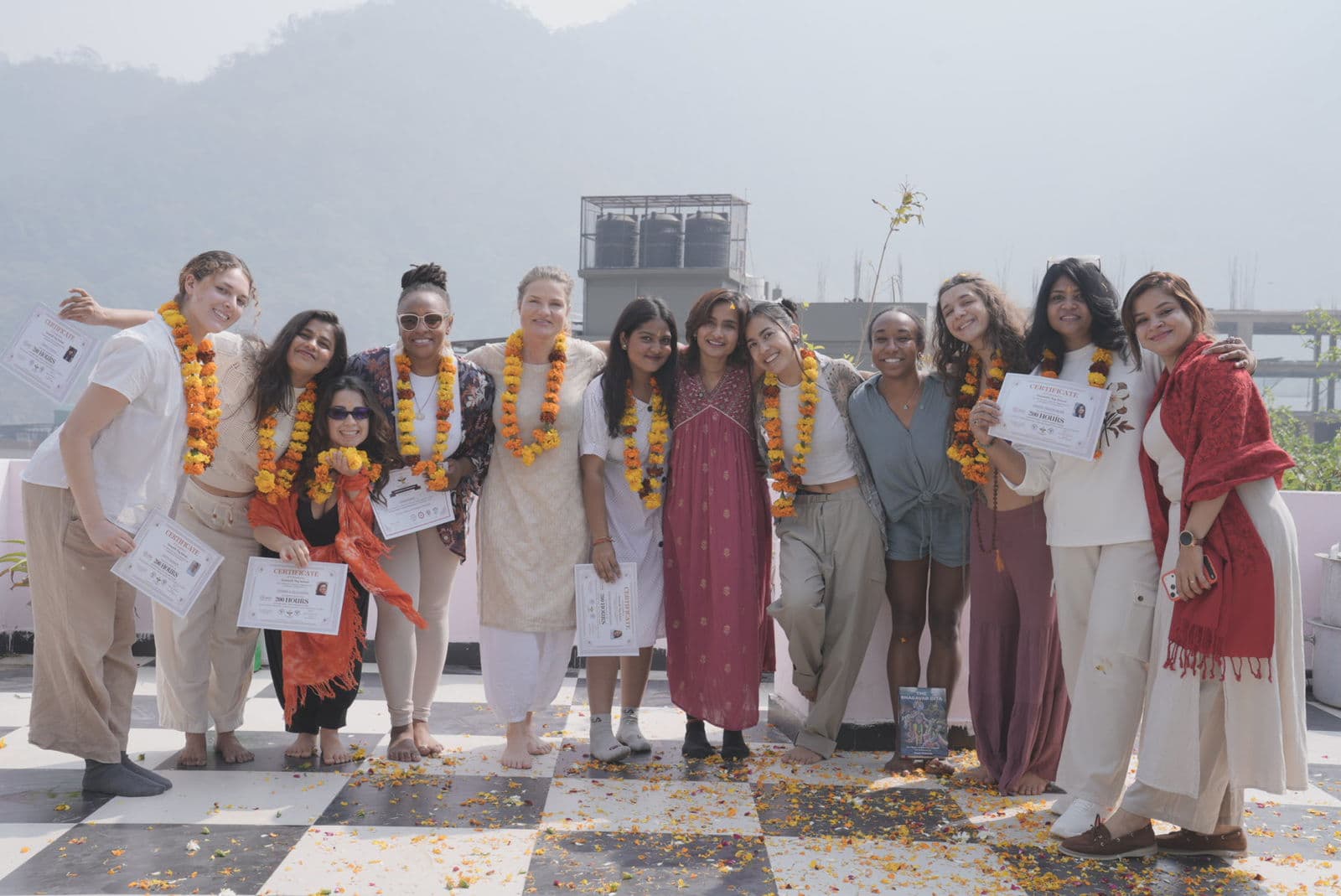
The relationships you form during teacher training often shape your career more than the certificate itself. In-person training creates bonds through shared challenge, vulnerability, and daily proximity. At our school in Rishikesh, students practice together, eat together, explore the town together, and support each other through the emotional depths that intensive yoga training inevitably surfaces. These bonds frequently last a lifetime, and many of our graduates collaborate on retreats, refer students to each other, and maintain active alumni networks across continents.

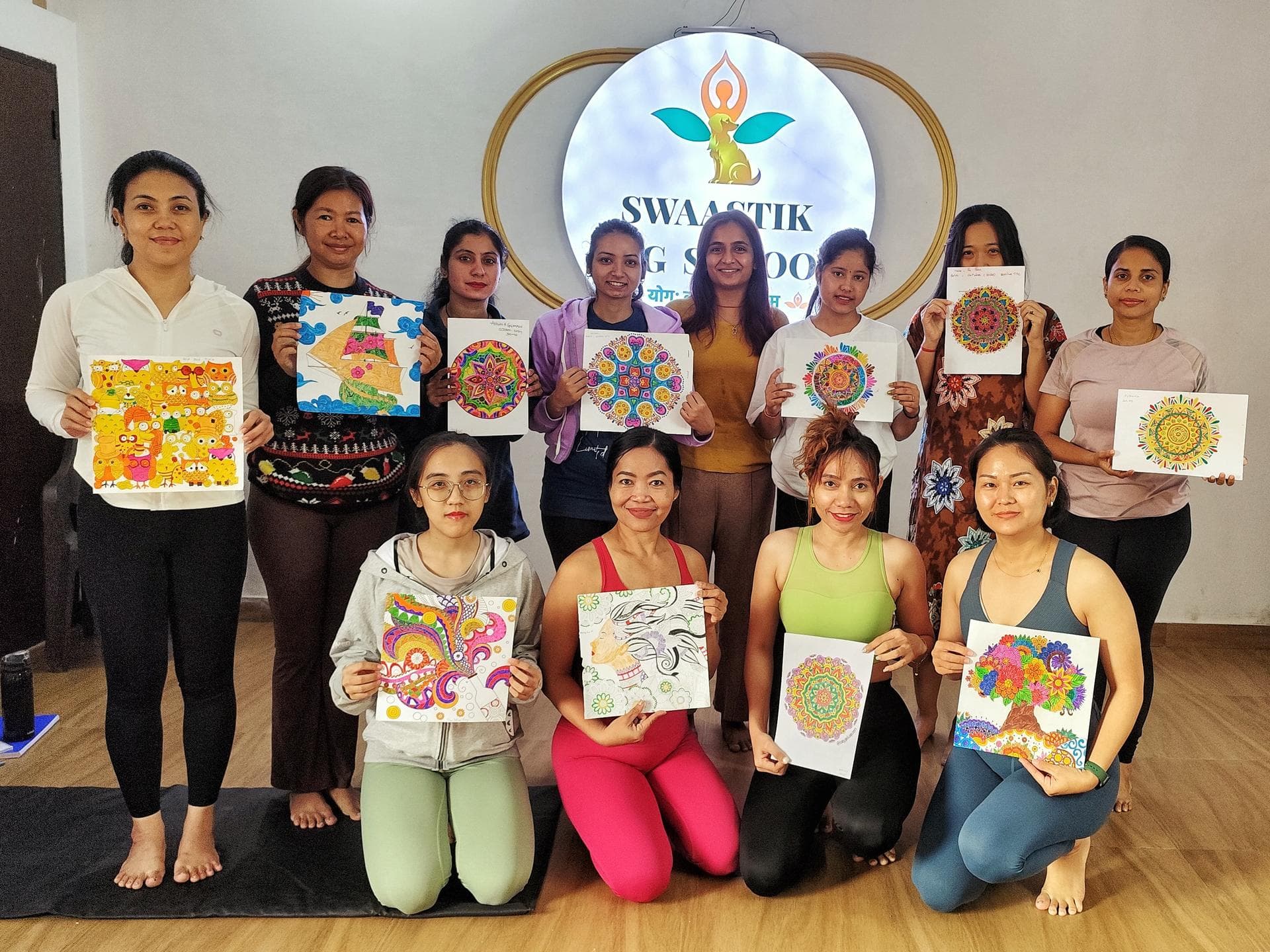
Online programs do create community, but it requires more deliberate effort. Zoom breakout rooms, WhatsApp groups, and partner assignments foster connection, but the depth is typically less than what develops through weeks of shared physical experience. The most successful online graduates are those who actively build in-person relationships after training through workshops, yoga festivals, and local teaching communities.

The Practical Skills Gap

This is the most honest and important section of this comparison. The online yoga teacher training vs in person debate ultimately comes down to one question: how prepared will you feel to stand in front of a room full of real people and teach?

In-person graduates from quality programs typically feel ready to teach within weeks of graduation. They have already taught dozens of practice classes to real bodies, received immediate feedback from experienced teachers, and navigated the vulnerability of teaching in front of peers who are also learning.

Online graduates, even from excellent programs, consistently report feeling less prepared for their first live teaching experience. The transition from teaching on Zoom (where you can see only small rectangles of your students) to teaching in a physical room (where thirty people are looking at you and you need to walk the room, adjust bodies, and project your voice) is significant.

This gap is not permanent. It can be closed with intentional practice, mentorship, and continued education. But it is real, and any honest assessment of online training must acknowledge it.

Hybrid Options: The Best of Both Worlds

The most promising development in yoga education is the emergence of hybrid models that combine online theory with in-person intensive periods. At Swaastik Yog School, we see this as the future of accessible, high-quality teacher training. A hybrid model might involve eight to twelve weeks of online study covering anatomy, philosophy, and teaching methodology, followed by a two-week residential intensive in Rishikesh focusing on hands-on adjustments, live teaching practice, and immersive experience.

This approach offers the flexibility of online learning, the depth of in-person training, and a total time commitment that is more manageable than a full residential program. It also tends to produce graduates who are both knowledgeable and practically skilled.

Which Option Is Right for You?

Consider choosing in-person training if:

  • You can take three to four weeks away from work and responsibilities
  • You want to teach in studios and need the strongest possible practical preparation
  • You crave a transformative, immersive experience that breaks you out of your daily patterns
  • You learn best through direct interaction and hands-on guidance
  • You want to experience yoga in its cultural birthplace

Consider choosing online training if:

  • You cannot take extended time away from work, family, or caregiving
  • You want to deepen your personal practice rather than teach professionally
  • You prefer self-paced learning and the ability to review content multiple times
  • You plan to teach primarily online
  • Budget constraints make travel to India or a Western residential program prohibitive

Our Recommendation

If your goal is to teach yoga professionally, especially in person, we believe the in-person experience is worth the investment and logistical effort. The practical skills, personal transformation, and professional network you gain during a residential 200-hour YTT in Rishikesh are difficult to replicate through any other format. However, our online program is an excellent choice for students who genuinely cannot travel, want to deepen their personal practice, or plan to teach primarily in virtual settings.

Whatever you choose, the most important decision is to begin. An imperfect start is infinitely better than a perfect plan that never leaves your notebook.

Ready to Start Your Yoga Teacher Training?

Explore our in-person 200-hour YTT in Rishikesh for the full immersive experience, or our online yoga teacher training for flexible, accessible learning from anywhere in the world. Both programs are Yoga Alliance certified and taught by our experienced Rishikesh-based faculty.

Contact us today to discuss which format is the best fit for your goals, schedule, and budget.

Ready to Start Your Yoga Journey?

Join our Yoga Alliance certified teacher training programs in Rishikesh and learn from experienced instructors in the birthplace of yoga.

Related Articles

200-Hour Yoga Teacher Training in Goa

200-Hour Yoga Teacher Training in Goa

Everything you need to know about 200-hour yoga teacher training in Goa, including costs, best schools, and what to expect during your training.

Read More
Best 100-Hour Yoga Teacher Training in Rishikesh

Best 100-Hour Yoga Teacher Training in Rishikesh

Complete guide to choosing the best 100-hour yoga teacher training in Rishikesh. Compare schools, costs, and certification options.

Read More
Best Yoga School in Rishikesh for Authentic Training & Certification

Best Yoga School in Rishikesh for Authentic Training & Certification

How to choose the best yoga school in Rishikesh for authentic training. Key factors, certifications, and questions to ask before enrolling.

Read More