Back to Blog
Wellness

Ajna Chakra Benefits: How to Activate Your Third Eye (Step-by-Step)

Swaastik Yog School
Share this post:
Ajna Chakra Benefits: How to Activate Your Third Eye (Step-by-Step)

Activate your Ajna Chakra (Third Eye) with 7 specific yoga poses, mantras, and pranayama. Includes a 21-day practice plan and signs your sixth chakra is balanced.

Within the human body lies a sophisticated network of seven powerful chakras - energy centers that govern our physical, emotional, mental, and spiritual well-being. Among these transformative energy points, the sixth chakra, known as Ajna Chakra or the Third Eye Chakra, stands as one of the most profound and influential centers for developing intuition, consciousness, and inner wisdom.
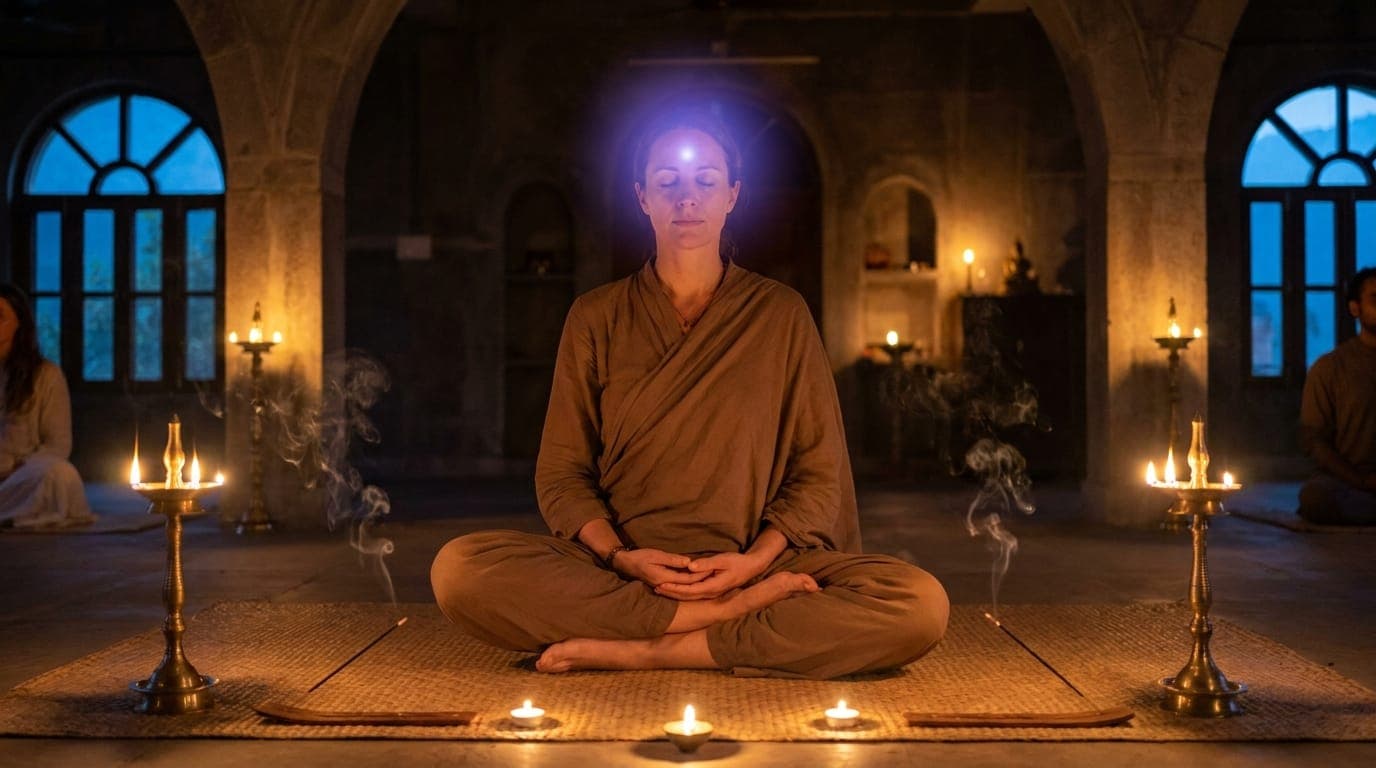
Ajna Chakra Meditation

The Third Eye Chakra represents the pinnacle of mental and spiritual development, serving as the command center for perception, decision-making, and manifestation. Located between the eyebrows, this sixth chakra has been revered for thousands of years in yogic traditions and continues to be studied extensively at authentic yoga schools like Swaastik Yog School in Rishikesh, where ancient wisdom meets modern understanding.

Understanding the Seven Chakra System

The chakra system represents one of the most sophisticated maps of human consciousness ever developed, originating from ancient Vedic traditions that have been preserved and practiced in Rishikesh for millennia. This ancient yogic wisdom forms a cornerstone of authentic yoga teacher training programs, where students learn not just physical postures but the deeper energetic anatomy that governs human experience.

In comprehensive 200-hour yoga teacher training programs, students discover how each chakra corresponds to specific physical, emotional, and spiritual aspects of life. Understanding these energy centers is crucial for anyone serious about yoga practice, as they provide a framework for self-awareness, healing, and spiritual development.

What is Ajna Chakra? (The Third Eye Chakra)

Sanskrit Meaning and Significance

The word "Ajna" derives from Sanskrit, meaning "command" or "perceive," indicating this chakra's role as the command center of consciousness. As the sixth of seven major chakras, Ajna serves as the gateway to higher consciousness, transcending ordinary perception to access intuitive wisdom and spiritual insight.

It is worth understanding what a chakra actually is within the yogic tradition, because the idea is often misrepresented. In the classical texts — the Hatha Yoga Pradipika and the various tantric works on the subtle body — chakras are described as energy centres along the sushumna nadi, the central channel said to run through the spine. They are not physical organs. They are best understood as focal points of awareness, traditional maps of consciousness that yogis use to direct attention and observe their inner experience. Approached this way, working with Ajna Chakra is not a medical intervention; it is a contemplative practice of cultivating clarity, perception and inner steadiness.

Location of the Third Eye Chakra

The Third Eye Chakra is precisely located between the eyebrows, at the center of the forehead, in the area known as Bhrumadhya (brow center) in yogic terminology. In meditation, the gentle inward gaze toward this point is itself called Bhrumadhya Drishti, and it is one of the most traditional and well-known concentration practices.

Yogic tradition associates this centre with the pineal gland, a small endocrine gland deep in the brain that produces melatonin and helps regulate the body's sleep–wake cycle. Many writers have drawn poetic parallels between the third eye and the pineal gland, and philosophers have called the pineal the "seat of the soul." It is honest to keep these as the traditional and philosophical associations they are — the chakra is a contemplative concept, and the gland is a physical structure. Practising third-eye meditation will not literally alter an endocrine gland, but a calmer mind, better sleep hygiene and reduced screen exposure genuinely do support healthy melatonin rhythms, which is why the lifestyle advice later in this guide matters.

Visual Representation and Symbolism

  • Color: Deep indigo or purple, representing wisdom, spirituality, and inner vision
  • Symbol: Two-petaled lotus, symbolizing duality transcended and the balance of opposites
  • Element: Light (Tej), the subtle element beyond physical matter
  • Mantra: OM (ॐ), the primordial sound of creation

The Energy Center of Intuition and Consciousness

What Ajna Chakra Represents

The Third Eye Chakra governs a wide range of mental and spiritual attributes that are essential for navigating life with wisdom and clarity:

Mental and Spiritual Attributes

  • Intuition: The ability to know something without logical reasoning
  • Wisdom: Deep understanding that transcends book knowledge
  • Imagination: Creative visualization abilities
  • Decision-Making Power: Clarity in choices
  • Consciousness: Higher awareness states

Role in Yoga Practice

In traditional yoga practice, the Third Eye serves multiple important functions:

  • Meditation Focal Point (Trataka): Focusing attention at the third eye center.
  • Visualization Practices: Visualizing light or symbols at the Ajna Chakra.
  • Pranayama Awareness Center: Directing attention to the third eye during breath work.

This profound aspect of yoga philosophy is taught in depth at 300-hour advanced training where students explore the subtler dimensions of yoga practice.
Signs of a Balanced Ajna Chakra

A balanced Third Eye Chakra manifests as a harmonious integration of intuitive wisdom and practical intelligence.

Mental Clarity

  • Clear thinking and decision-making
  • Strong intuitive abilities
  • Excellent memory and recall
  • Sharp mental focus

Spiritual Awareness

  • Strong manifestation power
  • Clear distinction between right and wrong
  • Enhanced consciousness
  • Connection to higher self

Signs of an Imbalanced Third Eye Chakra

When the Third Eye Chakra is imbalanced - whether blocked (underactive) or overactive - it creates disruption in multiple areas of life.

  • Mental Imbalances: Poor decision-making, confusion, mental fog, difficulty concentrating.
  • Physical Symptoms: Frequent headaches, migraines, eye problems, sinus issues, insomnia. Chronic tension can also trigger referred pain in the upper back and neck — see our guide to yoga for back pain for complementary relief.
  • Emotional Challenges: Low confidence, self-doubt, lack of intuition, anxiety about future.
  • Spiritual Blockages: Disconnection from spirituality, lack of purpose, material attachment.

How to Balance Ajna Chakra: Traditional Practices

1. Mantra Chanting: The Power of OM

The most powerful and traditional method for chakra balancing of the Third Eye is chanting the sacred mantra OM (ॐ). Sound vibration is so central to chakra work that we built an entire Sound Healing Course around it — covering Tibetan singing bowls, gongs, and Nada Yoga as therapeutic modalities for all seven chakras.

  • Chant the OM mantra loudly and clearly.
  • Feel the vibration in your forehead, particularly between the eyebrows.
  • Practice daily for 108 times or for 10-15 minutes.

2. Meditation and Visualization

Meditation is the heart of working with Ajna Chakra, and Trataka is its most traditional technique. Trataka is a steady, soft gaze — a concentration practice that trains the wandering mind to settle on a single point.

How to practise Trataka (candle gazing): Sit comfortably with a tall spine in a darkened, draught-free room. Place a candle at arm's length, with the flame roughly at eye level. Gaze softly at the flame without straining and, as far as possible, without blinking. When the eyes water or tire, gently close them and watch the after-image of the flame appear in the inner darkness — let your attention rest there, at the brow centre, for as long as the image lasts. When it fades, open the eyes and gaze again. Practise for 5 to 10 minutes, then sit quietly. Trataka is taught in drop-in classes at Swaastik Yog School. Caution: those with epilepsy, glaucoma, severe eye strain, or significant astigmatism should avoid candle gazing and instead use a fixed dark dot on a wall, or skip the external object altogether and simply rest the inner gaze at the brow.

Inner light visualisation: With the eyes closed, draw your attention to the space between the eyebrows and imagine a soft, steady point of indigo light glowing there. There is no need to force or strain the eyes upward — keep the physical eyes relaxed and only the attention placed at the brow. If the mind wanders, simply return it. This is the simplest and safest third-eye meditation, suitable for everyone.

3. Yoga Asanas for Third Eye Activation

In the yogic understanding, certain postures help draw awareness toward the brow centre — partly by bringing the forehead toward the floor, partly by encouraging a calm, inward-turned mind. They support the contemplative practice rather than acting on the body in a medical sense.

  • Child's Pose (Balasana): Rest the forehead — and specifically the brow centre — gently on the floor or a block. The light contact gives the mind an anchor at the third-eye point and is deeply calming.
  • Downward Dog (Adho Mukha Svanasana): A mild inversion that refreshes the mind and relieves mental fatigue, helping prepare a clear, settled state for meditation.
  • Seated Forward Fold (Paschimottanasana): A quiet, introspective pose that turns the attention inward; resting the forehead toward the legs invites awareness to the brow.
  • Standing Forward Fold (Uttanasana): Lets the head hang and the mind quieten, releasing tension from the neck and face.
  • Hare Pose / Shashankasana: A close cousin of Child's Pose, with the forehead grounded — excellent as a preparation for seated meditation.

To learn proper alignment, consider enrolling in our 100-Hour Yoga Teacher Training.

4. Mudras for the Third Eye

Mudras are subtle gestures, usually of the hands, used to focus and contain awareness during meditation. A few are traditionally associated with the Ajna Chakra:

  • Gyana Mudra: Tip of the index finger to the tip of the thumb, the other three fingers extended, hands resting on the knees. This common meditation gesture steadies the mind and supports concentration.
  • Shambhavi Mudra: An advanced practice in which the eyes turn gently upward and inward toward the brow centre while the mind stays calm. It should be learned from a teacher and never forced — strain in the eyes is a sign to ease off.
  • Hakini Mudra: The fingertips of both hands touch lightly, mirroring each other, with the gaze drawn toward the third eye. Traditionally said to support concentration, memory and clear thinking.

5. Pranayama (Breath Work)

Breath practices steady the nervous system and quiet the mind, which is precisely the inner condition that supports third-eye meditation.

  • Anulom Vilom (Alternate Nostril Breathing): A gentle, balancing practice that calms the mind and is said in yogic terms to harmonise the two main nadis, Ida and Pingala, which meet at the Ajna centre. Suitable for almost everyone.
  • Bhramari (Bee Breath): A long, humming exhalation. The soft vibration is felt around the head and face, helping to release tension and draw the attention naturally to the brow. Deeply soothing for an overactive, anxious mind.
  • Kapalbhati (Skull Shining Breath): A more vigorous cleansing practice of forceful exhalations. Energising and clarifying, but not for everyone — avoid it if you have high blood pressure, heart conditions, hernia, or are pregnant, and learn it from a teacher first.

Modern Approaches to Third Eye Balancing

6. Positive Affirmations for Ajna Chakra

Affirmations are simple statements of intention, repeated calmly, that help orient the mind toward clarity and trust. They are best used as a gentle complement to meditation, not a substitute for it.

  • "I trust my inner voice and intuition"
  • "My inner wisdom guides me perfectly"
  • "I see clearly and understand deeply"
  • "I am connected to universal consciousness"

7. Lifestyle and Diet Adjustments

The yogic view holds that a steady, simple life supports a steady, clear mind. Several everyday habits genuinely help here — and several of them have a real, common-sense basis:

  • Digital detox: Reducing screen time, especially in the evening, eases mental over-stimulation. Bright screens before bed are known to suppress melatonin and disrupt sleep, so this habit has a real, practical benefit.
  • Sleep hygiene: Going to bed early in a genuinely dark room supports healthy melatonin production and a calm, rested mind — the foundation for any clarity practice.
  • Nature connection: Spending time outdoors, especially in natural light in the morning, helps regulate the body's circadian rhythm and quiets a busy mind.
  • Sattvic, light diet: The tradition favours a sattvic diet — fresh, simple, plant-based food eaten in moderation — to keep the mind clear and light. Practitioners often reduce heavy, overly processed, and intoxicating foods. Foods with an indigo or purple hue, such as blueberries and grapes, are sometimes chosen symbolically for the third eye, though this is tradition and association rather than a physiological treatment.
  • Stillness and quiet: Regular periods of silence — even a few minutes a day without input — give the mind space to settle and perceive clearly.

8. Sound Healing Therapies

Sound has long been used in the yogic tradition to help draw the mind inward and into stillness. Practices with Tibetan singing bowls, gongs and chanting create steady, enveloping tones that many people find deeply calming and useful as a focal point for meditation. Comprehensive Sound Healing Training is available at Swaastik Yog School, where these methods are taught as contemplative and relaxation practices.

Learning Chakra Wisdom at Swaastik Yog School

Comprehensive Chakra Education in YTT

Our 200-Hour program covers complete chakra system study, practical balancing techniques, and meditation practices. For deeper mastery, our 300-Hour advanced program explores deep chakra healing methods and energetic anatomy.

Why Learn in Rishikesh?

Rishikesh offers unique advantages for chakra learning with its ancient wisdom, spiritual atmosphere, and powerful natural environment. Authentic traditional teachings are passed down through generations here.

A Simple Third Eye Meditation You Can Try Today

You do not need any equipment or experience to begin. This short practice draws together several of the techniques above into one accessible routine of about 12 to 15 minutes.

  1. Settle (2 minutes): Sit comfortably with a tall, easy spine — on a cushion or a chair. Rest the hands on the knees in Gyana Mudra. Let the eyes close and the breath find a natural, slow rhythm.
  2. Balance the breath (3–4 minutes): Practise gentle Anulom Vilom — alternate nostril breathing — to calm and steady the mind. Keep it soft and unforced.
  3. Hum (2–3 minutes): Move into Bhramari, the bee breath. With each long exhalation, make a soft, steady humming sound and feel the gentle vibration spread through the head and face.
  4. Rest at the brow (4–5 minutes): Let the breath return to normal. Bring your attention to the space between the eyebrows. Without straining the physical eyes, imagine a soft point of indigo light glowing quietly there. Each time the mind wanders — and it will — gently bring it back. You may silently repeat OM in rhythm with the breath if it helps anchor the attention.
  5. Close (1–2 minutes): Release the focus, let the mind be open and spacious, and sit quietly. Take a few deeper breaths, rub the palms together and place them over the eyes before slowly opening them.

Practised daily, even a short routine like this gradually builds the calm, focused, perceptive quality of mind that the Ajna Chakra represents. Consistency matters far more than duration — five quiet minutes every day will do more than an occasional long sitting.

Frequently Asked Questions

What exactly is the Ajna or third eye chakra?

In the yogic tradition, the Ajna Chakra is the sixth of the seven main energy centres, located at the brow centre between the eyebrows. It is associated with intuition, clarity of perception, concentration and inner wisdom. It is best understood as a traditional map of consciousness and a focal point for meditation rather than a physical organ.

How do I know if my third eye chakra is balanced or blocked?

Traditional teachings describe a balanced Ajna as clear thinking, steady focus, good intuition and calm decision-making, while an imbalance is described in terms of mental fog, confusion, indecision, or being either disconnected from intuition or lost in imagination. These are descriptive yogic concepts. If you are experiencing persistent headaches, sleep problems, or difficulty concentrating, treat that as a reason to consult a healthcare professional — not simply as a chakra to "fix."

How long does it take to balance the third eye chakra?

There is no fixed timeline, because this is a contemplative practice rather than a procedure. What people usually notice with consistent practice is a gradually calmer, clearer and more focused mind over several weeks and months. Daily practice — even a short one — matters far more than the total number of hours.

Is third eye meditation safe for everyone?

Gentle inner-light meditation at the brow centre is safe for almost everyone. Use caution with two specific practices: candle gazing (Trataka) should be avoided by those with epilepsy, glaucoma or significant eye conditions, and vigorous breathwork such as Kapalbhati is not suitable during pregnancy or for those with high blood pressure or heart conditions. Never force the eyes upward in any practice — strain is always a signal to ease off. If you have a history of significant mental health concerns, work with an experienced teacher.

Can yoga and meditation cure headaches or vision problems?

No. Yogic third-eye practices are contemplative tools for cultivating calm and clarity; they are not medical treatments and should never replace proper medical care. Relaxation and better sleep can certainly ease tension-related discomfort, but persistent headaches, migraines or vision changes should always be assessed by a doctor.

Which practice should a complete beginner start with?

Begin with the simple inner-light meditation at the brow centre, combined with a few minutes of gentle alternate nostril breathing. These are calming, accessible, and safe. Once you are comfortable, you can explore Trataka and the mudras under the guidance of a teacher. Starting small and practising daily is the surest path.

Begin Your Third Eye Journey Today

Ready to awaken your intuition and inner wisdom? Connect with Swaastik Yog School.

Contact Us

Ready to Start Your Yoga Journey?

Join our Yoga Alliance certified teacher training programs in Rishikesh and learn from experienced instructors in the birthplace of yoga.

Related Articles

8 Yoga Poses for Anxiety and Stress Relief

8 Yoga Poses for Anxiety and Stress Relief

Combat anxiety and stress with these calming yoga poses. Learn breathing techniques and mindfulness practices for mental wellness.

Read More
10 Health Benefits of Meditation and How to Focus on Mindfulness

10 Health Benefits of Meditation and How to Focus on Mindfulness

Discover the top 10 health benefits of meditation and learn practical tips on how to focus on mindfulness for reduced stress and better mental health.

Read More
Bhastrika Pranayama: Benefits, Steps & Precautions

Bhastrika Pranayama: Benefits, Steps & Precautions

Boost your energy and respiratory health with Bhastrika Pranayama (Bellows Breath). Step-by-step instructions and therapeutic benefits explained.

Read More

Have Questions? Get in Touch!

Whether you're interested in our teacher training courses, retreats, or drop-in classes, we're here to help guide your yoga journey. Fill out the form or chat with us directly on WhatsApp.