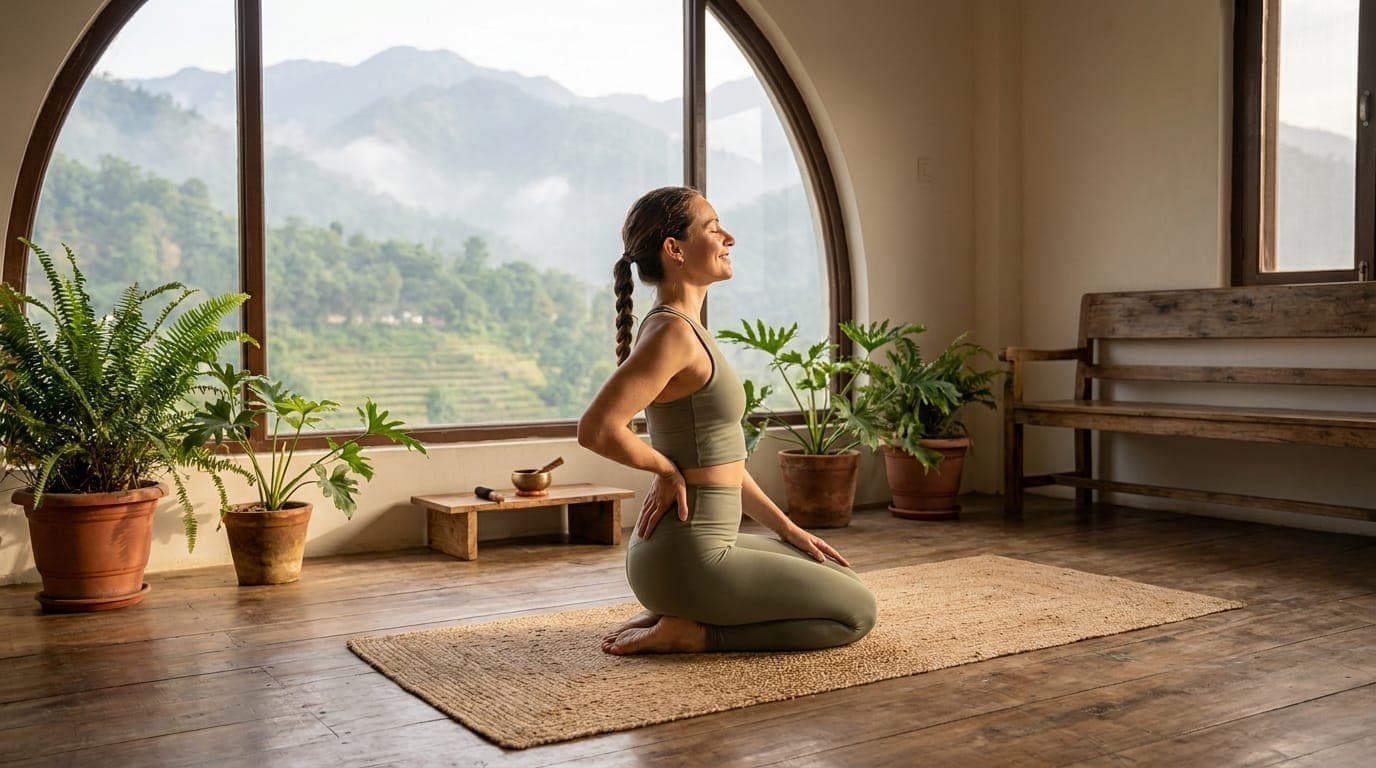
Quick answer: the 10 best yoga poses for back pain
The 10 best yoga poses for back pain are Cat-Cow, Downward-Facing Dog, Child's Pose, Sphinx, Cobra, Bridge, Legs-Up-The-Wall, Supine Spinal Twist, Pigeon and Savasana. Practised as a gentle 20–30 minute sequence five or six days a week, these poses mobilise the spine, strengthen the core and glutes that support the lower back, release tight hips, and calm the nervous system that amplifies pain. Most people feel looser after a single session; lasting relief usually takes four to six weeks of consistent practice. Always stay within a comfortable range and stop at any sharp or radiating pain.
Back pain has become a silent epidemic in our modern, sedentary world. Whether it's from long hours at a desk, heavy lifting, or simply stress manifesting physically, millions suffer daily. But there is a time-tested solution that goes beyond temporary relief: Yoga. At Swaastik Yog School, we witness the transformative power of yoga every day as students reclaim their mobility and live pain-free lives.
The 10 poses at a glance
| # | Pose | Sanskrit name | Best for | How long to hold |
|---|---|---|---|---|
| 1 | Cat-Cow | Marjaryasana-Bitilasana | Warming up the whole spine | 8–12 rounds |
| 2 | Downward-Facing Dog | Adho Mukha Svanasana | Lengthening the spine & hamstrings | 5–8 breaths |
| 3 | Child's Pose | Balasana | Gentle release & acute flare-ups | 1–3 minutes |
| 4 | Sphinx | Salamba Bhujangasana | Disc-friendly back strengthening | 30–60 seconds |
| 5 | Cobra | Bhujangasana | Posture, back & chest strength | 3–5 breaths ×2–3 |
| 6 | Bridge | Setu Bandhasana | Glutes & core (posterior chain) | 5–8 breaths |
| 7 | Legs-Up-The-Wall | Viparita Karani | Calming, restorative relief | 5–10 minutes |
| 8 | Supine Spinal Twist | Supta Matsyendrasana | Gentle spinal decompression | 1–2 min per side |
| 9 | Pigeon | Eka Pada Rajakapotasana | Tight hips & sciatica | 1–3 min per side |
| 10 | Savasana | Savasana | Nervous-system reset | 5–10 minutes |
If you're also struggling with neck issues, our guide on Yoga for Cervical Pain offers specialized relief techniques.
What are the best yoga poses for back pain?
The best yoga poses for back pain are Cat-Cow, Downward-Facing Dog, Child's Pose, Sphinx, Cobra, Bridge, Legs-Up-The-Wall, Supine Spinal Twist, Pigeon and Savasana. Together these ten poses mobilise the spine, strengthen the core and glutes that support the lower back, release tight hips, and calm the nervous system that amplifies pain. For most people the fastest relief comes not from any single pose but from a short, gentle 20-30 minute sequence practised five or six days a week. Begin with Cat-Cow to warm the spine, build into Sphinx, Cobra and Bridge for strength, then unwind with a Supine Twist, Legs-Up-The-Wall and Savasana with the knees supported over a bolster. Most students feel looser within one session; lasting change usually takes four to six weeks of consistent practice. Always stay within a comfortable range and stop at any sharp or radiating pain. These same therapeutic poses are taught in depth in our 200 Hour Yoga Teacher Training in Rishikesh, India.
Why Yoga Works for Back Pain
Yoga isn't just stretching; it's a holistic discipline that strengthens the core, improves flexibility, and realigns the spine. By practicing specific yoga poses for back pain, you increase blood flow to tight muscles, hydrate spinal discs, and correct the postural imbalances that cause pain in the first place.
To understand why this works, it helps to know what is actually happening in an aching back. The lumbar spine is designed to move, but most modern lives keep it locked in one shape — usually a slumped, flexed position in a chair — for hours at a time. When a joint stops moving through its full range, the surrounding muscles adapt by becoming either chronically short and tight or weak and lengthened. The deep stabilising muscles, particularly the transverse abdominis and multifidus, switch off. The result is a spine that has lost both its support system and its natural mobility. Pain is the body's request for change.
Yoga addresses this on several fronts at once. Gentle, controlled movement carries fresh blood and fluid into the intervertebral discs, which have no direct blood supply of their own and rely entirely on movement to stay hydrated and healthy. Mindful holding builds endurance in the postural muscles. Breath-led practice down-regulates the nervous system, which matters because pain and muscle guarding are amplified by a stressed, sympathetic-dominant state. Studies on chronic low-back pain consistently suggest that regular, gentle yoga can reduce pain and improve function as effectively as conventional physical therapy — and the people who keep practising tend to keep the benefits.
It is worth being honest about one thing: yoga is powerful, but it is not a cure for every back. Some back pain is mechanical and responds beautifully to movement. Some has a structural or medical cause that needs assessment first. Read the safety section at the end of this article before you begin, especially if your pain is new, severe, or accompanied by other symptoms.
Common Causes of Back Pain Yoga Can Help
- Postural and muscular pain: The most common type — stiffness and aching from prolonged sitting, weak core muscles, and tight hips. This responds very well to consistent practice.
- Lower-back stiffness: A spine that simply does not move much. Gentle mobility work restores range and usually eases the dull, constant ache.
- Sciatica: Pain that travels from the lower back or buttock down the leg, often caused by irritation of the sciatic nerve. Gentle, nerve-friendly stretches can help, but aggressive forward folds can make it worse — modifications matter.
- Disc-related pain: Discomfort linked to a bulging or herniated disc. Many people with disc issues improve with careful, extension-friendly movement, but they need to avoid loaded spinal flexion and twisting until cleared by a professional.
Throughout this guide we flag which poses suit which situation. When in doubt, move slowly, stay well within a comfortable range, and treat any sharp, shooting, or radiating sensation as a clear signal to stop.
10 Essential Yoga Poses for a Healthy Spine
1. Cat-Cow Pose (Marjaryasana-Bitilasana)
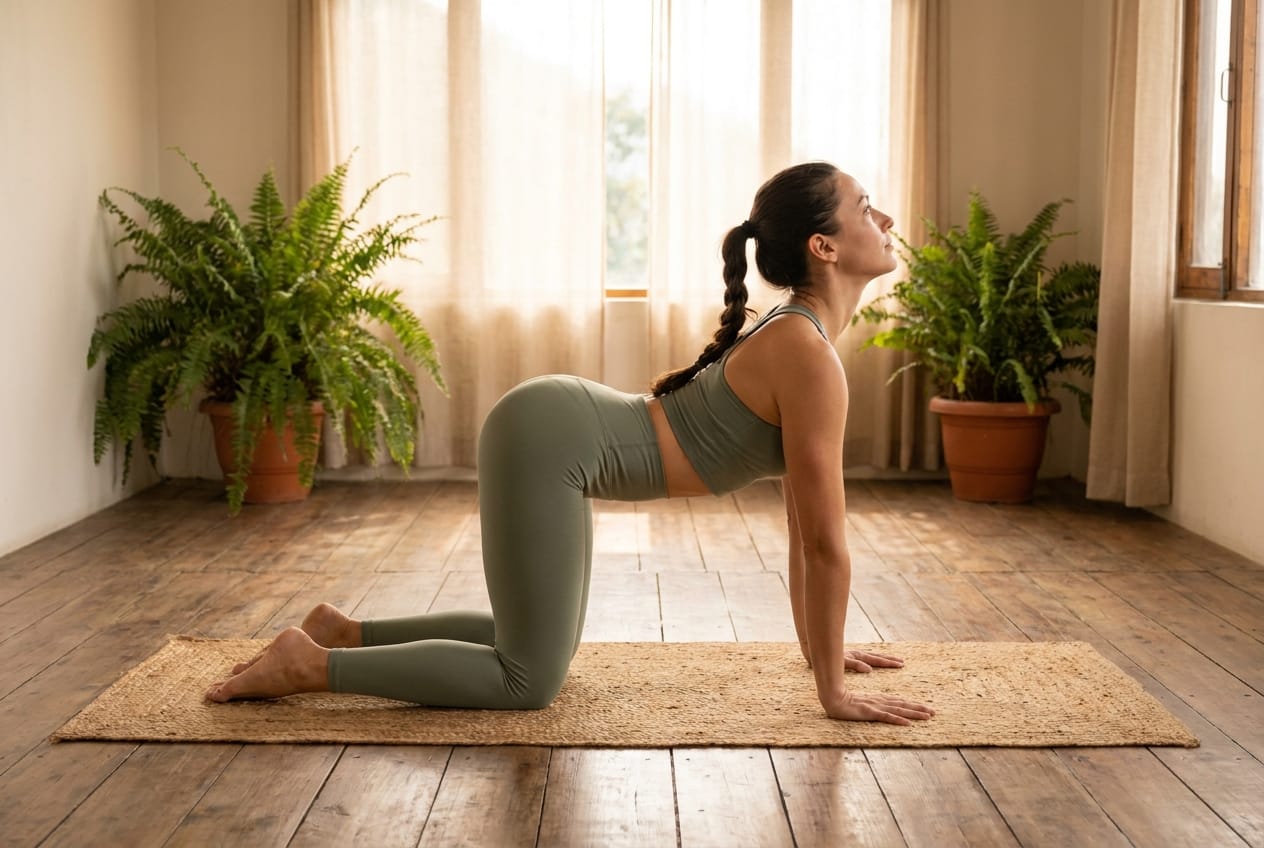
This gentle flow is the perfect warm-up. It lubricates the spinal vertebrae and releases tension in the entire back.
How to: Start on your hands and knees. Inhale as you drop your belly towards the mat, lift your chin and chest, and gaze up (Cow). Exhale as you draw your belly to your spine and round your back toward the ceiling (Cat). Repeat 10 times.
Benefits: Improves posture and balance, strengthens and stretches the spine and neck.
Alignment cues: Stack wrists directly under shoulders and knees under hips. Let the movement ripple through the spine one segment at a time rather than hinging only at the lower back. Keep the elbows soft, not locked, and let your breath set the pace — the body should follow the breath, not the other way around.
What it targets: The entire spinal column, the deep multifidus muscles, and the connective tissue around each vertebra. It also begins to reconnect breath with movement, which calms the nervous system.
Modifications: If your knees are sensitive, double the mat or kneel on a folded blanket. With lower-back stiffness, keep the range small at first and let it grow. For disc-related pain, reduce the depth of the Cat (rounding) phase and emphasise the gentle Cow extension.
How long: 8–12 slow rounds, ideally at the start of every session.
2. Downward-Facing Dog (Adho Mukha Svanasana)
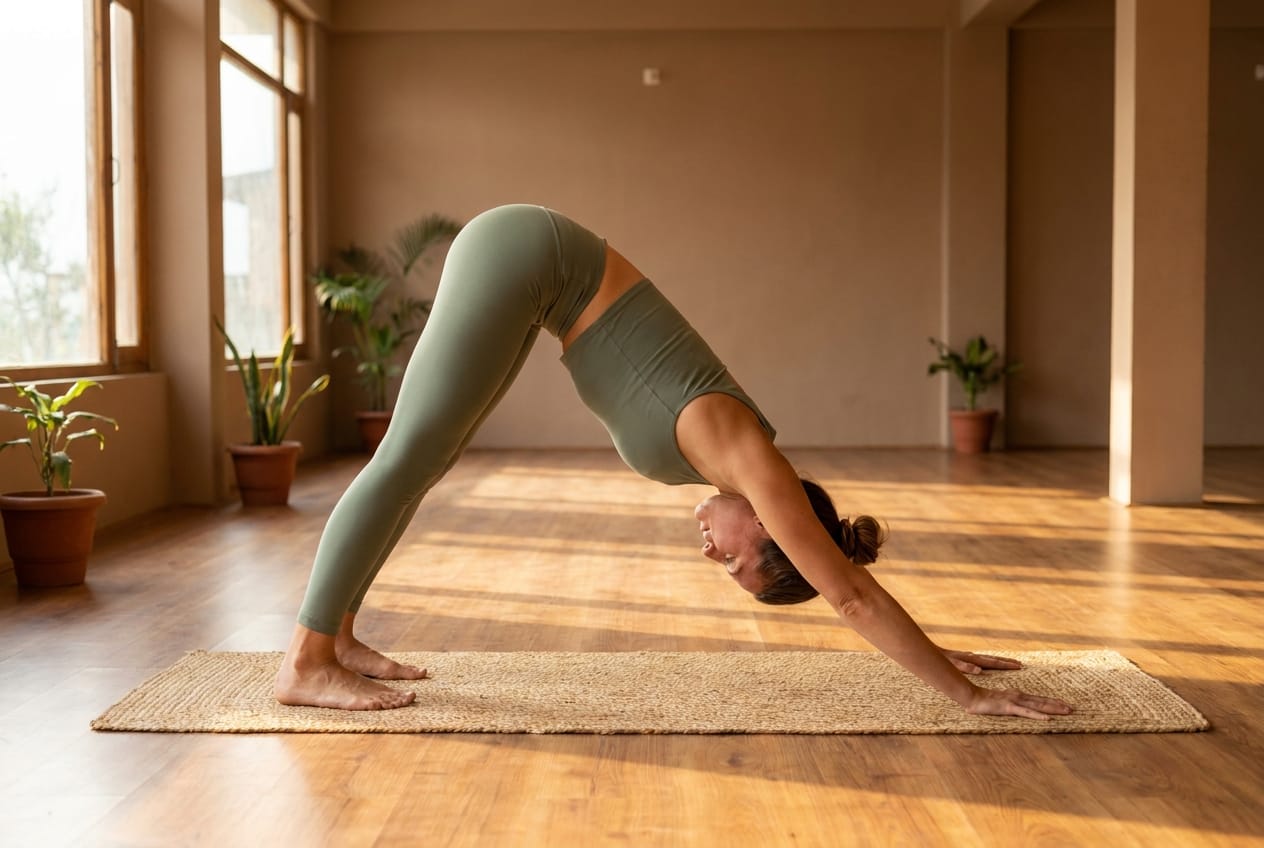
A full-body stretch that decompresses the spine and lengthens the hamstrings, which often contribute to lower back pain.
How to: From all fours, lift your hips up and back. Spread your fingers wide and press into your hands. Keep your spine long. It's okay to bend your knees if your hamstrings are tight.
Tip: Focus on lengthening your spine rather than straightening your legs.
Alignment cues: Prioritise a long, neutral spine over straight legs. Press evenly through the whole hand, especially the index-finger knuckles, to protect the wrists. Draw the front ribs in and lengthen the tailbone up toward the ceiling. A rounded lower back here is a sign the hamstrings are too tight — bend the knees generously.
What it targets: Hamstrings, calves, shoulders, and the long muscles of the back. By inverting the torso it gently decompresses the lumbar spine.
Modifications: For tight hamstrings or lower-back stiffness, keep a deep bend in the knees and lift the heels. For wrist sensitivity, practise on fists or use the forearm version, Dolphin Pose. Those with sciatica should keep knees bent and avoid forcing the heels down, as a hard hamstring stretch can tug the sciatic nerve.
How long: 5–8 breaths, or pedal the feet dynamically for a warmer release.
3. Child's Pose (Balasana)
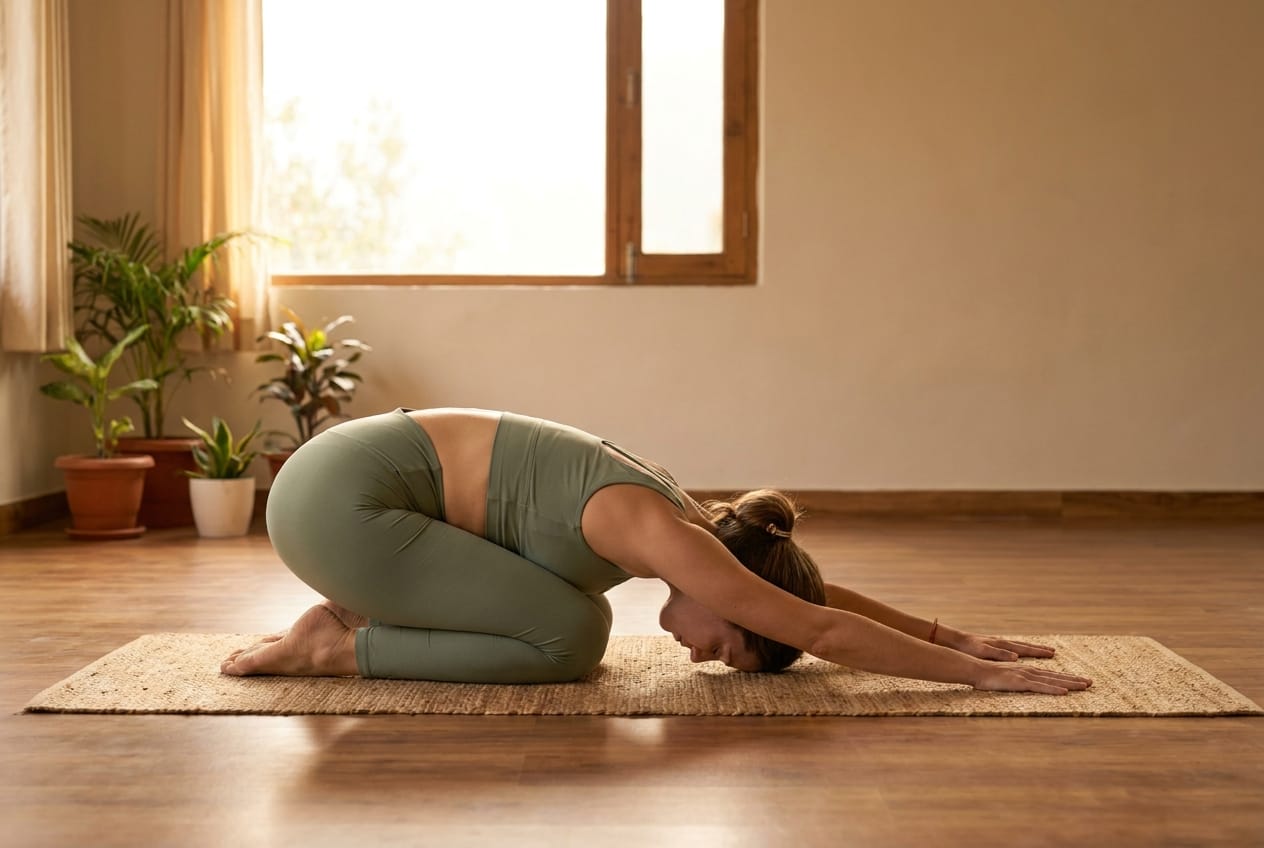
The ultimate restorative pose. It gently stretches the lower back and hips while calming the nervous system—perfect for anxiety relief as well.
How to: Kneel on the floor, touch your big toes together, and sit on your heels. Separate your knees about as wide as your hips. Exhale and lay your torso down between your thighs.
Alignment cues: Let the forehead rest on the mat or a block so the neck can fully release. Walk the hands forward to lengthen the spine, or rest them alongside the body for a more passive shape. Breathe into the back of the ribs and feel the lower back gently widen with each inhale.
What it targets: A passive, traction-style release for the entire spine, particularly the lumbar erectors, plus a gentle stretch for the hips and ankles.
Modifications: Place a bolster or stacked cushions under the torso so you can rest fully without effort — excellent for acute flare-ups. Widen the knees further for tight hips. If knees object, sit on a cushion between the heels. People with disc-related pain who find rounding uncomfortable can skip this and use Constructive Rest (lying on the back, knees bent) instead.
How long: 1–3 minutes, returning to it any time the back needs a reset.
4. Sphinx Pose (Salamba Bhujangasana)
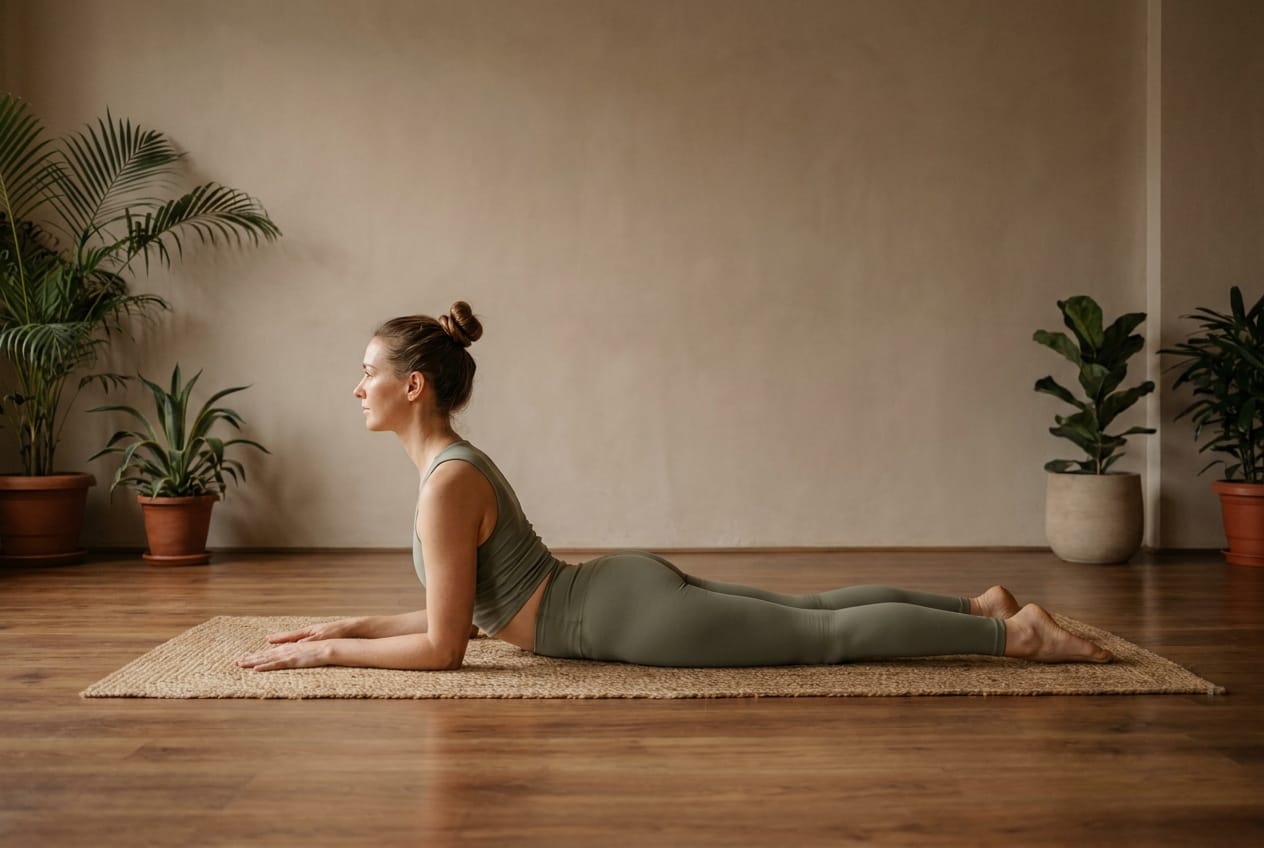
A gentle backbend that strengthens the spine without overwhelming it. Ideal for those recovering from back injuries.
How to: Lie on your belly with your legs side by side. Set your elbows under your shoulders and your forearms on the floor parallel to each other. Lift your chest and head.
Alignment cues: Keep the elbows directly under the shoulders so the chest lifts without crunching the lower back. Lengthen forward through the crown of the head as much as you lift up. Soften the buttocks and let the front of the pelvis stay grounded. The sensation should spread broadly across the back, never pinch in one spot.
What it targets: Strengthens the spinal extensors and gently restores the natural lumbar curve that hours of sitting flatten out.
Modifications: This is one of the best poses for many people with disc-related pain, because gentle extension can encourage a bulging disc to settle — but only if it feels good and does not send pain down the leg. Slide the elbows further forward to reduce the arch. For sciatica, keep the legs relaxed and the back-body soft.
How long: 30 seconds to 1 minute, building gradually.
5. Cobra Pose (Bhujangasana)
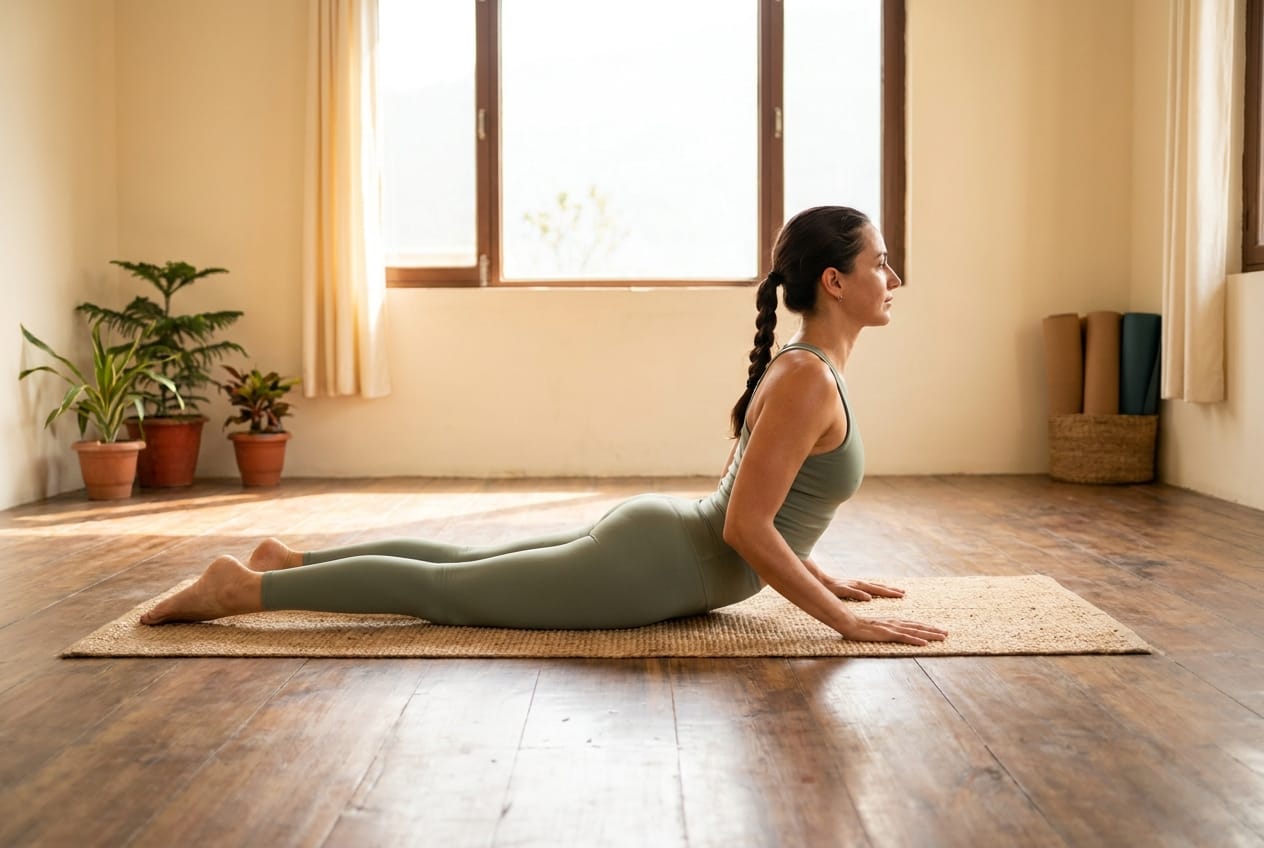
Progressing from Sphinx, Cobra strengthens the entire back and opens the chest, counteracting the "hunch" from desk work.
How to: Lie prone. Place hands under shoulders. Inhale and lift your chest off the floor. Keep your elbows close to your body.
Alignment cues: Hug the elbows toward the ribs and draw the shoulders down away from the ears. Lift primarily by engaging the back muscles, using the hands for support rather than pushing all the way up. Keep a slight bend in the elbows and the pubic bone pressing down so the work distributes evenly along the spine.
What it targets: Strengthens the erector spinae, opens the chest and front of the shoulders, and reverses the rounded posture that drives so much back pain.
Modifications: Begin with a low Cobra and only rise as high as feels supported. If Cobra causes any pinching in the lower back, return to Sphinx. Those with sciatica or disc issues should treat this as a back-strengthening pose, not a deep backbend — keep it low and pain-free.
How long: 3–5 breaths, repeated 2–3 times.
6. Bridge Pose (Setu Bandhasana)
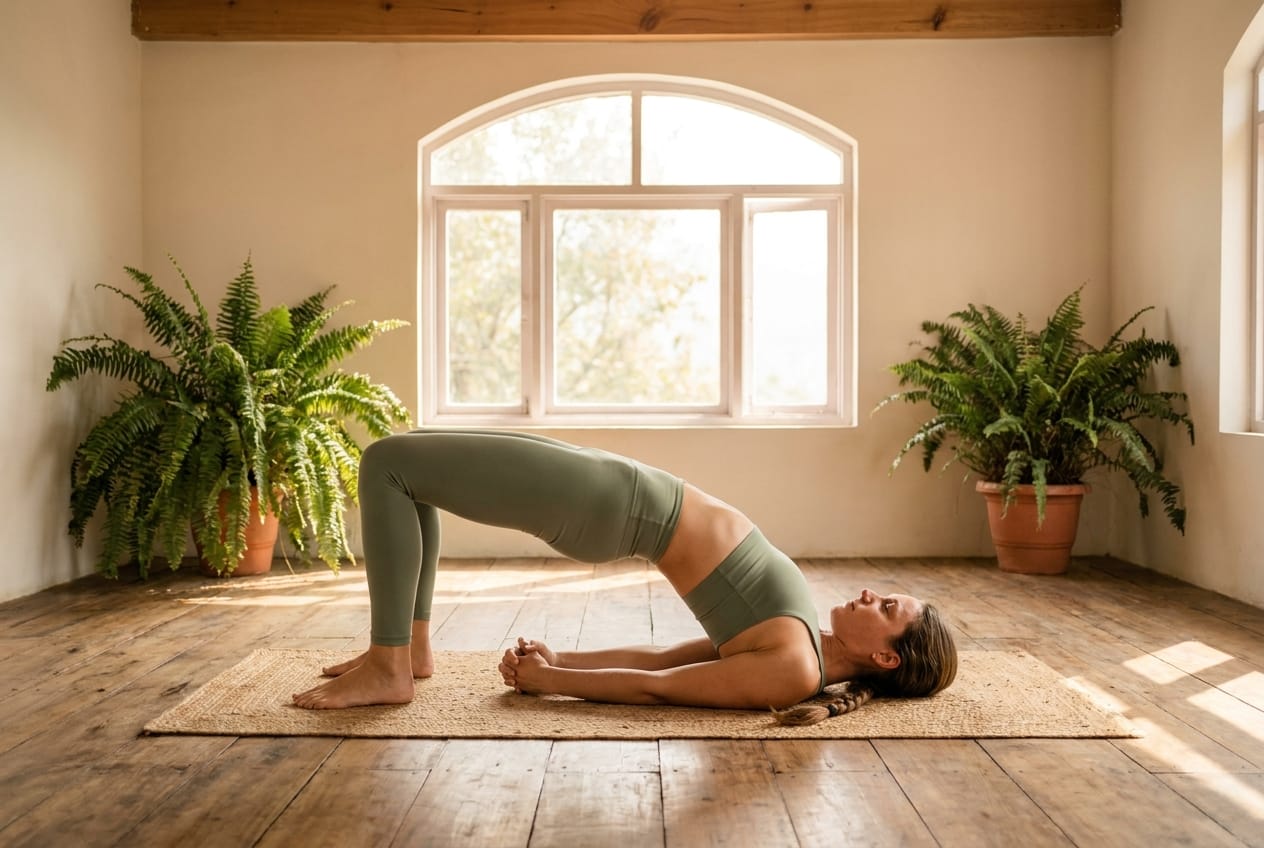
Strengthens the glutes and hamstrings—the support system for your lower back. A weak posterior chain is a common cause of back pain.
How to: Lie on your back, bend your knees, and place feet flat on the floor. Press into your feet and arms to lift your hips towards the ceiling.
Alignment cues: Keep the feet hip-width and parallel, knees tracking over the ankles. Initiate the lift by pressing the feet down and squeezing the glutes rather than arching the lower back. Keep the back of the neck long and the chin slightly away from the chest. The lower back should feel supported, not jammed.
What it targets: Builds the glutes, hamstrings, and core — the posterior chain that takes load off an overworked lower back. It is one of the most genuinely therapeutic strengthening poses for back pain.
Modifications: For a restorative version, slide a block under the sacrum and rest there passively — wonderful for lower-back stiffness and easy on a sensitive spine. People with sciatica and disc-related pain generally tolerate Bridge well because it strengthens without flexing or twisting the spine.
How long: Hold 5–8 breaths, or lift and lower dynamically for 8–10 rounds to build strength.
7. Legs-Up-The-Wall (Viparita Karani)
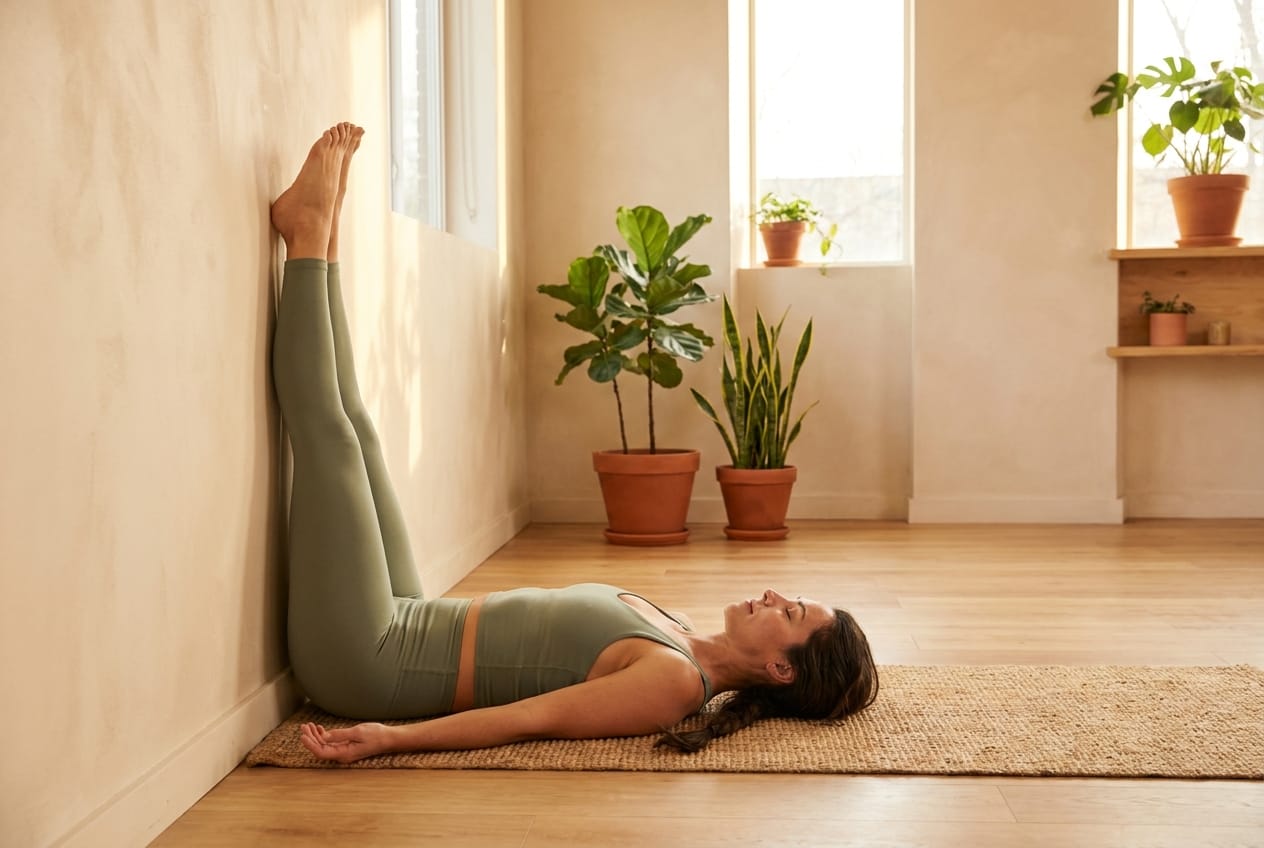
This restorative inversion allows gravity to release tension from the legs and lower back. Stay here for 5-10 minutes for deep relief.
How to: Sit close to a wall. Swing your legs up onto the wall and lie back. Rest your arms by your sides.
Alignment cues: Get the hips reasonably close to the wall, but not so close that the lower back is forced to round. Let the whole back body melt into the floor. The legs need almost no muscular effort — let the wall hold them. Soften the jaw, the eyes, and the breath.
What it targets: Calms the nervous system, eases tired legs, and gives the lower back a long, supported, gravity-assisted rest. Because pain and stress amplify each other, this pose treats the nervous-system side of back pain.
Modifications: Slide a thin cushion under the pelvis for support, or move the hips slightly away from the wall and bend the knees if the hamstrings feel tight. This is one of the safest poses here and suits almost everyone, including most people with sciatica and disc pain.
How long: 5–10 minutes. Few poses give this much relief for so little effort.
8. Supine Spinal Twist (Supta Matsyendrasana)
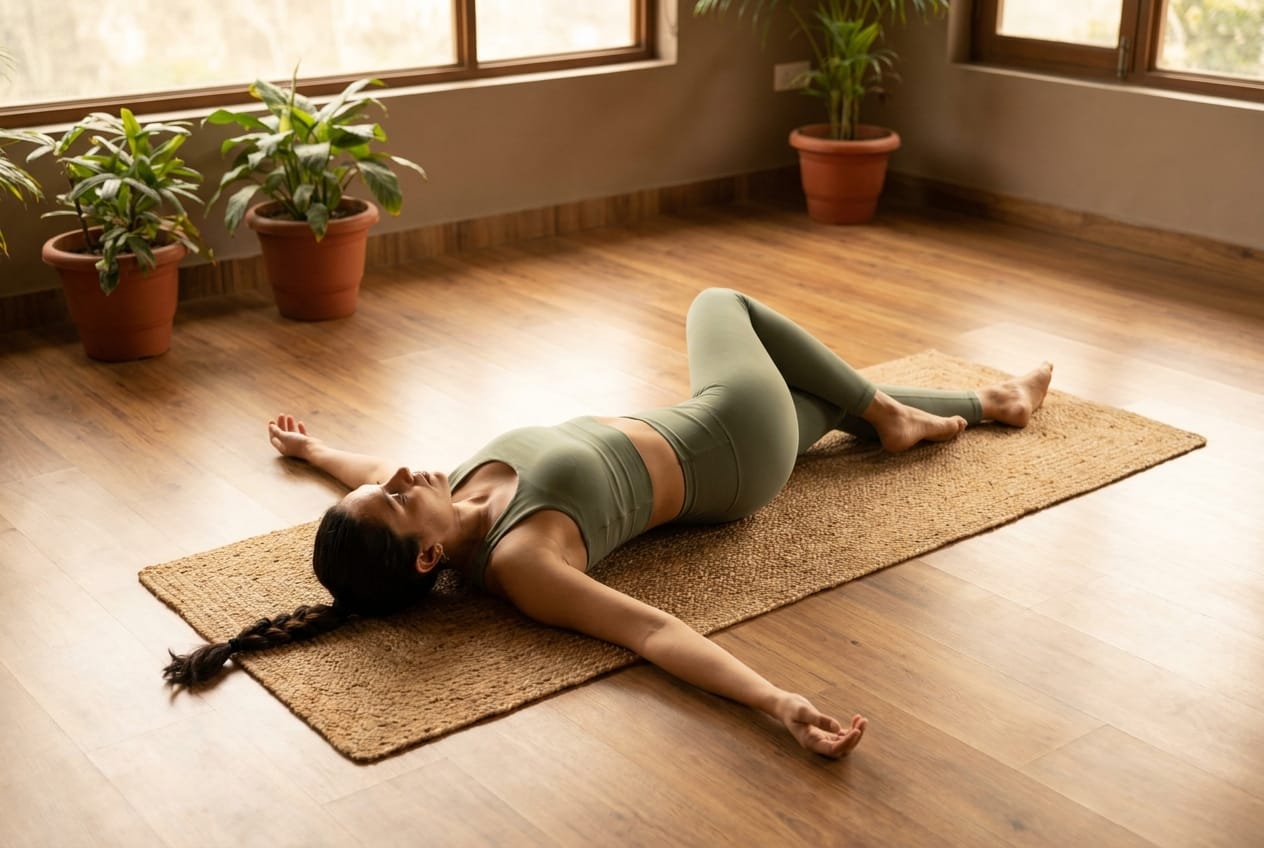
Realigns the spine and hydrates the spinal discs. A perfect way to end your practice.
How to: Lie on your back. Hug your knees into your chest. Drop both knees to one side while turning your head to the opposite side.
Alignment cues: Keep the twist gentle and supported — the goal is release, not depth. Let the knees fall only as far as the shoulders can stay grounded. If the top shoulder lifts away from the floor, place a cushion under the knees to meet you. Breathe slowly and let the body unwind a little more with each exhale.
What it targets: Releases the muscles along the spine and around the hips, and helps move fluid through the intervertebral discs.
Modifications: Always support the knees with a bolster or cushion so the twist stays passive. Important caution for disc-related pain: people with an acute disc problem should generally avoid loaded or end-range spinal twists — keep this very small and gentle, or skip it entirely until cleared by a professional. For sciatica, twist toward whichever side feels easeful and stop short of any leg symptoms.
How long: 1–2 minutes per side, near the end of practice.
9. Pigeon Pose (Eka Pada Rajakapotasana)
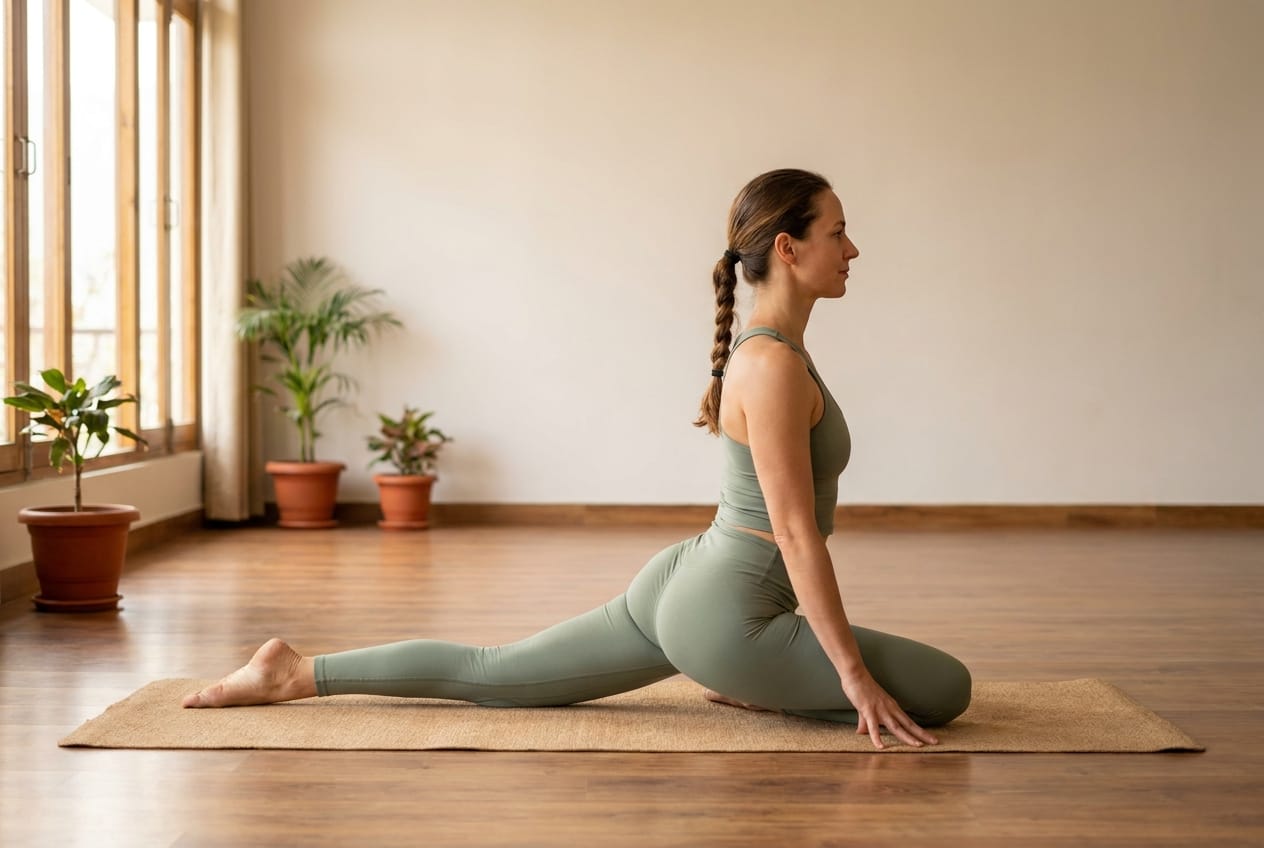
Tight hips often pull on the lower back. Pigeon pose releases deep-seated hip tension, providing immense relief for the lumbar spine.
How to: From Down Dog, bring your right knee forward behind your right wrist. Extend your left leg behind you. Fold forward if comfortable.
Alignment cues: Keep the hips as level and square as possible — let the front shin sit at whatever angle keeps the front hip comfortable. Tuck the back toes or point them; either is fine, as long as the back hip points down toward the floor. There should be a deep stretch in the front hip and buttock, never a sharp sensation in the front knee.
What it targets: Opens the piriformis and deep external rotators of the hip. Because the piriformis sits very close to the sciatic nerve, releasing it can ease the muscular component of sciatica and reduce the pull on a tight lower back.
Modifications: Always place a block or folded blanket under the hip of the bent leg so the pelvis stays supported and level — this protects both the knee and the lower back. For an easier and often safer alternative, practise a reclined figure-four (Supta Kapotasana) on your back. People with knee issues should choose the reclined version.
How long: 1–3 minutes per side, only ever in a comfortable range.
10. Corpse Pose (Savasana)
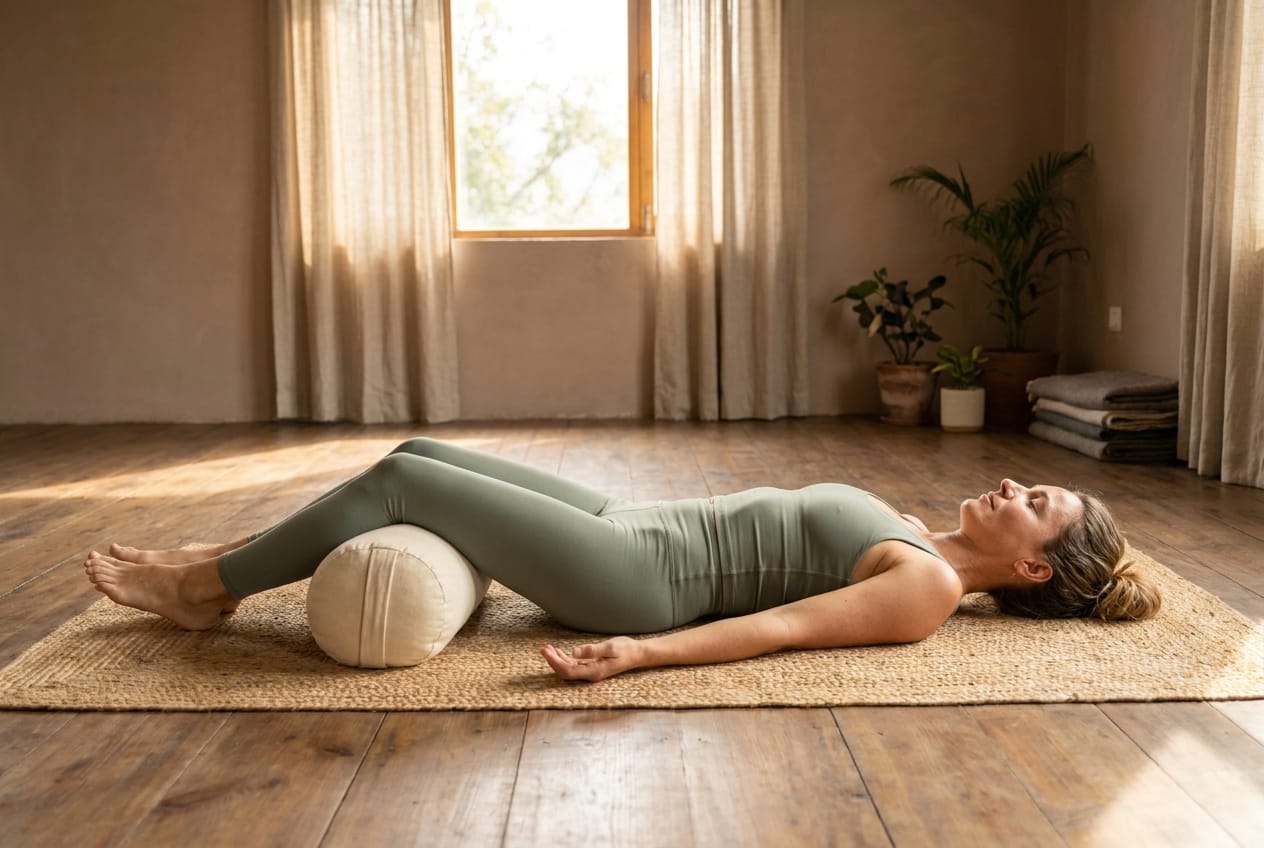
Never skip Savasana! It allows your body to integrate the practice and release any lingering stress holding your muscles tight.
How to: Lie flat on your back, arms by your sides, palms facing up. Close your eyes and relax every muscle.
Alignment cues: If lying flat is uncomfortable, place a bolster or rolled blanket under the knees — this releases the lower back and is often the single most important modification for back-pain sufferers. Let the feet fall open, the shoulders soften, and the breath find its own quiet rhythm.
What it targets: Shifts the nervous system into its rest-and-repair (parasympathetic) state. This is where tense, guarding muscles finally let go and the benefits of the practice are absorbed.
Modifications: Knees over a bolster for almost anyone with back pain. If lying on the back is not comfortable at all, rest on your side in a loose foetal position instead.
How long: 5–10 minutes. This is not optional — it is part of the treatment.