Back to Blog
Practice

Benefits of Aerial Yoga: Complete Guide

Rahul Badoni
Share this post:
Benefits of Aerial Yoga: Complete Guide

Discover the physical and mental benefits of aerial yoga. Spinal decompression, flexibility, strength, stress relief, and who can practice it.

Suspended from silk hammocks, defying gravity, and discovering entirely new dimensions of your practice: aerial yoga has taken the global yoga community by storm. But beyond the stunning Instagram photos, what are the real benefits of aerial yoga? Whether you are a seasoned yogi looking for a new challenge or a complete beginner curious about this innovative practice, this complete guide covers everything you need to know about aerial yoga, from its physical and mental benefits to safety considerations and what your first class will actually look like.

At Swaastik Yog School in Rishikesh, we have watched aerial yoga transform the practices and bodies of hundreds of students. Here is what we have learned from years of teaching it on the banks of the Ganges.

What Is Aerial Yoga?

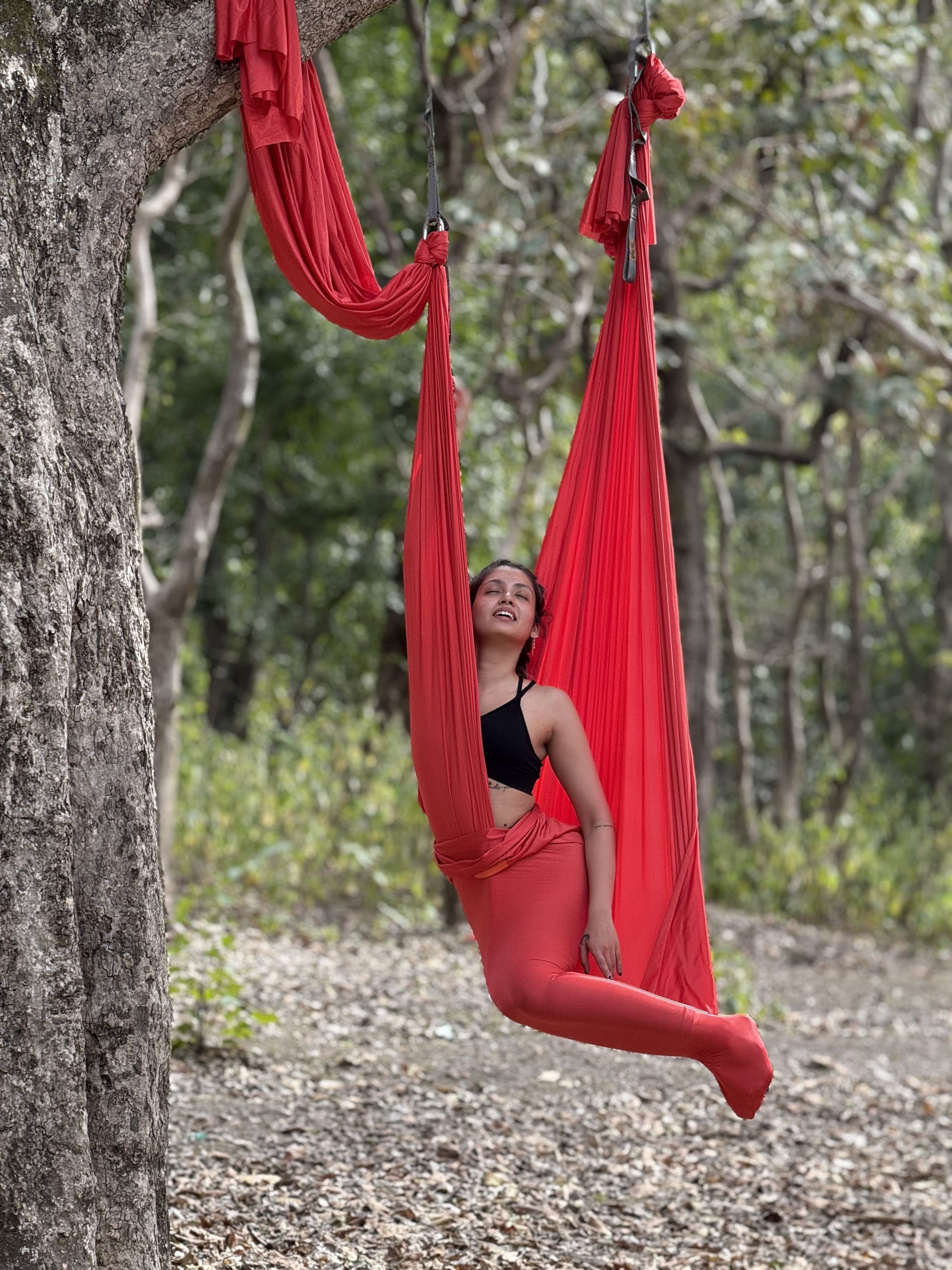
Aerial yoga, also called anti-gravity yoga, combines traditional yoga poses with elements of aerial arts using a silk hammock (sometimes called a yoga swing or sling) suspended from the ceiling. The hammock supports your body weight, allowing you to perform poses that would be difficult or impossible on the ground.
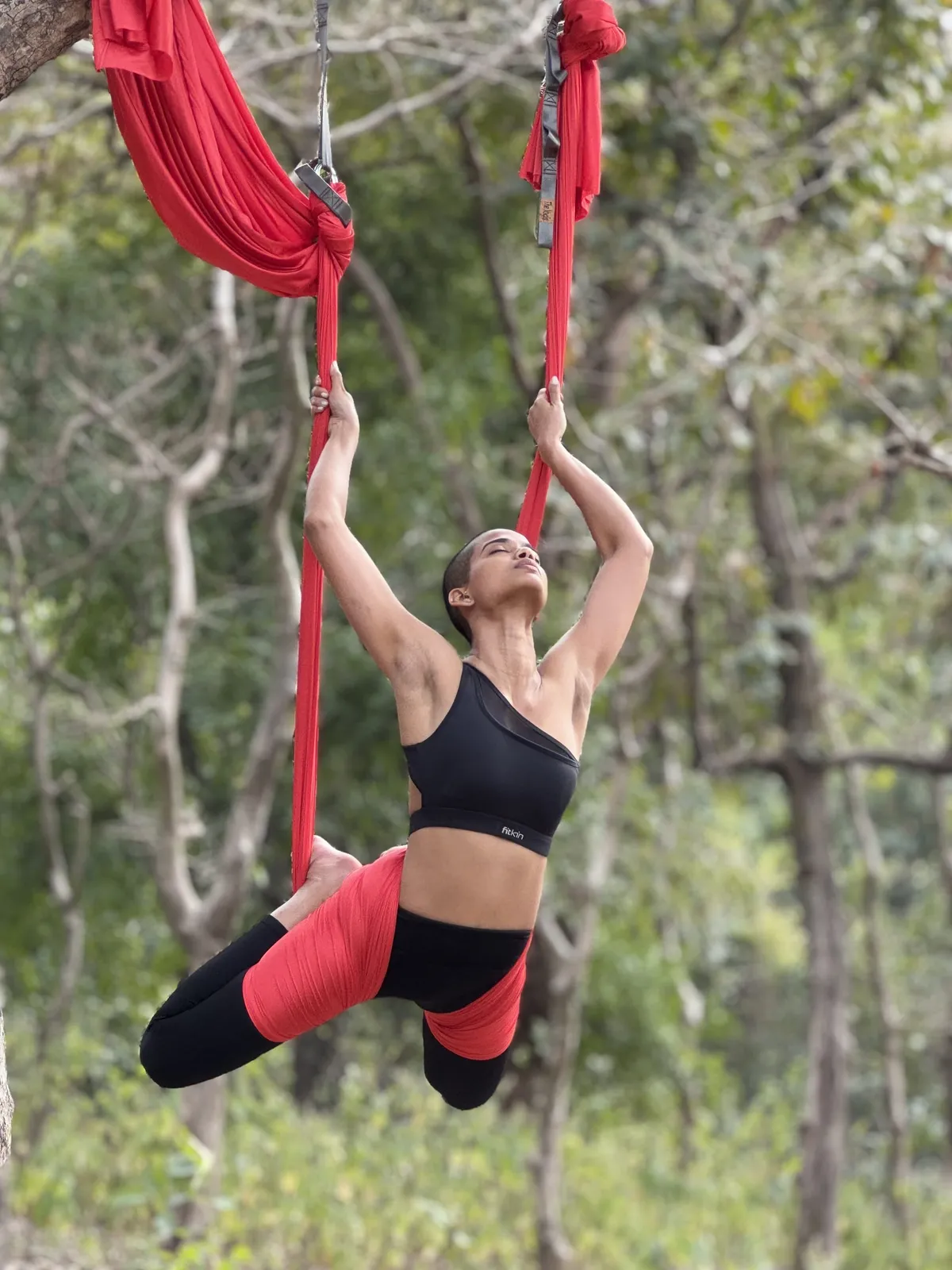
Developed in the early 2000s by aerial performer Christopher Harrison, aerial yoga draws from traditional Hatha yoga, Pilates, calisthenics, and aerial acrobatics. The hammock acts as both a prop and a partner, supporting you in inversions, deepening your stretches, and challenging your balance and core strength in entirely new ways.

Physical Benefits of Aerial Yoga

1. Spinal Decompression

This is perhaps the most celebrated benefit of aerial yoga and the reason many people try it for the first time. When you hang inverted or partially inverted in the hammock, gravity gently decompresses your spine, creating space between the vertebrae. This can:

  • Relieve chronic back pain caused by compression
  • Improve circulation to spinal discs
  • Reduce pressure on nerves
  • Counteract the effects of sitting at a desk all day

Many students report immediate relief in their lower back after just one aerial yoga session. Over time, regular practice can significantly improve spinal health and posture.

2. Increased Flexibility

The hammock allows you to move into stretches with the support of the fabric, enabling you to safely go deeper than you might on the ground. The suspended nature of the practice means:

  • Your body weight creates gentle, sustained traction in stretches
  • Tight muscles can release more easily without the resistance of the floor
  • Hip openers, backbends, and hamstring stretches become more accessible
  • You can hold stretches longer with less discomfort

3. Full-Body Strength Building

Do not let the graceful photos fool you: aerial yoga is a serious workout. The instability of the hammock means your muscles are constantly working to stabilize you. Key strength benefits include:

  • Core strength: Almost every aerial pose requires deep core engagement to control your position in the hammock
  • Upper body: Gripping, pulling, and supporting yourself builds strength in your arms, shoulders, and back
  • Lower body: Standing poses with one foot in the hammock challenge your legs and glutes
  • Grip strength: Holding the fabric develops hand and forearm strength

4. Improved Balance and Proprioception

Working in a suspended, unstable environment forces your body to develop much finer balance and spatial awareness (proprioception). This improved body awareness translates directly to your regular yoga practice and daily movement, reducing your risk of falls and improving coordination.

5. Joint-Friendly Practice

Because the hammock bears a significant portion of your body weight, aerial yoga is remarkably gentle on the joints. This makes it an excellent option for people who find certain ground-based yoga poses uncomfortable due to wrist, knee, or shoulder issues. The reduced weight-bearing allows you to build strength and flexibility without excessive joint stress.

6. Cardiovascular Benefits

The dynamic nature of aerial yoga, with transitions between poses requiring effort and control, provides a moderate cardiovascular workout. Your heart rate elevates as you move through sequences, particularly during more active flows and inversions.
Mental and Emotional Benefits of Aerial Yoga

1. Stress Relief and Relaxation

There is something uniquely calming about being cradled in a hammock. The gentle rocking motion and the sensation of being held can activate your parasympathetic nervous system (the rest-and-digest response), reducing cortisol levels and promoting deep relaxation. Aerial savasana, where you rest completely cocooned in the hammock, is often described by students as one of the most relaxing experiences of their lives.

2. Overcoming Fear and Building Confidence

Hanging upside down or performing poses several feet off the ground requires courage. As you gradually learn to trust the hammock and your own abilities, you build mental resilience and confidence that extends far beyond the yoga studio. Many students describe a powerful shift in their self-belief after mastering their first aerial inversion.

3. Playfulness and Joy

One of the most underrated benefits of aerial yoga is the sheer fun factor. Swinging, flipping, and floating brings out a childlike playfulness that many adults rarely experience. This joy is therapeutic in itself, breaking patterns of seriousness and stress that accumulate in daily life.

4. Improved Focus and Mindfulness

When you are suspended in a hammock, there is no room for a wandering mind. You must be completely present to maintain your position and execute transitions safely. This enforced mindfulness is a powerful meditation tool and helps develop concentration skills that benefit your seated meditation practice.

Who Can Do Aerial Yoga?

Aerial yoga is more accessible than most people assume. You do not need to be a gymnast, a dancer, or even particularly flexible to begin. Most classes offer modifications for all levels. However, there are some considerations:

Great Candidates for Aerial Yoga

  • Complete beginners looking for a fun introduction to yoga
  • Experienced yogis wanting to challenge their practice in new ways
  • People with back pain seeking spinal decompression
  • Athletes looking for cross-training and recovery
  • Anyone who wants a full-body workout that does not feel like traditional exercise

Precautions and Contraindications

Consult a doctor before trying aerial yoga if you have:

  • Uncontrolled high blood pressure or heart conditions
  • Glaucoma or other eye conditions affected by inversion
  • Recent surgery, especially abdominal or spinal
  • Pregnancy (some gentle aerial yoga is possible, but only with specialized instruction)
  • Inner ear conditions or severe vertigo
  • Osteoporosis or bone density issues

Aerial Yoga Safety: What You Need to Know

Safety in aerial yoga comes down to three factors: the equipment, the teacher, and your own awareness.

Equipment Safety

  • Hammocks should be made from high-quality aerial silk or tricot fabric rated for at least 300 kg (660 lbs)
  • Rigging points must be professionally installed in ceiling beams or steel frames
  • Hammock height should be adjustable and set appropriately for each student
  • The floor beneath should have padding or crash mats, especially for beginners

Teacher Qualifications

Always train with a certified aerial yoga instructor who has specific aerial training beyond standard yoga teacher certification. At Swaastik Yog School, our aerial yoga teachers hold specialized certifications and have extensive experience in both aerial arts and traditional yoga. Our Aerial Yoga Teacher Training Course prepares future teachers with rigorous safety protocols.

Personal Safety Tips

  • Wear fitted clothing that covers your armpits and the backs of your knees (the fabric can pinch bare skin)
  • Remove all jewelry, watches, and belt buckles that could snag the fabric
  • Do not eat a heavy meal within 2 hours of class
  • Stay hydrated but do not drink excessive water right before inversions
  • Always communicate with your teacher about any discomfort or dizziness

What to Expect in Your First Aerial Yoga Class

If you are wondering what your first aerial yoga class will be like, here is a typical structure:

Warm-Up (10 to 15 minutes)

You will begin with ground-based stretches and gentle movements to warm up your body. Your teacher will introduce the hammock, show you how to get in and out safely, and teach basic grips and positions.

Standing and Low Hammock Work (15 to 20 minutes)

Next, you will use the hammock at hip height for supported standing poses, lunges, and gentle stretches. This builds familiarity with the fabric and develops trust before moving to more challenging positions.

Inversions and Aerial Poses (15 to 20 minutes)

This is where the magic happens. You will learn to invert safely, hang from various positions, and flow through suspended poses. Beginners typically learn a basic inversion (hanging upside down with the hammock around the hips) and a few suspended poses.

Cool-Down and Aerial Savasana (10 minutes)

The class ends with gentle stretches in the hammock followed by aerial savasana, where you lie completely cradled in the fabric. The gentle swaying and full-body support make this one of the most deeply relaxing experiences in any yoga discipline.

Aerial Yoga vs Regular Yoga: How Do They Compare?

  • Accessibility of inversions: Aerial yoga makes inversions accessible to almost everyone. In regular yoga, headstands and handstands require significant upper body strength and practice. In aerial yoga, the hammock supports you.
  • Spinal decompression: Unique to aerial yoga. Ground-based yoga cannot replicate the gravitational traction of suspended inversions.
  • Core engagement: Both build core strength, but aerial yoga provides a more intense core workout due to the constant instability.
  • Flexibility development: Both are excellent. Aerial yoga can accelerate flexibility gains through supported, gravity-assisted stretches.
  • Meditative depth: Traditional yoga, especially Hatha and Yin, may offer deeper meditative experiences. Aerial yoga's focus on physical challenge can make quiet meditation more difficult during class.
  • Equipment requirements: Regular yoga needs only a mat. Aerial yoga requires specialized equipment and a suitable space.

The ideal approach? Practice both. Aerial and ground-based yoga complement each other beautifully. Many of our students at Swaastik Yog School attend both traditional and aerial classes to get the full spectrum of benefits.

Try Aerial Yoga in Rishikesh

There is no better place to experience aerial yoga for the first time than in the yoga capital of the world. At Swaastik Yog School, we offer aerial yoga as part of our drop-in class schedule so you can try it without any long-term commitment. For those who want to go deeper, our Aerial Yoga Teacher Training Course provides comprehensive certification that prepares you to teach aerial yoga safely and confidently.

Whether you are visiting Rishikesh for a week or a month, adding aerial yoga to your practice can unlock new dimensions of strength, flexibility, and pure enjoyment.

Ready to Fly? Get Started Today

The benefits of aerial yoga are real, profound, and accessible to almost everyone. From spinal decompression and full-body strengthening to stress relief and childlike joy, this innovative practice has something to offer every body. The only thing better than reading about it is experiencing it yourself.

Contact Swaastik Yog School to book your first aerial yoga class in Rishikesh, ask about our teacher training program, or simply learn more about how aerial yoga can transform your practice. We are hanging in the hammocks and waiting for you.

Ready to Start Your Yoga Journey?

Join our Yoga Alliance certified teacher training programs in Rishikesh and learn from experienced instructors in the birthplace of yoga.

Related Articles

10 Best Yoga Asanas for Back Pain Relief

10 Best Yoga Asanas for Back Pain Relief

Discover the most effective yoga asanas and poses to alleviate back pain and improve spine health. Learn proper alignment and modifications for all levels.

Read More
Aerial Yoga in Rishikesh & Home Practice Guide

Aerial Yoga in Rishikesh & Home Practice Guide

Everything you need to know about Aerial Yoga in Rishikesh and learning at home. Includes equipment, safety tips, and online resources.

Read More
Everything About Vajrasana: Benefits, Time Limit & Information

Everything About Vajrasana: Benefits, Time Limit & Information

Complete information about Vajrasana (Thunderbolt Pose) including benefits, time limit, proper technique, and common mistakes to avoid.

Read More