Breath is the bridge between body and mind, and pranayama breathing techniques are the ancient science of harnessing that bridge for health, vitality, and spiritual growth. In the yogic tradition, prana means life force and ayama means expansion or control. Pranayama, therefore, is the practice of expanding and directing the life force through conscious breathing. At Swaastik Yog School in Rishikesh, pranayama is not an afterthought or a brief warm-up. It is a central pillar of every program we offer, taught with the depth and precision it deserves.
This complete guide covers what pranayama is, its place in the yogic system, and eight essential pranayama breathing techniques with step-by-step instructions that beginners can start practicing today. We also cover the benefits, best times to practice, and important safety guidelines.
What Is Pranayama and Why Should You Practice It?
Pranayama is the fourth limb of Patanjali's Ashtanga Yoga, positioned after asana (physical postures) and before pratyahara (sense withdrawal). This placement is intentional. Once the body is stable and comfortable through asana practice, the practitioner is ready to work with the subtler energy of breath.
In the Hatha Yoga Pradipika, one of the oldest texts on hatha yoga, it is stated that when the breath wanders, the mind is unsteady. When the breath is calmed, the mind is calm. This observation, made centuries ago, is now confirmed by modern neuroscience. Controlled breathing directly influences the autonomic nervous system, shifting the balance between sympathetic (fight-or-flight) and parasympathetic (rest-and-digest) activation.
The benefits of regular pranayama breathing techniques practice include reduced anxiety and stress, improved lung capacity, better sleep, enhanced focus and concentration, balanced energy levels, strengthened immune function, and greater emotional regulation. These are not abstract promises but measurable outcomes supported by peer-reviewed research.
Before You Begin: Essential Guidelines
Before diving into specific techniques, understand these foundational principles that apply to all pranayama practice.
- Empty stomach: Always practice pranayama on an empty or light stomach, ideally two to three hours after a meal
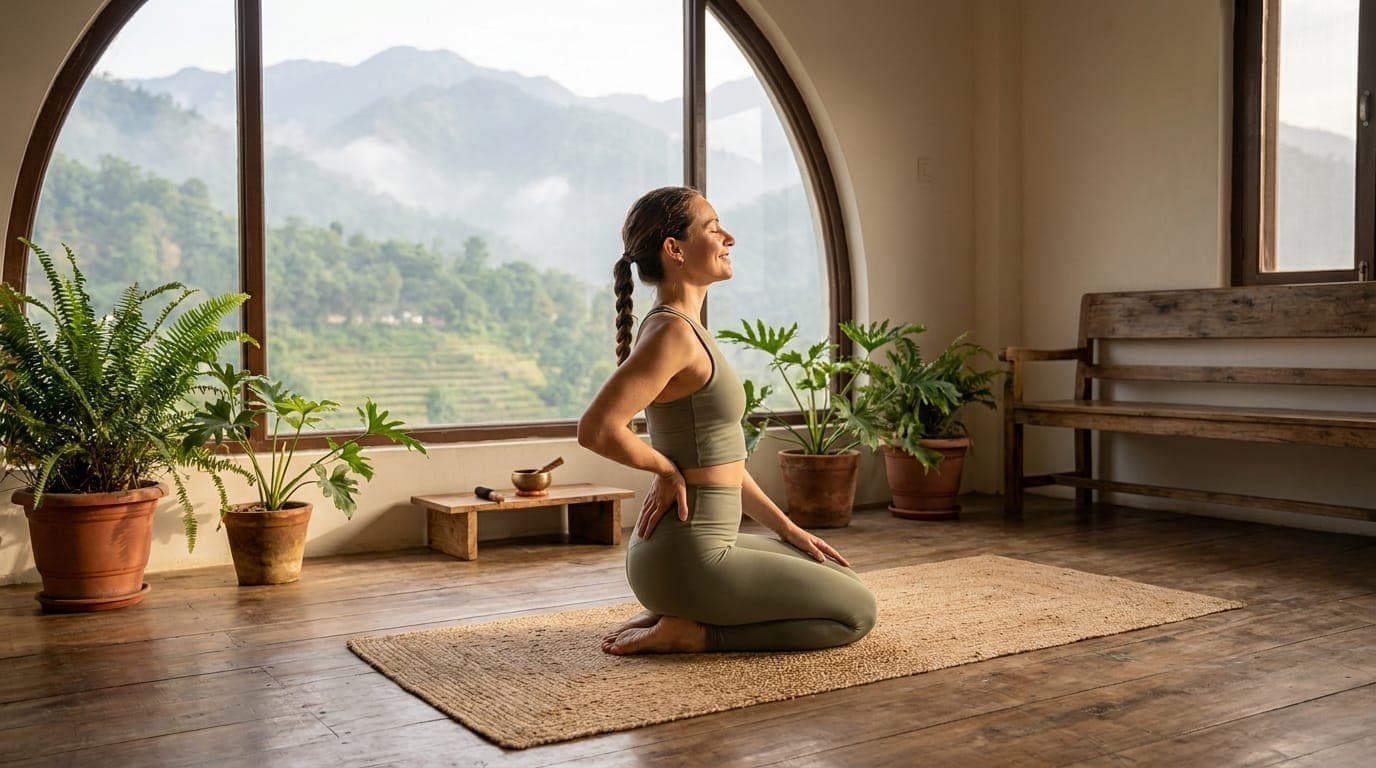
- Posture: Sit comfortably with your spine erect. Sukhasana (cross-legged), Vajrasana (kneeling), or sitting in a chair are all acceptable
- Nostrils: Ensure both nostrils are relatively clear before practicing. A gentle neti (nasal wash) beforehand can help
- Progression: Start with gentle techniques and shorter durations. Increase gradually over weeks and months
- No forcing: If you feel dizzy, lightheaded, or anxious, stop immediately and return to normal breathing
- Best time: Early morning (Brahma Muhurta, 4-6 AM) is traditionally considered the best time, but any consistent time works
8 Essential Pranayama Breathing Techniques
Here are eight foundational pranayama breathing techniques arranged from the gentlest to the most energizing. Beginners should start with the first three and add others gradually.
1. Nadi Shodhana (Alternate Nostril Breathing)
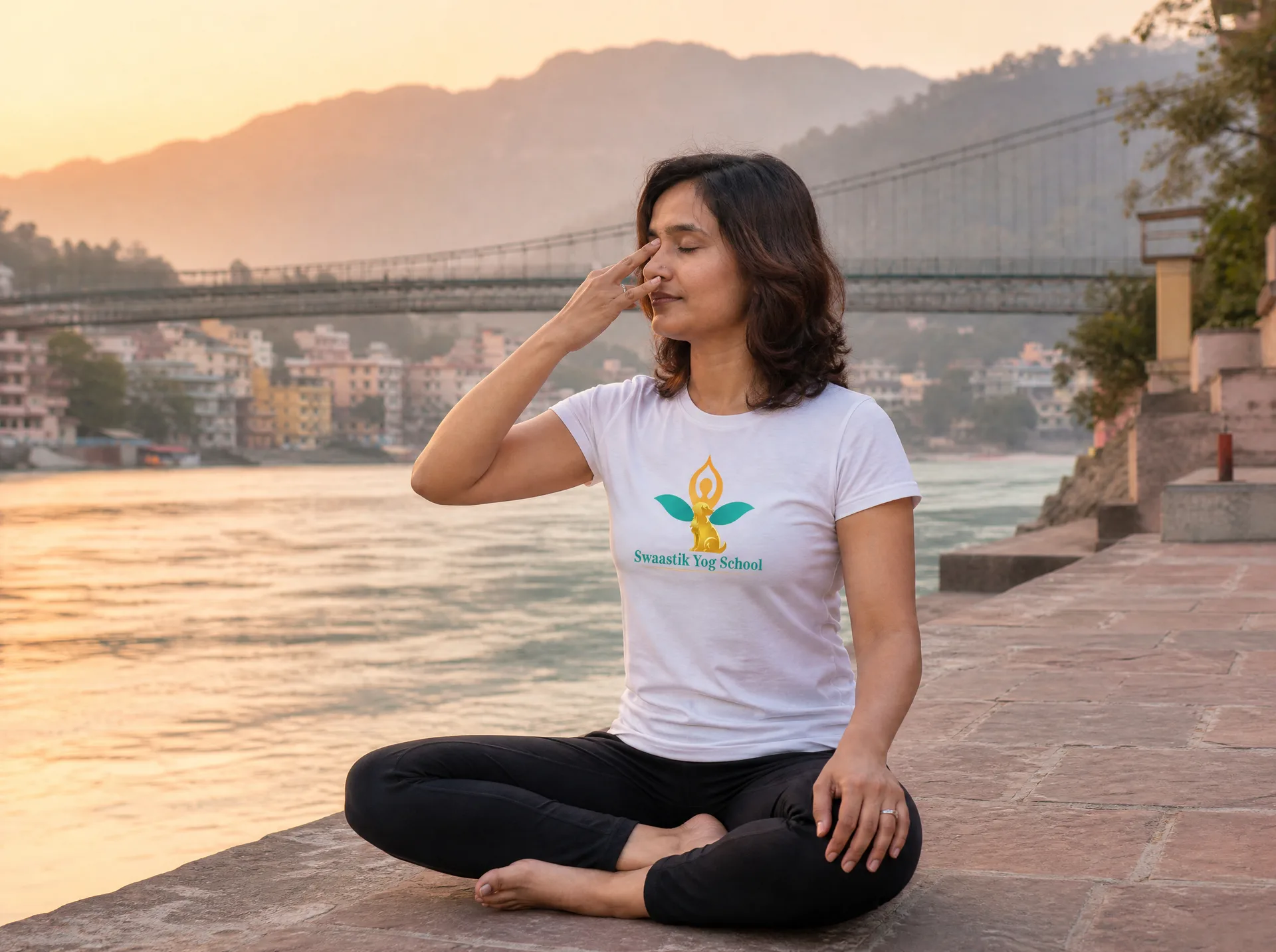
Nadi Shodhana is arguably the most important pranayama technique and the one most frequently recommended for beginners. Nadi means energy channel and shodhana means purification. This practice balances the left and right hemispheres of the brain, calms the nervous system, and purifies the energy channels.
Step-by-step instructions:
- Sit comfortably with your spine straight and shoulders relaxed
- Bring your right hand into Vishnu Mudra: fold the index and middle fingers toward the palm, keeping the thumb, ring finger, and little finger extended
- Close your right nostril with your right thumb
- Inhale slowly and deeply through your left nostril for a count of 4
- Close your left nostril with your ring finger, so both nostrils are closed
- Hold the breath for a count of 4 (beginners may skip retention initially)
- Release your thumb and exhale slowly through the right nostril for a count of 8
- Inhale through the right nostril for a count of 4
- Close the right nostril, hold for 4
- Exhale through the left nostril for 8
- This completes one full round. Practice 5 to 10 rounds
Benefits: Reduces anxiety, improves focus, balances the nervous system, prepares the mind for meditation.
2. Ujjayi (Victorious Breath)
Ujjayi is the breath most commonly used during asana practice, particularly in vinyasa and ashtanga yoga. It creates a gentle ocean-like sound by slightly constricting the back of the throat, which slows the breath, warms the air, and brings attention inward.
Step-by-step instructions:
- Begin by breathing through your mouth. On the exhale, constrict the back of your throat as if you were fogging a mirror
- Now close your mouth and maintain that same slight throat constriction while breathing through your nose
- Both inhale and exhale should produce a soft, whispering sound
- Keep the breath slow, smooth, and even. Aim for inhales and exhales of equal length
- Practice for 5 to 10 minutes
Benefits: Builds internal heat, improves concentration, calms the mind, regulates blood pressure.
3. Bhramari (Humming Bee Breath)
Bhramari creates a soothing humming vibration that immediately calms the mind and is particularly effective for reducing anger, anxiety, and frustration. It is named after the Indian black bee, bhramara.
Step-by-step instructions:
- Sit comfortably with eyes closed
- Place your index fingers on the cartilage of your ears (Shanmukhi Mudra) or simply press the ear flaps gently closed
- Inhale deeply through the nose
- As you exhale, make a steady, medium-pitched humming sound like a bee
- Feel the vibration in your face, skull, and chest
- Continue for 7 to 10 rounds
Benefits: Instantly calms the mind, reduces blood pressure, relieves headaches, improves concentration, beneficial for tinnitus.
4. Kapalabhati (Skull-Shining Breath)
Kapalabhati is a shat kriya (cleansing technique) as much as a pranayama. It involves forceful exhalations and passive inhalations, creating a pumping action in the abdomen that generates heat, cleanses the respiratory tract, and energizes the system.
Step-by-step instructions:
- Sit tall with a long spine
- Take a deep inhale to begin
- Exhale sharply through the nose by contracting your abdominal muscles quickly and forcefully
- Allow the inhale to happen passively as your belly naturally relaxes and expands
- Start with one round of 20 pumps, then inhale deeply, hold briefly, and exhale slowly
- Gradually increase to 3 rounds of 30 to 60 pumps each
Benefits: Cleanses the sinuses and respiratory system, strengthens the abdominal muscles, increases lung capacity, energizes the brain.
Contraindications: Avoid during pregnancy, menstruation, high blood pressure, heart conditions, hernia, or recent abdominal surgery.
5. Bhastrika (Bellows Breath)
Bhastrika is similar to Kapalabhati but more forceful on both the inhale and exhale. Both are active, powerful, and equal in force, mimicking the action of a blacksmith's bellows. This is a highly energizing technique.
Step-by-step instructions:
- Sit with your spine erect and hands on your knees
- Inhale forcefully through the nose, expanding your belly
- Exhale forcefully through the nose, pulling the belly in sharply
- Both inhale and exhale should be equal, forceful, and rhythmic
- Start with one round of 10 breaths, then rest with normal breathing
- Gradually increase to 3 rounds of 20 breaths
Benefits: Generates significant body heat, energizes the nervous system, clears the mind, strengthens the lungs and diaphragm.
Contraindications: Same as Kapalabhati. Additionally avoid if you have epilepsy, vertigo, or panic disorder.
6. Shitali (Cooling Breath)
Shitali is a cooling pranayama, perfect for hot weather, pitta (fire) constitution, or when you need to cool down after intense practice. Here in Rishikesh, we teach Shitali extensively during the hot summer months when temperatures climb.
Step-by-step instructions:
- Sit comfortably and relax your shoulders
- Roll your tongue into a tube shape (if genetically unable to curl your tongue, use Sitkari: inhale through clenched teeth instead)
- Inhale slowly through the curled tongue, feeling the cool air pass over it
- Close your mouth and exhale slowly through the nose
- Practice 10 to 15 rounds
Benefits: Cools the body and mind, reduces anger and agitation, aids digestion, reduces fever, beneficial for high blood pressure.
7. Surya Bhedana (Right Nostril Breathing)
Surya means sun, and the right nostril is associated with the solar, warming, activating energy channel (Pingala Nadi). Surya Bhedana involves inhaling exclusively through the right nostril and exhaling through the left, stimulating the sympathetic nervous system and creating warmth and energy.
Step-by-step instructions:
- Sit in a comfortable position with Vishnu Mudra on your right hand
- Close the left nostril with your ring finger
- Inhale slowly and deeply through the right nostril
- Close both nostrils and hold the breath for a comfortable duration
- Release the ring finger and exhale slowly through the left nostril
- This is one round. Practice 5 to 10 rounds
Benefits: Increases body heat and metabolism, stimulates digestion, boosts energy, helpful for lethargy and depression.
Contraindications: Avoid with high blood pressure, heart disease, hyperthyroidism, or fever.
8. Anulom Vilom (Simple Alternate Nostril Breathing)
Anulom Vilom is similar to Nadi Shodhana but traditionally practiced without breath retention (kumbhaka), making it gentler and more accessible for complete beginners. It is an excellent daily practice for maintaining balance and calm.
Step-by-step instructions:
- Sit comfortably with Vishnu Mudra on the right hand
- Close the right nostril with the thumb and inhale through the left nostril
- Close the left nostril with the ring finger and immediately exhale through the right nostril
- Inhale through the right nostril
- Close the right nostril and exhale through the left
- This is one round. Practice 10 to 15 rounds, gradually increasing the length of each breath
Benefits: Balances both hemispheres of the brain, purifies the nadis, reduces stress, improves respiratory function.