.jpg&w=1920&q=75)
Suspended from silk hammocks, defying gravity, and discovering entirely new dimensions of your practice: aerial yoga has taken the global yoga community by storm. But beyond the stunning Instagram photos, what are the real benefits of aerial yoga? Whether you are a seasoned yogi looking for a new challenge or a complete beginner curious about this innovative practice, this complete guide covers everything you need to know about aerial yoga, from its physical and mental benefits to safety considerations and what your first class will actually look like.
At Swaastik Yog School in Rishikesh, we have watched aerial yoga transform the practices and bodies of hundreds of students. Here is what we have learned from years of teaching it on the banks of the Ganges.
What Is Aerial Yoga?
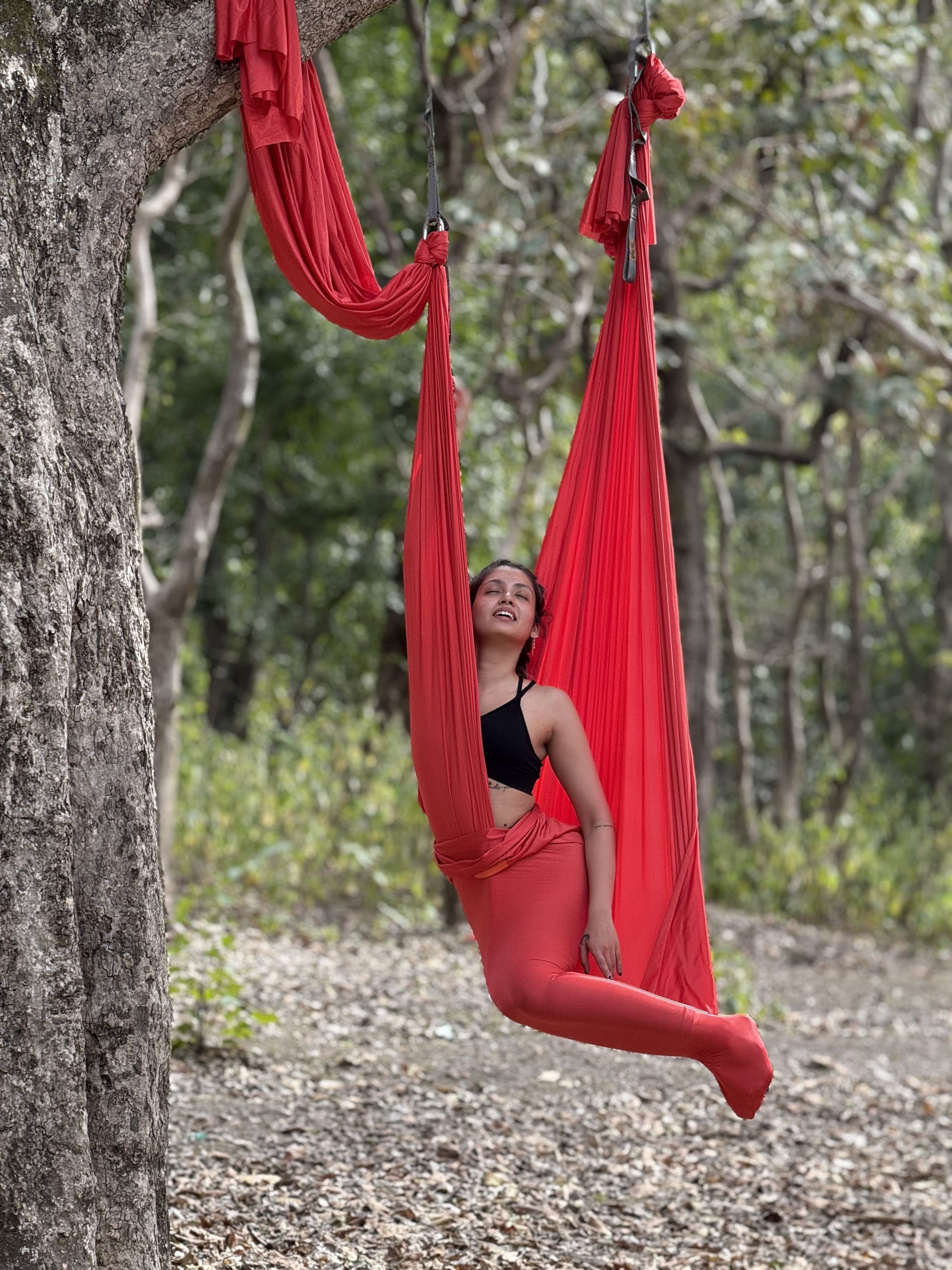
Aerial yoga, also called anti-gravity yoga, combines traditional yoga poses with elements of aerial arts using a silk hammock (sometimes called a yoga swing or sling) suspended from the ceiling. The hammock supports your body weight, allowing you to perform poses that would be difficult or impossible on the ground.
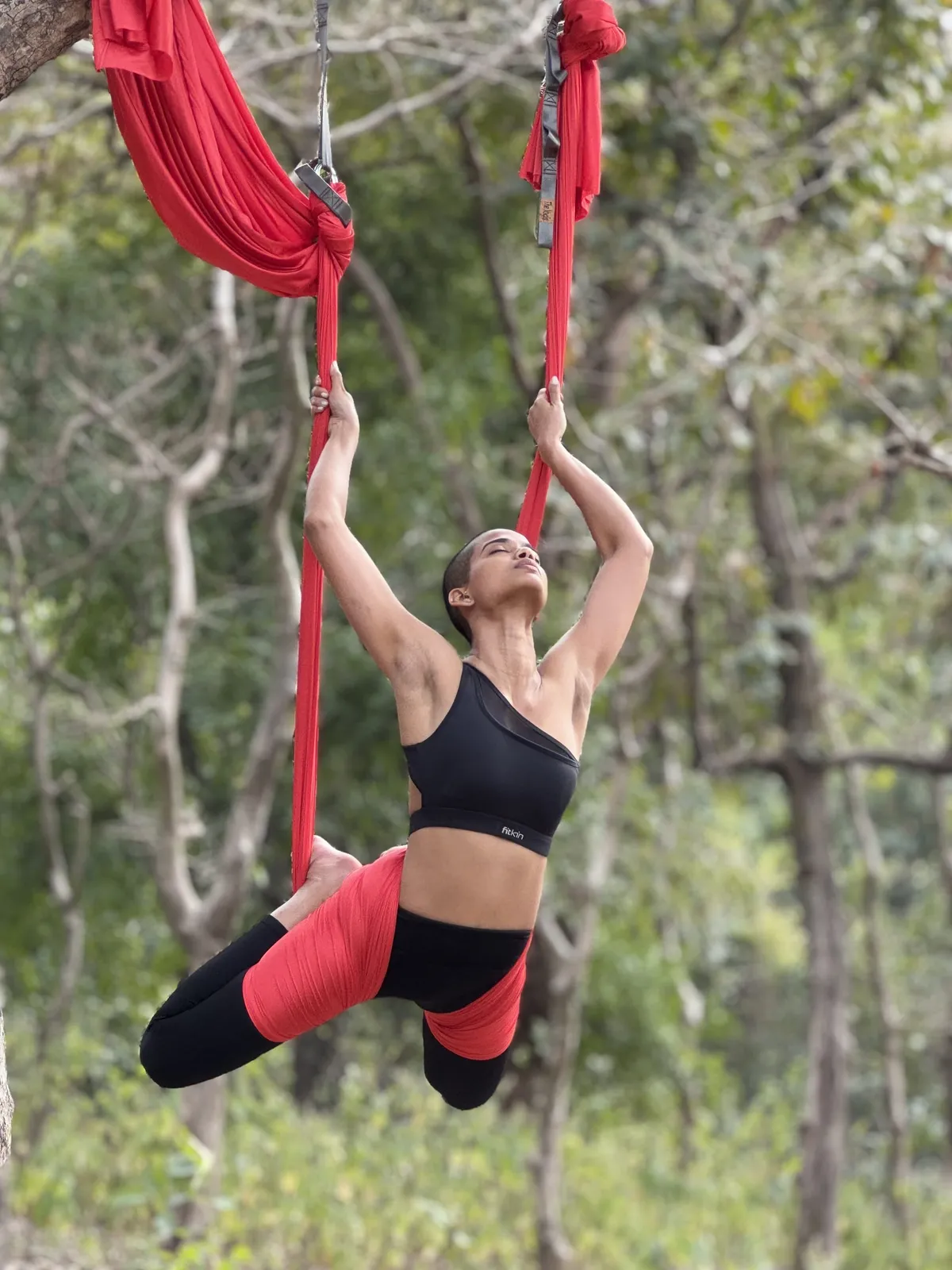
Developed in the early 2000s by aerial performer Christopher Harrison, aerial yoga draws from traditional Hatha yoga, Pilates, calisthenics, and aerial acrobatics. The hammock acts as both a prop and a partner, supporting you in inversions, deepening your stretches, and challenging your balance and core strength in entirely new ways.
Physical Benefits of Aerial Yoga
1. Spinal Decompression
This is perhaps the most celebrated benefit of aerial yoga and the reason many people try it for the first time. When you hang inverted or partially inverted in the hammock, gravity gently decompresses your spine, creating space between the vertebrae. This can:
- Relieve chronic back pain caused by compression
- Improve circulation to spinal discs
- Reduce pressure on nerves
- Counteract the effects of sitting at a desk all day
Many students report immediate relief in their lower back after just one aerial yoga session. Over time, regular practice can significantly improve spinal health and posture.
2. Increased Flexibility
The hammock allows you to move into stretches with the support of the fabric, enabling you to safely go deeper than you might on the ground. The suspended nature of the practice means:
- Your body weight creates gentle, sustained traction in stretches
- Tight muscles can release more easily without the resistance of the floor
- Hip openers, backbends, and hamstring stretches become more accessible
- You can hold stretches longer with less discomfort
3. Full-Body Strength Building
Do not let the graceful photos fool you: aerial yoga is a serious workout. The instability of the hammock means your muscles are constantly working to stabilize you. Key strength benefits include:
- Core strength: Almost every aerial pose requires deep core engagement to control your position in the hammock
- Upper body: Gripping, pulling, and supporting yourself builds strength in your arms, shoulders, and back
- Lower body: Standing poses with one foot in the hammock challenge your legs and glutes
- Grip strength: Holding the fabric develops hand and forearm strength
4. Improved Balance and Proprioception
Working in a suspended, unstable environment forces your body to develop much finer balance and spatial awareness (proprioception). This improved body awareness translates directly to your regular yoga practice and daily movement, reducing your risk of falls and improving coordination.
5. Joint-Friendly Practice
Because the hammock bears a significant portion of your body weight, aerial yoga is remarkably gentle on the joints. This makes it an excellent option for people who find certain ground-based yoga poses uncomfortable due to wrist, knee, or shoulder issues. The reduced weight-bearing allows you to build strength and flexibility without excessive joint stress.
6. Cardiovascular Benefits
The dynamic nature of aerial yoga, with transitions between poses requiring effort and control, provides a moderate cardiovascular workout. Your heart rate elevates as you move through sequences, particularly during more active flows and inversions.