
Eine der häufigsten Sorgen internationaler Studenten vor der Ankunft zu ihrer Ernährung während der Yogalehrer-Ausbildung in Indien ist das Essen. Was werde ich essen? Bekomme ich genug Protein? Vertrage ich die Schärfe? Überlebt mein Magen das? Das sind berechtigte Fragen, und wir an der Swaastik Yog School in Rishikesh haben Studenten aus über sechzig Ländern willkommen geheißen und wissen, dass die Umstellung auf indisches Essen ein echter Teil der Ausbildungsreise ist. Die Wahrheit ist: Das Essen während der Yogalehrer-Ausbildung ist nicht nur Treibstoff für deinen Körper. In der yogischen Tradition ist die Ernährung eine Praxis für sich, die deine Energie, geistige Klarheit, emotionale Stabilität und deine Fähigkeit zu spirituellem Wachstum direkt beeinflusst.
Dieser Leitfaden behandelt alles, was du über das Essen während der YTT in Indien wissen musst: die Philosophie hinter der yogischen Ernährung, was dir tatsächlich serviert wird, wie du mit Ernährungseinschränkungen umgehst und praktische Tipps für internationale Studenten, die sich zum ersten Mal an die indische Küche gewöhnen.
Die sattvische Ernährung: Das Fundament der Ernährung in der Yogalehrer-Ausbildung
Im Ayurveda (der traditionellen indischen Gesundheitslehre) und in der yogischen Philosophie fällt jedes Nahrungsmittel je nach seiner energetischen Qualität, dem Guna, in eine von drei Kategorien:
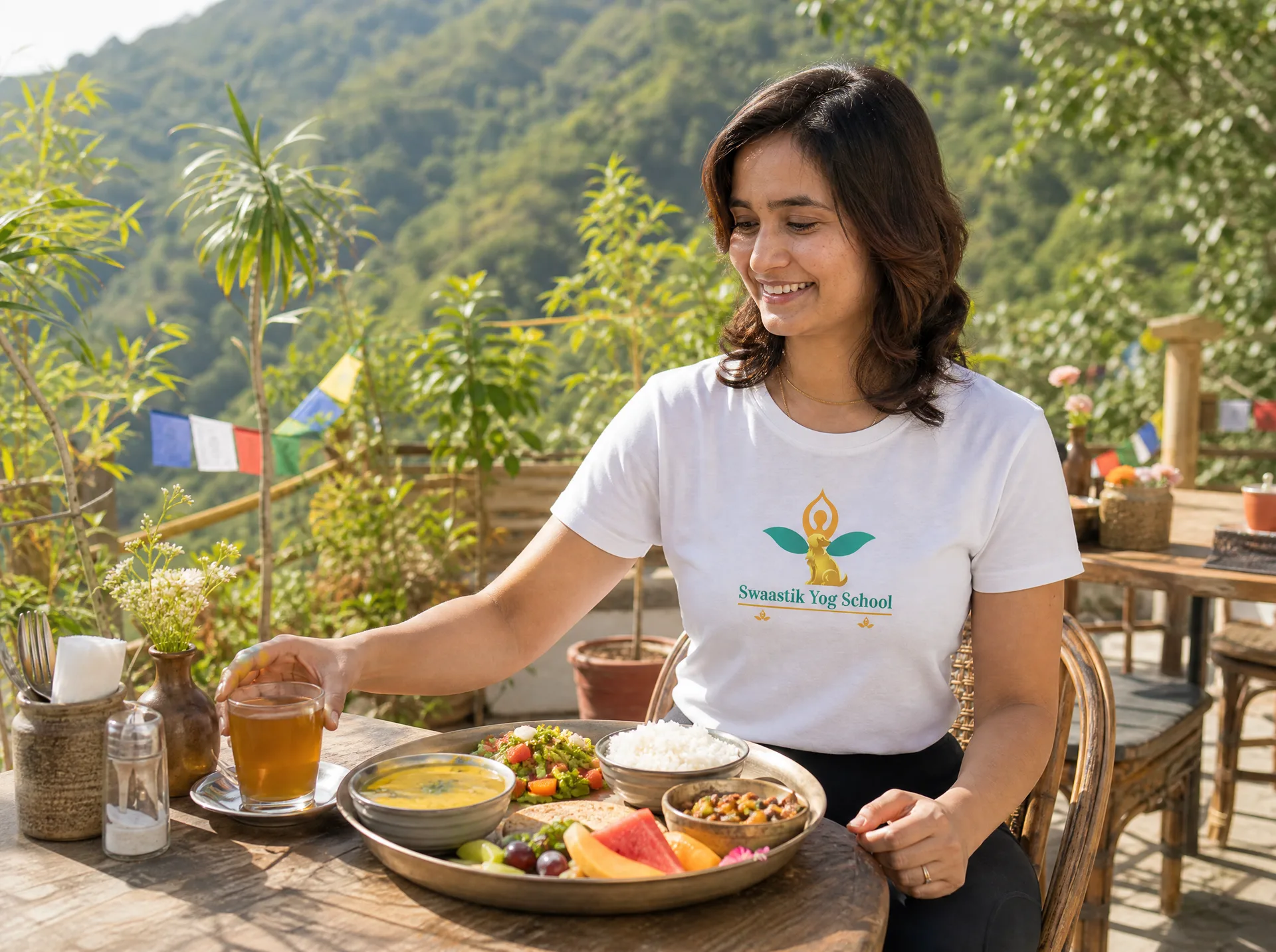
- Sattvisch (rein, harmonisch): Frisches Obst, Gemüse, Vollkorn, Hülsenfrüchte, Nüsse, Samen, milde Gewürze, Ghee (geklärte Butter), Honig und Kräutertees. Diese Lebensmittel fördern Klarheit, Leichtigkeit und Ruhe. Sie bilden das Fundament der Ernährung in der Yogalehrer-Ausbildung
- Rajasisch (anregend, aktivierend): Scharfes Essen, Kaffee, starker Tee, Zwiebeln, Knoblauch, Schokolade und stark verarbeitete Lebensmittel. Sie erzeugen Unruhe, Aufgeregtheit und einen überaktiven Geist. Während der Ausbildung werden sie auf ein Minimum reduziert
- Tamasisch (abstumpfend, schwer): Fleisch, Fisch, Eier, Alkohol, abgestandenes Essen, Frittiertes und übermäßig verarbeitete Produkte. Sie erzeugen Trägheit, Schwere und geistigen Nebel. Während der Ausbildung werden sie vollständig weggelassen
Die Begründung ist erfahrungsbasiert, nicht dogmatisch. Nach ein paar Tagen sattvischer Ernährung bemerken die meisten Studenten einen spürbaren Unterschied in ihrem Energieniveau, ihrer Schlafqualität und ihrer Konzentrationsfähigkeit in der Meditation. Der Körper fühlt sich leichter an, der Geist klarer, die Praxis tiefer. Das ist kein Placebo; es ist das Ergebnis von Nahrung, die leicht verdaulich und nährstoffreich ist und frei von den Stimulanzien und Dämpfern, die die meisten von uns täglich unbewusst konsumieren.
Warum keine Zwiebeln und kein Knoblauch?
Einer der überraschendsten Aspekte der sattvischen Ernährung für westliche Studenten ist der Verzicht auf Zwiebeln und Knoblauch. Im Ayurveda gelten sie als rajasisch bzw. tamasisch. Zwiebeln sollen emotionale Schwankungen und sexuelles Verlangen verstärken, während Knoblauch Hitze und Schwere erzeugt. Viele Studenten sind anfangs skeptisch, doch nach drei bis vier Wochen Küche ohne Zwiebeln und Knoblauch stellen sie oft fest, dass das Essen aromatischer ist als erwartet, weil die Küche auf eine außergewöhnliche Vielfalt an Gewürzen, Kräutern und frischen Zutaten setzt statt auf die vertraute Zwiebel-Knoblauch-Basis, die die meisten Küchen der Welt dominiert.
Was du während der YTT in Indien tatsächlich isst
So sieht ein typischer Tag mit Mahlzeiten an einer Yogaschule in Rishikesh aus.
Morgentee (6:00 Uhr)
Vor der ersten Praxiseinheit bieten die meisten Schulen Kräutertee oder warmes Zitronenwasser mit Honig an. Dieses sanfte Aufwachen aktiviert die Verdauung, ohne den Organismus zu schocken. Übliche Optionen sind Tulsi-Tee (heiliges Basilikum), Ingwertee oder warmes Wasser mit Kurkuma. Chai (indischer Gewürztee mit Milch) ist manchmal erhältlich, gilt wegen seines Koffeingehalts aber als leicht rajasisch und wird deshalb nicht an allen Schulen während der Ausbildung angeboten.
Frühstück (8:30–9:30 Uhr, nach der Morgenpraxis)
Zum Frühstück gibt es üblicherweise frisches Obst der Saison, Porridge (Haferflocken, Daliya/Weizenschrot oder Grieß-Upma), Poha (Reisflocken mit Gemüse und Erdnüssen), Idli mit Kokos-Chutney oder Paratha (Vollkorn-Fladenbrot) mit Joghurt. Frischer Fruchtsaft oder Buttermilch sind üblich. Die Portionen sind so bemessen, dass sie nach der Morgenpraxis nähren, ohne vor den Philosophie- oder Anatomievorlesungen schwer im Magen zu liegen.
Mittagessen (12:30–13:30 Uhr, die Hauptmahlzeit)
Das Mittagessen ist die größte Mahlzeit des Tages, im Einklang mit dem ayurvedischen Prinzip, dass das Verdauungsfeuer (Agni) gegen Mittag seinen Höhepunkt erreicht. Ein typisches Mittagessen umfasst:
- Dal (Linsensuppe) – die wichtigste Proteinquelle, in Dutzenden Varianten mit verschiedenen Linsen und Gewürzmischungen zubereitet
- Reis (meist Basmati, manchmal Vollkornreis)
- Roti oder Chapati (Vollkorn-Fladenbrot)
- Zwei Gemüsegerichte (Sabzi) – etwa Aloo Gobi (Kartoffeln und Blumenkohl), Palak Paneer (Spinat mit indischem Frischkäse), Bhindi (Okra), Lauki (Flaschenkürbis) oder gemischtes Gemüsecurry
- Salat mit Gurke, Tomate, Karotte und Zitrone
- Raita (Joghurt mit Gemüse oder Gewürzen)
- Pickle oder Chutney in kleinen Mengen
Nachmittagssnack (16:00 Uhr)
Eine leichte Zwischenmahlzeit zwischen Nachmittagspraxis und Abendmeditation: Obst der Saison, geröstete Chana (Kichererbsen), Kräutertee oder gelegentlich eine Süßigkeit wie Halwa oder Ladoo aus Nüssen und Jaggery (Rohrzucker) statt raffiniertem Zucker.
Abendessen (19:00–19:30 Uhr)
Das Abendessen ist leichter als das Mittagessen, gemäß dem ayurvedischen Prinzip, dass die Verdauung am Abend schwächer wird. Typische Optionen sind Khichdi (ein Eintopfgericht aus Reis und Mung-Dal, das im Ayurveda als die sattvischste Mahlzeit gilt), Gemüsesuppe, ein leichtes Curry mit Roti oder an internationalen Essenstagen Pasta. Das Abendessen wird früh serviert, damit die Verdauung vor dem Schlafengehen gut im Gang ist – das unterstützt sowohl die Schlafqualität als auch die Praxis am nächsten Morgen.