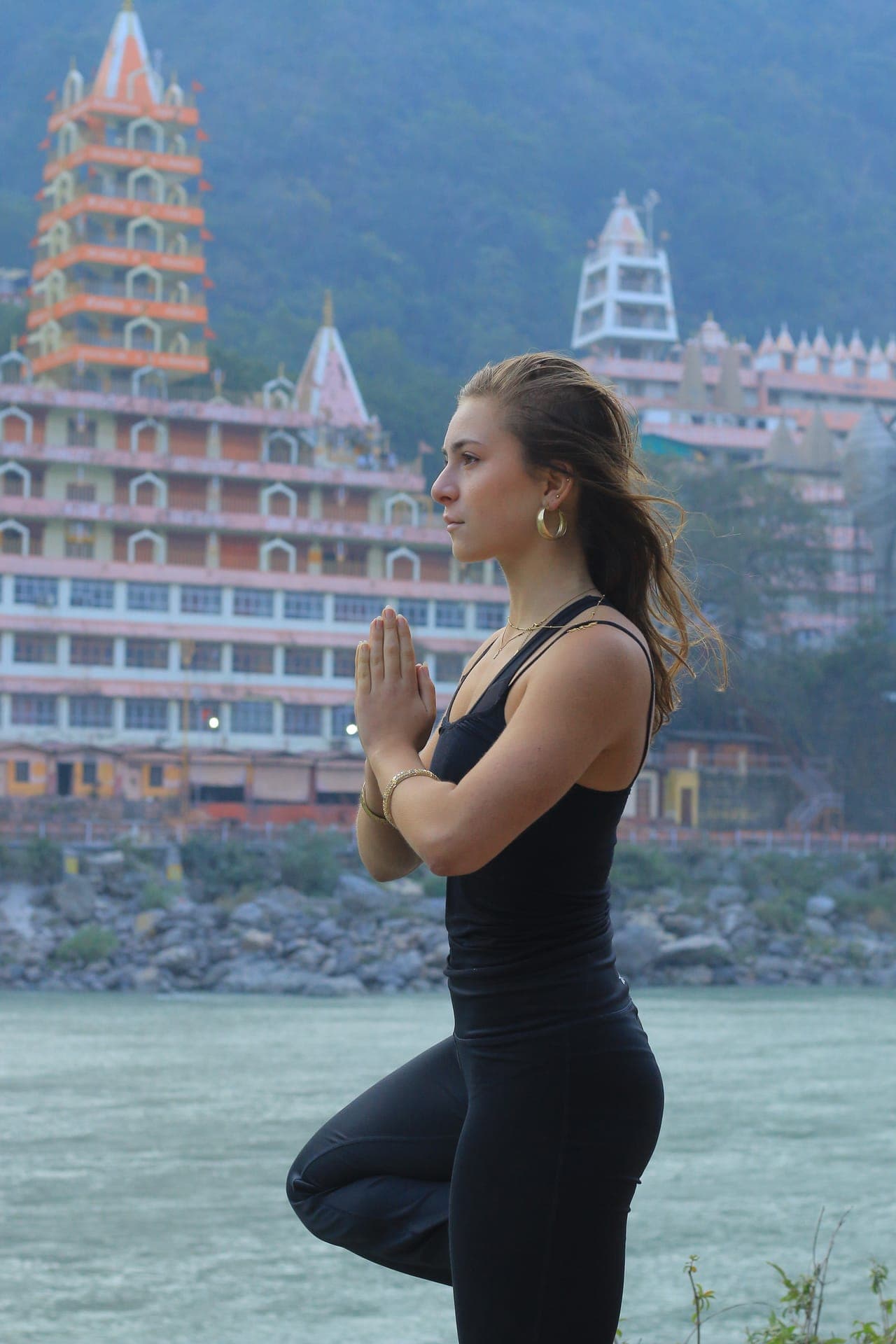
Starting a yoga for beginners at home practice is one of the most rewarding decisions you can make for your physical and mental well-being. You do not need an expensive studio membership, fancy equipment, or years of flexibility training. All you need is a small space, a willingness to learn, and the guidance to avoid common pitfalls that derail most home practitioners. At Swaastik Yog School in Rishikesh, we have introduced thousands of absolute beginners to yoga, and many of them started their journey right in their living rooms before ever stepping foot on a mat in India.
This comprehensive guide will walk you through everything you need to know about starting yoga for beginners at home: from setting up your practice space and choosing the right props, to following a complete 20-minute routine and knowing when it is time to deepen your practice with formal training.
Setting Up Your Home Yoga Space
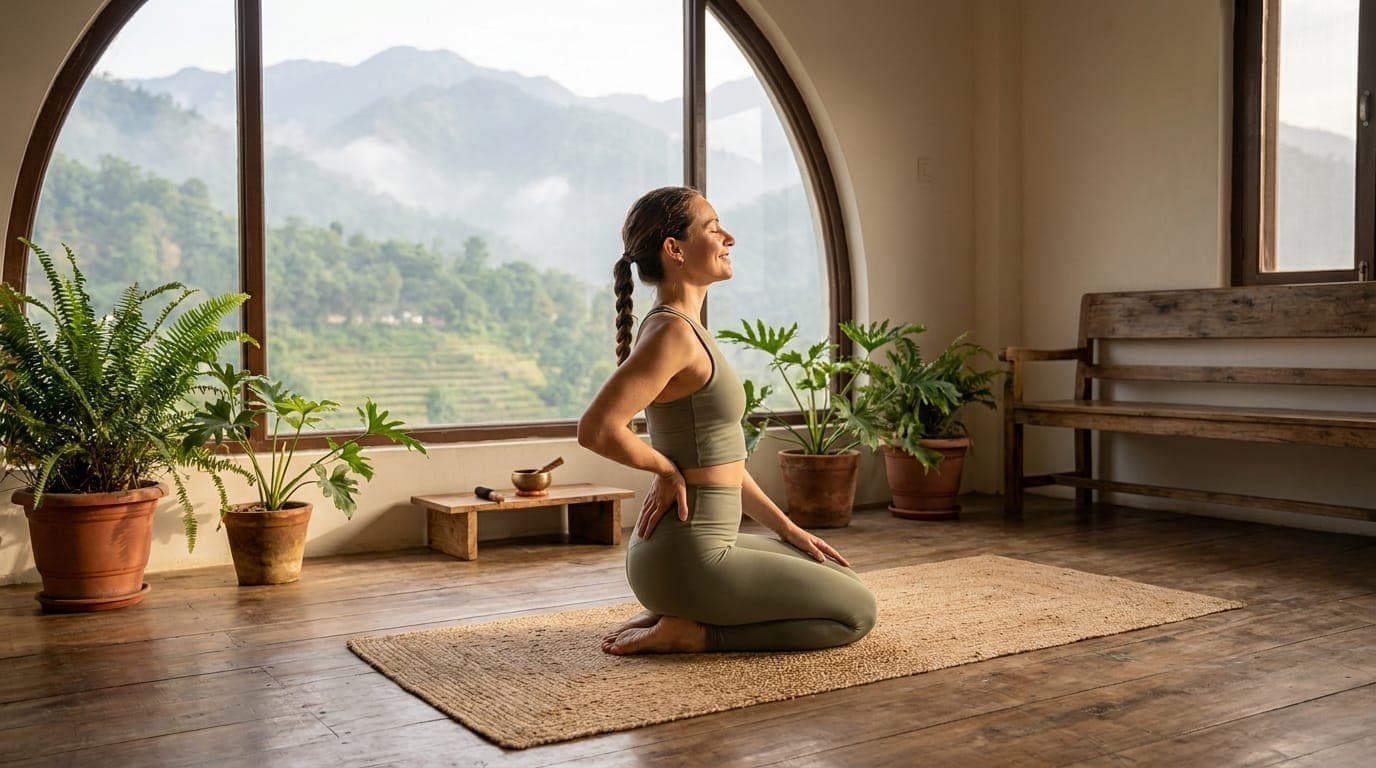
Your practice environment directly affects the quality of your yoga for beginners at home experience. You do not need a dedicated yoga room, but a few thoughtful adjustments to any space in your home can make a significant difference.
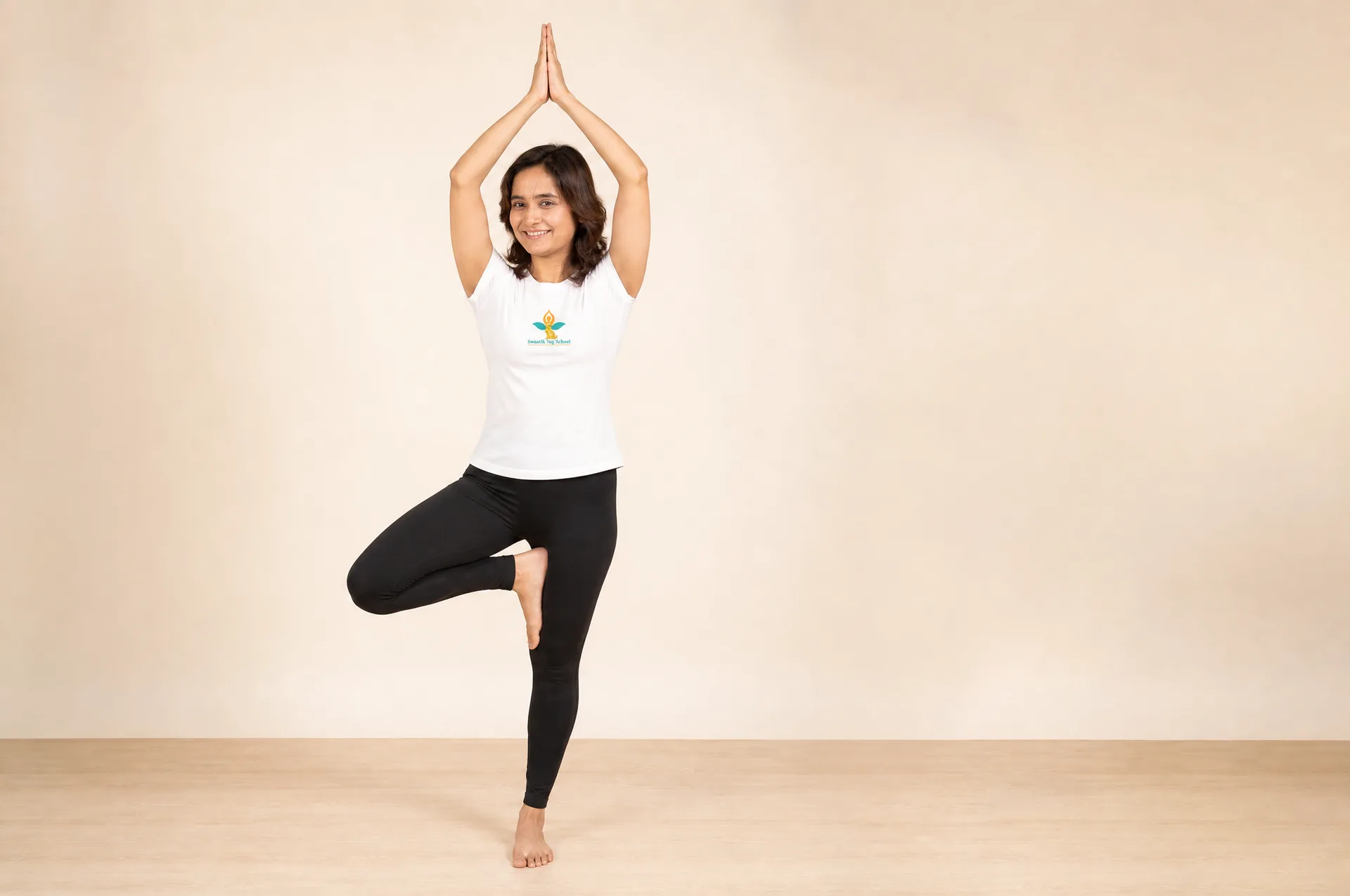
Choosing the Right Spot
Look for a space that is at least six feet by four feet, enough room to stretch your arms wide and take a full step in any direction. A corner of your bedroom, a cleared section of the living room, or even a balcony works perfectly. Hardwood or tile flooring is ideal because it provides a stable surface beneath your mat. If you only have carpet, place your mat on it and accept that balance poses may feel slightly different.
Natural light is a wonderful bonus. If you can practice near a window, the morning sunlight will energize your sessions. Avoid spaces directly beneath ceiling fans on high speed, as the constant breeze can be distracting during breathwork and relaxation.
Reducing Distractions
Before you begin, silence your phone or place it in another room. Tell family members or roommates that you need uninterrupted time. If you have pets, they will likely want to join you, and that is fine as long as they do not trip you during standing poses. Close the door if possible. The mental shift from daily chaos to focused practice begins with creating a container of stillness around you.
Temperature and Ambiance
Keep the room comfortably warm, around 22 to 25 degrees Celsius. Cold muscles are more prone to strain, and shivering makes relaxation impossible. You do not need incense, candles, or background music, though some beginners find soft instrumental music helpful in the early weeks. As your practice matures, you will likely prefer silence so you can hear your own breath.
Essential Props for Yoga for Beginners at Home
One of the biggest myths about yoga is that you need nothing but your body. While that is technically true for advanced practitioners, beginners benefit enormously from a few basic props that make poses accessible and safe.
The Non-Negotiable: A Good Yoga Mat
Invest in a quality yoga mat with at least 4mm thickness and good grip. Cheap mats slip, bunch up, and offer no cushioning for your knees. Brands like Manduka, Liforme, or locally made Indian mats from Rishikesh markets offer excellent value. Your mat is the one prop you will use in every single session, so do not cut corners here.
Helpful Additions
- Yoga blocks (2): These bridge the gap between your hands and the floor in poses like Triangle and Forward Fold. Cork or foam blocks work equally well.
- Yoga strap: A simple cotton strap helps you reach your feet in seated forward bends and deepens stretches without forcing your body beyond its current range.
- Bolster or firm pillow: Essential for restorative poses and supported backbends. A rolled-up blanket is a fine substitute.
- Blanket: For padding under knees during kneeling poses and for warmth during final relaxation (Savasana).
You can substitute household items in the beginning: thick books for blocks, a belt or towel for a strap, and sofa cushions for bolsters. But as your practice becomes regular, dedicated props make a noticeable difference.
Best Resources for Yoga for Beginners at Home
The internet offers a wealth of free and paid resources to guide your home practice. Here are the most reliable options for beginners in 2026.
YouTube Channels
- Yoga with Adriene: The most popular yoga channel on YouTube with over 12 million subscribers. Her 30-day challenges are perfect for building consistency.
- Breathe and Flow: Excellent for beginners who want slightly more athletic sequences with clear alignment cues.
- Yoga with Kassandra: Specializes in yin yoga and slower practices that are ideal for evening sessions.
- Swaastik Yog School: Our own channel features authentic Hatha and Ashtanga sequences taught by experienced teachers from Rishikesh.
Apps
- Down Dog: Generates unique sequences every session based on your level, preferred style, and time available. The free tier is generous.
- Yoga Go: Designed specifically for beginners with illustrated pose guides and progressive programs.
- Insight Timer: While primarily a meditation app, it offers thousands of free guided yoga sessions from teachers worldwide.
When Digital Is Not Enough
Apps and videos are excellent starting points, but they cannot correct your alignment in real time. A screen cannot tell you that your front knee is collapsing inward in Warrior II or that your lower back is rounding dangerously in Forward Fold. After two to three months of consistent home practice, we strongly recommend attending at least a few drop-in classes with a qualified teacher to receive personalized feedback.