In the foothills of the Himalayas, where the Ganges flows through Rishikesh, sound has been used as a healing tool for thousands of years. From Vedic chanting on the ghats of Ram Jhula to the resonant hum of Tibetan singing bowls echoing through ashrams in Tapovan, sound healing benefits have been recognized by yogic traditions long before modern science began to validate them. At Swaastik Yog School, we have witnessed profound transformations in students who experience sound healing as part of their yoga journey.
This comprehensive guide explores what sound healing therapy is, the science behind it, its wide-ranging benefits, and how you can experience or even train to become a practitioner yourself.
What Is Sound Healing Therapy?
Sound healing, also known as sound therapy or sonic therapy, is a practice that uses vibrations from specific instruments, vocal tones, or frequencies to promote physical, emotional, and spiritual well-being. The fundamental principle is simple yet profound: everything in the universe vibrates at a specific frequency, including every cell, organ, and system in the human body.
When the body is in a state of health, all its components vibrate harmoniously. Disease, stress, and emotional trauma can disrupt these natural frequencies, creating dissonance. Sound healing benefits arise from the ability of external vibrations to entrain the body back to its natural, healthy frequency patterns, a phenomenon known as sympathetic resonance.
This is not merely a spiritual concept. Modern physics confirms that sound waves are mechanical vibrations that interact with physical matter. When a singing bowl vibrates at a frequency of 432 Hz, the sound waves physically interact with water molecules in your body (which comprises about 60% of your total mass), creating measurable effects at the cellular level.
Types of Sound Healing Instruments and Methods
Tibetan and Crystal Singing Bowls
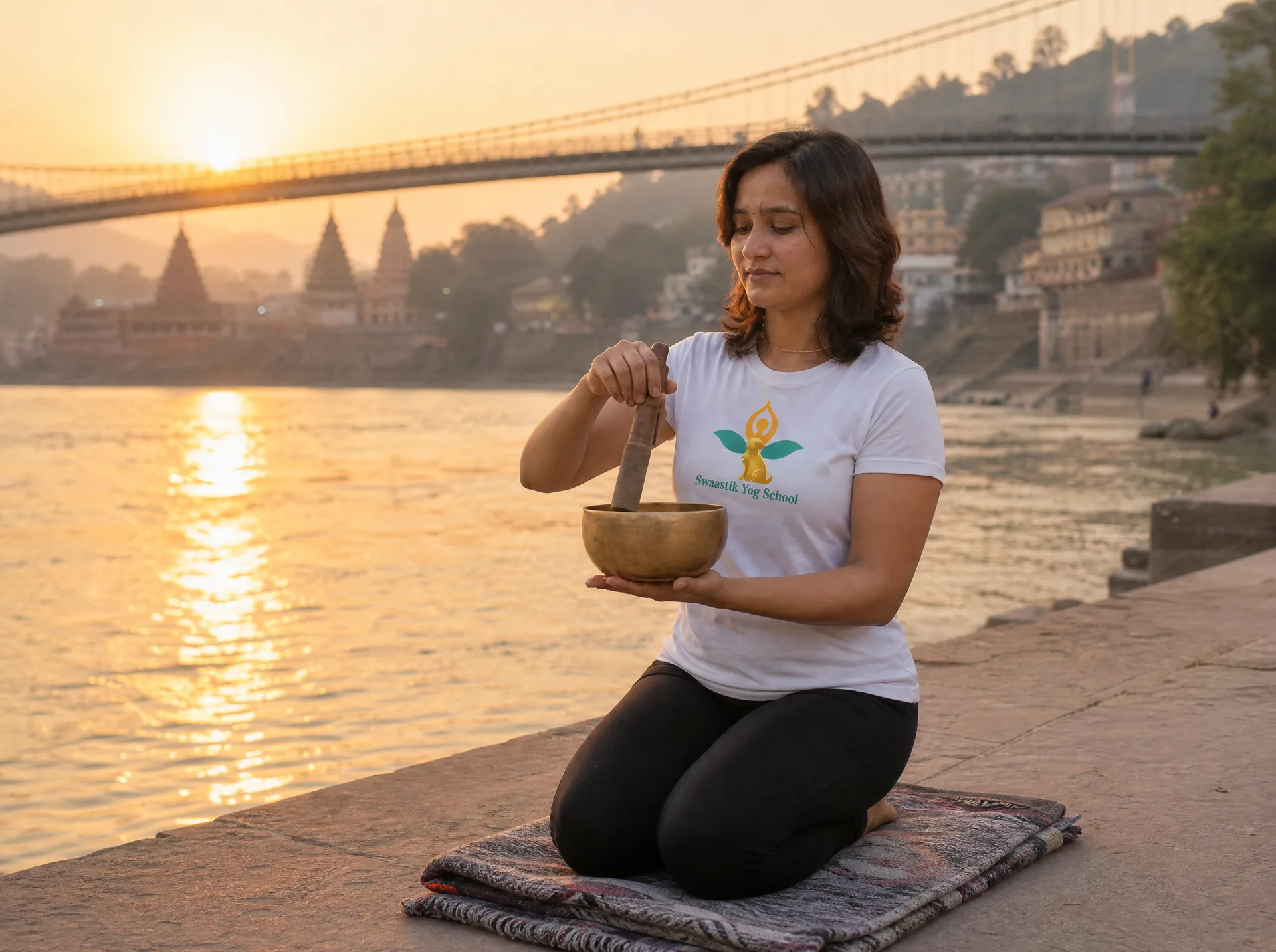
Singing bowls are perhaps the most recognized sound healing instruments. Tibetan singing bowls, traditionally made from an alloy of seven metals, produce rich overtones that resonate deeply in the body. Crystal singing bowls, made from crushed quartz, produce purer tones that many practitioners find particularly effective for meditation and chakra work.
In our sessions near the Ganges in Rishikesh, the natural acoustics of the river valley amplify the bowl vibrations, creating an especially immersive experience. Each bowl corresponds to a specific chakra or energy center, and skilled practitioners use sets of bowls to address different areas of the body and psyche.
Gong Therapy
The gong is one of the most powerful sound healing instruments. A single gong can produce an extraordinary range of frequencies simultaneously, creating a "sound bath" that envelops the entire body. Gong therapy, sometimes called a gong bath, involves lying down while a practitioner plays one or more large gongs, creating waves of sound that can induce deep meditative states within minutes.
The intensity of gong vibrations can reach deep into muscular tissue and bone, making it particularly effective for chronic pain and deeply held tension. Many students describe the experience as feeling like a full-body massage from the inside.
Tuning Forks
Tuning forks offer precise, targeted frequencies that practitioners place on or near specific points on the body, similar to acupuncture points. Medical-grade tuning forks calibrated to specific frequencies (such as 128 Hz for bone and joint work, or 528 Hz for cellular repair) are used in both alternative and some conventional medical settings.
Voice and Mantras
The human voice is the original and most accessible sound healing instrument. Vedic chanting, kirtan (devotional singing), overtone singing, and specific mantras like Om have been used for millennia. The vibrations produced by chanting physically massage the vagus nerve, which runs from the brainstem through the neck and chest to the abdomen, directly influencing the parasympathetic nervous system.
Additional Instruments
- Didgeridoo: The deep drone of this Aboriginal Australian instrument is effective for grounding and respiratory health
- Drums: Rhythmic drumming can shift brainwave states and has been used in shamanic healing traditions worldwide
- Chimes and bells: High-frequency instruments that clear energy and shift attention
- Shruti box: A traditional Indian instrument that produces a continuous drone, ideal for meditation support
Scientific Research on Sound Healing Benefits
While sound healing has ancient roots, modern research is increasingly validating its effectiveness through rigorous scientific studies.
Brainwave Entrainment
Research published in the Journal of Evidence-Based Integrative Medicine (2017) found that Tibetan singing bowl meditation significantly reduced tension, anger, fatigue, and depressed mood in participants. The study measured brainwave patterns and found that singing bowls consistently shifted participants from beta waves (active thinking) to alpha and theta waves (relaxation and deep meditation).
Stress and Cortisol Reduction
A 2020 study in the Global Advances in Health and Medicine journal found that sound healing sessions led to significant reductions in cortisol levels, heart rate, and blood pressure. Participants reported dramatic improvements in feelings of spiritual well-being and reduced physical pain after just one session.
Pain Management
Research from the British Academy of Sound Therapy demonstrated that 95% of participants with stress-related conditions experienced improved calm after sound therapy sessions. Studies on vibroacoustic therapy (using low-frequency sound vibrations applied directly to the body) have shown measurable pain reduction in conditions including fibromyalgia, arthritis, and chronic lower back pain.
Cellular Effects
Emerging research in the field of cymatics (the study of visible sound and vibration) shows that specific frequencies can influence cellular behavior, including promoting tissue healing and reducing inflammation. While this research is still in early stages, the results align with what traditional practitioners have observed for centuries.
Sound Healing Benefits for Specific Conditions
Anxiety and Depression
Sound healing is remarkably effective for anxiety and depression. The vibrations activate the parasympathetic nervous system (the "rest and digest" response), directly counteracting the fight-or-flight state that characterizes anxiety. Regular sessions can help rewire the nervous system's default responses, creating lasting resilience against stress triggers.
Sleep Disorders
Insomnia and disrupted sleep patterns respond well to sound therapy. The brainwave entrainment effect gradually shifts neural activity from the fast-paced beta frequencies of wakefulness to the slower delta frequencies associated with deep, restorative sleep. Many of our students in Rishikesh report that their first truly restful night in months comes after a sound healing session.
Chronic Pain
Sound vibrations can reduce the perception of pain through multiple mechanisms: releasing endorphins, relaxing muscular tension, reducing inflammation, and interrupting pain signaling pathways in the nervous system. The vibrational quality of instruments like singing bowls can penetrate deeply into the body, reaching areas that manual therapy cannot easily access.
Emotional Trauma and PTSD
Sound healing creates a safe, non-verbal pathway for processing stored trauma. Because sound works below the level of conscious thought, it can access and release emotional patterns held in the body without requiring the person to relive or verbally process the traumatic experience. This makes it a valuable complement to talk therapy and other conventional treatments.
What to Expect in a Sound Healing Session
If you have never experienced sound healing, knowing what to expect can help you get the most from your first session.
A typical session lasts 45 to 90 minutes. You will lie comfortably on a yoga mat or massage table, usually covered with a blanket. The practitioner will begin with a brief guided relaxation, then gradually introduce instruments. The sounds will build in layers, creating an immersive "bath" of vibration.
- Physical sensations: Tingling, warmth, heaviness, or a sense of floating are common
- Emotional responses: Some people experience deep peace, while others may feel emotions surfacing and releasing. Tears are normal and welcome
- Visual experiences: Colors, patterns, or imagery may appear behind closed eyes
- Time distortion: Most people lose track of time; a 60-minute session can feel like 15 minutes or two hours
- After the session: You may feel deeply relaxed, energized, or emotional. Drinking plenty of water and resting is recommended
Training to Become a Sound Healing Practitioner
The demand for qualified sound healing practitioners is growing rapidly worldwide. If you feel called to this work, professional training provides the foundation you need to practice safely and effectively.
Our Sound Healing Course in Rishikesh combines the ancient wisdom of Nada Yoga (the yoga of sound) with modern understanding of acoustics, psychoacoustics, and therapeutic applications. Set against the natural soundscape of the Ganges and the Himalayan foothills, it is an ideal environment for deep immersion in the practice.
A comprehensive sound healing training should cover:
- Theory of sound, frequency, and vibration
- Anatomy and physiology relevant to sound therapy
- Proficiency with multiple instruments (singing bowls, gongs, tuning forks, voice)
- Session design and facilitation skills
- Chakra system and energy body mapping
- Contraindications and safety protocols
- Business skills for building a practice
Career Opportunities
Trained sound healing practitioners work in diverse settings: wellness centers, yoga studios, hospitals, hospices, corporate wellness programs, retreat centers, and private practice. Many combine sound healing with yoga teaching, massage therapy, or counseling for a multidisciplinary approach.
Integrating Sound Healing with Your Yoga Practice
Sound healing and yoga are natural partners. Both work with the subtle energy body, both aim to bring the practitioner into a state of balance and harmony, and both have roots in the same ancient Indian traditions. Many of our yoga teacher training graduates incorporate sound healing elements into their classes, enhancing the meditative quality of savasana and pranayama.
Here in Rishikesh, where the evening aarti ceremony fills the air with chanting and bells along the ghats near Laxman Jhula, the power of sound as a spiritual and healing tool is woven into daily life. It is a living tradition, not merely a historical curiosity.
Experience Sound Healing in Rishikesh
Whether you want to experience the benefits of sound healing for your own well-being or train to become a certified practitioner, Swaastik Yog School offers immersive programs in the heart of Rishikesh. Our Sound Healing Course provides hands-on training with expert practitioners in one of the most spiritually charged environments on earth.
Get in touch with us to learn about upcoming course dates and reserve your place.