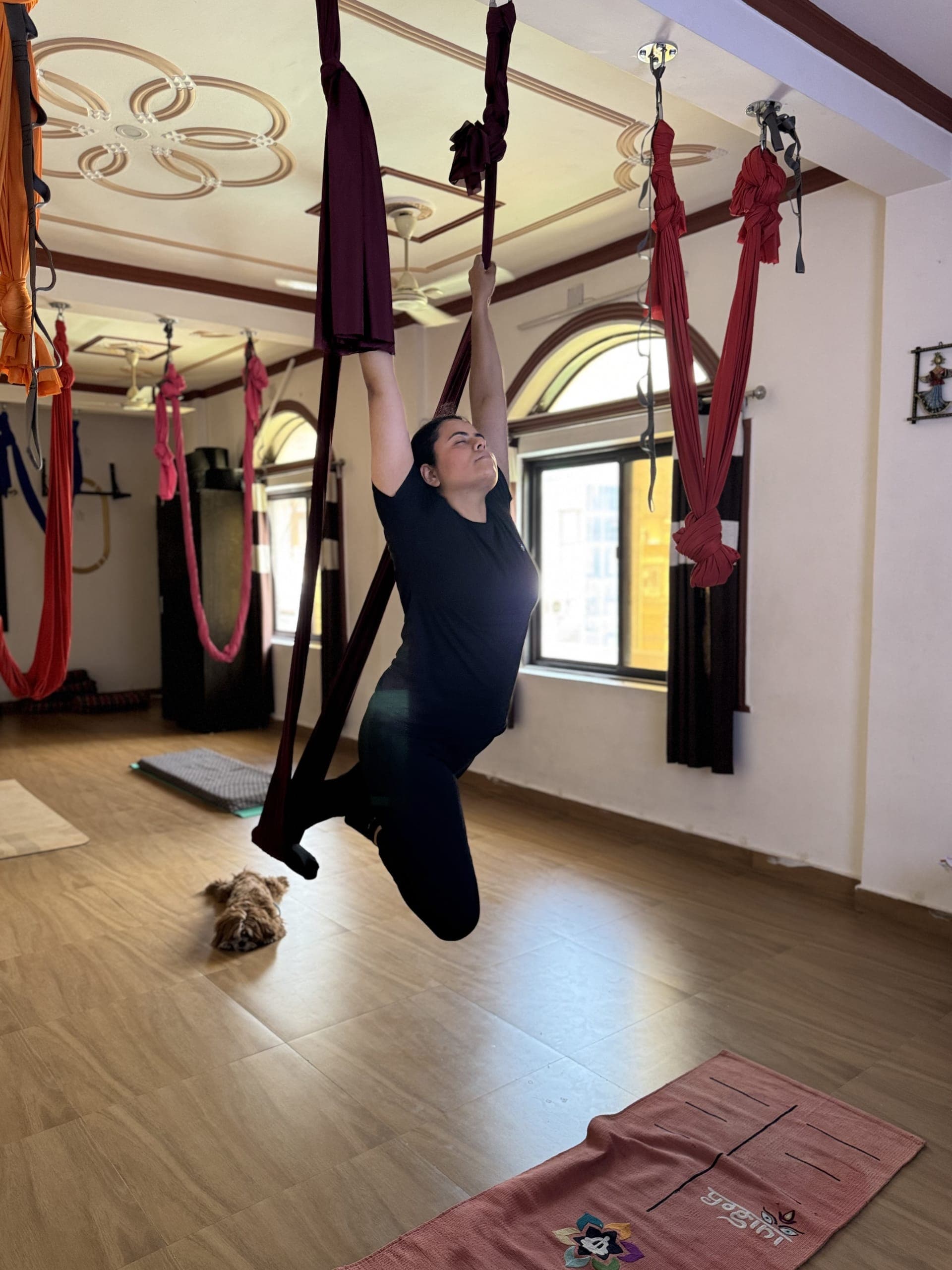
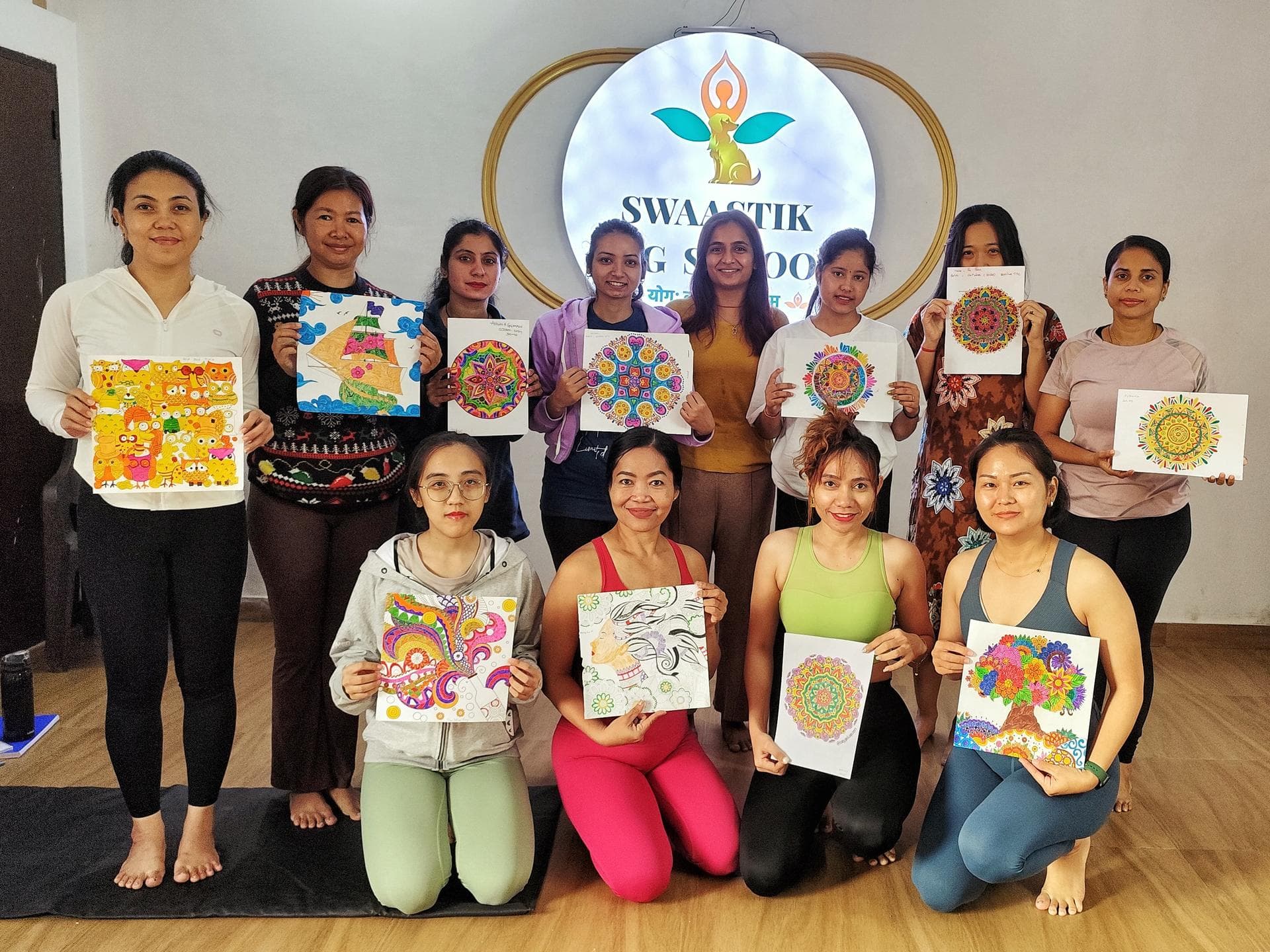
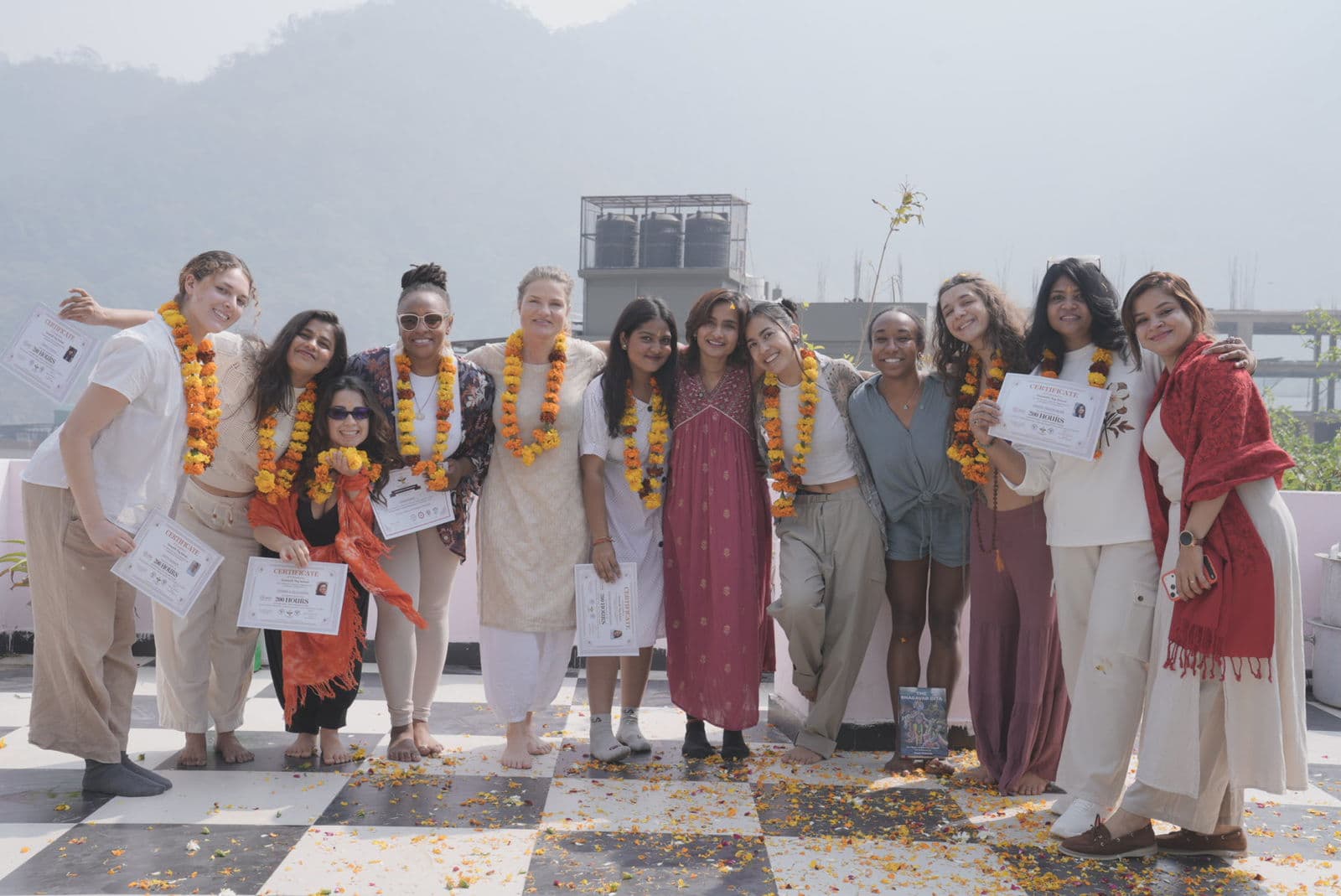
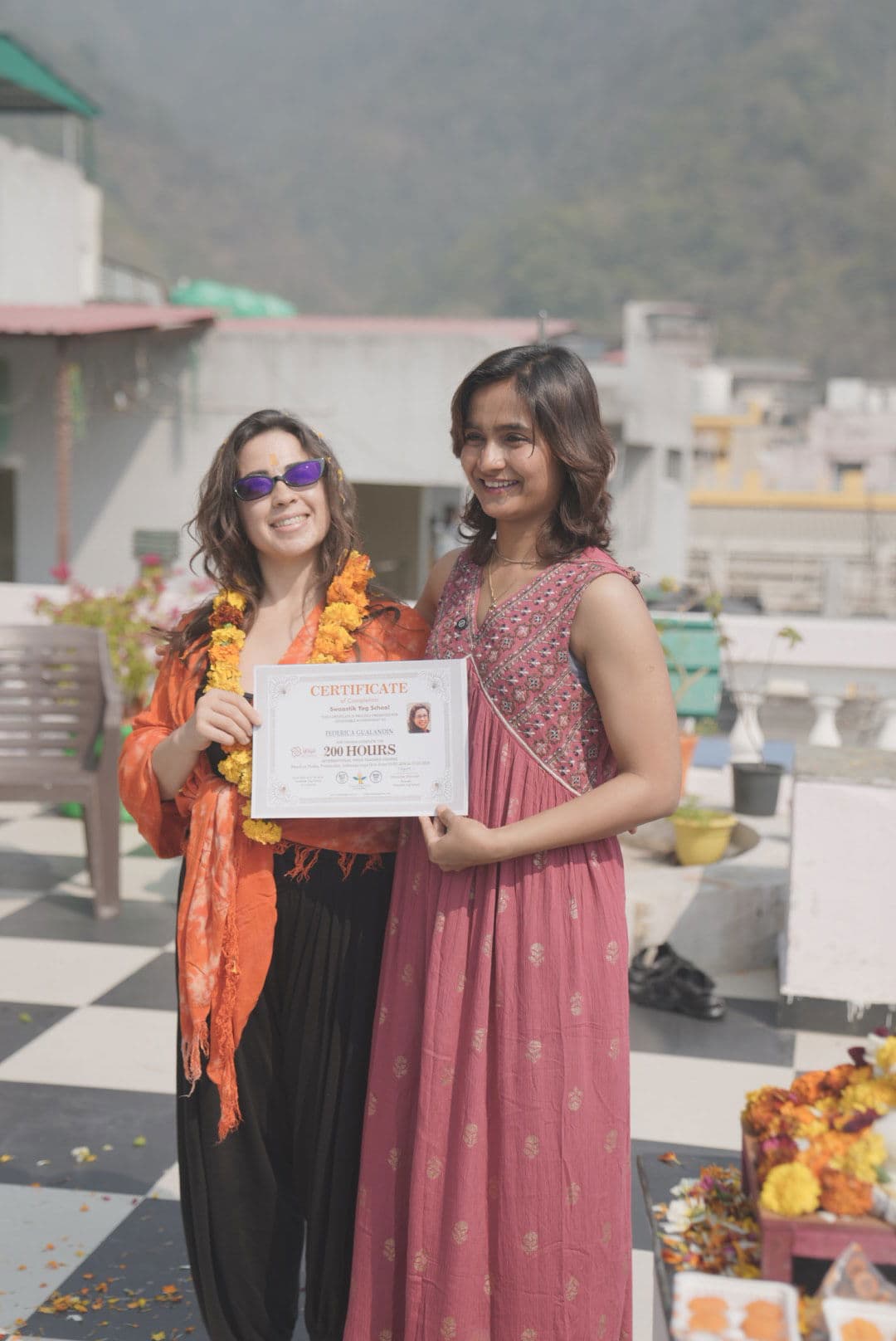
Aerial yoga teacher training in Rishikesh fees typically range from ₹65,000 to ₹1,40,000 ($780-$1,680) for a 50-100 hour certification, or ₹1,20,000-₹2,10,000 ($1,440-$2,520) for a full Yoga Alliance-recognised 200-hour aerial-focused TTC. The price difference comes down to course length, hammock equipment quality, accommodation grade, and whether the school operates on a permanent campus or rents studio space.
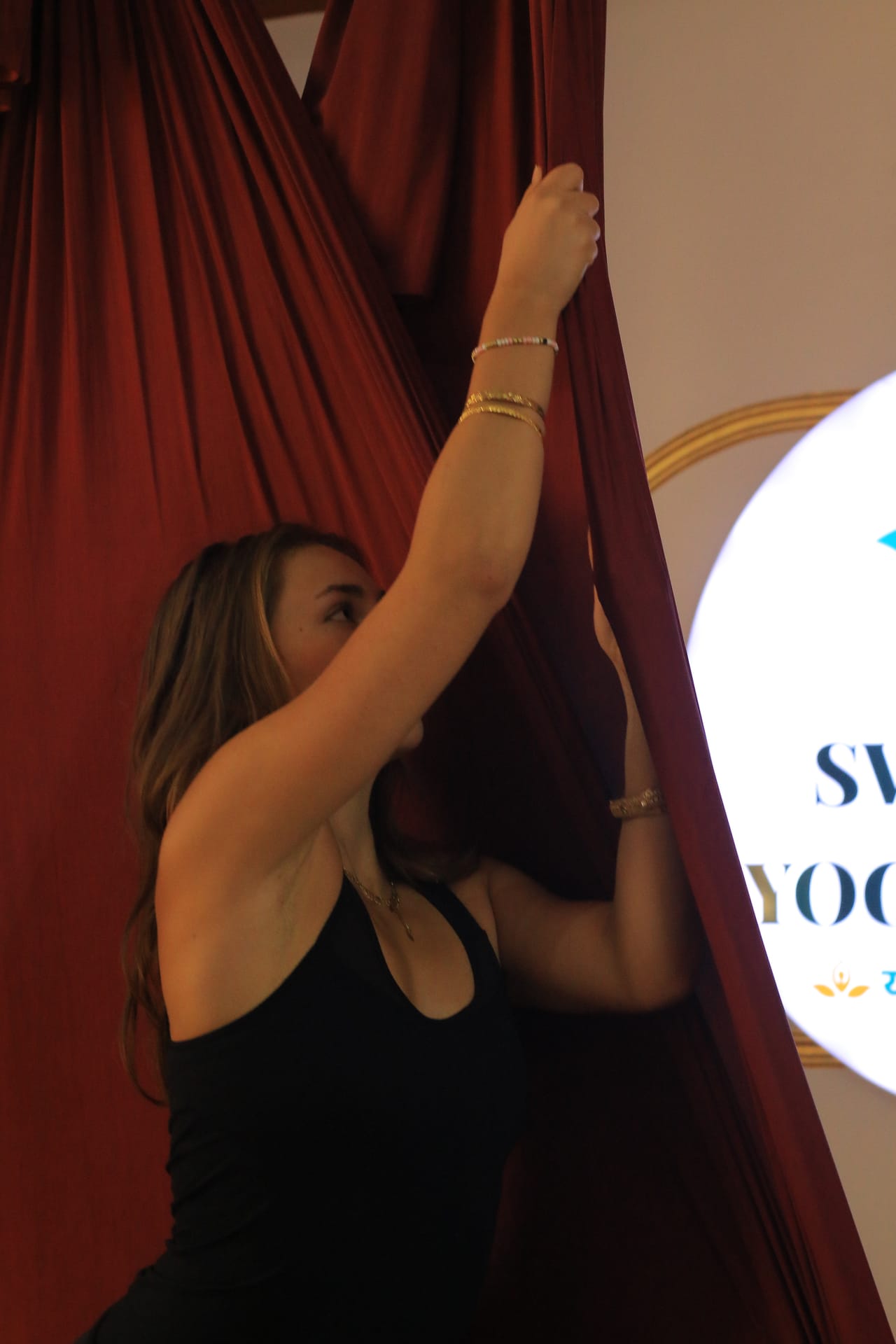
What's Included in Genuine Aerial TTC Fees
A reputable Rishikesh aerial yoga TTC fee should always include:
- Course tuition — daily aerial practice (2-3 hrs), anatomy, hammock rigging, sequencing, alignment, adjustments
- Personal hammock — yours to keep on completion (usually a parachute-grade silk worth ₹3,000-₹6,000)
- Accommodation — shared or private room on campus for the full duration
- Three sattvic vegetarian meals daily
- Course manual — printed reference covering ~50 aerial poses with anatomy notes
- Yoga Alliance Continuing Education (YACEP) or RYS certificate
- Weekend excursions — Vashistha Cave, Kunjapuri sunrise, Beatles Ashram
Watch for schools that quote a low "course-only" price and then add ₹1,500/day for the hammock, ₹800/night for the room, and ₹500/day for food. The all-inclusive number always wins on value.
Course Length vs Fee Breakdown
- 50-hour Aerial YACEP (10-12 days): ₹65,000 to ₹95,000. For existing 200-hour RYTs adding aerial as a specialty.
- 100-hour Aerial Specialty TTC (12 days): $390–$1,100 depending on room. Most popular format. Deeper coverage of anatomy and sequencing.
- 200-hour Aerial-Focused TTC (4 weeks): ₹1,20,000 to ₹2,10,000. Full Yoga Alliance RYS 200 with aerial as the dominant style. Suits students who want their first TTC to be aerial-specific.
- Private 1:1 Aerial Training (custom): ₹4,500-₹8,000 per day. Useful for teachers wanting to refine specific techniques.
What You Will Learn
- Hammock rigging and safety — eye bolt installation, weight ratings, daily inspection protocols. The single most important safety topic — many schools skim it.
- Foundation aerial poses — Hammock Sit, Crow's Nest, Star, Sleeping Bird, Knotted Half Pigeon
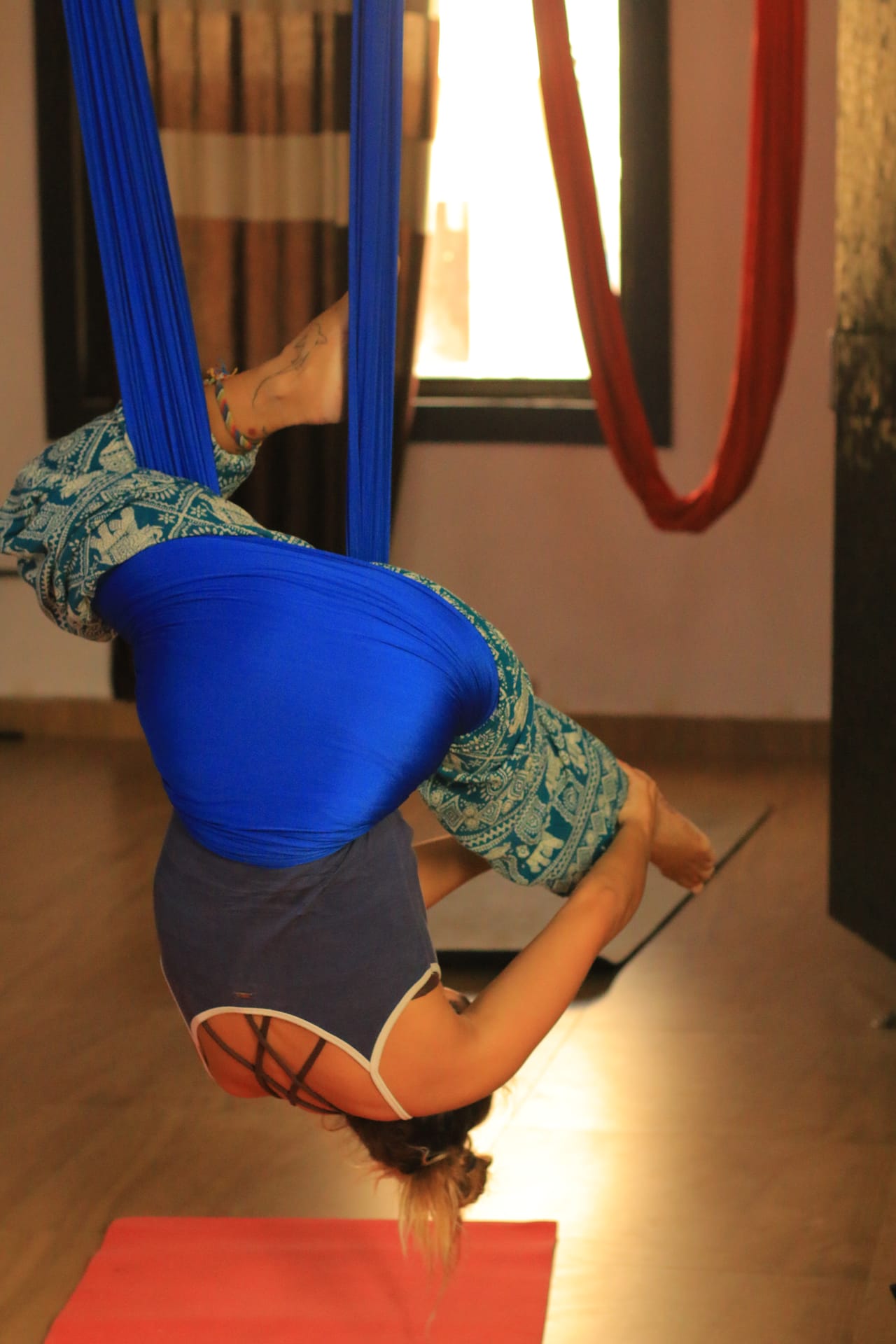
- Inversions — Hammock Headstand, Forearm Stand, Inverted Pigeon, Vampire — taught progressively from supported to free
- Backbends in suspension — Wheel, Camel, Bow with hammock support — particularly therapeutic for deskbound students
- Spinal traction sequences — using the hammock for safe spinal decompression. This is what makes aerial therapeutically valuable.
- Sequencing and class design — building 60- and 75-minute classes for beginner, intermediate, and mixed-level groups
- Adjustments and assists — how to spot, support, and verbally cue students safely in the air
- Anatomy — shoulder, hip, spine — applied to inverted load
Prerequisites
For the 100-hour aerial specialty: at least one year of regular yoga practice. A 200-hour RYT certificate is preferred but not always required. For the 200-hour aerial TTC: same as any 200-hour TTC — six months of regular practice and reasonable general fitness. See the general 200-hour requirements.
Why Rishikesh for Aerial Specifically
You can do aerial TTC in Bali or Spain. Three reasons Rishikesh wins:
- Cost. A 100-hour aerial TTC in Bali averages $2,800. The same syllabus in Rishikesh starts at $390 — and includes accommodation and meals.
- Anatomy depth. Indian aerial teachers tend to integrate traditional yoga anatomy (chakras, nadis, koshas) with western biomechanics. The combination is rare elsewhere.
- Continuation path. If you decide aerial is your specialty, Rishikesh has dozens of senior teachers offering further short courses you can stack onto your foundation.
How Swaastik Yog School Compares
Our 50-hour Aerial Yoga TTC is led by Priya Sharma (RYT 500, aerial specialist with 8+ years on the silk). Course fee includes your choice of dormitory, shared or private room, three sattvic meals, your own parachute-grade hammock, full course manual, and Yoga Alliance YACEP certification. Group size is capped at 12 to ensure every student gets daily hands-on adjustments — critical when you are inverted in silk for the first time.
Frequently Asked Questions
Do I need to be flexible to learn aerial yoga?
No. The hammock provides external support, so aerial is often more accessible than mat yoga for tight bodies. Many students find their hamstrings and hips open faster in suspension than on the floor.
Is aerial yoga safe for someone with a back injury?
Aerial is often used therapeutically for back pain because the spinal traction reduces load. That said, tell your school about any injury before enrolment — some specific conditions (severe glaucoma, recent surgery, untreated high blood pressure) are contraindications for inversions.
Will my certificate let me teach in studios outside India?
Yes — Yoga Alliance YACEP certifications and RYS 200 aerial certificates are accepted internationally. You can also list the specialty hours toward an RYT 500 designation later.