शुरुआती लोगों के लिए लचीलेपन के सबसे अच्छे योगासन कौन से हैं?
शुरुआती लोगों के लिए लचीलेपन के सबसे अच्छे योगासन हैं आगे झुकने वाले आसन, हिप ओपनर, हल्के बैकबेंड और ट्विस्ट, जिन्हें धीमी और स्थिर सांस के साथ होल्ड किया जाता है। अगर आप अभी शुरुआत कर रहे हैं, तो 5 बुनियादी आसनों पर ध्यान दें: खड़े होकर आगे झुकना (उत्तानासन), लो लंज (अंजनेयासन), कबूतर आसन (एक पाद राजकपोतासन), भुजंगासन (कोबरा पोज़) और बैठकर रीढ़ की ट्विस्ट (अर्ध मत्स्येन्द्रासन)। ये मिलकर हैमस्ट्रिंग, कूल्हों, रीढ़ और छाती को स्ट्रेच करते हैं, यानी वे चार हिस्से जहां शुरुआती लोग सबसे ज़्यादा जकड़े होते हैं। हर आसन को एक से तीन मिनट तक होल्ड करें, स्ट्रेच को ज़बरदस्ती करने के बजाय उसमें सांस लें, और हमेशा पहले पांच से दस मिनट वार्म-अप करें। हफ्ते में तीन से चार बार 30 मिनट अभ्यास करें; एक से दो हफ्ते में आपको हरकत आसान लगने लगेगी और तीसरे से छठे हफ्ते तक गति की सीमा में मापने लायक सुधार दिखेगा। लचीलापन किसी भी उम्र में ट्रेन किया जा सकता है, इसलिए अपने मौजूदा स्तर पर सुरक्षित अभ्यास के लिए ब्लॉक और स्ट्रैप जैसे प्रॉप्स का इस्तेमाल करें। अगर आप इन आसनों को विशेषज्ञ मार्गदर्शन में सीखना चाहते हैं, तो ऋषिकेश में हमारी शुरुआती लोगों के अनुकूल 200 घंटे की योग टीचर ट्रेनिंग लचीलेपन को बिल्कुल बुनियाद से तैयार करती है।
लचीलापन योग के सबसे ज़्यादा चाहे जाने वाले फायदों में से एक है, और सही लचीलेपन के लिए योगासन एक अकड़े और जकड़े हुए शरीर को ऐसे शरीर में बदल सकते हैं जो सहजता और आज़ादी से चलता है। चाहे आप बिल्कुल नए हों और पैर की उंगलियां न छू पाते हों, या अनुभवी अभ्यासी हों जो अपनी गति की सीमा को और बढ़ाना चाहते हों, यह गाइड आपको विस्तृत निर्देशों के साथ बारह ज़रूरी आसन देती है, साथ ही सुरक्षित स्ट्रेचिंग के व्यावहारिक टिप्स, यथार्थवादी समय-सीमा और आपकी यात्रा में सहारा देने वाले सबसे अच्छे प्रॉप्स भी। ऋषिकेश में स्वास्तिक योग स्कूल में हम दुनिया भर के छात्रों को हिमालय की तलहटी में अपने लचीलेपन की क्षमता को खोलने में मदद करते हैं।
लचीलेपन के बारे में सच यह है कि यह कोई ऐसा तोहफ़ा नहीं है जो सिर्फ़ जन्म से लचीले लोगों के लिए हो। यह एक ट्रेन करने योग्य गुण है जो नियमित और समझदारी भरे अभ्यास से विकसित होता है। सही तरीके से कोई भी, किसी भी उम्र में, अपने लचीलेपन में काफ़ी सुधार कर सकता है।
लचीलेपन के लिए योग सबसे अच्छा तरीका क्यों है
स्टैटिक स्ट्रेचिंग, फोम रोलिंग और डायनामिक वार्म-अप की अपनी जगह है, लेकिन योग कई कारणों से लचीलेपन के लिए एक अनोखा और असरदार तरीका देता है।
- पूरे शरीर का एकीकरण: योगासन एक साथ कई मांसपेशी समूहों को स्ट्रेच करते हैं, और अलग-थलग मांसपेशियों के बजाय आपस में जुड़ी फेशियल चेन पर काम करते हैं
- सांस के साथ तालमेल: योगिक श्वास पैरासिम्पैथेटिक तंत्रिका तंत्र को सक्रिय करती है, जिससे स्ट्रेच रिफ्लेक्स कम होता है और मांसपेशियां ज़्यादा गहराई से ढीली हो पाती हैं
- क्रमिक लोडिंग: योग एक ही सत्र में स्वाभाविक रूप से हल्के से गहरे स्ट्रेच की ओर बढ़ता है, और ऊतकों को लंबा करने से पहले उन्हें गर्म करता है
- मन-शरीर की जागरूकता: योग प्रोप्रियोसेप्शन और इंटरोसेप्शन विकसित करता है, यानी यह महसूस करने की क्षमता कि आपका शरीर कहां है और उसे क्या चाहिए
- नियमितता का ढांचा: नियमित योग अभ्यास लचीलेपन की निरंतर ट्रेनिंग के लिए ढांचा और प्रेरणा देता है
लचीलेपन के लिए 12 सर्वश्रेष्ठ योगासन
ये बारह लचीलेपन के लिए योगासन शरीर के उस हिस्से के हिसाब से व्यवस्थित हैं जिस पर वे मुख्य रूप से काम करते हैं। पूरे लचीलेपन सत्र के लिए इन्हें दिए गए क्रम में करें, या अपने सबसे जकड़े हिस्सों के लिए अलग-अलग आसन चुनें।
आगे झुकने वाले आसन: पोस्टीरियर चेन को ढीला करना
1. खड़े होकर आगे झुकना (उत्तानासन)
हैमस्ट्रिंग और निचली पीठ के लचीलेपन की क्लासिक परीक्षा। पैरों को कूल्हों की चौड़ाई पर रखकर खड़े हों। सांस छोड़ें और कमर से नहीं, बल्कि कूल्हों से आगे झुकें। सिर को भारी होकर लटकने दें। पेट को जांघों की ओर लाने के लिए घुटनों को जितना ज़रूरी हो उतना मोड़ें। विपरीत हाथों से कोहनियां पकड़ें और धीरे-धीरे झूलें। एक से दो मिनट तक रुकें।
टिप: घुटनों को हल्का सा मोड़ने से स्ट्रेच घुटनों के पीछे से हटकर हैमस्ट्रिंग के बीच वाले हिस्से में आ जाता है, जहां यह ज़्यादा सुरक्षित और असरदार होता है।
2. बैठकर आगे झुकना (पश्चिमोत्तानासन)
पैरों को सामने सीधा फैलाकर बैठें, पंजे अपनी ओर खिंचे हुए। सांस लेते हुए रीढ़ को ऊपर की ओर लंबा करें। सांस छोड़ें और आगे झुकें, पैरों या पिंडलियों तक पहुंचें, या पैरों के चारों ओर स्ट्रैप का इस्तेमाल करें। ज़्यादा गोल होने के बजाय धड़ के अगले हिस्से को लंबा करते रहें। दो से तीन मिनट तक होल्ड करें, हर सांस छोड़ने के साथ थोड़ा और गहरा जाएं।
टिप: अगर आपकी हैमस्ट्रिंग बहुत कसी हुई है, तो श्रोणि को आगे झुकाने के लिए तह किए हुए कंबल पर बैठें।
3. पैर फैलाकर आगे झुकना (प्रसारित पादोत्तानासन)
पैरों को चौड़ा फैलाकर खड़े हों, पंजे समानांतर रखें। कूल्हों से आगे झुकें, हाथों को फर्श पर, ब्लॉक पर रखें, या कोहनियां पकड़ें। यह आसन रीढ़ को डीकंप्रेस करते हुए एक साथ भीतरी जांघों और हैमस्ट्रिंग को स्ट्रेच करता है। एक से दो मिनट तक होल्ड करें।
टिप: अगर हाथ फर्श तक नहीं पहुंचते, तो ब्लॉक को उनकी सबसे ऊंची स्थिति में इस्तेमाल करें और समय के साथ उन्हें नीचे करते जाएं।
हिप ओपनर: श्रोणि को खोलना
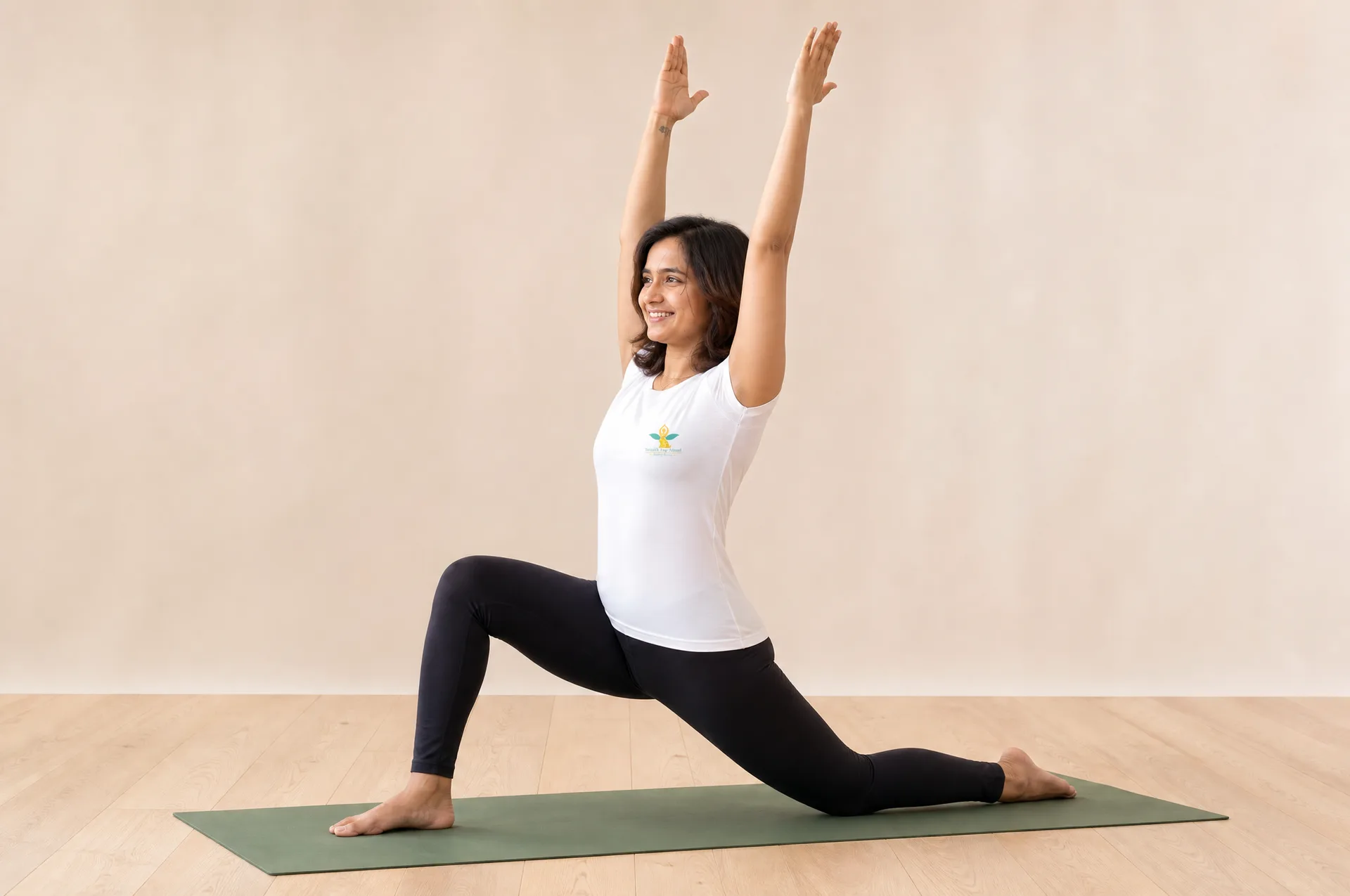
4. लो लंज (अंजनेयासन)
खड़ी स्थिति से दायां पैर आगे बढ़ाकर गहरे लंज में आएं। बायां घुटना ज़मीन पर टिकाएं। छाती को ऊपर उठाते हुए कूल्हों को आगे और नीचे की ओर दबाएं। आपको बाएं हिप फ्लेक्सर और बाईं जांघ के अगले हिस्से में गहरा स्ट्रेच महसूस होना चाहिए। और गहराई के लिए बाहों को सिर के ऊपर उठाएं। हर तरफ एक से दो मिनट तक होल्ड करें।
टिप: गद्दी के लिए पीछे वाले घुटने के नीचे तह किया हुआ कंबल रखें।
5. कबूतर आसन (एक पाद राजकपोतासन)
अधोमुख श्वानासन या टेबलटॉप स्थिति से दायां घुटना आगे लाकर दाईं कलाई की ओर ले जाएं। दाईं पिंडली को ऐसे रखें कि वह मैट के अगले किनारे के लगभग समानांतर हो (या अगर आपके कूल्हे कसे हुए हैं तो शरीर के ज़्यादा करीब)। बायां पैर सीधा पीछे फैलाएं। हाथों को आगे ले जाएं और अगले पैर के ऊपर झुकें। हर तरफ दो से तीन मिनट तक होल्ड करें।
टिप: अगर दायां कूल्हा फर्श तक नहीं पहुंचता, तो उसके नीचे ब्लॉक या कंबल रखें। इस आसन के लिए यह सबसे ज़रूरी बदलाव है।
6. मालासन (गारलैंड पोज़)
पैरों को कूल्हों की चौड़ाई से थोड़ा ज़्यादा फैलाकर खड़े हों, पंजे बाहर की ओर मुड़े हुए। गहराई से बैठें, कूल्हों को जितना हो सके फर्श के करीब लाएं। कोहनियों को घुटनों के अंदरूनी हिस्से से दबाएं और हथेलियों को प्रार्थना की मुद्रा में जोड़ें। कोहनियों के दबाव से घुटनों को धीरे-धीरे और चौड़ा खोलें। एक से दो मिनट तक होल्ड करें।
टिप: अगर एड़ियां फर्श से उठ जाती हैं, तो सहारे के लिए उनके नीचे मुड़ा हुआ कंबल या वेज रखें।
7. उत्थान पृष्ठासन (लिज़र्ड पोज़)
दायां पैर आगे रखकर लो लंज की स्थिति से दाएं पैर को मैट के बाहरी किनारे तक ले जाएं। दोनों हाथों को दाएं पैर के अंदर की तरफ फर्श पर या ब्लॉक पर रखें। ज़्यादा तीव्रता के लिए कोहनियों के बल नीचे आएं। यह गहरा हिप ओपनर एक साथ हिप फ्लेक्सर, भीतरी जांघों और हैमस्ट्रिंग पर काम करता है। हर तरफ एक से दो मिनट तक होल्ड करें।
टिप: पीछे वाले घुटने को ज़मीन पर रखें और ज़रूरत हो तो उसके नीचे कंबल की गद्दी लगाएं।
बैकबेंड: शरीर के अगले हिस्से को खोलना
8. भुजंगासन (कोबरा पोज़)
पेट के बल लेटें, हाथ कंधों के नीचे, कोहनियां शरीर के पास। हाथों पर दबाव डालें और श्रोणि को ज़मीन पर टिकाए रखते हुए छाती को फर्श से ऊपर उठाएं। कंधों को पीछे और नीचे घुमाएं, छाती को खोलें। सामने या थोड़ा ऊपर देखें। 30 सेकंड से एक मिनट तक होल्ड करें और दो से तीन बार दोहराएं।
टिप: कोहनियों को मुड़ा हुआ और शरीर के पास रखें। उठान पीठ की मांसपेशियों से आनी चाहिए, बाहों के धक्के से नहीं।
9. सेतु बंधासन (ब्रिज पोज़)
पीठ के बल लेटें, घुटने मुड़े हुए, पैर फर्श पर सपाट और कूल्हों की चौड़ाई पर। पैरों पर दबाव डालें और कूल्हों को छत की ओर उठाएं। हाथों को शरीर के नीचे आपस में जोड़ें और कंधों को एक-दूसरे के करीब लाएं। यह एक साथ छाती, हिप फ्लेक्सर और रीढ़ को खोलता है। एक मिनट तक होल्ड करें।
टिप: सहारे वाले, आरामदायक रूप के लिए त्रिकास्थि (सेक्रम) के नीचे ब्लॉक रखें, जिसे आप तीन से पांच मिनट तक होल्ड कर सकते हैं।
10. उष्ट्रासन (कैमल पोज़)
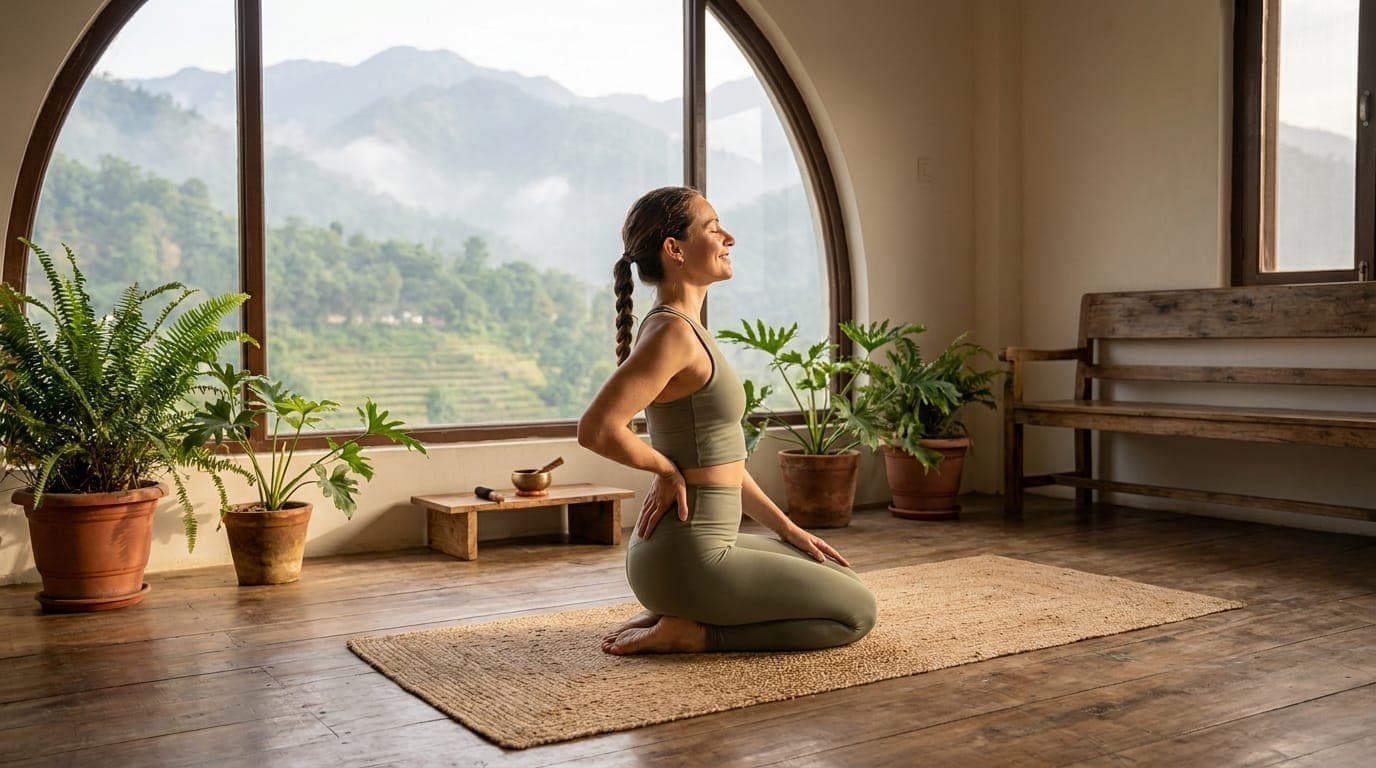
घुटनों को कूल्हों की चौड़ाई पर रखकर घुटनों के बल बैठें, जांघें फर्श से लंबवत। हाथों को निचली पीठ पर रखें, उंगलियां नीचे की ओर। छाती को छत की ओर उठाएं और पीछे की ओर झुकना शुरू करें। अगर संभव हो, तो पीछे पहुंचकर एड़ियां पकड़ें। कूल्हों को आगे दबाते और छाती को उठाते रहें। 30 सेकंड से एक मिनट तक होल्ड करें।
टिप: अगर पीछे पहुंचना बहुत गहरा लगे, तो एड़ियां ऊंची करने के लिए पंजों को मोड़कर अंदर करें। हमेशा पहले हल्के बैकबेंड से रीढ़ को वार्म-अप करें।
ट्विस्ट: रीढ़ में गतिशीलता लाना
11. बैठकर रीढ़ की ट्विस्ट (अर्ध मत्स्येन्द्रासन)
पैरों को फैलाकर बैठें। दायां घुटना मोड़ें और दायां पैर बाईं जांघ के बाहर रखें। आप बायां पैर सीधा रख सकते हैं या उसे मोड़कर बाईं एड़ी को दाएं कूल्हे के पास ला सकते हैं। दायां हाथ अपने पीछे रखें और बाईं कोहनी दाएं घुटने के बाहर। सांस लेते हुए लंबा हों, सांस छोड़ते हुए और गहरा मुड़ें। हर तरफ एक से दो मिनट तक होल्ड करें।
टिप: दोनों सिटिंग बोन्स को ज़मीन पर टिकाए रखें। ट्विस्ट थोरैसिक रीढ़ से आना चाहिए, बांह से लीवर लगाकर नहीं।
12. लेटकर रीढ़ की ट्विस्ट (सुप्त मत्स्येन्द्रासन)
पीठ के बल लेटें। दाएं घुटने को छाती से लगाएं और फिर उसे शरीर के आर-पार बाईं तरफ ले जाएं। दाईं बांह को बगल में फैलाएं और सिर घुमाकर दाएं हाथ की ओर देखें। दोनों कंधों को जितना हो सके ज़मीन पर रखें। यह हल्की ट्विस्ट रीढ़, ग्लूट्स और कूल्हे के बाहरी हिस्से को स्ट्रेच करती है। हर तरफ दो से तीन मिनट तक होल्ड करें।
टिप: अगर घुटना फर्श से काफ़ी ऊपर हवा में रहता है, तो मांसपेशियों को पूरी तरह ढीला होने देने के लिए उसके नीचे तकिया या ब्लॉक रखें।