Quick answer: can yoga build both flexibility and strength?
Yes. Yoga builds flexibility by moving joints through their full range and holding stretches, and builds strength by asking you to support your own body weight in poses such as Plank, Chair and Warrior. For most people, three to four sessions a week that mix held strength poses with slower stretches produce noticeable changes within six to eight weeks. The same approach works after 40 and 50, with longer warm-ups, more rest and a bigger focus on strength and balance.
- Frequency: 3 to 4 sessions a week of 30 to 45 minutes beats one long class a week.
- Balance the two: pair every strength block with a stretch block, and finish with a few minutes of rest.
- After 40: warm up longer, hold strength poses steadily, and add balance work every session.
- Safety: stretch to mild tension, never sharp pain.
Many people come to yoga to become more flexible and are surprised how much stronger they get. That is because almost every standing pose, arm balance and core pose is a bodyweight strength exercise. Flexibility without strength can leave joints unstable; strength without flexibility can leave you stiff. Yoga trains both together. The practical guidance below is drawn from our teaching at Swaastik Yog School in Rishikesh, where our founders Mayuri Shewale and Rahul Badoni have each taught for more than 15 years.
How does yoga improve flexibility and strength?
Yoga improves flexibility through repeated, gradual stretching, and strength through holding and moving your body weight against gravity.
- Flexibility: regular, gentle stretching may help your muscles and nervous system tolerate longer ranges of motion over time. Holding a stretch for 30 seconds or more, with slow breathing, helps you relax into it.
- Strength: holding Plank, Chair or Warrior asks muscles to work for many breaths. Moving slowly in and out of poses adds control.
- Stability: balance poses train the small muscles around the ankles, knees and hips, which matters more and more with age.
- Breath: steady breathing helps you stay calm in effort, which makes it easier to hold strength poses and relax into stretches.
10 yoga poses for flexibility and strength (with cues)
Hold each pose for 5 to 8 slow breaths unless stated otherwise.
- Downward-Facing Dog (Adho Mukha Svanasana). Strengthens arms and shoulders, stretches hamstrings and calves. Cue: press the floor away with your whole hand and bend your knees as much as you need to keep your back long.
- Plank (Phalakasana). Builds core, arm and shoulder strength. Cue: shoulders over wrists, heels pressing back, belly gently drawn in. Drop your knees to the floor if your lower back sags.
- Chair Pose (Utkatasana). Strengthens thighs and glutes. Cue: sit back as if into a chair, keep your weight in your heels and your knees in line with your toes.
- Warrior II (Virabhadrasana II). Builds leg strength and opens the hips. Cue: front knee over the ankle, pointing towards your middle toes; arms reach long in both directions.
- Low Lunge (Anjaneyasana). Stretches hip flexors, which tighten with long sitting. Cue: back knee on a folded blanket, hips move gently forward, ribs stay soft.
- Triangle (Trikonasana). Stretches hamstrings and side body, strengthens legs. Cue: rest your lower hand on your shin or a block rather than collapsing to reach the floor.
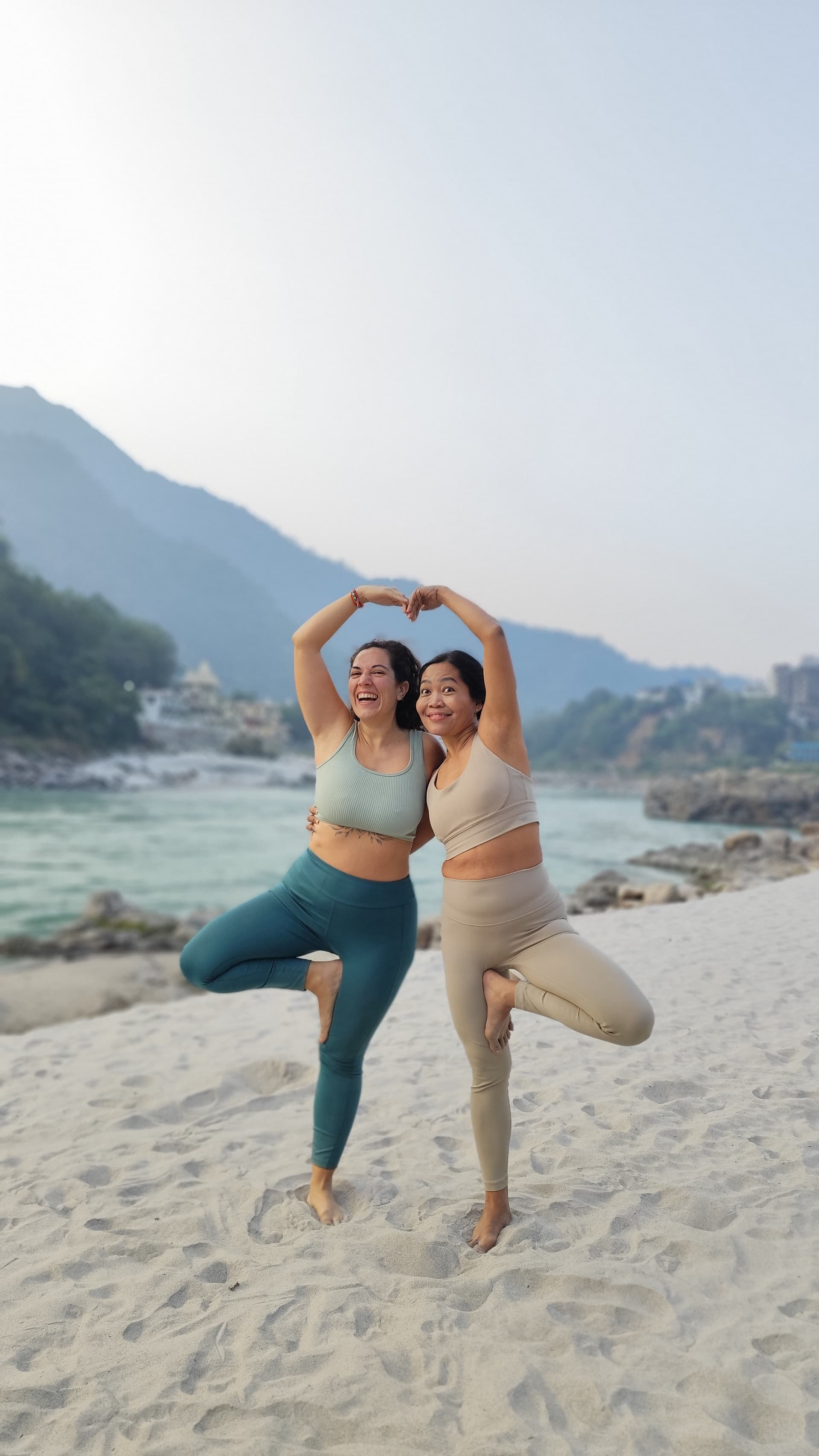
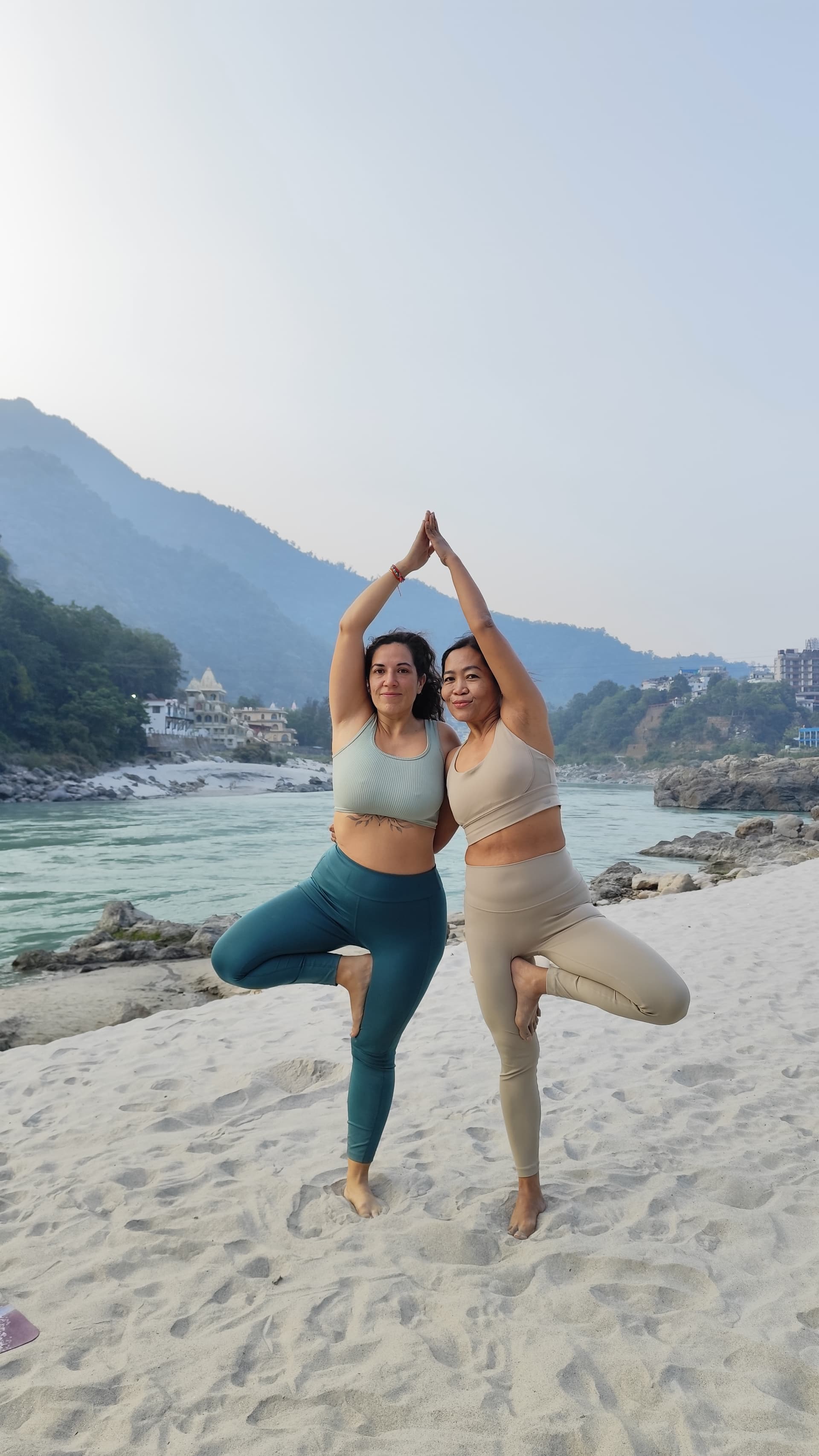
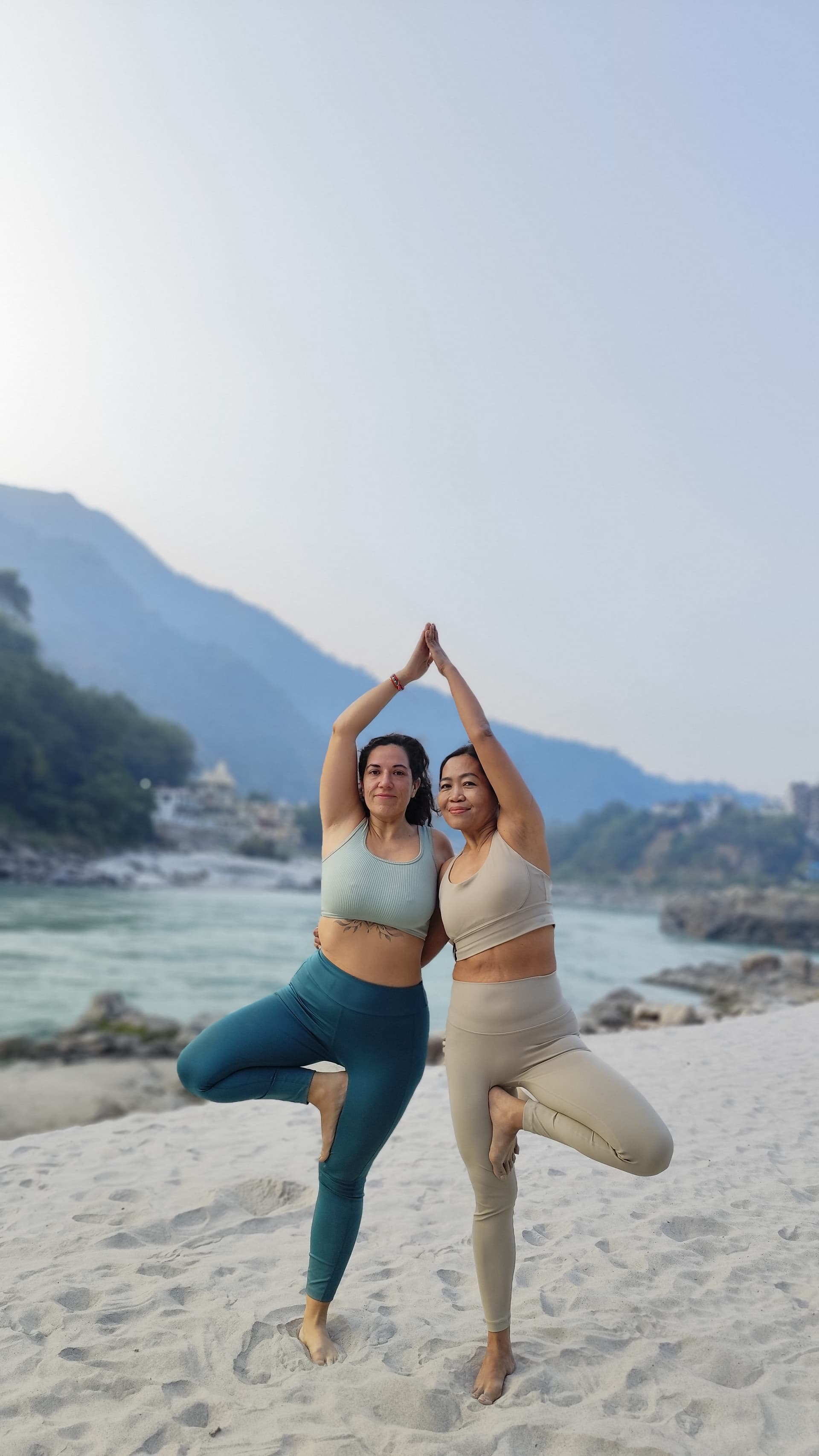
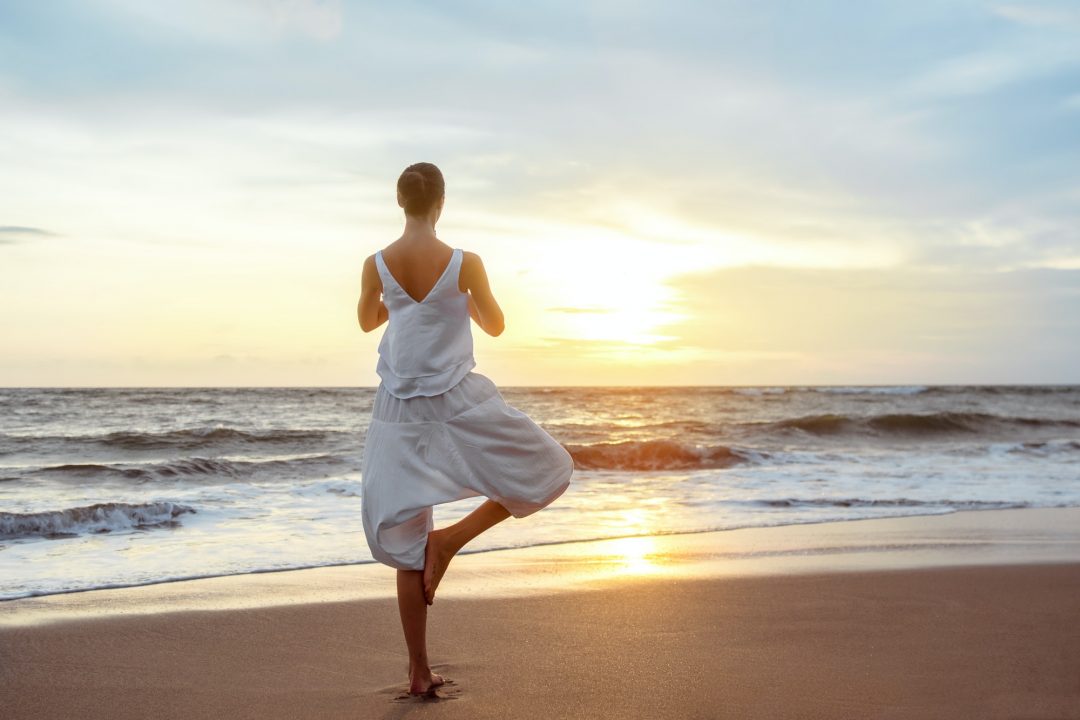
- Tree Pose (Vrksasana). Trains balance and ankle strength. Cue: foot on the calf or inner thigh, never on the knee; fix your gaze on one still point.
- Bridge Pose (Setu Bandhasana). Strengthens glutes and the back of the legs, opens the chest. Cue: feet hip-width apart, knees pointing forward, lift from the hips not the neck.
- Seated Forward Fold (Paschimottanasana). Stretches hamstrings and the back. Cue: sit on a folded blanket, bend your knees, and lead with your chest rather than rounding to bring your head down.
- Locust Pose (Salabhasana). Strengthens the back of the body, which supports posture. Cue: lift chest and legs a little, keep the back of the neck long and gaze at the floor.
Finish every practice with 3 to 5 minutes in Savasana (lying relaxation) to let your breath and heart rate settle.