Back to Blog
Wellness

10 Health Benefits of Meditation and How to Focus on Mindfulness

· Updated
Share this post:
10 Health Benefits of Meditation and How to Focus on Mindfulness

10 research-backed ways meditation may help with stress, focus, sleep and mood, each with a practical tip, plus a simple 10-minute starter practice.

Quick answer: what are the health benefits of meditation?

Research suggests regular meditation and mindfulness may help reduce perceived stress, improve focus, support better sleep and help you respond to emotions more calmly. The effects are usually modest and build over weeks of steady practice, not after one session. Ten minutes a day is a realistic place to start, and meditation works best alongside, not instead of, medical care.

  • Most studied benefits: lower perceived stress, better attention and improved sleep quality.
  • Dose: consistency matters more than length; 10 minutes daily beats one hour once a week.
  • Easy start: a 10-minute routine of settling, breath counting and a body scan (below).
  • Caution: if you have a history of trauma, depression or psychosis, practise with a qualified teacher or therapist.
Meditation Benefits

Meditation is the practice of training attention, usually by resting it on one thing such as the breath and gently bringing it back when it wanders. Mindfulness is a form of meditation that means paying attention to the present moment without judging it. Both have been studied widely over the last few decades. The research is promising, but it is also mixed, and many studies are small. Below are ten benefits that research suggests meditation may offer, each with a practical tip so you can try it yourself.

What are 10 health benefits of meditation and mindfulness?

1. It may help reduce stress

Stress reduction is the most studied benefit of mindfulness, and reviews of mindfulness programmes report modest reductions in perceived stress.

Tip: when you notice stress, take three slow breaths with a longer exhale than inhale, for example in for 4, out for 6.

2. It may ease feelings of anxiety

Some studies suggest mindfulness-based programmes may help people manage everyday anxious thoughts by noticing them rather than following them.

Tip: name what is happening silently, such as "worrying" or "planning", then return to the breath.

3. It may support emotional balance

Regular practice may help you create a small pause between a feeling and your reaction to it.

Tip: before replying to a difficult message, feel your feet on the floor for one breath.

4. It may improve attention and focus

Every time you notice your mind has wandered and bring it back, you are training attention, a bit like a repetition in the gym.

Tip: count breaths from 1 to 10 and start again at 1 each time you lose count. Losing count is not failure; it is the exercise.

5. It may support better sleep

Research suggests mindfulness practice may improve self-reported sleep quality, especially for people whose minds race at night.

Tip: try a slow body scan in bed, or a guided Yoga Nidra practice, instead of scrolling on your phone.

6. It may help with blood pressure as part of a healthy lifestyle

Some studies report small reductions in blood pressure with meditation, though it is not a substitute for medication or medical advice.

Tip: if you have high blood pressure, keep taking your prescribed treatment and mention your practice to your doctor.

7. It may change how you relate to pain

Mindfulness does not remove pain, but some research suggests it may reduce how much pain bothers you and how much you fight it.

Tip: describe the sensation with neutral words such as "warm", "tight" or "pulsing" instead of "terrible".

8. It may build self-awareness

Sitting quietly each day shows you your habitual thoughts, moods and patterns more clearly.

Tip: after each session, write one sentence about what you noticed. Patterns appear within a few weeks.

9. It may encourage kindness towards yourself and others

Loving-kindness (metta) meditation, in which you silently wish others well, has been linked in some studies with more positive emotions.

Tip: repeat "May I be well. May you be well." for two minutes, first for yourself, then for someone you know.

10. It may support healthier habits

Mindfulness may help you notice cravings and urges before you act on them, which can support changes in eating, screen time or smoking.

Tip: when an urge arrives, wait for three breaths and watch it rise and fall before deciding what to do.

Wyszukiwarka kursów

Nie wiesz, który kurs jest dla Ciebie?

Ułatwiliśmy porównywanie. Zobacz wszystkie kursy instruktora jogi, wyjazdy i zajęcia obok siebie – z aktualnymi datami startu, cenami i opcjami pokoi – na jednej stronie.

  • Filtruj według miesiąca
  • Filtruj według budżetu
  • Filtruj według rodzaju pokoju
Porównaj wszystkie kursyZajmie 30 sekund · Bez rejestracji

Benefits at a glance

BenefitStrength of evidencePractice that fits best
StressFairly consistent, modest effectBreath awareness, body scan
AttentionPromising, mixedBreath counting, single-point focus
SleepPromising, mostly self-reportedBody scan, Yoga Nidra
Emotional balancePromising, mixedMindfulness of thoughts and feelings
KindnessEarly, smaller studiesLoving-kindness (metta)

A simple 10-minute meditation for beginners

Sit on a cushion or a chair with your back upright but not stiff. Set a gentle timer.

  1. Minute 0 to 1, settle. Close your eyes or lower your gaze. Feel where your body touches the floor or chair.
  2. Minute 1 to 3, slow the breath. Breathe through the nose. Let each exhale be a little longer than the inhale.
  3. Minute 3 to 7, count breaths. Count each exhale from 1 to 10, then start again. When you lose count, notice it kindly and start at 1.
  4. Minute 7 to 9, body scan. Move your attention slowly from the top of your head to your feet, noticing sensations without changing them.
  5. Minute 9 to 10, close. Notice how you feel compared with ten minutes ago. Open your eyes slowly.

Practise at the same time each day, for example after brushing your teeth in the morning. For more techniques, read our beginner's guide to meditation techniques.

A short safety note

Meditation is safe for most people, but it is not always gentle. A small number of people find that sitting with their thoughts brings up difficult memories or feelings. If you have a history of trauma, severe depression, psychosis or another mental health condition, check with your doctor or therapist first and practise with an experienced teacher. Stop and open your eyes if you feel overwhelmed. Meditation is not a treatment for any illness.

Learning meditation in Rishikesh

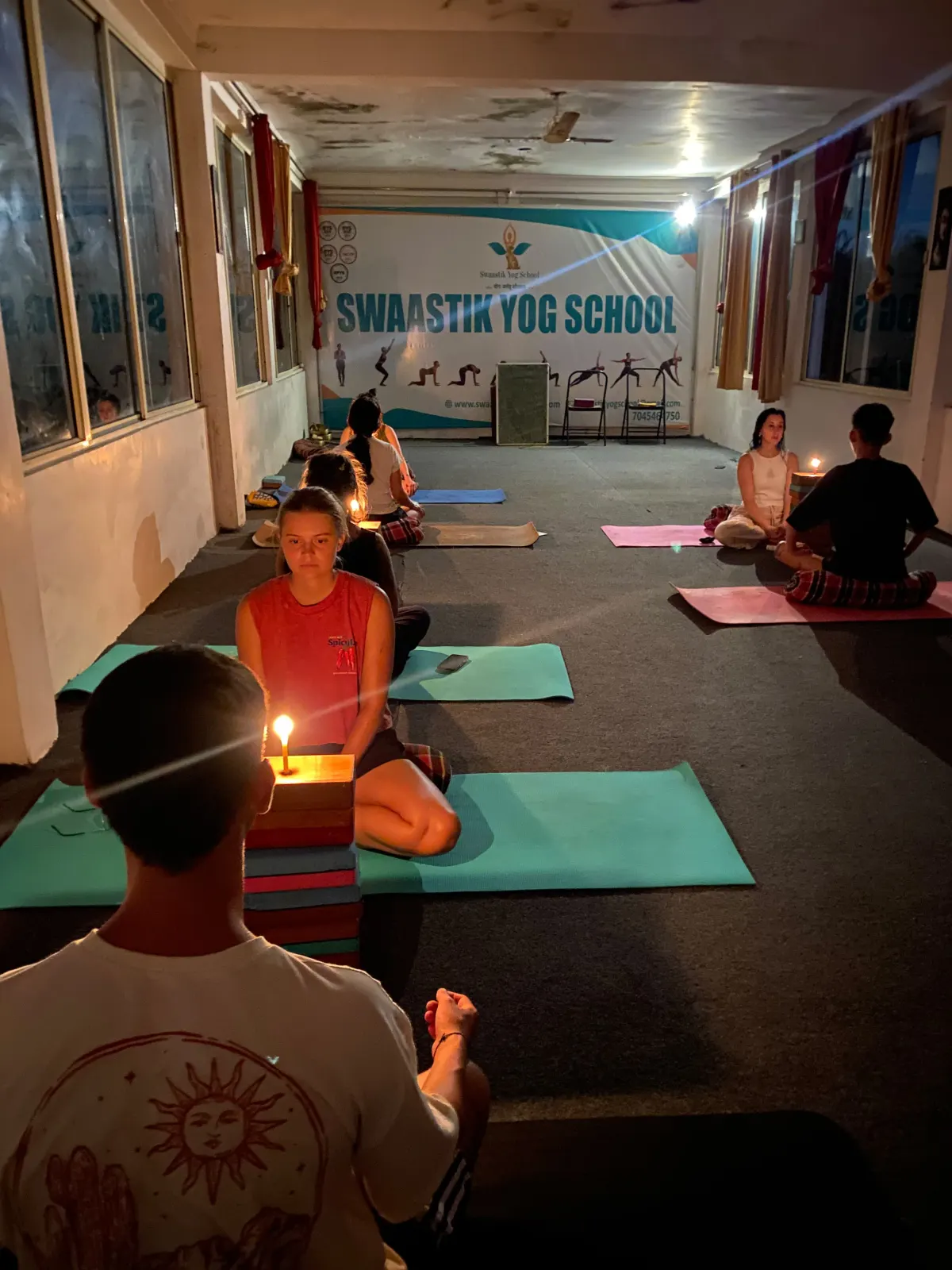
At Swaastik Yog School in Tapovan, Rishikesh, meditation and pranayama are part of our daily schedule, both on our retreats and in every teacher training. Our founders, Mayuri Shewale and Rahul Badoni, are both E-RYT 500 teachers with more than 15 years of experience, and our residential programmes include two sattvic meals a day.

Next step

If you want time to build a meditation habit in a quiet setting, look at our yoga and meditation retreats in Rishikesh. If you want to study meditation in depth and learn to teach it, see our 200-hour yoga teacher training.

Ready to Start Your Yoga Journey?

Join our Yoga Alliance certified teacher training in Rishikesh — or just ask us a question. We reply to every message personally.

About the Author

Rahul Badoni, Co-Founder & Philosophy Teacher at Swaastik Yog School

Rahul Badoni

Co-Founder & Philosophy Teacher

E-RYT 500 · 15+ years teaching

Rahul Badoni teaches Yoga Philosophy, Ashtanga Yoga, Meditation at Swaastik Yog School in Rishikesh, sharing 15+ years of hands-on experience with students from around the world.

Related Articles

Bhastrika Pranayama: Benefits, Steps & Precautions

Bhastrika Pranayama: Benefits, Steps & Precautions

Bhastrika (bellows breath) step by step: beginner rounds and timing, benefits, who should avoid it, common mistakes, and how it differs from Kapalbhati.

Read More
Ajna Chakra Benefits: How to Balance Your Third Eye (Mudra, Mantra & 12-Min Routine)

Ajna Chakra Benefits: How to Balance Your Third Eye (Mudra, Mantra & 12-Min Routine)

A practical guide to the Ajna (third eye) chakra: where it is, what its meditation can honestly do for you, and how to do Ajna (Hakini) mudra, Trataka and Bhramari step by step. Includes a practice table, a 12-minute routine and a 21-day plan.

Read More
What is the Difference Between 200 and 300 Hour Yoga Teacher Training?

What is the Difference Between 200 and 300 Hour Yoga Teacher Training?

Learn the key differences between 200 and 300 hour yoga teacher training, from course content to certification. Choose the right path for your yoga career.

Read More

Masz pytania? Napisz do nas!

Niezależnie od tego, czy interesuje Cię kurs instruktora jogi, wyjazd jogowy czy zajęcia jednorazowe, chętnie pomożemy Ci na Twojej drodze z jogą. Wypełnij formularz albo napisz do nas bezpośrednio na WhatsAppie.

Odpowiadamy w ciągu 24 godzin · 4.8★ na podstawie 138 opinii w Google