Quick answer: can you learn aerial yoga at home?
You can practise aerial yoga at home, but it is much safer to learn the basics, especially inversions, from a teacher in person first. The real risks at home are the rigging, not the poses: a hammock needs a load-rated anchor point or a purpose-built frame, rated hardware and clear space around it. Learn the grips, wraps and safe inversion entries in a class or short course, then use home practice to repeat what you already know.
- Fine to do at home: seated and supported stretches, restorative poses, and wraps you have already learnt with a teacher.
- Learn in person first: any full inversion, hands-free hanging and transitions between wraps.
- Never improvise rigging: no door frames, curtain rails, light fittings or untested ceiling hooks.

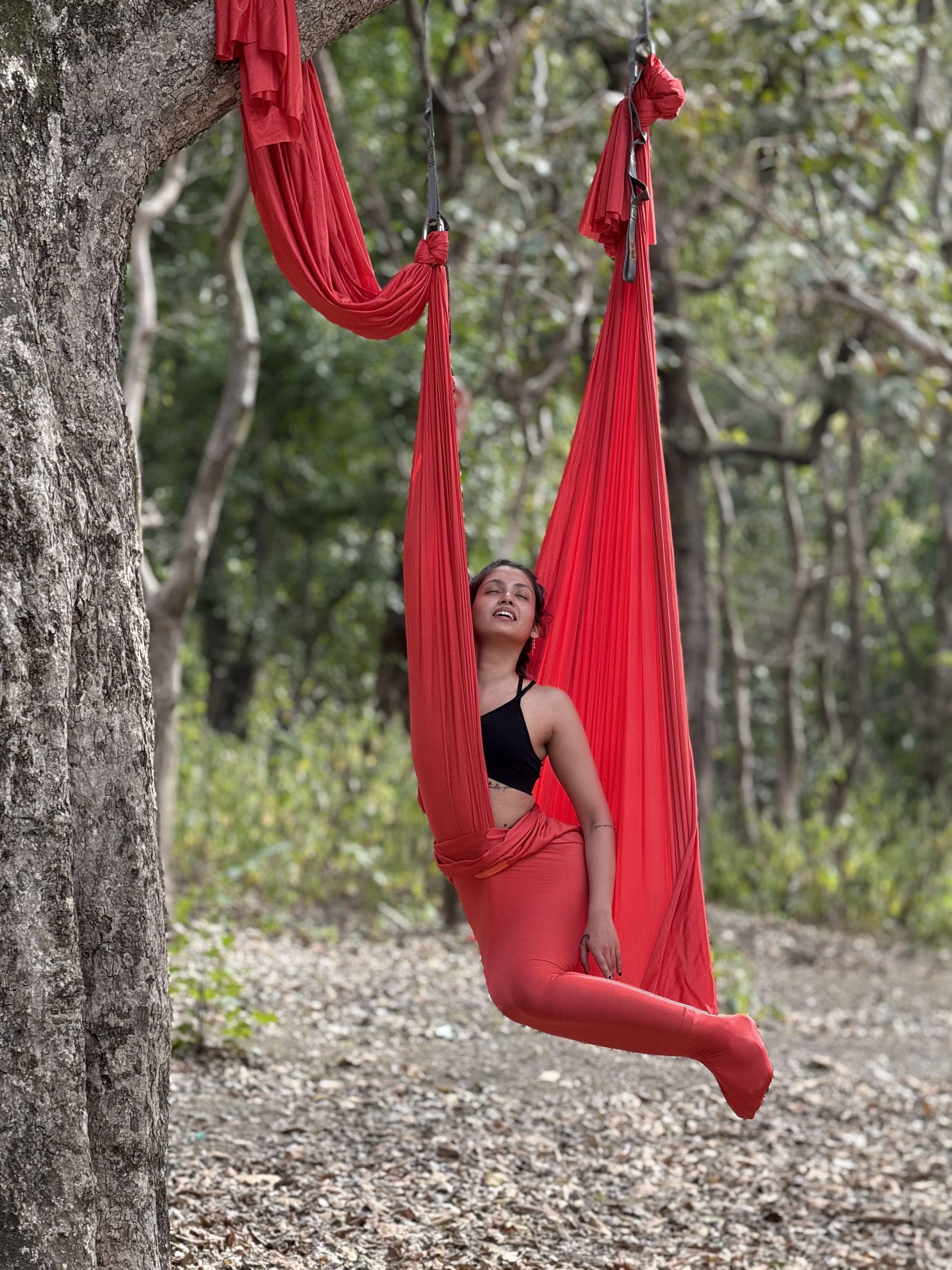
Aerial yoga uses a soft fabric hammock, hung from the ceiling, to support part or all of your weight while you stretch, invert and move. The hammock makes some poses easier and some feel almost effortless. That is exactly why people want to try it at home, and also why it needs care. Here is an honest guide to what you can safely do on your own, what to set up, and when you need a teacher.
What do you need for aerial yoga at home?
You need four things: a safe anchor point, rated hardware, a proper aerial hammock and enough clear space.
- An anchor point you can trust. This is either a structural ceiling beam that a qualified builder or engineer has confirmed can take dynamic loads, or a freestanding aerial frame made for the purpose. Plasterboard, false ceilings and ordinary screw hooks are not safe.
- Rated hardware. Use climbing-grade or rigging-grade carabiners, a swivel and daisy chains or slings, each with a stated working load limit. When you swing, bounce or drop into a wrap, the force on the hardware is several times your body weight, so choose ratings well above it.
- A proper aerial hammock. Look for low-stretch fabric sold specifically for aerial yoga, not a garden hammock or stretchy silks. Ask the seller for the fabric's load rating.
- Clear space and padding. Leave room to swing in every direction without touching furniture or walls, and put a thick mat or crash mat underneath. Keep pets and children out of the area while you practise.
If you are not sure whether your ceiling is strong enough, assume it is not and use a frame, or ask a professional. This is the one part of home aerial yoga where you should not save money.