Quick answer: is your 30s a good time to start or deepen yoga?
Yes. In your 30s most people still recover quickly, learn new movement patterns easily and have enough life experience to practise with patience instead of ego. The main obstacles are time and energy, not your body. A steady 20-minute routine four or five days a week usually does more for you than one long class on a Sunday.
- Consistency beats length: 20 minutes most days is a realistic, effective target.
- Train for your real life: desk hours, carrying children and stress all shape what your body needs.
- Build strength now: balance flexibility work with poses that load your legs, back and core.
- Teacher training is not only for teachers: many people in their 30s take a 200-hour course to deepen their own practice.
Why your 30s are a good decade to deepen your practice
Your 20s often give you flexibility and fast recovery without much thought. Your 30s give you something more useful: the ability to notice. You are more likely to feel the difference between a stretch and a strain, and to stay with a slow practice long enough for it to change you.
It is also the decade where small habits start to show. Long hours at a laptop, broken sleep with young children, and career stress tend to settle into the hips, upper back, neck and jaw. A regular practice gives you a daily check-in with those areas before stiffness becomes your normal.
- You still adapt well. Strength and mobility usually respond within weeks when you practise regularly.
- You have context. You know your schedule, your stress patterns and your weak spots, so you can practise with purpose.
- You are building the base for later. Strength, balance and mobility habits formed now are far easier to keep than to start at 50.
The real-life challenges of your 30s, and how yoga meets them
If you sit at a desk all day
Hours of sitting tend to shorten the hip flexors, round the upper back and push the head forward. Prioritise hip openers (low lunge, lizard), thoracic mobility (thread the needle, cat-cow) and back-strengthening poses such as locust. Set a timer to stand and do two minutes of movement every hour; it counts.
If you are a parent
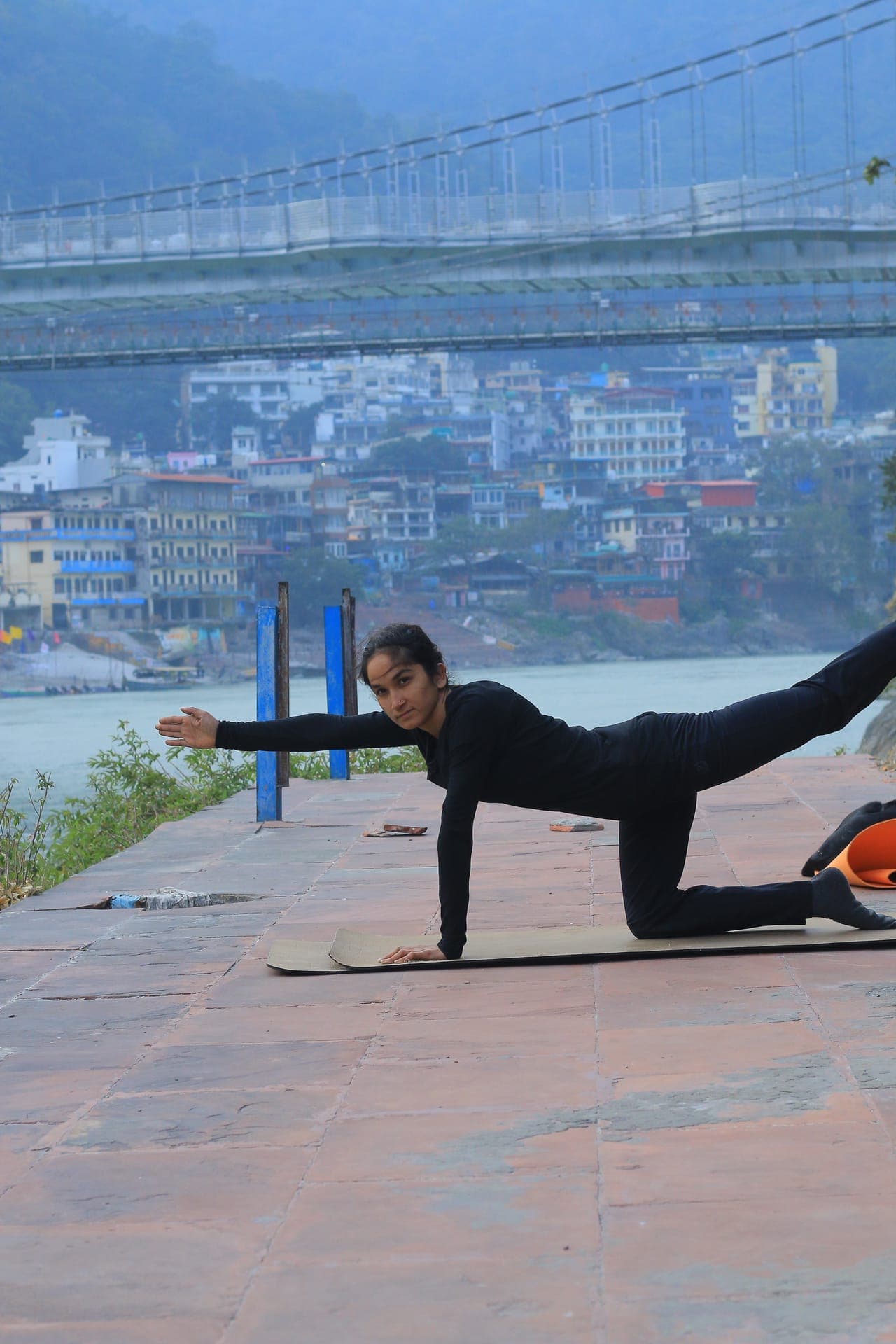
Lifting, carrying and bending over a child load the lower back and one hip more than the other. Focus on core stability (bird-dog, forearm plank), glute strength (bridge, chair pose) and gentle twists. If you have recently given birth, get clearance from your doctor or midwife before returning to practice, and ask a teacher about postnatal modifications for the abdominal wall and pelvic floor.
If your career is demanding
Stress often shows up as shallow breathing, tight shoulders and poor sleep. Even five minutes of slow breathing at the end of the day, with the exhale longer than the inhale, may help you switch off. A short evening practice of forward folds and legs-up-the-wall is more realistic on busy weeks than a full class.