Back to Blog
Travel

Ashram Stay in Rishikesh: Rules, Costs, Booking and Ashram vs Yoga School

· Updated
Share this post:
Ashram Stay in Rishikesh: Rules, Costs, Booking and Ashram vs Yoga School

How an ashram stay in Rishikesh really works: the usual rules, how to book, what it costs, and when a residential yoga school in Tapovan is the better fit.

Quick answer: how does an ashram stay in Rishikesh work?

You ask the ashram for a room before you travel, usually through its own website or by email. Then you live by its rules: no alcohol, meat, eggs, smoking or drugs; modest clothes; quiet hours at night (Parmarth Niketan asks for silence from 10 PM to 6 AM); and joining daily prayer, satsang or the evening Ganga Aarti.

  • Best for: quiet, devotion and self-led practice.
  • Not for: a teaching certificate or a structured yoga course.
  • If you want both: a residential yoga school gives you ashram-style living plus daily guided classes. Our 3-day retreat starts at $100 and our 200-hour course at $440, with room and meals included.

"Can I stay in an ashram in Rishikesh?" We hear this question almost every week. People picture a simple room by the Ganga, a bell at dawn and a quiet mind.

That picture is real. But an ashram is not a hotel, and it is not a yoga school. It has its own rules, its own rhythm and its own way of taking bookings. Knowing this before you arrive saves a lot of confusion.

This guide explains how ashram stays work, what the rules usually are, how to book and what it costs. It also shows, honestly, when a yoga school is the better fit.
Written by Mayuri Shewale, E-RYT 500 (Yoga Alliance) and founder of Swaastik Yog School in Rishikesh. Our campus is in Tapovan, and many of our students first came to Rishikesh looking for an ashram. The ashram rules quoted below come from the ashrams' own official pages. Our own prices come from our current published price list.

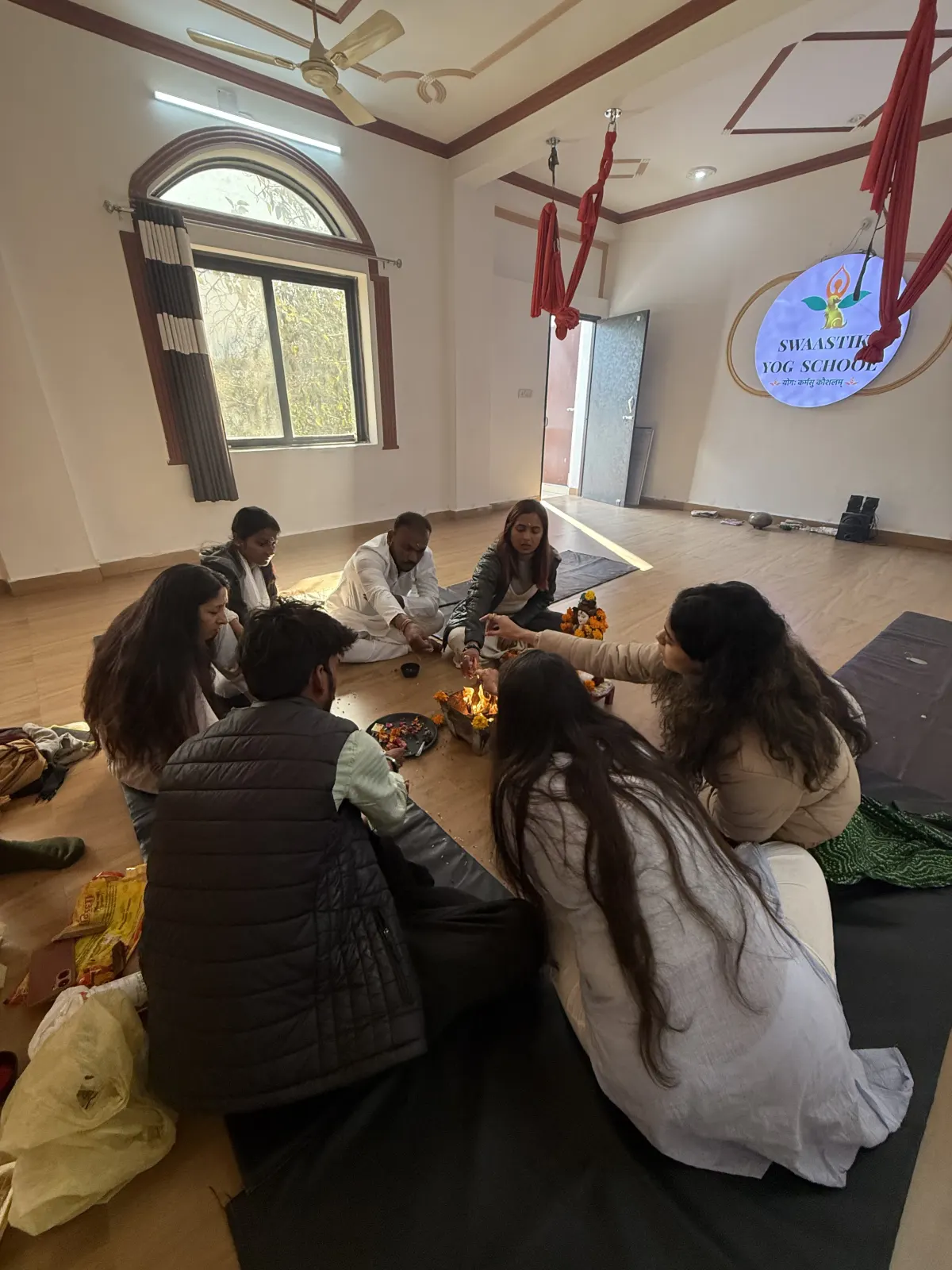
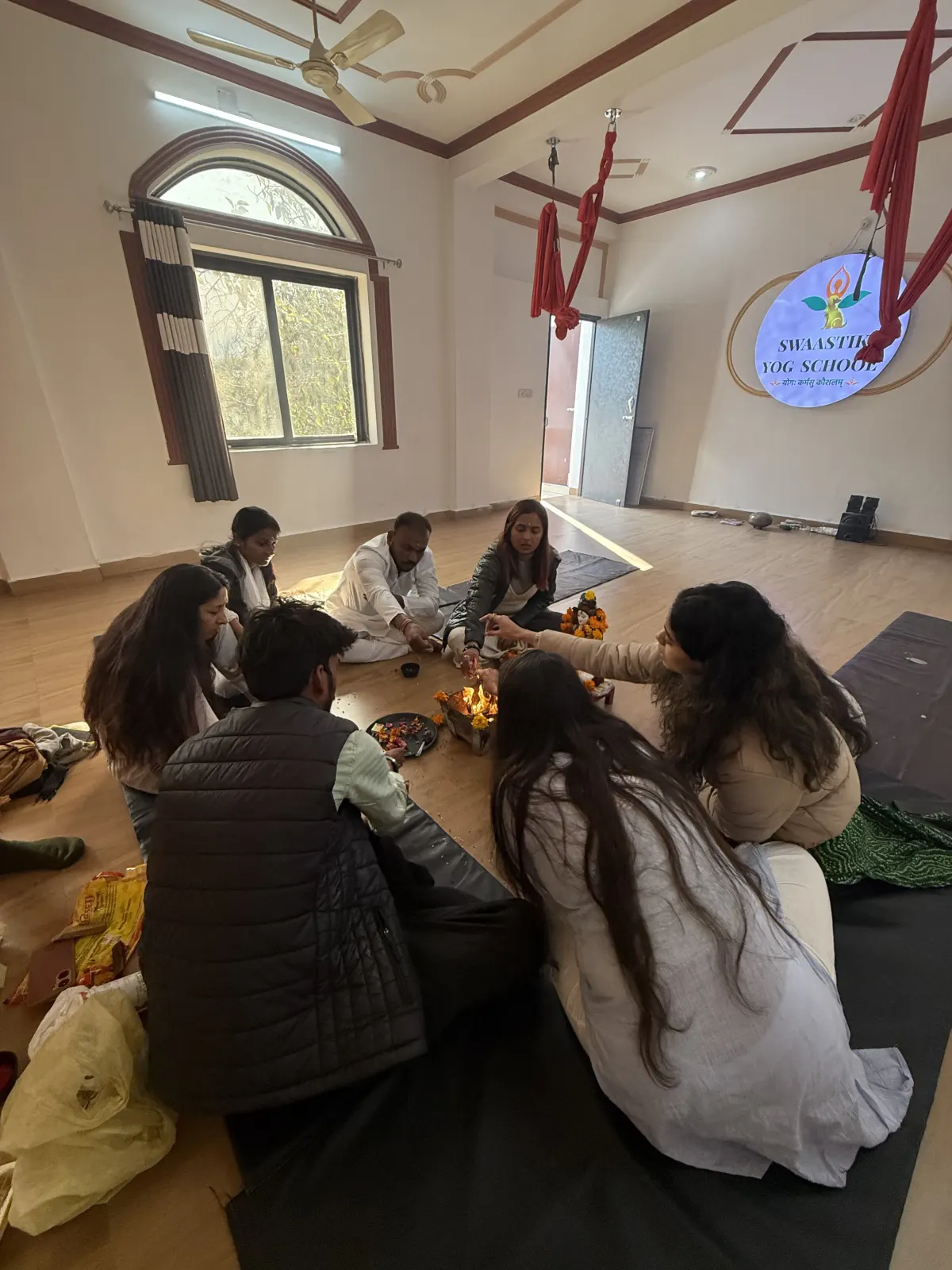
Students and teachers sitting in a circle around a small fire ceremony (havan) with flowers in the Swaastik Yog School shala in Tapovan, Rishikesh
A small fire ceremony (havan) in our shala in Tapovan. Ashram traditions like this are part of life at many yoga schools too.

What is an ashram stay in Rishikesh?

An ashram is a spiritual community. People live there to pray, meditate, study and serve. Guests are welcome at many ashrams, but they come as seekers, not as tourists.

That changes what you get. You get a simple room, a daily spiritual timetable and a peaceful setting. You usually do not get a set course, a teacher who tracks your progress, or a certificate.

Rishikesh has many ashrams. Two of the best known sit on the banks of the Ganga:

  • Parmarth Niketan, known for its large sunset Ganga Aarti. Its own website describes "several hundred residential rooms that retain the simplicity of ashram living". Many rooms have attached Western-style bathrooms and hot water, and linens are provided.
  • Sivananda Ashram, the headquarters of the Divine Life Society. Its official page lists group prayer and meditation in the early morning, temple worship three times a day, daily talks on Yoga, Vedanta and the Bhagavad Gita, and satsang at night.

We describe these two only because they are famous and their rules are public. Every ashram is different, so always read the rules of the one you choose.

What are the typical ashram rules?

Most ashrams in Rishikesh share the same core rules. They come from yogic ethics: non-violence, simplicity and self-discipline. Here is what Parmarth Niketan's published guidelines ask of guests. Many other ashrams follow similar rules.

RuleWhat it means in practice
No intoxicantsSmoking, alcohol and drugs are strictly prohibited.
Vegetarian onlyNo meat, fish or eggs. Guests are also advised to avoid onion and garlic.
Quiet hoursSilence is appreciated from 10 PM to 6 AM.
Modest dressShoulders, midriff and calves covered. No shorts, capris, sleeveless tops or short dresses. Avoid tight clothes.
White for yogaYoga students are asked to wear white. You can be turned away from class if you are not dressed properly.
Daily programmeGuests are expected to join the sunset Ganga Aarti.
No outside guestsOnly people named on your admission form may enter your room.
No entertainmentPlaying cards, radios and TVs are not allowed. No pets.
Shoes offRemove shoes before entering buildings and sacred places.
Leaving your roomAway for 2 to 3 days? Tell the manager and leave your key at the office. Away for more than 3 days? You give up the room.

Notice what is not on the list: a fixed curfew. Parmarth Niketan's guidelines do not publish a gate-closing time. Other ashrams may have one, so ask before you book if you plan late evenings.

How do you book an ashram stay in Rishikesh?

You book directly with the ashram, and you book ahead. Walking in and hoping for a room often does not work, especially in busy seasons and festivals.

Here is how the two best-known ashrams handle it, according to their own official pages:

  • Parmarth Niketan: you send a request through the reservations page on its official website. If there is no reply in 3 days, you send a reminder by email. Reception is open 8 AM to 8 PM, so arrive between 8 AM and 9 PM. Check-out is before 11 AM.
  • Sivananda Ashram (Divine Life Society): visitors must write to the General Secretary first and receive written permission before coming for a short or long stay.

Watch out for booking scams

Parmarth Niketan states clearly that it never asks for room payments by phone or WhatsApp. If someone contacts you with a "booking" and a payment link, report it. Always book through the ashram's official website or published email.

How much does an ashram stay in Rishikesh cost?

The honest answer: it depends on the ashram, and most do not publish fixed prices. Neither of the two official pages we checked lists a room rate. You find out the amount when the ashram replies to your request.

Some ashrams charge a simple daily rate. Some work on donations. Food may or may not be included. So ask these 5 questions in writing before you pay anything:

  1. What is the price per night, and is it a fee or a donation?
  2. Are meals included? How many a day?
  3. Is there a minimum or maximum stay?
  4. Which yoga or meditation classes are included, and which cost extra?
  5. How and when do I pay, and will I get a receipt?

On that last point: Parmarth Niketan asks guests to give donations through the office, ask for a receipt, and never hand money or tips to individuals.

A yoga school works differently. You pay one published price that covers the room, food and teaching. Here is what that looks like at our school, from our current price list:

ProgrammeLengthPrice (USD)Meals
3-day yoga retreat3 days / 2 nights$100, shared room3 a day
5-day yoga retreat5 days$200, shared room3 a day
7-day yoga retreat7 days$250, shared room3 a day
100-hour teacher training14 days$275 dorm / $660 shared / $880 private2 a day
200-hour teacher training22 days$440 dorm / $880 shared / $1,100 private2 a day
Drop-in class1 class₹500 (first class ₹250)Not included

Course prices include your room, sattvic vegetarian meals, evening chai, herbal tea, RO drinking water, mats and props, printed materials, Wi-Fi, weekend excursions and all taxes. Retreats include 3 meals a day. Airport transfer, laundry and personal costs are extra.

Buscador de cursos

Não sabe qual curso é ideal para você?

Facilitamos a comparação. Veja todas as formações de professores, retiros e aulas lado a lado — com datas de início atualizadas, preços e opções de quarto em uma única página.

  • Filtrar por mês
  • Filtrar por orçamento
  • Filtrar por tipo de quarto
Comparar todos os cursosLeva 30 segundos · Sem cadastro

Ashram vs yoga school: which is right for you?

Both give you a simple, clean, spiritual way of living. The big difference is structure. An ashram gives you a setting and a timetable. A yoga school gives you a teacher, a course and a goal.

Traditional ashramResidential yoga school
Main purposeSpiritual life: prayer, satsang, seva, meditationLearning yoga with a teacher, step by step
BookingRequest or written permission from the ashramRegister online, pay a deposit, get a confirmation
PriceOften not published; may be a fee or a donationFixed, published, all-inclusive
Yoga classesVaries; often group classes, some open to allDaily guided classes in a set syllabus
Personal feedbackDepends on the class; harder to get in a big groupTeachers correct and follow your progress
CertificateA stay alone does not give you a teaching certificateTeacher training courses lead to a certificate you can register with Yoga Alliance
RulesStrict: dress code, quiet hours, daily programmeYogic rules too, but built around a class schedule
FoodSimple vegetarian; may not be includedSattvic vegetarian meals included
SizeSome are very large, with hundreds of roomsSmaller groups that live and learn together

Neither is "better". They answer different needs. Read the next section to see which one fits yours.

Who should choose an ashram stay?

An ashram suits you if your main goal is inner quiet and devotion, not a course. Choose an ashram if you:

  • Already have a steady personal practice and want space to deepen it alone.
  • Want to take part in prayer, chanting, seva (selfless service) and satsang.
  • Are happy to follow strict dress and conduct rules every day.
  • Have flexible plans and can wait for the ashram to confirm your stay.
  • Do not need a certificate at the end.

Who should choose a yoga school instead?

A yoga school suits you if you want to learn, not only to live simply. Choose a school if you:

  • Are a beginner and want a teacher to guide and correct you.
  • Want to become a yoga teacher. Then you need a certified course such as our 200-hour yoga teacher training in Rishikesh.
  • Have only a few days and want every day planned for you. Our 3-day retreat starts every Monday.
  • Want one clear price, with room and food included.
  • Are a woman travelling alone and want a small, supervised campus. Read why we call ourselves a women-led yoga school in Rishikesh.

Not sure if a retreat or a full course is right for you? Our guide on yoga retreat vs teacher training walks through it.

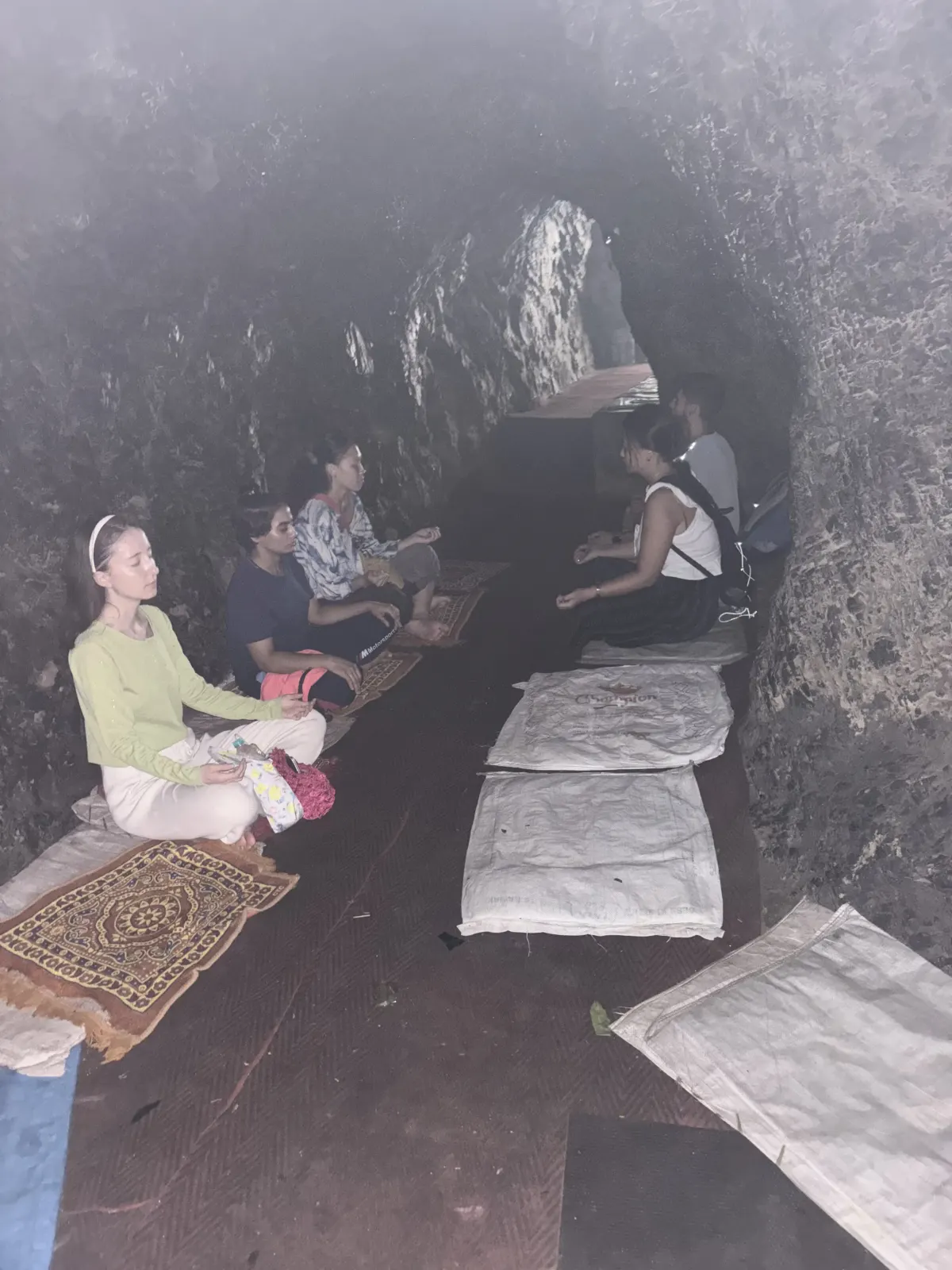
Yoga students sitting in silent meditation on mats inside a rock cave near Rishikesh during a weekend excursion
Silent meditation in a cave on one of our weekend excursions. You get the quiet of the ashram tradition with a teacher beside you.

What does ashram-style living look like at a yoga school?

Many people tell us they want "an ashram, but with proper classes". That is close to how our campus in Tapovan works. Here is what is the same, and what is different.

What feels like an ashram

  • Early mornings. On our 200-hour course, the first class starts at 6:00 AM.
  • Sattvic food. All meals are vegetarian and cooked fresh. We can make them dairy-free on request.
  • Clean living. Our terms say meat, fish, eggs, alcohol, tobacco and drugs are not allowed during a course. There is no smoking or drinking on the school premises.
  • Spiritual practice. Mantra chanting, meditation, pranayama and yogic cleansing (shatkarma) are on the daily timetable of our 200-hour course.
  • The Ganga Aarti. Our weekend excursions include visits to temples and the evening Ganga Aarti.
  • Early nights. On our retreats, the daily schedule ends with lights off at 9:00 PM.

What is different from an ashram

  • A real syllabus. On the 200-hour course you have about 8 hours of sessions a day: Hatha, Ashtanga, pranayama, anatomy, meditation, chanting and teaching practice. See a day in the life of our 200-hour training.
  • Teachers who know your name. The same core teachers run every batch.
  • A room you choose. Dorm, shared or private, each with a clear price. Compare them in our guide to dorm vs shared vs private rooms.
  • A certificate. Our school is registered with Yoga Alliance. Learn what that means in what is RYT 200.
Simple twin shared room at Swaastik Yog School in Tapovan, Rishikesh, with two single beds, blue blankets, bedside tables and a Buddha picture on the wall
One of our shared rooms. Simple and clean, like an ashram room, but with your course, meals and Wi-Fi included.

Can you stay at a yoga school and still visit the ashrams?

Yes, and this is what many of our students do. You sleep, eat and study on campus. Then, on free time or weekends, you visit the ghats and ashrams along the river.

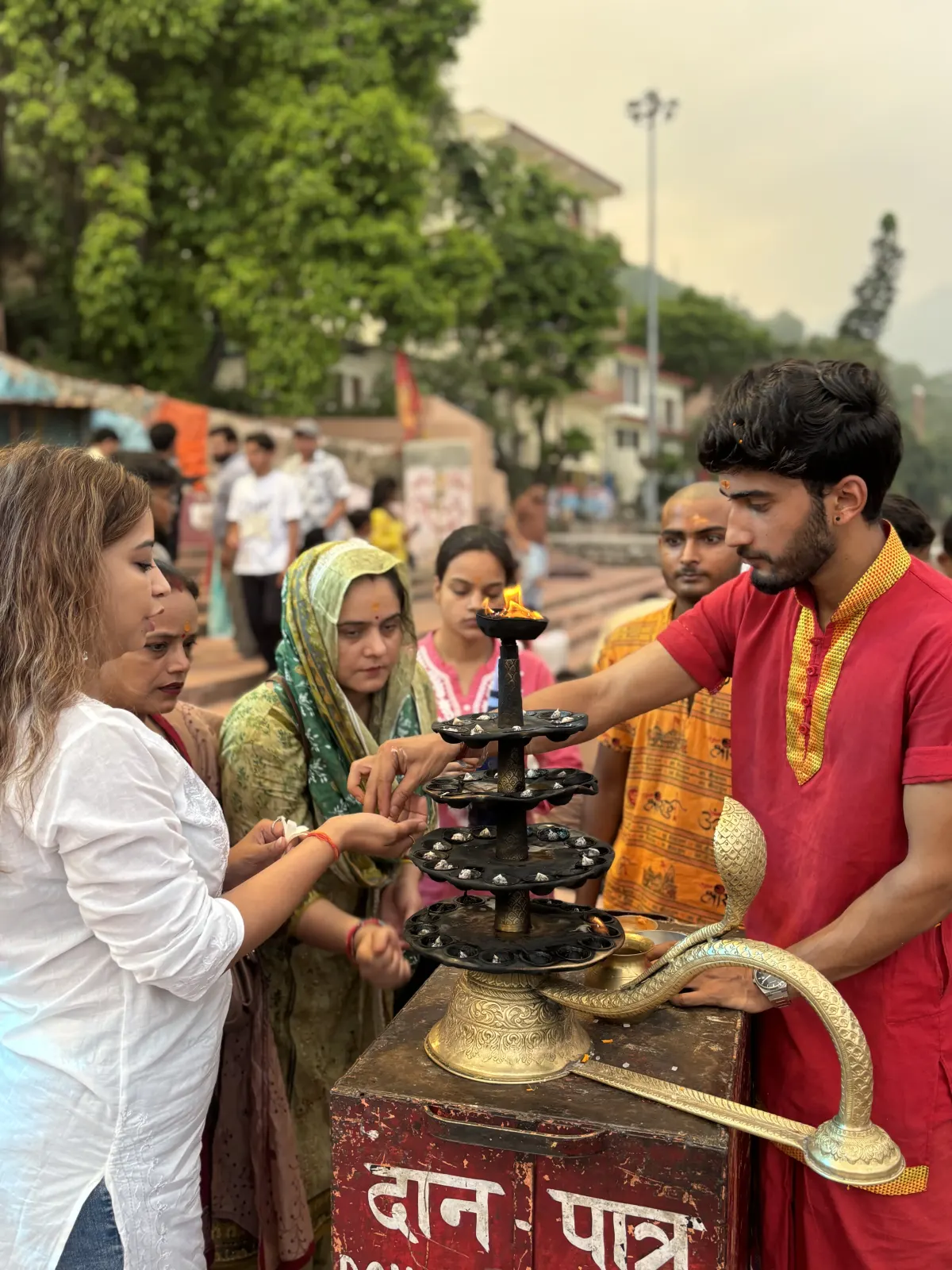
Parmarth Niketan's Ganga Aarti begins every day at sunset, so the time changes with the season. Its reception can tell you the exact time on the day. Our weekend excursions also include an evening aarti.

Students offering flowers at a lit brass aarti lamp on the Ganga ghats in Rishikesh
Joining the aarti ritual on the ghats during a weekend outing.

Want more ideas for your free days? See our list of things to do in Rishikesh. And if you are new to the area, our Tapovan guide explains where everything is.

Tips for your first ashram stay

Whether you pick an ashram or a school, these tips will make your first days easier.

  1. Pack modest, loose clothes. Cover shoulders and knees. Bring white clothes if you plan to join ashram yoga classes. At our school you need a white outfit for the graduation ceremony.
  2. Bring slip-on shoes. You take them off many times a day.
  3. Read the rules before you arrive. Rules are not suggestions. An ashram can ask you to leave if you break them.
  4. Book in writing and keep the reply. Save the confirmation email and the amount agreed.
  5. Pay only through official channels. Never pay a stranger who messages you about a room.
  6. Sort your visa first. Read our guide to the India visa for yoga teacher training.
  7. Travelling alone as a woman? Read is Rishikesh safe for solo female travellers before you choose where to stay.

How do you book a stay at Swaastik Yog School?

Booking with us takes three steps:

  1. Pick your programme and dates on the courses page or a retreat page. Retreats and the aerial course start every Monday. The 200-hour course starts on the 5th and 15th of each month.
  2. Fill in the short registration form or message us on WhatsApp.
  3. Pay a 10% deposit to hold your seat. You pay the rest when you arrive at the school.

You can move in the day before your course starts. If you have questions first, our FAQ page answers the most common ones.

Frequently asked questions

Can foreigners stay in an ashram in Rishikesh?

Yes. Many ashrams in Rishikesh welcome guests from all over the world. You need to request a stay in advance through the ashram's official website or email. Some, like Sivananda Ashram, ask for written permission before you come. Book early for busy seasons and festivals, and keep the confirmation email.

What are the rules in a Rishikesh ashram?

Typical rules are: no alcohol, smoking, drugs, meat or eggs; modest clothes covering shoulders and calves; quiet hours at night; and joining daily programmes such as the Ganga Aarti. Parmarth Niketan, for example, asks for silence from 10 PM to 6 AM and asks yoga students to wear white.

How much does it cost to stay in an ashram in Rishikesh?

It varies by ashram, and most do not publish fixed rates online. Some charge a daily rate and some work on donations. Ask in writing whether meals and classes are included before you pay. A residential yoga school is different: at Swaastik Yog School a 3-day retreat costs $100 with a shared room and 3 meals a day included.

Is an ashram stay the same as a yoga retreat?

No. An ashram stay is spiritual living with a daily prayer and meditation timetable. A yoga retreat is a planned programme with guided yoga, meditation, meals and excursions. A retreat suits you if you want every day organised and taught.

Do ashrams give a yoga teacher certificate?

Staying at an ashram does not give you a teaching certificate. To teach yoga, you need a certified training course, such as a 200-hour yoga teacher training with a Yoga Alliance registered school.

Which ashram is best to stay in Rishikesh?

There is no single best ashram. It depends on what you want. Parmarth Niketan is a large riverside ashram with several hundred rooms and a daily sunset Ganga Aarti. Sivananda Ashram has a daily programme of prayer, temple worship, talks and satsang, and asks for written permission first. If you want daily guided yoga classes, a residential yoga school may suit you better.

Can men and women stay in the same ashram?

Many ashrams host both men and women, with rules on who may enter rooms. At Swaastik Yog School, men and women stay in the same building, but rooms are always single-gender. Women share only with women.

Is there a curfew in Rishikesh ashrams?

It depends on the ashram. Parmarth Niketan's published guidelines ask for silence from 10 PM to 6 AM but do not list a gate-closing time. Always ask your ashram about evening rules before you book.

Ready to Start Your Yoga Journey?

Join our Yoga Alliance certified teacher training in Rishikesh — or just ask us a question. We reply to every message personally.

About the Author

Mayuri Shewale, Founder & Lead Yoga Teacher at Swaastik Yog School

Mayuri Shewale

Founder & Lead Yoga Teacher

E-RYT 500 · 15+ years teaching

Mayuri Shewale teaches Hatha Yoga, Aerial Yoga, Vinyasa Yoga at Swaastik Yog School in Rishikesh, sharing 15+ years of hands-on experience with students from around the world.

Related Articles

Best Yoga Retreat in Rishikesh (2026): 3, 5 or 7 Days Compared

Best Yoga Retreat in Rishikesh (2026): 3, 5 or 7 Days Compared

Our 3-, 5- and 7-day yoga retreats in Tapovan, Rishikesh, side by side: real prices ($100/$200/$250), the hour-by-hour day, what's included, and whether a retreat or a teacher training suits you better.

Read More
Affordable Yoga Retreat in India: Budget Guide 2026

Affordable Yoga Retreat in India: Budget Guide 2026

How to find an affordable yoga retreat in India. Budget breakdown, cheapest options in Rishikesh, Goa, and Kerala, plus money-saving tips.

Read More
Best Time to Visit Rishikesh for Yoga: Month-by-Month Weather Guide

Best Time to Visit Rishikesh for Yoga: Month-by-Month Weather Guide

October–November and February–March are the easiest months for yoga in Rishikesh. Here is a month-by-month table of temperatures and rainfall, what December and the monsoon are really like, and festival dates for 2026–27, from a school in Tapovan that teaches all year.

Read More

Have Questions? Get in Touch!

Whether you're interested in our teacher training courses, retreats, or drop-in classes, we're here to help guide your yoga journey. Fill out the form or chat with us directly on WhatsApp.

We reply within 24 hours · 4.8★ from 135 Google reviews