Back to Blog
Wellness

Ajna Chakra Benefits: How to Balance Your Third Eye (Mudra, Mantra & 12-Min Routine)

· Updated
Share this post:
Ajna Chakra Benefits: How to Balance Your Third Eye (Mudra, Mantra & 12-Min Routine)

A practical guide to the Ajna (third eye) chakra: where it is, what its meditation can honestly do for you, and how to do Ajna (Hakini) mudra, Trataka and Bhramari step by step. Includes a practice table, a 12-minute routine and a 21-day plan.

Quick answer: what is the Ajna chakra and how do you balance it?

The Ajna chakra is the sixth chakra, at the brow centre between the eyebrows. Its colour is indigo and its mantra is Om. To balance it, practise 12 minutes a day: 1 minute to settle, 3 minutes of Bhramari (humming breath), 4 minutes of Trataka (candle gazing), 3 minutes of brow-centre focus in Hakini mudra with a silent Om, and 1 minute to close. Daily practice beats long, rare sessions.

  • Location: brow centre (Bhrumadhya), between the eyebrows
  • Main benefits: a calmer, steadier and clearer mind
  • Best "Ajna mudra": Hakini mudra (all ten fingertips touching)
  • Safety: never strain the eyes; skip candle gazing if you have epilepsy or glaucoma

The Ajna chakra, also called the third eye chakra, is the sixth of the seven main chakras. It is linked with intuition, focus and clear seeing. It is also one of the most misunderstood ideas in yoga. Some people promise visions or psychic powers. That is not what this guide is about.

The seven main chakras, from the base of the spine upward, are Muladhara, Svadhisthana, Manipura, Anahata, Vishuddha, Ajna and Sahasrara. Ajna is the last one before the crown.

This guide is practical. You will learn where Ajna is, what it means, and what you can honestly expect from the practice. You will also get step-by-step instructions for the Ajna mudra, a practice table with timings, a 21-day plan, and clear safety notes.

Written by Mayuri Shewale, E-RYT 500 (Yoga Alliance) and founder of Swaastik Yog School in Rishikesh. We teach Trataka, mantra, mudra and pranayama every week to teacher-training students in our yoga hall in Tapovan. The techniques below are the same ones we teach in class, written so you can start safely at home.

Ajna chakra at a glance

AttributeDetail
Sanskrit nameAjna ("command" or "perceive")
Position in the chakra systemSixth of seven main chakras
LocationBetween the eyebrows (brow centre, called Bhrumadhya)
ElementBeyond the five elements; linked with the mind (manas)
ColourIndigo in the modern colour system (older texts describe it as white, like the moon)
SymbolTwo-petalled lotus
Seed mantraOm (ॐ)
Syllables on the two petalsHam and Ksham
Presiding goddess (in tantric texts)Hakini, which is where Hakini mudra gets its name
Signs of imbalanceMental fog, poor focus, indecision, self-doubt, an overactive imagination
Key practicesTrataka, Om chanting, Bhramari, Anulom Vilom, Hakini mudra, brow-centre meditation

Where is the Ajna chakra located?

The Ajna chakra sits at the brow centre, directly between the eyebrows, in the middle of the forehead. In Sanskrit this point is called Bhrumadhya. When yogis gently rest their inner gaze here, the practice is called Bhrumadhya Drishti. It is one of the oldest concentration practices in yoga.

Many writers link the third eye with the pineal gland, a small gland deep in the brain that makes melatonin, the hormone that helps regulate sleep. The philosopher Descartes called the pineal the "principal seat of the soul." This link is a modern idea, not one from the old yoga texts. It is honest to keep this as an association, not a fact. The chakra is a meditation map. The gland is a physical organ. Meditation will not "activate" a gland. But a calmer mind, a dark bedroom and less late-night screen time really do support healthy sleep rhythms. That is why the lifestyle tips later in this guide matter.

What does "Ajna" mean?

The word Ajna comes from Sanskrit and means "command" or "perceive." It is seen as the command centre of awareness, where the mind can watch itself clearly.

In the tantric texts on the subtle body, chakras are described as centres along the sushumna nadi, the central energy channel said to run along the spine. They are not physical organs. The best way to understand them is as focal points of awareness. Yogis use them to direct attention and observe their inner experience.

Tradition says two other channels, Ida and Pingala, wind up the spine and meet at Ajna. This is one reason why alternate nostril breathing, which balances the left and right nostrils, is so often paired with third-eye practice.

So working with the Ajna chakra is not a medical treatment. It is a contemplative practice for building clarity, focus and inner steadiness.

Symbolism of the third eye chakra

  • Colour: deep indigo, the colour of the night sky, linked with inner vision in modern teaching
  • Symbol: a two-petalled lotus, showing two opposites coming into balance
  • Element: none of the five physical elements; Ajna is linked with the mind itself
  • Mantra: Om (ॐ), the primordial sound in yogic tradition

What are the benefits of Ajna chakra meditation?

The main benefits of Ajna chakra meditation are a calmer mind, steadier focus during practice, clearer thinking and less mental noise. In yogic terms, a balanced Ajna means sharper intuition, better judgment and a vivid but grounded imagination. These benefits build slowly, through short daily practice. They are inner qualities, not special powers.

Here is what traditional teaching describes, and what you can honestly expect:

BenefitWhat tradition saysWhat you can realistically expect
Calm mindAjna quiets mental chatterMany people feel calmer after even 10 minutes of slow breathing and focus
ConcentrationAjna is the seat of one-pointed attentionThe mind wanders less during practice, with weeks of daily effort
IntuitionAjna is the "inner eye" of insightYou may notice your own thoughts and feelings more clearly before acting
Decision-makingAjna is the "command" centreA quieter mind can make choices with less panic and less overthinking
SleepLinked with the pineal glandEvening relaxation and less screen time may help you wind down

What does science say? A large 2014 review in JAMA Internal Medicine looked at 47 trials with 3,515 people. It found that mindfulness meditation programs gave small to moderate improvements in anxiety, depression and pain, usually measured after about 8 weeks. The same review found little or no evidence for effects on attention or sleep. That is why we describe the benefits of third-eye practice as calm and steadiness first. Anything deeper is personal experience, not proven fact.

Signs of a balanced Ajna chakra

A balanced third eye chakra shows up as a mix of clear thinking and quiet trust in yourself.

  • Clear thinking and calm decisions
  • Steady focus and good memory
  • Trust in your own inner sense of things
  • Imagination that is creative but grounded
  • The ability to see the bigger picture

Signs of a blocked or overactive third eye chakra

In modern chakra teaching, Ajna can be underactive (blocked) or overactive. Both feel unsettled, in different ways.

Underactive (blocked)Overactive
Mental fog and confusionRacing thoughts, overthinking
Trouble focusingDaydreaming that disconnects you from daily life
Indecision and self-doubtFeeling "spaced out" or ungrounded
Rigid, black-and-white thinkingTrouble sleeping because the mind will not switch off
Ignoring your gut feelingReading hidden meaning into everything

Physical symptoms such as frequent headaches, eye problems, sinus trouble or insomnia are often listed online as "third eye" signs. Please treat them as a reason to see a doctor, not as a chakra to fix. Tension in the neck and upper back can also feed headaches; our guide to yoga for back pain has gentle relief for that.

If you feel overactive, add grounding before third-eye work: standing poses, walking barefoot, and a full meal. This is the same advice we give in our chakra healing meditation guide, which covers all seven chakras.

Ajna chakra practice table: mudra, mantra, pranayama and duration

This table is the heart of the guide. Each practice has a clear time and a clear caution. Beginners can start with the first three rows only.

PracticeTypeHow to do it (short)Beginner timeSteady practiceCaution
Brow-centre focusMeditationEyes closed, rest attention between the eyebrows, picture soft indigo light3–5 min10–15 minKeep the physical eyes relaxed
Bhramari (bee breath)PranayamaInhale through the nose, exhale with a long, soft hum5 rounds (about 2 min)9–11 rounds (about 4 min)Practise sitting up; skip with an ear infection
Anulom VilomPranayamaBreathe slowly in and out through alternate nostrils3 min5–10 minNever force or hold the breath
Om chantingMantraChant a long "Ommm," feel the hum in the forehead11 rounds (about 2 min)108 rounds (about 15 min)Use a soft voice; stop if dizzy
Hakini mudraHand mudraAll ten fingertips touch lightly, palms apart5 min15 minKeep shoulders and elbows soft
Gyana mudraHand mudraIndex fingertip touches thumb tip, hands on knees5 minWhole meditationNone for most people
Trataka (candle gazing)Concentration (kriya)Gaze softly at a flame, then close the eyes and watch the after-image2–3 min5–10 minAvoid with epilepsy, glaucoma or eye problems
Shambhavi mudraEye mudraGently lift the gaze toward the brow centre10–20 sec, 3 times1–2 minLearn with a teacher; never strain
Kurshittare

Osäker på vilken kurs som passar dig?

Vi har gjort det enkelt att jämföra. Se alla lärarutbildningar, retreats och klasser sida vid sida – med aktuella startdatum, priser och rumsalternativ – på en och samma sida.

  • Filtrera på månad
  • Filtrera på budget
  • Filtrera på rumstyp
Jämför alla kurserTar 30 sekunder · Ingen registrering behövs

How do you do Ajna mudra? (step by step)

There is no single, fixed "Ajna mudra" in the classical texts. When people search for it, they usually mean Hakini mudra. It is named after Hakini, the goddess who rules the Ajna chakra in tantric texts. It is the hand gesture we teach for brow-centre focus, and it is simple, safe and suitable for beginners.

Hakini mudra (the "Ajna mudra"): 7 steps

  1. Sit tall. Use a cushion or a chair. Let your spine be long and your shoulders soft.
  2. Bring your hands together in front of your lower chest, palms facing each other but not touching.
  3. Touch each fingertip to its partner. Thumb to thumb, index to index, middle to middle, ring to ring, little finger to little finger.
  4. Make a dome. Spread the fingers a little, so your hands look like a small cage or ball. Keep a gap between the palms.
  5. Use light pressure only. The fingertips just kiss. Let the elbows rest away from the body.
  6. Close your eyes and rest your attention at the brow centre. Do not roll the eyes up. Simply place your awareness there.
  7. Breathe slowly through the nose for 5 minutes. If it helps, repeat "Om" silently on each exhale. Build up to 15 minutes over a few weeks.

Common mistakes: pressing the fingers hard, lifting the shoulders, and squeezing the eyebrows together. If you feel tension in your forehead, let your face go soft and try again.

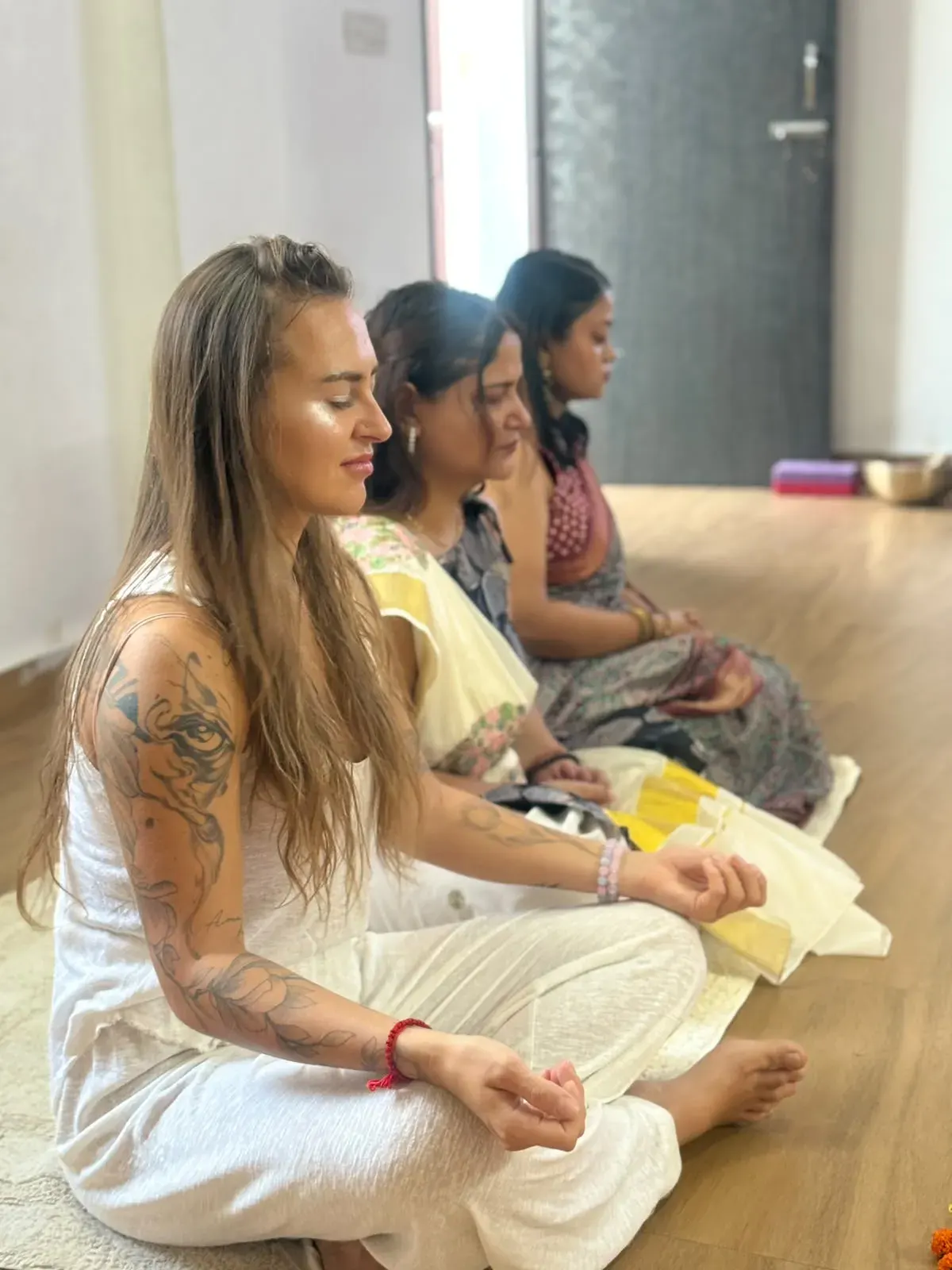
Students meditating in Gyana mudra with eyes closed during a class at Swaastik Yog School, Tapovan, Rishikesh
Students in Gyana mudra during a meditation class at our school in Tapovan. Notice the soft hands and relaxed face.

Gyana mudra: the easiest place to start

  1. Rest your hands on your knees, palms up.
  2. Touch the tip of your index finger to the tip of your thumb.
  3. Keep the other three fingers relaxed and gently straight.
  4. Close your eyes and let your attention settle at the brow.

Gyana mudra is the most common meditation gesture. It is a good choice if Hakini mudra makes your arms tired.

Shambhavi mudra: the eye mudra (learn with a teacher)

Shambhavi mudra is named in the Hatha Yoga Pradipika. It is an eye mudra, not a hand gesture. The version most schools teach today is a gentle gaze toward the eyebrow centre. Done gently, it draws your attention to the brow centre. Done with force, it causes headaches and eye strain.

  1. Sit tall with your eyes open, looking straight ahead.
  2. Without moving your head, slowly lift your gaze up toward the space between the eyebrows.
  3. Hold for 10 to 20 seconds only. The eyes should feel soft, not pulled.
  4. Release, close your eyes, and rest for a few breaths.
  5. Repeat up to 3 times. Stop at once if you feel strain, pain or a headache.

How to do Trataka (candle gazing) safely

Trataka is the classic third-eye concentration practice. The Hatha Yoga Pradipika lists it as one of the six cleansing practices (shatkarmas). It trains a busy mind to settle on one point.

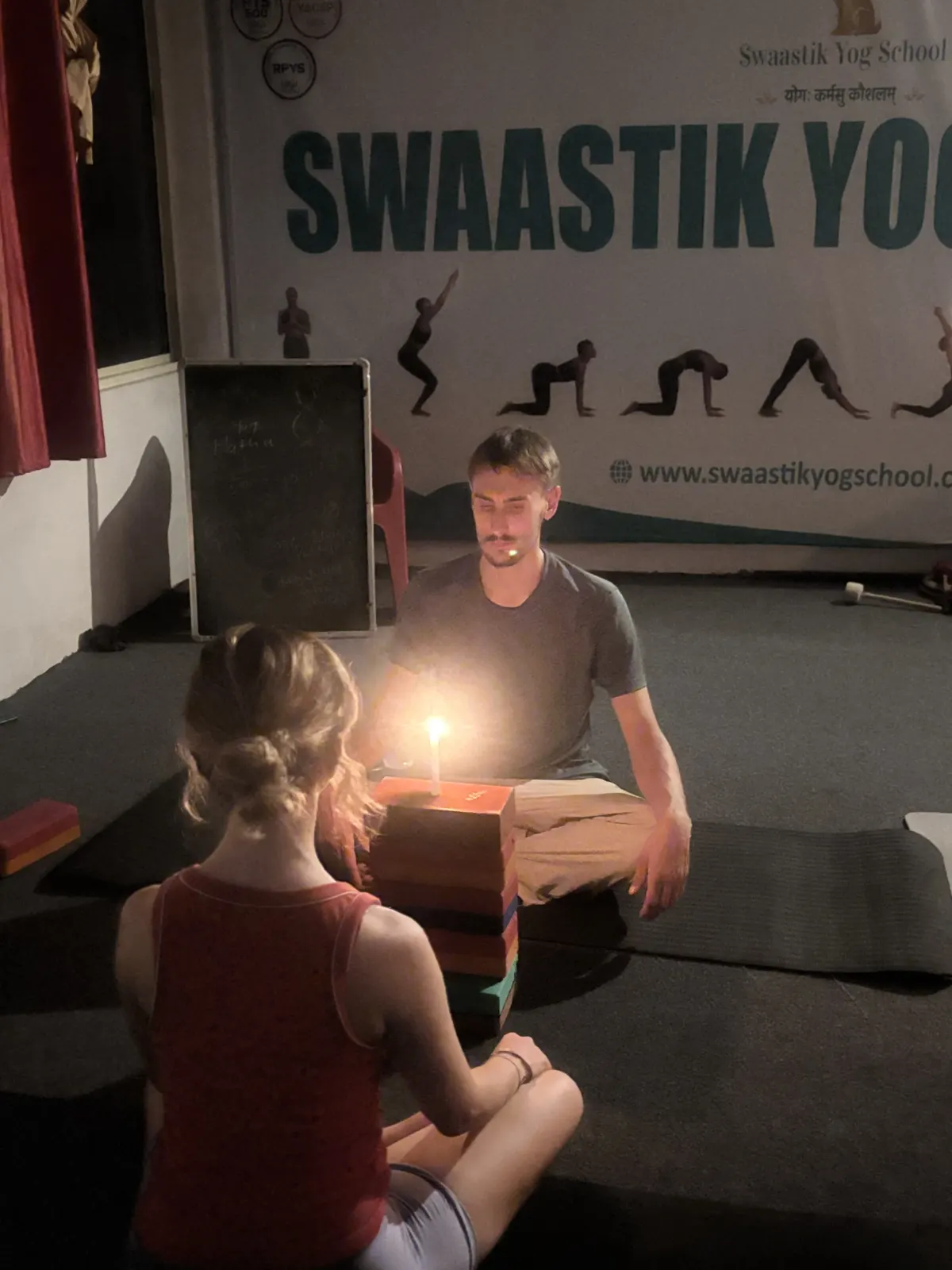
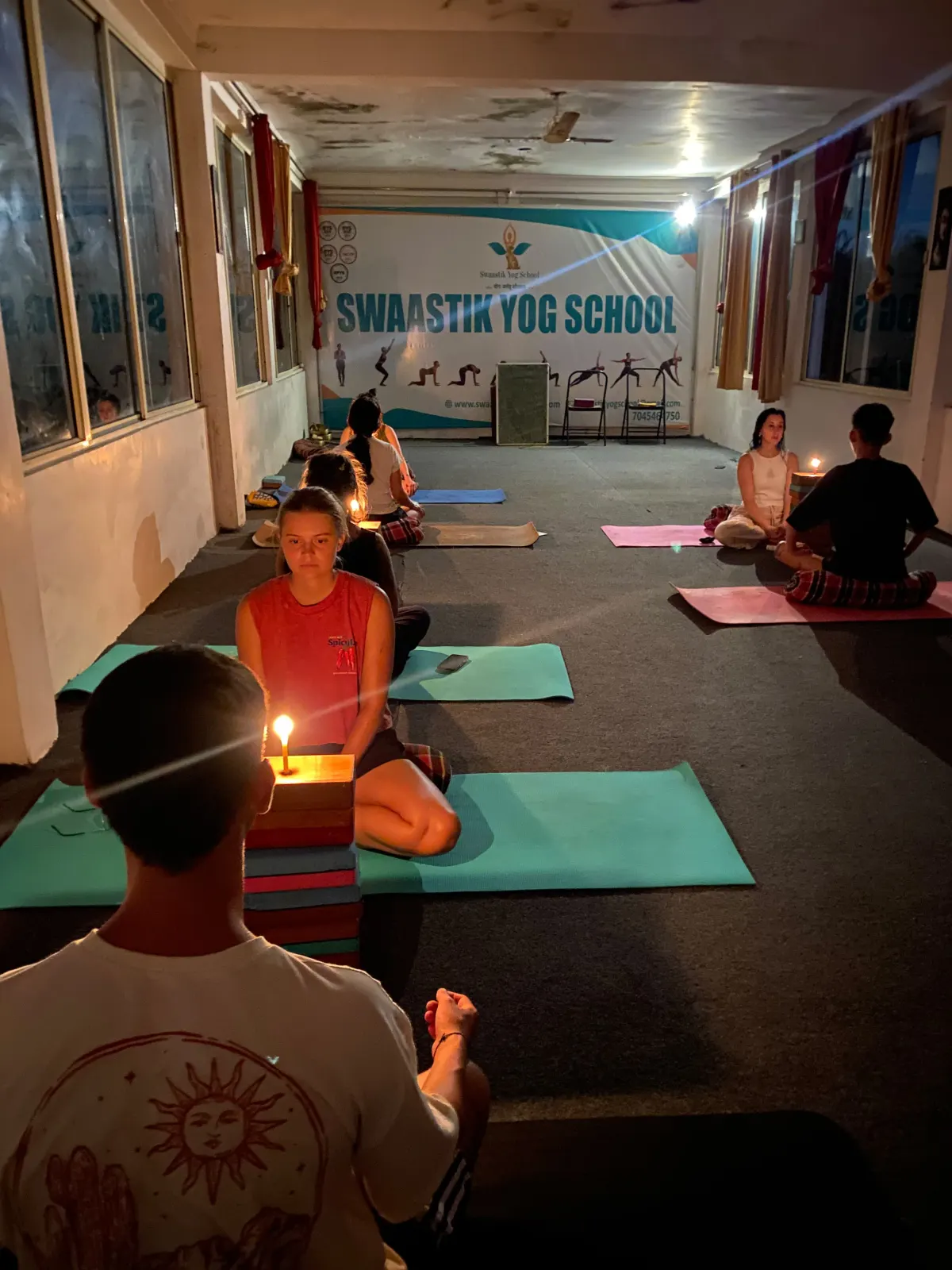
Two students seated on either side of a candle raised on stacked yoga blocks during an evening session in the Swaastik Yog School yoga hall
An evening candle session in our yoga hall. Stacked yoga blocks lift the flame closer to eye level.
  1. Set up. Use a dim, still room with no breeze. Place a candle at arm's length, with the flame at eye level. A stack of yoga blocks or books works well.
  2. Sit tall and take a few slow breaths.
  3. Gaze softly at the tip of the wick, just below the flame. Try not to blink, but do not force it.
  4. Close your eyes when they water or tire. Watch the glowing after-image in the darkness. Let it rest at the brow centre.
  5. When the image fades, open your eyes and gaze again.
  6. Start with 2 to 3 minutes. Build up to 5 to 10 minutes over a few weeks.
  7. Finish by rubbing your palms together and resting them over your eyes.

The most common mistake we see in class is staring too hard. The gaze should be soft, like watching a sunset. If you have epilepsy, glaucoma, recent eye surgery or serious eye strain, skip the candle. Use a small dark dot on a wall instead, or simply rest your inner gaze at the brow with eyes closed.

Mantra and pranayama for the third eye

Om chanting

Om is the seed mantra of Ajna. Sound and chakra work go together, which is why chakra work is part of our sound healing course.

  • Sit tall and take a full breath in.
  • Chant "Ommm" slowly. Let the "mmm" hum last most of the exhale.
  • Feel the vibration in your forehead and face.
  • Begin with 11 rounds. Build to 108 rounds (about 15 minutes) with a mala if you like.

Bhramari (bee breath)

Bhramari is a long, humming exhale. The soft buzz is felt in the head and face, which draws attention naturally to the brow. It is one of the most soothing practices for an anxious, busy mind.

  1. Sit tall. Close your eyes.
  2. Optional: gently close your ears with your thumbs, resting the index fingers above the eyebrows.
  3. Inhale slowly through the nose.
  4. Exhale with a smooth, low hum, like a bee, for as long as is comfortable.
  5. Do 5 rounds to start. Then sit quietly for a minute.

Practise sitting up, not lying down. Skip it if you have an ear infection, and stop if you feel dizzy.

Anulom Vilom (alternate nostril breathing)

Anulom Vilom is gentle and suits almost everyone. In yogic terms it balances Ida and Pingala, the two channels said to meet at Ajna. In simple terms, it slows the breath and calms the mind. Breathe in through the left nostril, out through the right, in through the right, out through the left. That is one round. Keep it slow and never force it. Our beginner's guide to pranayama explains the hand position step by step.

A note on Kapalbhati: some guides add this forceful "skull shining" breath. It is energising, but it is not for everyone. Avoid it if you are pregnant or have high blood pressure, a heart condition or a hernia, and learn it from a teacher first.

7 yoga poses that support the third eye

Certain poses help bring awareness to the brow, often by resting the forehead on the floor or by turning the mind inward. They support your meditation. They do not act on the body in a medical sense.

PoseHoldBrow-centre cue
Child's Pose (Balasana)1–2 minRest the brow centre on the mat or a block
Hare Pose (Shashankasana)1 minForehead down, arms long, breathe into the back
Downward Dog (Adho Mukha Svanasana)5–8 breathsLet the head hang; soften the face
Dolphin Pose (Ardha Pincha Mayurasana)5 breathsSteady gaze toward the feet; keep the neck long
Seated Forward Fold (Paschimottanasana)1–2 minRest the forehead on a bolster if it does not reach
Standing Forward Fold (Uttanasana)5–8 breathsBend the knees; let the neck release
Corpse Pose (Savasana)3–5 minFeel the space between the eyebrows widen and soften

If you have high blood pressure or glaucoma, skip Downward Dog and Dolphin, since the head drops below the heart. Child's Pose with the head on a block is the safer choice.

A simple 12-minute third eye routine you can do today

You do not need any equipment. This routine brings the best practices together. Do it in the morning or early evening, on an empty stomach if you can.

MinutesPracticeWhat to do
0–1SettleSit tall in Gyana mudra. Let the breath slow down.
1–4Bhramari5 to 7 rounds of humming breath. Feel the buzz in the forehead.
4–8TratakaSoft candle gaze (2–3 minutes if you are new), then watch the after-image with eyes closed.
8–11Brow-centre focusChange to Hakini mudra. Picture soft indigo light at the brow. Silently repeat Om.
11–12CloseRelease the focus. Rub your palms, cover your eyes, then slowly open them.

If you cannot do Trataka, replace it with 4 minutes of Anulom Vilom. Five quiet minutes every day will do more than one long session a week.

A 21-day Ajna practice plan

Three weeks is a good test. It is long enough to form a habit and short enough to stay motivated.

WeekDaily practiceTimeFocus
Week 1 (days 1–7)Anulom Vilom + Bhramari + brow-centre focus in Gyana mudra8–10 minBuild the habit. Same time, same place.
Week 2 (days 8–14)Add 2–3 min of Trataka and switch to Hakini mudra12 minSoft gaze. No straining.
Week 3 (days 15–21)Full 12-minute routine + 11 rounds of Om chanting15 minNotice how your mind feels during the day.

Keep a short note each day: how long you sat and how your mind felt. After 21 days, read it back. If something has changed, it is usually small, like reacting a little less quickly. Small is good. It means the habit is working.

Is third eye meditation safe? (safety note)

Gentle brow-centre meditation is safe for almost everyone. A few practices need care. Please read this list before you start.

  • Never strain the eyes. In any practice, a pulling feeling or a headache means ease off.
  • Trataka: avoid with epilepsy, glaucoma, recent eye surgery or serious eye conditions.
  • Shambhavi mudra: keep it short and learn it with a teacher.
  • Kapalbhati: avoid in pregnancy and with high blood pressure, heart conditions or a hernia.
  • Inversions (Downward Dog, Dolphin): avoid with high blood pressure or glaucoma.
  • Mental health: if you have a history of psychosis, severe anxiety or trauma, long or intense meditation can sometimes stir things up. Keep sessions short and work with an experienced teacher or therapist.
  • Feeling spaced out? Stop, eat something, walk outside, and do some standing poses. Grounding comes first.

Yoga and meditation are not medical treatments. They do not cure headaches, vision problems or sleep disorders. If symptoms persist, see a doctor.

Lifestyle habits that support a clear mind

The yogic view is simple: a steady life supports a steady mind. Several of these habits also have plain, common-sense value.

  • Less evening screen time. Bright screens before bed can delay sleep. Put the phone away an hour before bed.
  • A dark bedroom. Darkness supports your natural melatonin rhythm.
  • Morning daylight. Time outdoors early in the day helps set your body clock.
  • A light, sattvic diet. Fresh, simple, mostly plant-based food in moderation keeps the mind light. Some people choose purple foods like grapes or blueberries as a symbol for Ajna. That is tradition, not treatment.
  • Daily silence. Even five minutes with no input gives the mind room to settle.

Affirmations for the Ajna chakra

Affirmations are short, calm statements you repeat to set your intention. Use them after meditation, not instead of it.

  • "I trust my inner voice."
  • "I see clearly and understand deeply."
  • "My mind is calm and my choices are clear."

Sound healing and the third eye

Sound has always been used in yoga to draw the mind inward. Singing bowls, gongs and chanting create steady tones that many people find deeply calming and easy to focus on. At Swaastik Yog School we teach these methods as relaxation and meditation tools in our sound healing course in Rishikesh. If you want to make it a profession, our sound healing certification guide explains the levels and what each one covers.

Learning chakra practice at Swaastik Yog School in Rishikesh

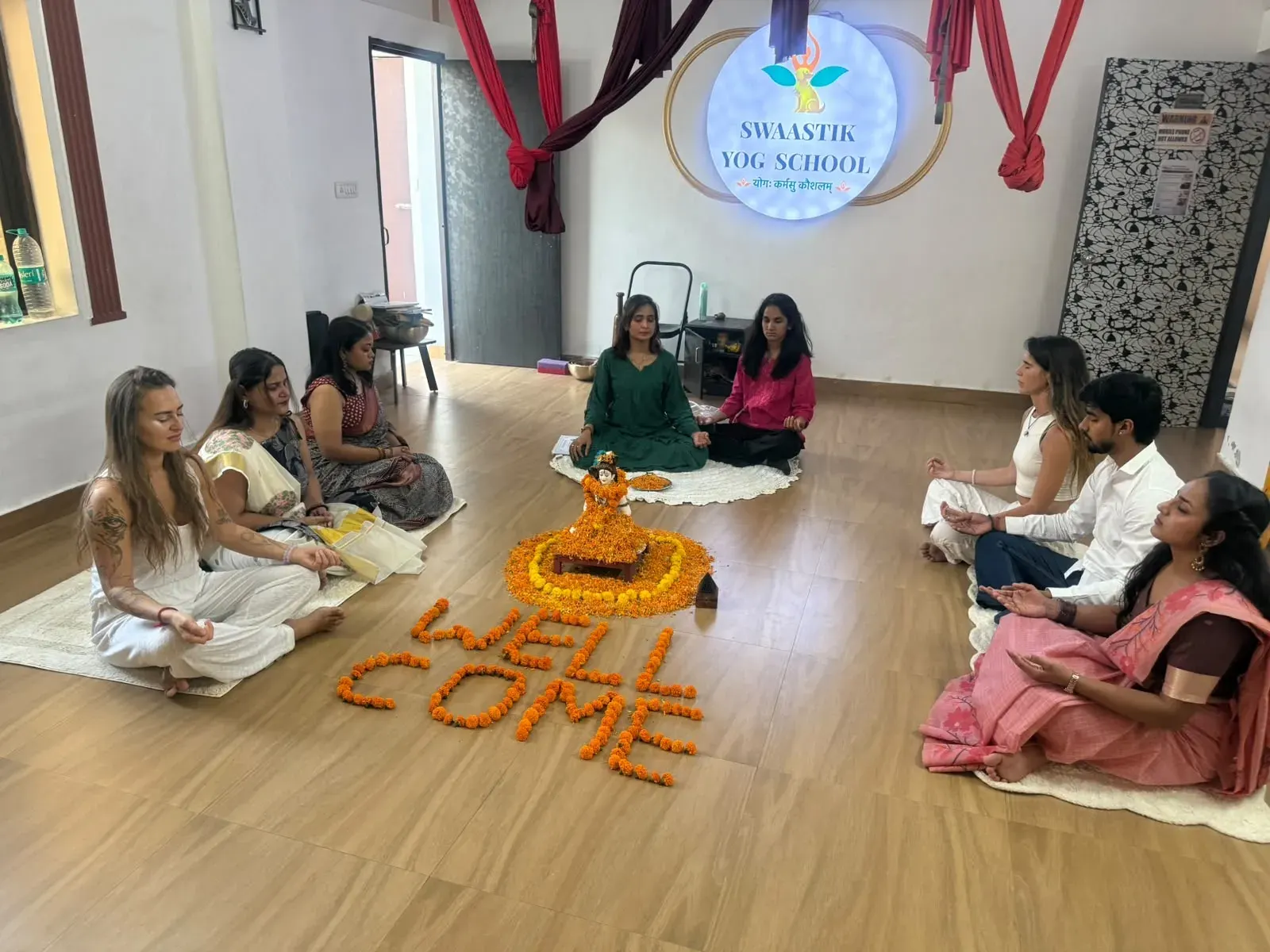
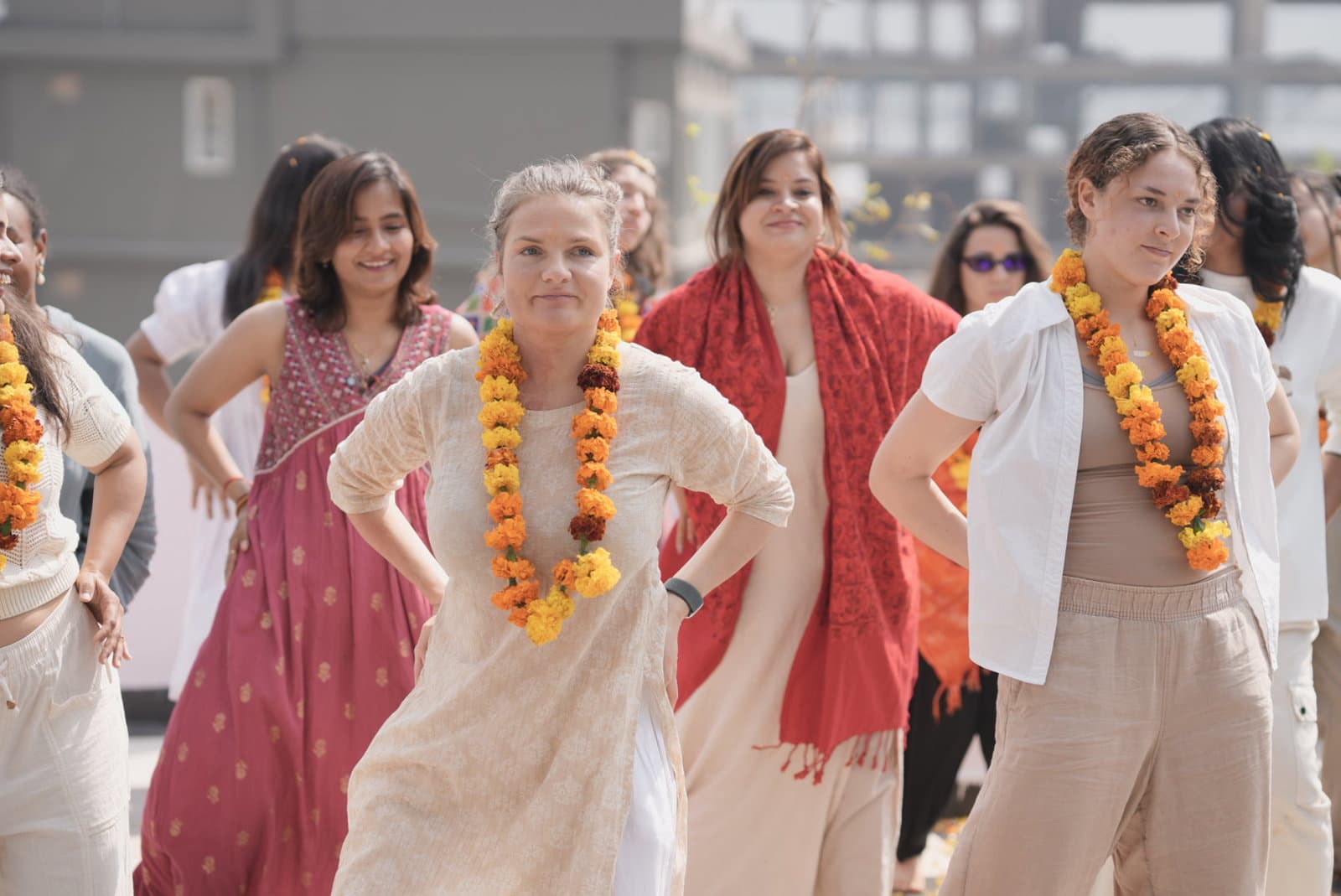
Group meditation in the yoga hall at Swaastik Yog School, Tapovan, Rishikesh, with a marigold welcome mandala
Group meditation on the opening day of a course in our Tapovan yoga hall.

Reading about the third eye is a start. Learning it in person is different. A teacher can see when your shoulders creep up, when your gaze is too hard, or when you need grounding before more brow-centre work.

CourseWhat you learn about Ajna and the chakras
100-hour yoga TTCTrataka, mantra meditation, the chakras and their places in the body, and short daily breath practices
200-hour yoga TTCDaily morning and evening meditation, Trataka, mantra, pranayama, and Jnana, Chin and other hand mudras, plus how to guide others
300-hour yoga TTCDeeper subtle-body study: the chakra system, nadis and prana vayus, with extended Bhramari and Nadi Shodhana practice
Sound healing courseChakra work with singing bowls, sound and mantra

Most students who want a deep, guided foundation choose our 200-hour yoga teacher training in Rishikesh. Meditation there is part of the daily rhythm, not an add-on. If you are only in town for a few days, you can join our pranayama class (Monday to Saturday) through our drop-in yoga classes, or come for a short 3-day yoga retreat with daily pranayama and guided meditation.

Our school is women-led, founded by Mayuri Shewale, and based in Tapovan, Rishikesh. You can read more about how we teach on our women-led yoga school page.

Frequently asked questions

Where is the Ajna chakra located?

The Ajna chakra is at the brow centre, directly between the eyebrows in the middle of the forehead. In Sanskrit this point is called Bhrumadhya. Many modern writers link it with the pineal gland deep in the brain. Its colour is indigo and its seed mantra is Om.

What are the benefits of Ajna chakra meditation?

The main benefits are a calmer mind, steadier focus during practice and clearer thinking. Yogic tradition also links a balanced Ajna with intuition and good judgment. Research on mindfulness meditation shows small to moderate improvements in anxiety, depression and pain. Deeper "third eye" experiences are personal, not proven.

How do you do Ajna mudra?

Most people mean Hakini mudra. Sit tall. Bring your hands in front of your lower chest and touch each fingertip to its partner, thumb to thumb through little finger to little finger, with the palms apart. Close your eyes, rest your attention at the brow centre, and breathe slowly for 5 minutes. Build up to 15 minutes.

What is the mantra for the third eye chakra?

The seed (bija) mantra for the Ajna chakra is Om. Its two lotus petals carry the syllables Ham and Ksham. For daily practice, chanting Om slowly, 11 rounds at first and up to 108 rounds, is the simplest and most traditional choice.

How long does it take to balance the third eye chakra?

There is no fixed timeline. Some people feel calmer after the first session. Most meditation studies measure results after about 8 weeks of regular practice, so give it at least that long. Deeper changes take months or years. Daily practice matters far more than long sessions.

How do I know if my third eye chakra is blocked?

Modern chakra teaching describes a blocked Ajna as mental fog, poor focus, indecision, self-doubt and ignoring your gut feeling. An overactive Ajna shows as racing thoughts and feeling ungrounded. These are descriptive ideas, not a diagnosis. Persistent headaches, sleep problems or vision changes need a doctor.

Is third eye meditation safe for everyone?

Gentle brow-centre meditation is safe for almost everyone. Avoid candle gazing (Trataka) with epilepsy, glaucoma or serious eye conditions. Avoid Kapalbhati in pregnancy or with high blood pressure or heart problems. Never force the eyes upward. If you have a history of serious mental health conditions, practise with an experienced teacher. Meditation does not cure headaches or vision problems; see a doctor for those.

Which practice should a complete beginner start with?

Start with 3 minutes of Anulom Vilom, 5 rounds of Bhramari, and 3 minutes of eyes-closed brow-centre focus in Gyana mudra. That is about 8 minutes. Add Trataka and Hakini mudra in your second week.

Ready to Start Your Yoga Journey?

Join our Yoga Alliance certified teacher training in Rishikesh — or just ask us a question. We reply to every message personally.

About the Author

Mayuri Shewale, Founder & Lead Yoga Teacher at Swaastik Yog School

Mayuri Shewale

Founder & Lead Yoga Teacher

E-RYT 500 · 15+ years teaching

Mayuri Shewale teaches Hatha Yoga, Aerial Yoga, Vinyasa Yoga at Swaastik Yog School in Rishikesh, sharing 15+ years of hands-on experience with students from around the world.

Related Articles

What is the Difference Between 200 and 300 Hour Yoga Teacher Training?

What is the Difference Between 200 and 300 Hour Yoga Teacher Training?

Learn the key differences between 200 and 300 hour yoga teacher training, from course content to certification. Choose the right path for your yoga career.

Read More
Is Yoga a Good Career Choice in India and Abroad?

Is Yoga a Good Career Choice in India and Abroad?

Is yoga a good career in India and abroad? Learn about opportunities, income potential, and how certified training can help you build a successful yoga career.

Read More
Powerful Benefits of Yoga for Mental Health You Need to Know

Powerful Benefits of Yoga for Mental Health You Need to Know

How yoga may ease stress, anxiety, low mood and poor sleep: breathwork and meditation to try today, and why yoga complements, not replaces, professional care.

Read More

Har du frågor? Hör av dig!

Oavsett om du är intresserad av våra yogalärarutbildningar, retreats eller drop-in-klasser hjälper vi dig gärna på din yogaresa. Fyll i formuläret eller chatta direkt med oss på WhatsApp.

Vi svarar inom 24 timmar · 4.8★ från 138 Google-recensioner