Quick answer: what is the Ajna chakra and how do you balance it?
The Ajna chakra is the sixth chakra, at the brow centre between the eyebrows. Its colour is indigo and its mantra is Om. To balance it, practise 12 minutes a day: 1 minute to settle, 3 minutes of Bhramari (humming breath), 4 minutes of Trataka (candle gazing), 3 minutes of brow-centre focus in Hakini mudra with a silent Om, and 1 minute to close. Daily practice beats long, rare sessions.
- Location: brow centre (Bhrumadhya), between the eyebrows
- Main benefits: a calmer, steadier and clearer mind
- Best "Ajna mudra": Hakini mudra (all ten fingertips touching)
- Safety: never strain the eyes; skip candle gazing if you have epilepsy or glaucoma
The Ajna chakra, also called the third eye chakra, is the sixth of the seven main chakras. It is linked with intuition, focus and clear seeing. It is also one of the most misunderstood ideas in yoga. Some people promise visions or psychic powers. That is not what this guide is about.
The seven main chakras, from the base of the spine upward, are Muladhara, Svadhisthana, Manipura, Anahata, Vishuddha, Ajna and Sahasrara. Ajna is the last one before the crown.
This guide is practical. You will learn where Ajna is, what it means, and what you can honestly expect from the practice. You will also get step-by-step instructions for the Ajna mudra, a practice table with timings, a 21-day plan, and clear safety notes.
Ajna chakra at a glance
| Attribute | Detail |
|---|---|
| Sanskrit name | Ajna ("command" or "perceive") |
| Position in the chakra system | Sixth of seven main chakras |
| Location | Between the eyebrows (brow centre, called Bhrumadhya) |
| Element | Beyond the five elements; linked with the mind (manas) |
| Colour | Indigo in the modern colour system (older texts describe it as white, like the moon) |
| Symbol | Two-petalled lotus |
| Seed mantra | Om (ॐ) |
| Syllables on the two petals | Ham and Ksham |
| Presiding goddess (in tantric texts) | Hakini, which is where Hakini mudra gets its name |
| Signs of imbalance | Mental fog, poor focus, indecision, self-doubt, an overactive imagination |
| Key practices | Trataka, Om chanting, Bhramari, Anulom Vilom, Hakini mudra, brow-centre meditation |
Where is the Ajna chakra located?
The Ajna chakra sits at the brow centre, directly between the eyebrows, in the middle of the forehead. In Sanskrit this point is called Bhrumadhya. When yogis gently rest their inner gaze here, the practice is called Bhrumadhya Drishti. It is one of the oldest concentration practices in yoga.
Many writers link the third eye with the pineal gland, a small gland deep in the brain that makes melatonin, the hormone that helps regulate sleep. The philosopher Descartes called the pineal the "principal seat of the soul." This link is a modern idea, not one from the old yoga texts. It is honest to keep this as an association, not a fact. The chakra is a meditation map. The gland is a physical organ. Meditation will not "activate" a gland. But a calmer mind, a dark bedroom and less late-night screen time really do support healthy sleep rhythms. That is why the lifestyle tips later in this guide matter.
What does "Ajna" mean?
The word Ajna comes from Sanskrit and means "command" or "perceive." It is seen as the command centre of awareness, where the mind can watch itself clearly.
In the tantric texts on the subtle body, chakras are described as centres along the sushumna nadi, the central energy channel said to run along the spine. They are not physical organs. The best way to understand them is as focal points of awareness. Yogis use them to direct attention and observe their inner experience.
Tradition says two other channels, Ida and Pingala, wind up the spine and meet at Ajna. This is one reason why alternate nostril breathing, which balances the left and right nostrils, is so often paired with third-eye practice.
So working with the Ajna chakra is not a medical treatment. It is a contemplative practice for building clarity, focus and inner steadiness.
Symbolism of the third eye chakra
- Colour: deep indigo, the colour of the night sky, linked with inner vision in modern teaching
- Symbol: a two-petalled lotus, showing two opposites coming into balance
- Element: none of the five physical elements; Ajna is linked with the mind itself
- Mantra: Om (ॐ), the primordial sound in yogic tradition
What are the benefits of Ajna chakra meditation?
The main benefits of Ajna chakra meditation are a calmer mind, steadier focus during practice, clearer thinking and less mental noise. In yogic terms, a balanced Ajna means sharper intuition, better judgment and a vivid but grounded imagination. These benefits build slowly, through short daily practice. They are inner qualities, not special powers.
Here is what traditional teaching describes, and what you can honestly expect:
| Benefit | What tradition says | What you can realistically expect |
|---|---|---|
| Calm mind | Ajna quiets mental chatter | Many people feel calmer after even 10 minutes of slow breathing and focus |
| Concentration | Ajna is the seat of one-pointed attention | The mind wanders less during practice, with weeks of daily effort |
| Intuition | Ajna is the "inner eye" of insight | You may notice your own thoughts and feelings more clearly before acting |
| Decision-making | Ajna is the "command" centre | A quieter mind can make choices with less panic and less overthinking |
| Sleep | Linked with the pineal gland | Evening relaxation and less screen time may help you wind down |
What does science say? A large 2014 review in JAMA Internal Medicine looked at 47 trials with 3,515 people. It found that mindfulness meditation programs gave small to moderate improvements in anxiety, depression and pain, usually measured after about 8 weeks. The same review found little or no evidence for effects on attention or sleep. That is why we describe the benefits of third-eye practice as calm and steadiness first. Anything deeper is personal experience, not proven fact.
Signs of a balanced Ajna chakra
A balanced third eye chakra shows up as a mix of clear thinking and quiet trust in yourself.
- Clear thinking and calm decisions
- Steady focus and good memory
- Trust in your own inner sense of things
- Imagination that is creative but grounded
- The ability to see the bigger picture
Signs of a blocked or overactive third eye chakra
In modern chakra teaching, Ajna can be underactive (blocked) or overactive. Both feel unsettled, in different ways.
| Underactive (blocked) | Overactive |
|---|---|
| Mental fog and confusion | Racing thoughts, overthinking |
| Trouble focusing | Daydreaming that disconnects you from daily life |
| Indecision and self-doubt | Feeling "spaced out" or ungrounded |
| Rigid, black-and-white thinking | Trouble sleeping because the mind will not switch off |
| Ignoring your gut feeling | Reading hidden meaning into everything |
Physical symptoms such as frequent headaches, eye problems, sinus trouble or insomnia are often listed online as "third eye" signs. Please treat them as a reason to see a doctor, not as a chakra to fix. Tension in the neck and upper back can also feed headaches; our guide to yoga for back pain has gentle relief for that.
If you feel overactive, add grounding before third-eye work: standing poses, walking barefoot, and a full meal. This is the same advice we give in our chakra healing meditation guide, which covers all seven chakras.
Ajna chakra practice table: mudra, mantra, pranayama and duration
This table is the heart of the guide. Each practice has a clear time and a clear caution. Beginners can start with the first three rows only.
| Practice | Type | How to do it (short) | Beginner time | Steady practice | Caution |
|---|---|---|---|---|---|
| Brow-centre focus | Meditation | Eyes closed, rest attention between the eyebrows, picture soft indigo light | 3–5 min | 10–15 min | Keep the physical eyes relaxed |
| Bhramari (bee breath) | Pranayama | Inhale through the nose, exhale with a long, soft hum | 5 rounds (about 2 min) | 9–11 rounds (about 4 min) | Practise sitting up; skip with an ear infection |
| Anulom Vilom | Pranayama | Breathe slowly in and out through alternate nostrils | 3 min | 5–10 min | Never force or hold the breath |
| Om chanting | Mantra | Chant a long "Ommm," feel the hum in the forehead | 11 rounds (about 2 min) | 108 rounds (about 15 min) | Use a soft voice; stop if dizzy |
| Hakini mudra | Hand mudra | All ten fingertips touch lightly, palms apart | 5 min | 15 min | Keep shoulders and elbows soft |
| Gyana mudra | Hand mudra | Index fingertip touches thumb tip, hands on knees | 5 min | Whole meditation | None for most people |
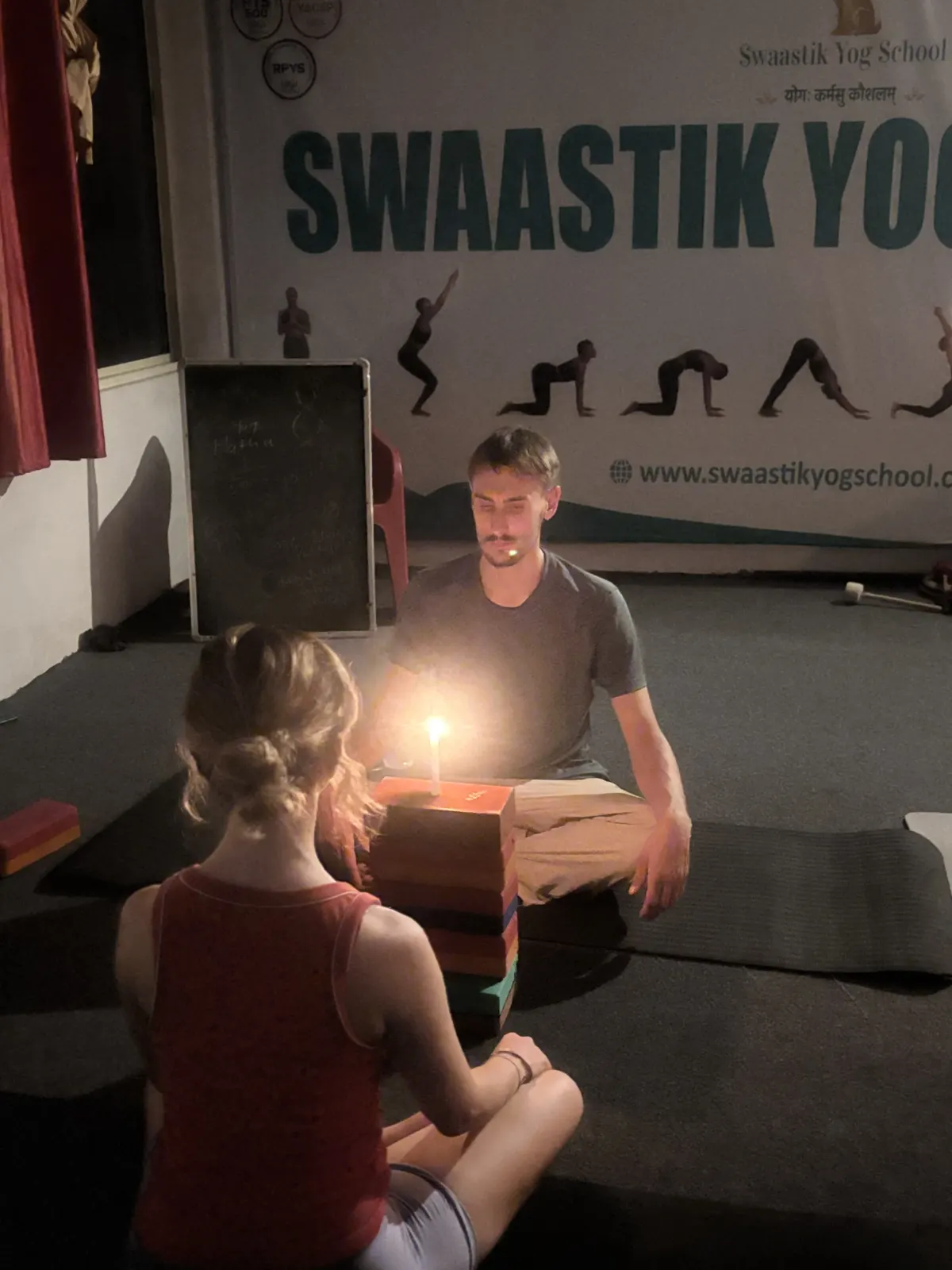
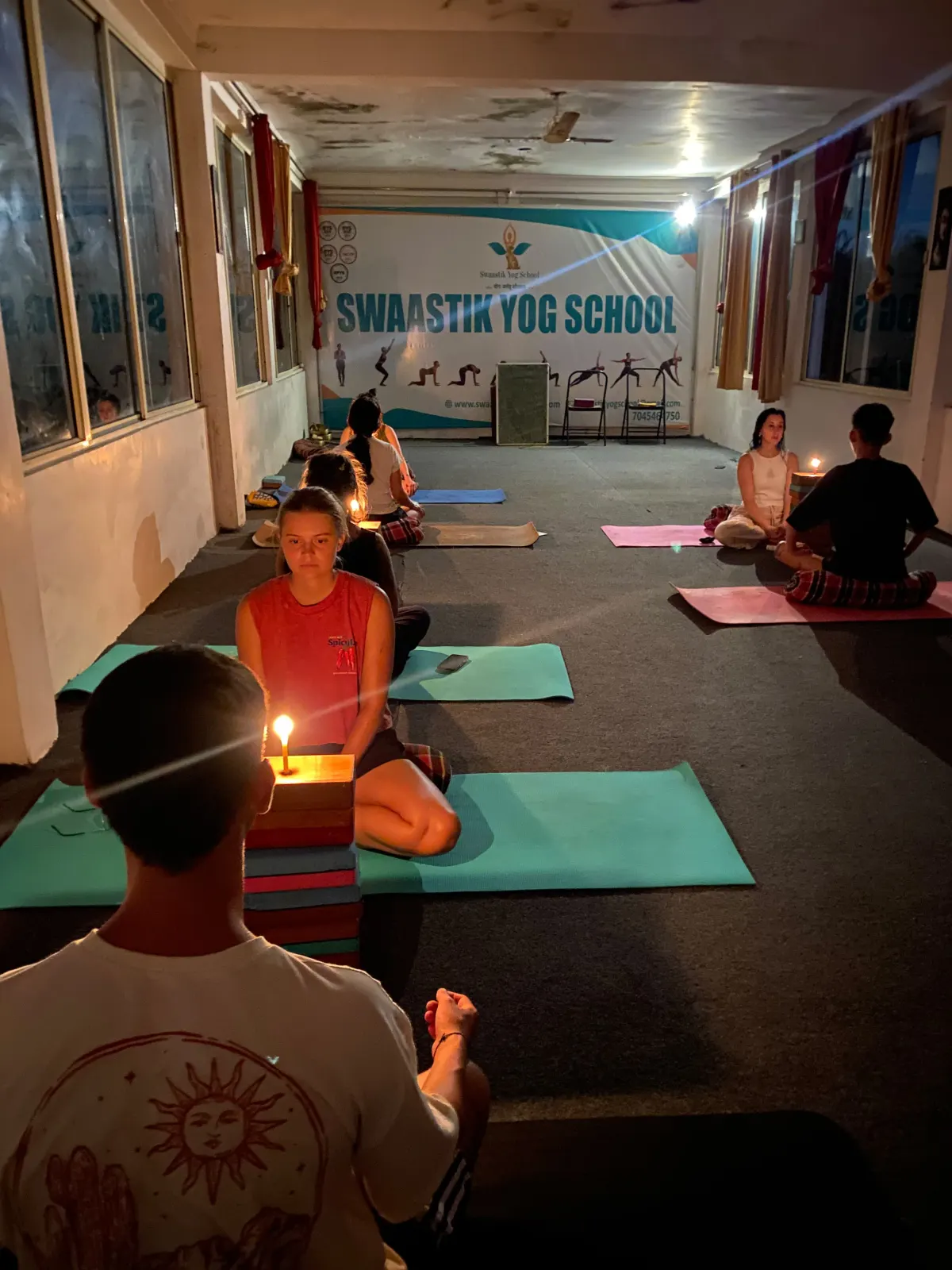
| Trataka (candle gazing) | Concentration (kriya) | Gaze softly at a flame, then close the eyes and watch the after-image | 2–3 min | 5–10 min | Avoid with epilepsy, glaucoma or eye problems |
| Shambhavi mudra | Eye mudra | Gently lift the gaze toward the brow centre | 10–20 sec, 3 times | 1–2 min | Learn with a teacher; never strain |